


MEMENTO: My journey to the cemeteries of Europe
Cemeteries have drawn me since I was young: places of silence where one comes to oneself. With MEMENTO I gave them a book of their own and photographed differently than ever before, close up, handheld and with an eye for small things.

MEMENTO was published in September 2022 by Frederking & Thaler: 240 pages with around 180 illustrations and texts by Björn Eenboom. It is my book about the cemeteries of Europe, from Italy's monumental grounds and Germany's green, natural cemeteries to Jewish burial places where nobody intervenes any more. A homage meant to prompt reflection and, above all, to celebrate the melancholy beauty of these places.
Where does the closeness to cemeteries come from?
My interest in cemeteries was there long before I photographed. Since my youth they have exerted a nostalgic pull on me. They are places of peaceful silence. I am someone who prefers his own paths and avoids larger crowds, and slowing down, paired with a healthy portion of melancholy, has always had a large place in my life.
Being alone and being lonely are two different things to me. Loneliness is never chosen. Being alone, to me, means retreating. In such moments I enter an almost meditative dialogue with myself and draw strength and ideas from it. It matters to me to be able to be happy on my own. I find that in abandoned places, and I find it in cemeteries.
Why a book of its own only now?
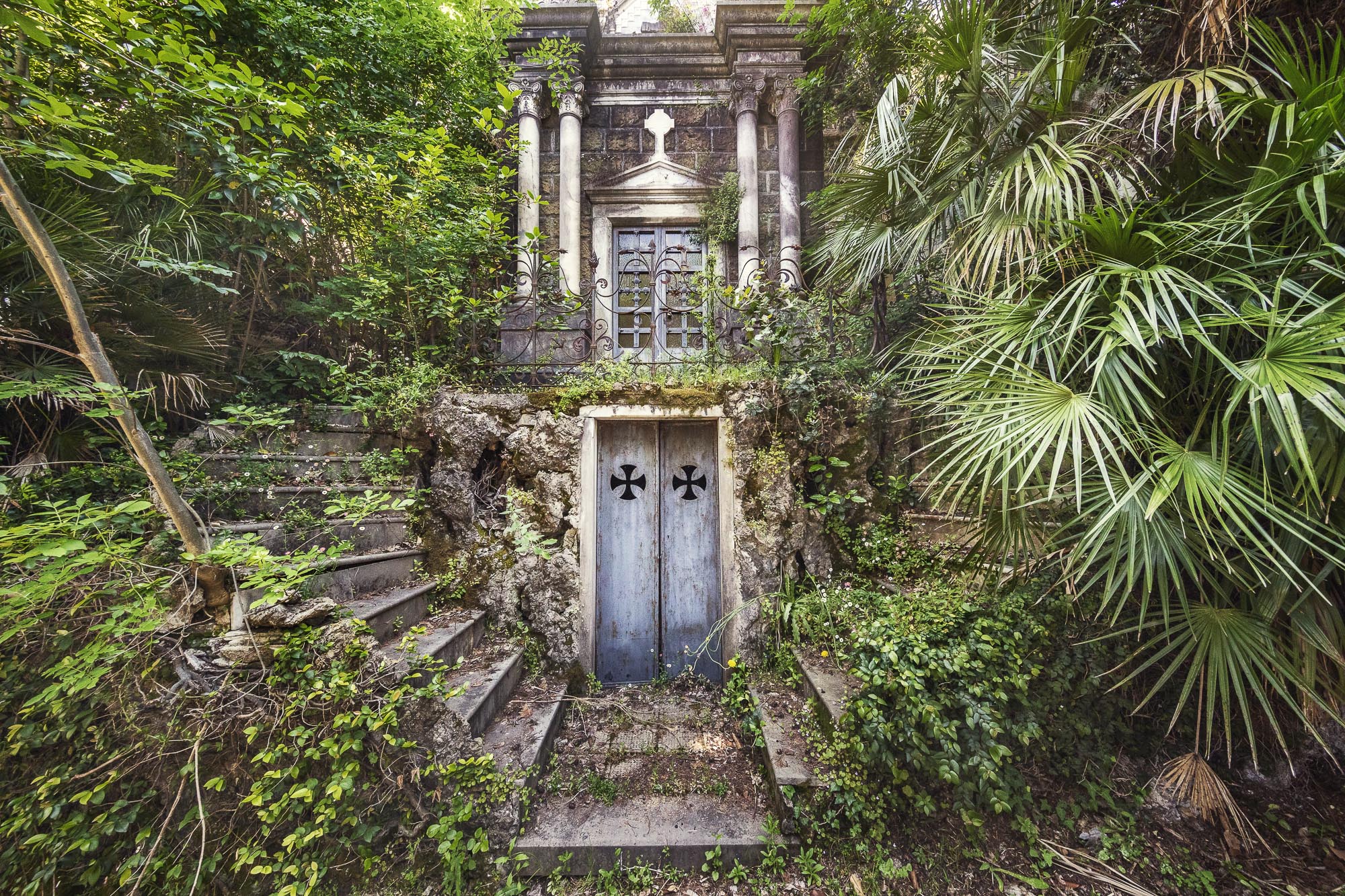
In 2009 I stood in a cemetery with my camera for the first time, at the Cimitero Monumentale di Staglieno in Genoa. Some years later I began an ongoing series called MEMENTO for all the works dealing with finitude and death. Many of those motifs, though, such as abandoned pathology departments, ossuaries and crematoria, belonged to the abandoned places. For a long time the cemeteries themselves had no fitting home.
Then the pandemic came and overturned my plans. I realised that there was not a single large photo book about cemeteries, and my publisher backed the idea. Between lockdowns and reopenings I researched and travelled, to many German cities and to Austria, Belgium, France, Romania, Poland, the Czech Republic and Italy.
What was new photographically?
My approach is usually very structured. I work with architecture, with symmetries, with large rooms and their perspectives; the camera sits on a tripod and the exposures are long. In the cemeteries other things suddenly mattered: small motifs, details, crops, depth within the frame. The places are harder to take in at a glance and invite you to discover them.
The photographs in MEMENTO were therefore mostly made handheld. That freedom of movement retrained my eye, and I want to keep it.
I deliberately decided against black and white, popular as it is for cemetery motifs. It would have been easier, but I would have felt I was taking something away from the places. Colour, gentler here than in my other books, belongs to their nature. Through the seasons from winter into late autumn the cemeteries showed a range that amazed me.
What did I learn there?
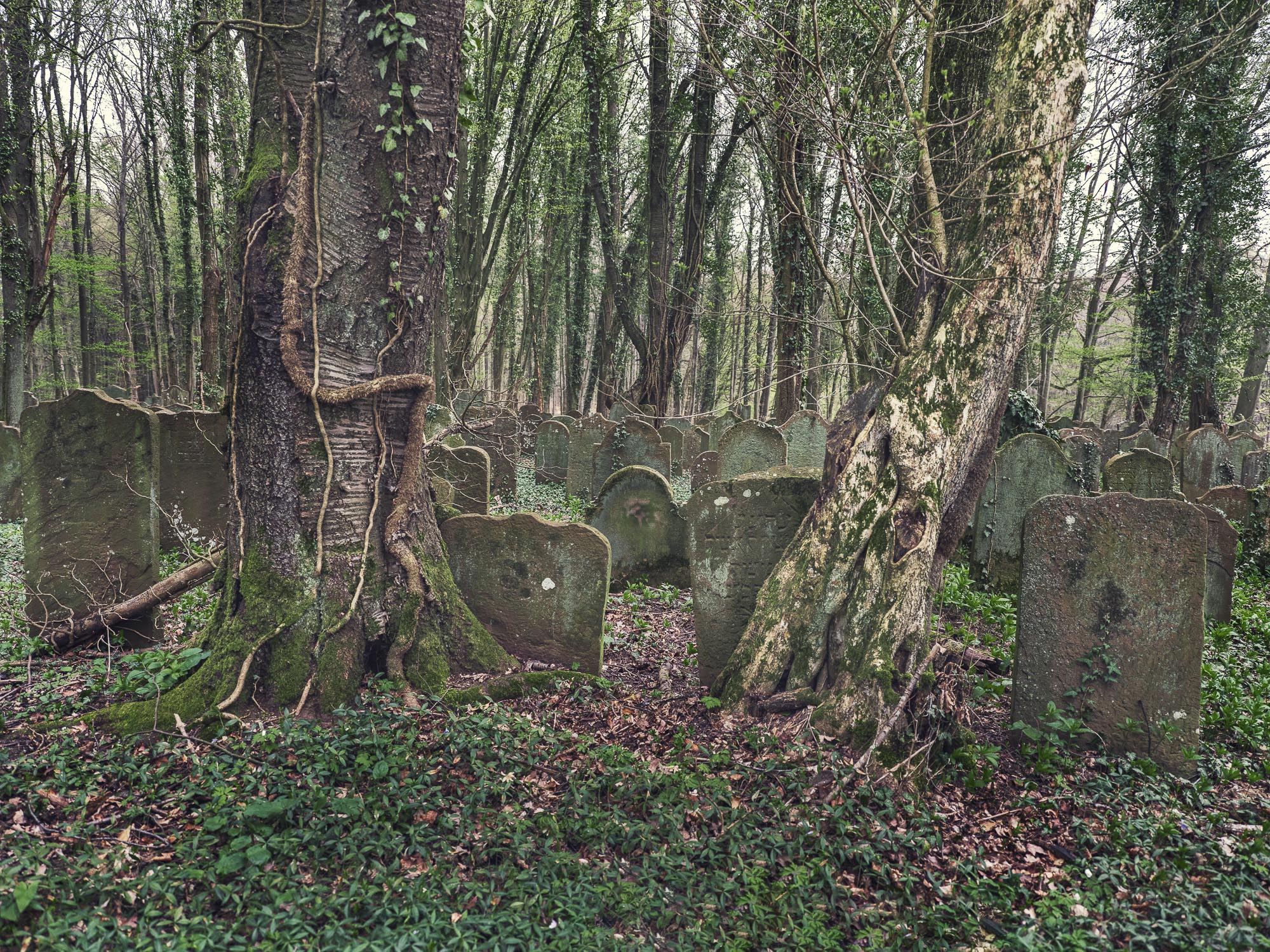
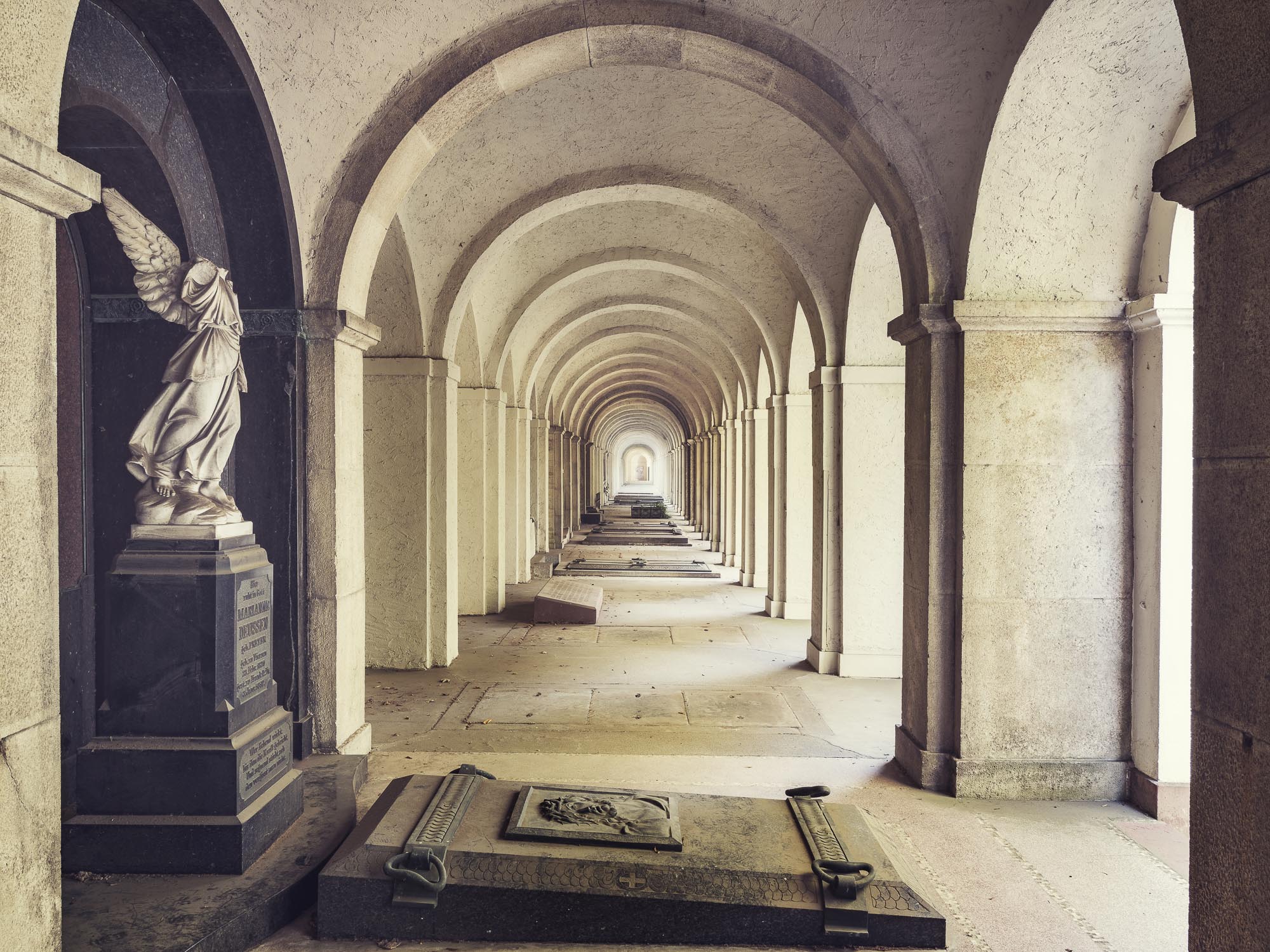
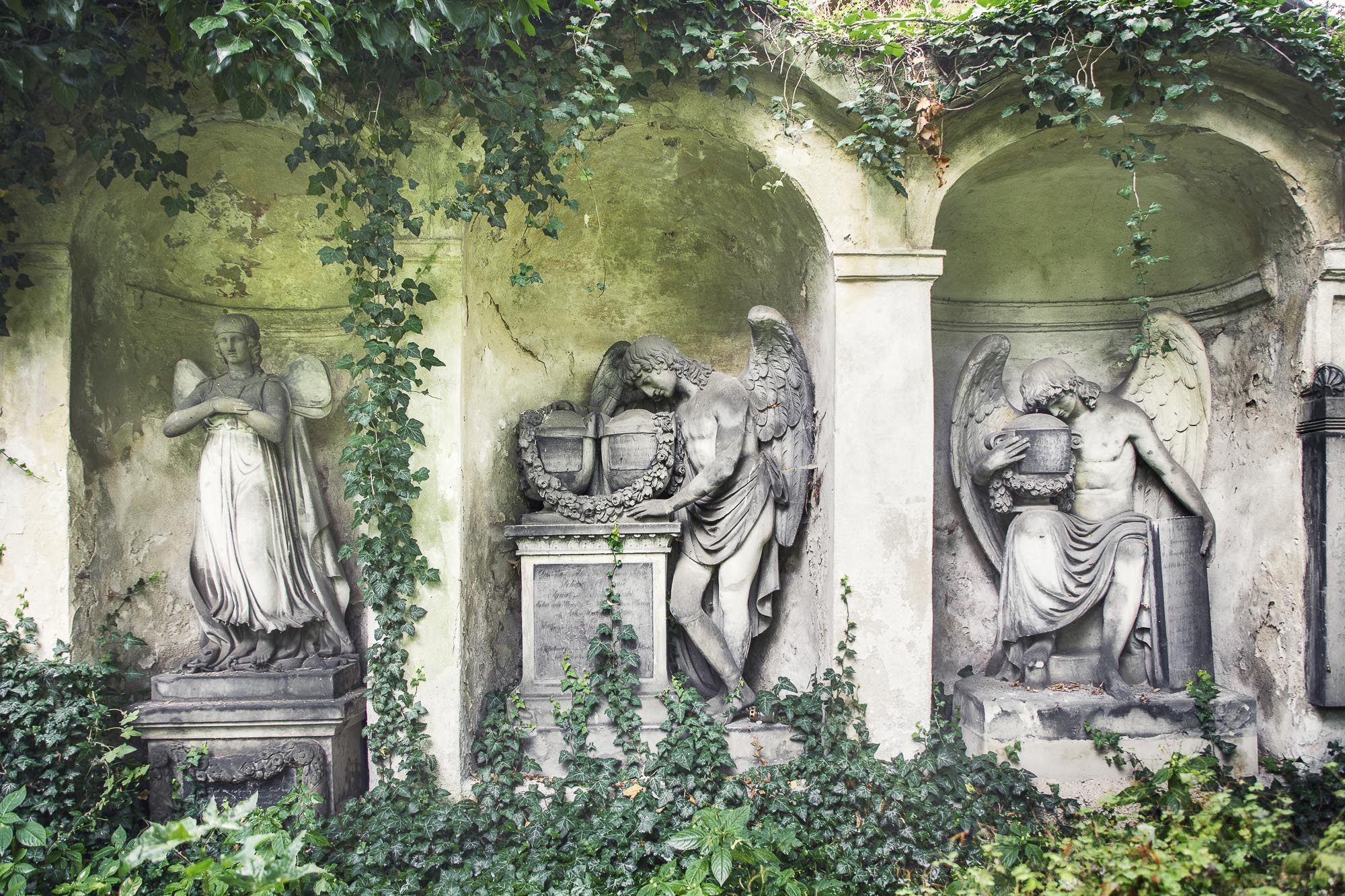
How differently Europe treats its dead. In Italy arcades full of statues, in Germany clear order and much nature, in France a great deal of stone. What moved me most were Jewish cemeteries. There the peace of the dead holds, nobody intervenes, and you can tell from the graves: the stones disappear into and beneath nature.
Cemeteries are also places of life. Even in the middle of large cities they become oases. Squirrels and birds kept me company, and where else do you find yourself face to face with a deer in Leipzig or Vienna? When that happened I knew I was working at the right pace.
And I noticed how little we concern ourselves with our own transience. In Hanover an elderly lady spoke to me; she was sitting on a bench with biscuits and her knitting. She comes two or three times a week, she said, to tell her late husband what has been happening. Not sadly, but out of a need to share it with him.
More about the book on the book's page.
The pictures
Five photographs from MEMENTO.
Sources and further background
This story draws on the following sources.
- Sven Fennema – Memento. kredo-Magazin, 22.11.2022 , accessed 10. November 2026
Related stories
All stories →
Share