


Stories · Countries and regions · Italy, Tuscany
Val d'Orcia in fog: An hour I had waited years for
Hills, cypresses and solitary farms: the Val d'Orcia is Tuscany as people imagine it. For years I failed to make strong pictures there. In May 2025 the evening ended in a thunderstorm. The next morning fog lay across the whole valley, for barely an hour.
At a glance
- Location
- Italy, Tuscany
- Series
- AIRSCAPES
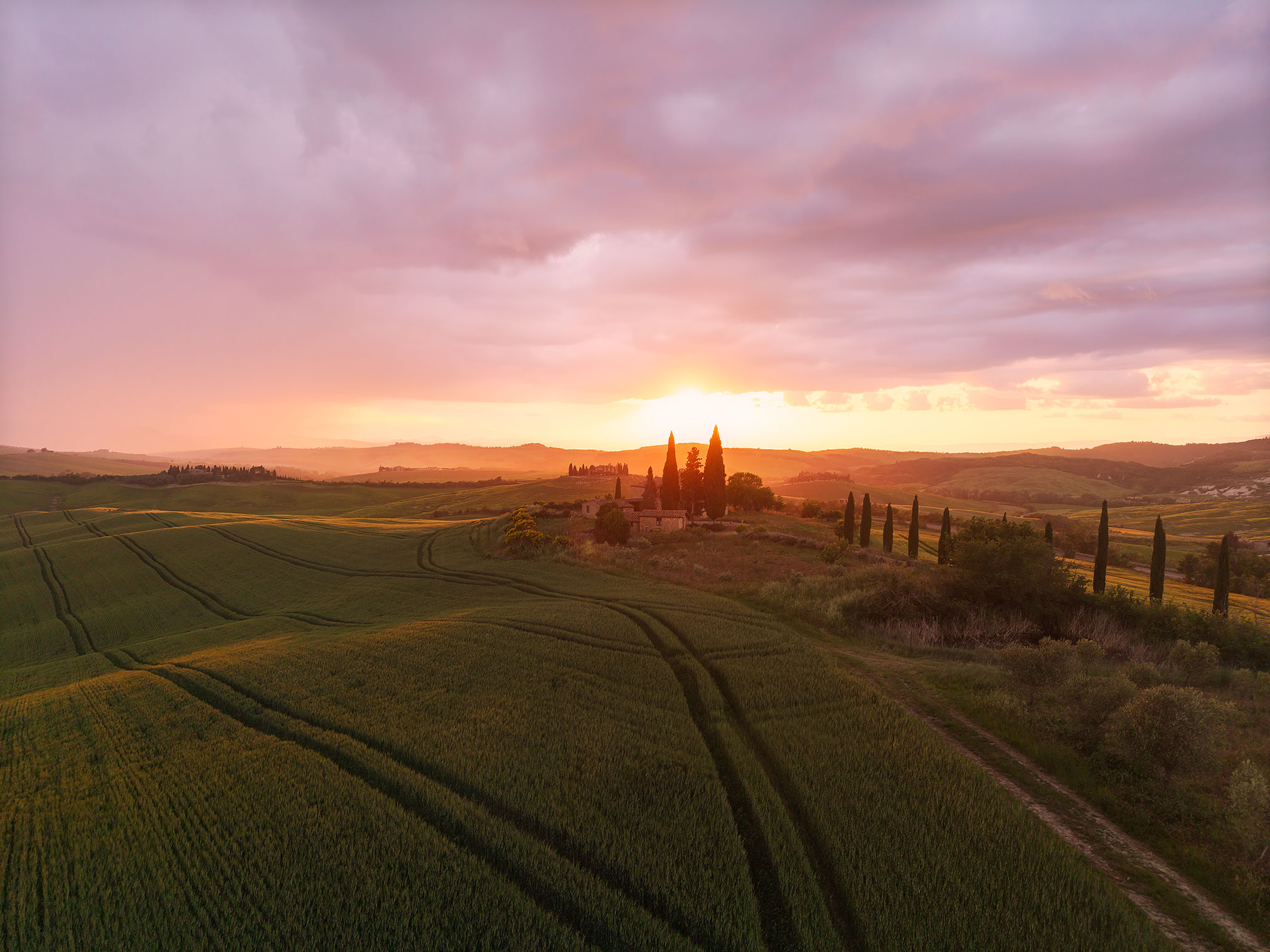
It took fifteen minutes. One moment I was standing in perfect evening light above the hills of the Val d'Orcia; the next, everything was a severe thunderstorm.
I had long wanted to make strong pictures there, and it had never worked out. Either I had rain or deadly dull sunshine, or it was the wrong season. So in May 2025 I had deliberately set aside both an evening and a morning. That took care of the evening.
What makes the Val d'Orcia
The Val d'Orcia lies in the south of the province of Siena, on the northern foothills of Monte Amiata. It takes its name from the river Orcia. Five municipalities belong to it: Castiglione d'Orcia, Montalcino, Pienza, Radicofani and San Quirico d'Orcia. The valley has been a UNESCO World Heritage site since 2004, the historic centre of Pienza since 1996.
What you see here is not untouched nature. The city state of Siena reshaped the landscape in the fourteenth and fifteenth centuries. It was meant to present the image of good government and to be beautiful to look at, and the painters of the Sienese school found their subjects here. To this day it is the picture so many people associate with Tuscany: soft hills, single farms on the rises, cypresses in rows and small groups, and grain fields in between.
The old Via Francigena runs through the valley. One well-known motif is the Cappella della Madonna di Vitaleta, a small chapel on a gravel road between Pienza and San Quirico d'Orcia. It is first mentioned in 1590 and was given its present form in 1884 by the architect Giuseppe Partini.
The morning after
Beautiful as the valley is, it does not make photography easy. The next morning I did not want to drag myself out of bed at first. The sun would rise at six, and I was sad about the evening. In the end I tore myself away and was disappointed all over again, because there was not a cloud in the sky.
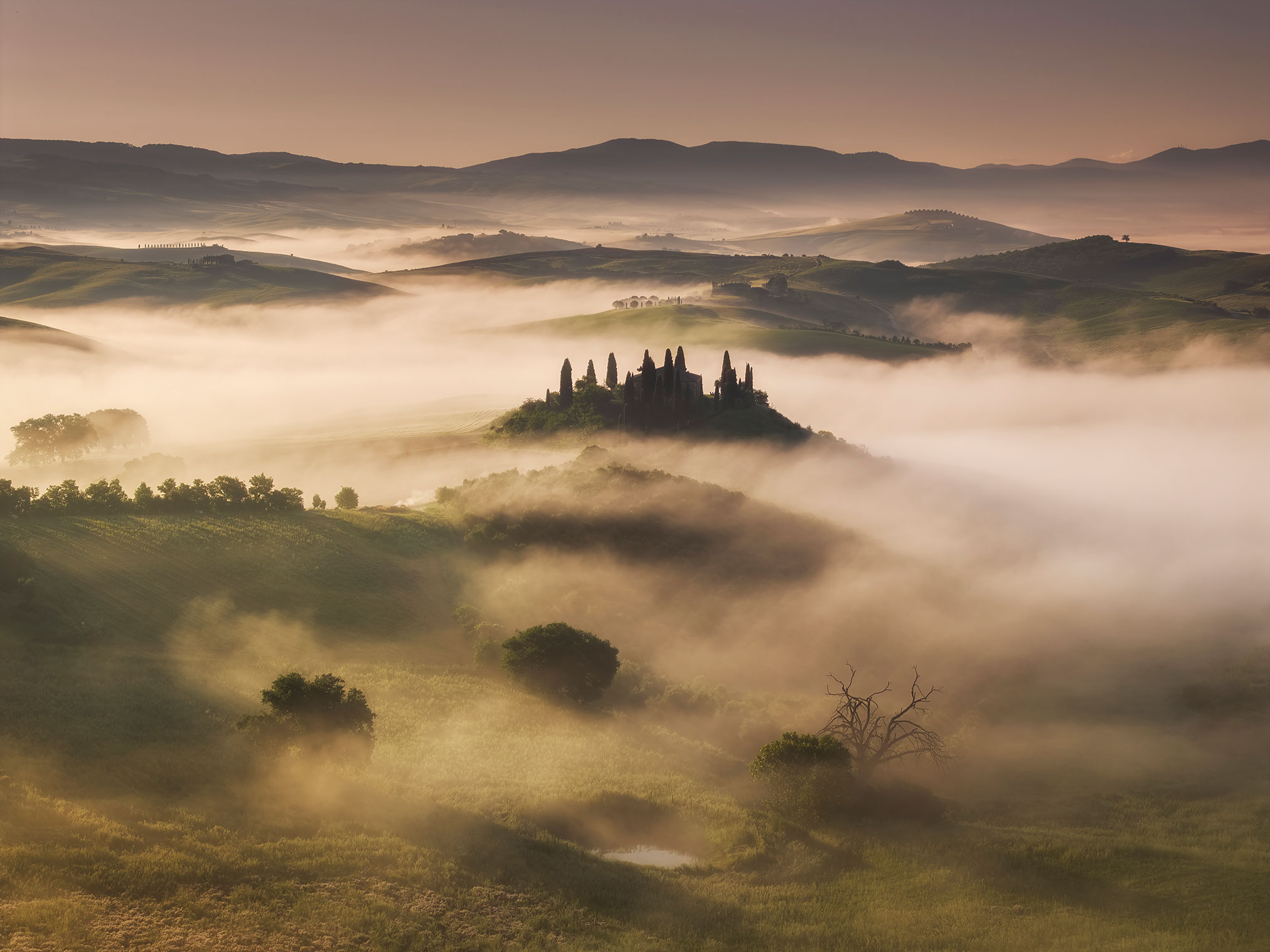
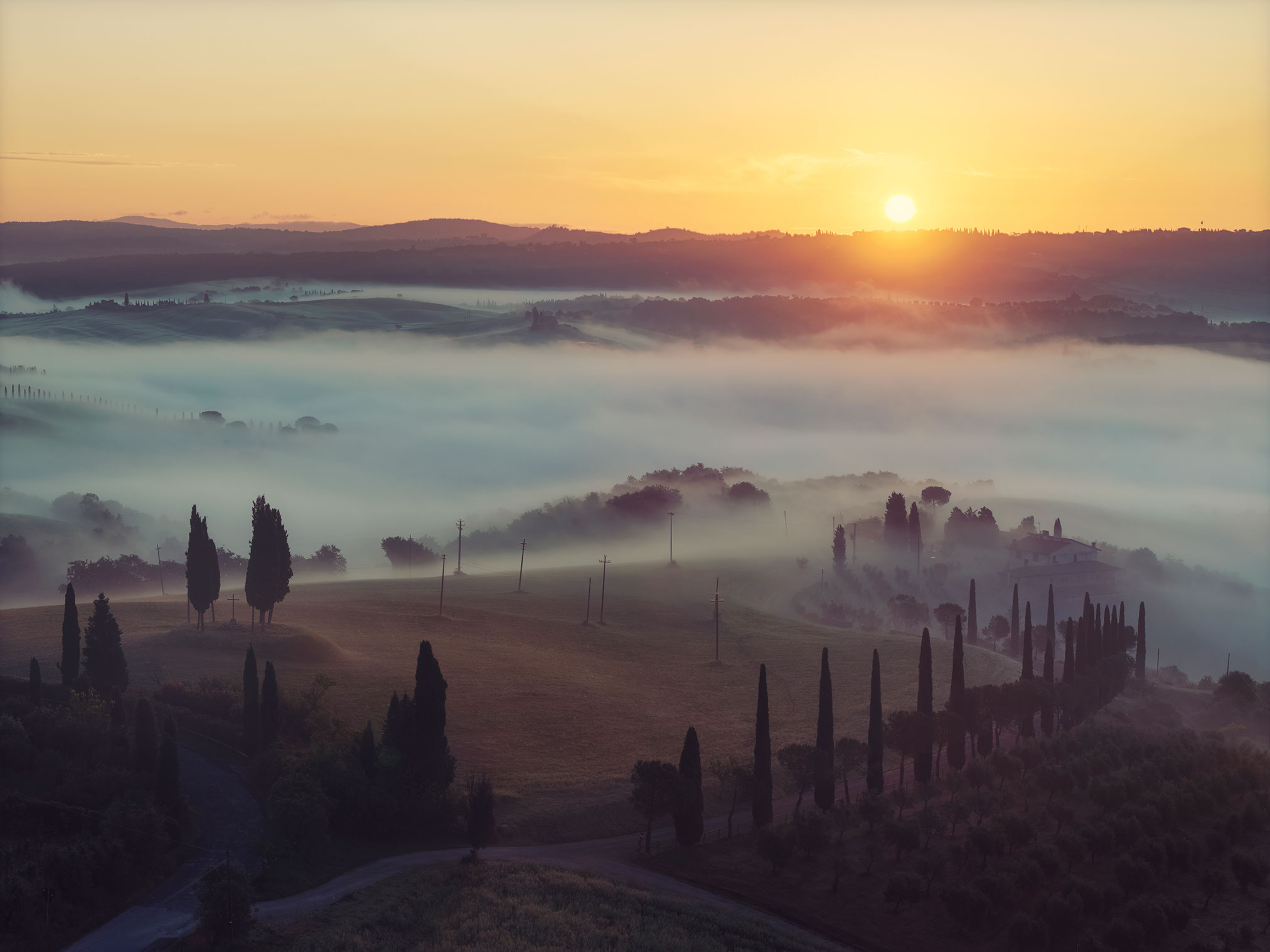
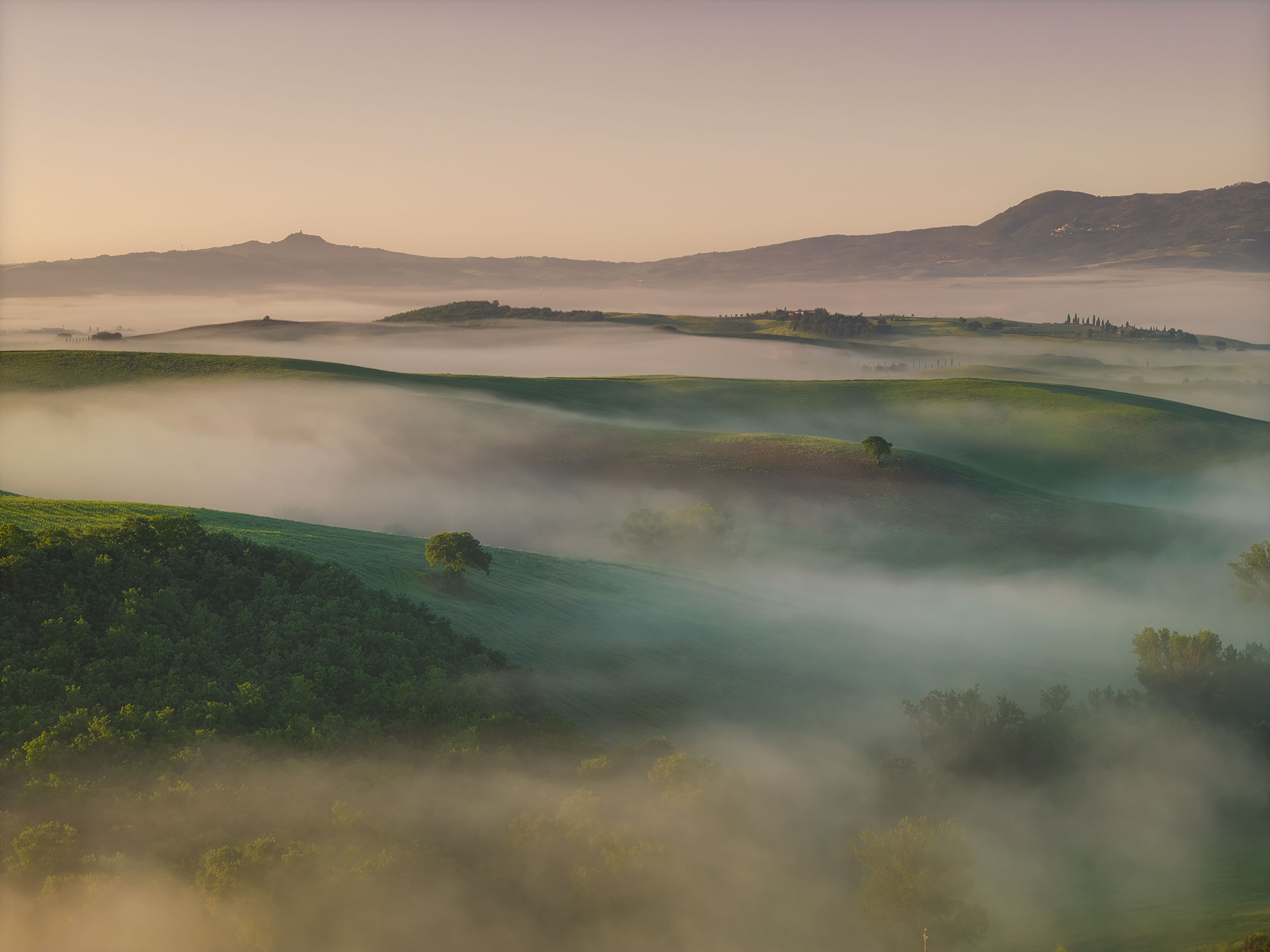
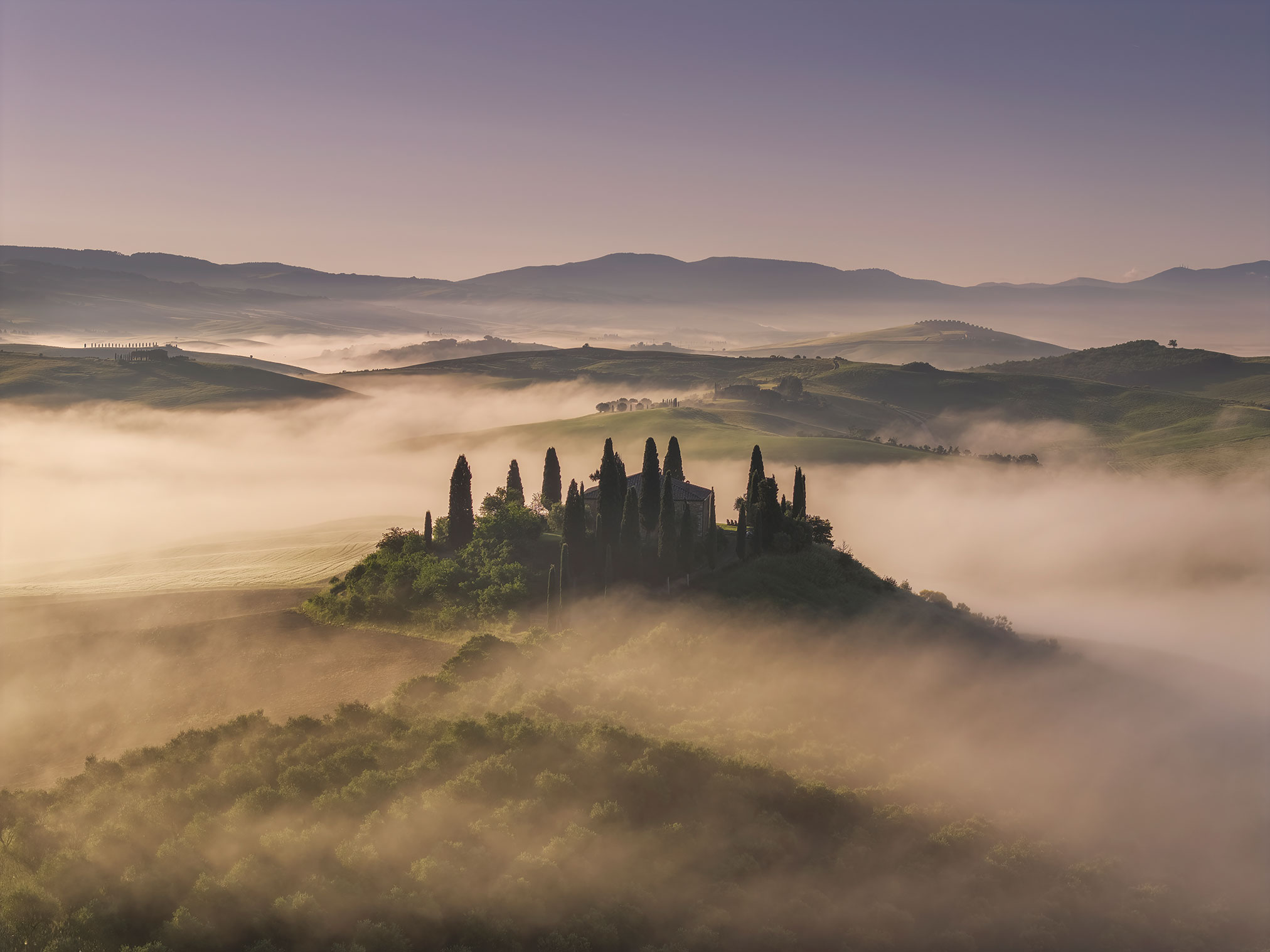
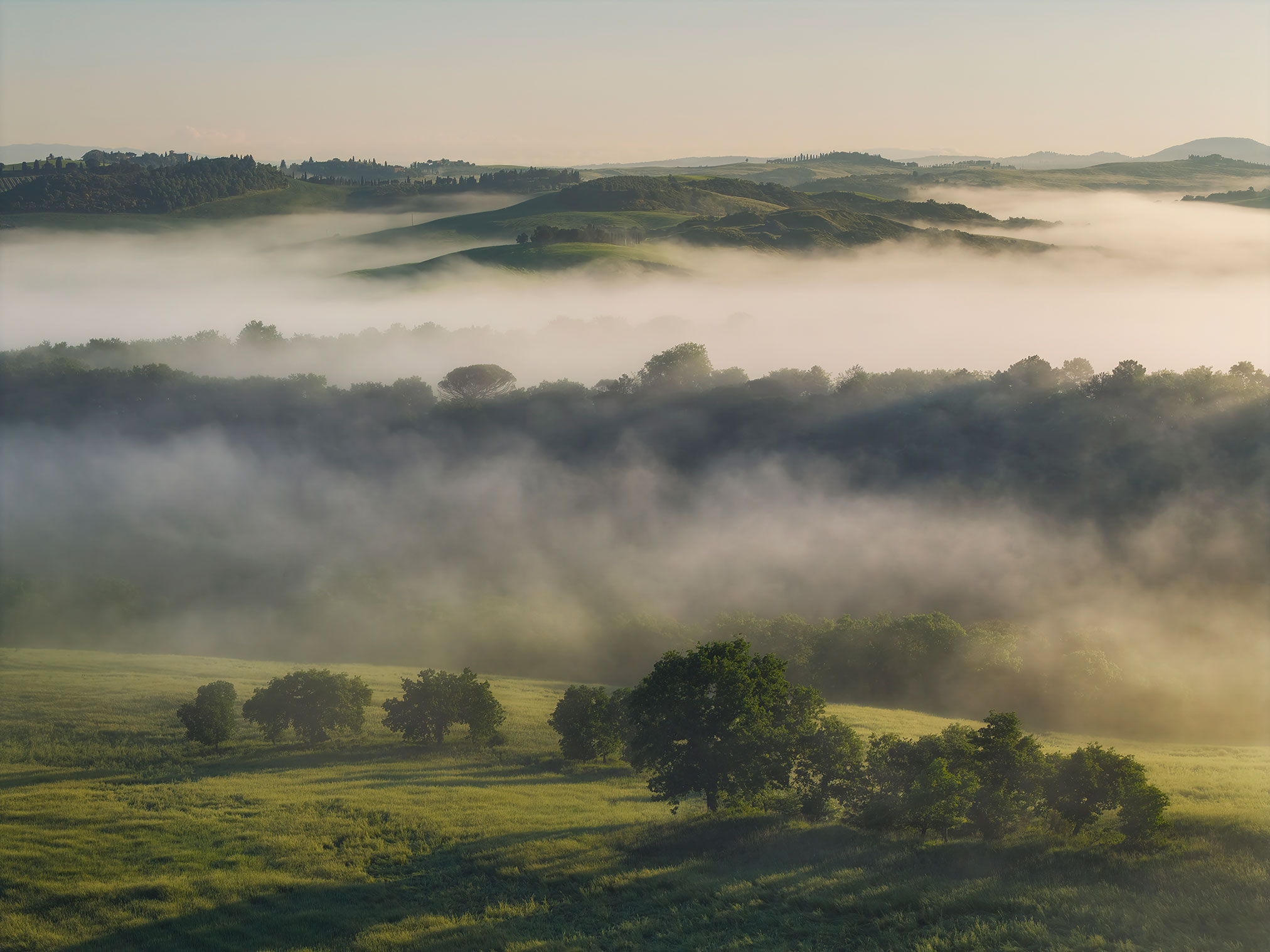
I drove on anyway. And then I saw them, a few at first, then more and more: fantastic fields of fog lying everywhere in the hills. Only the rises with their farms and cypresses still stood out.
One magical moment after another
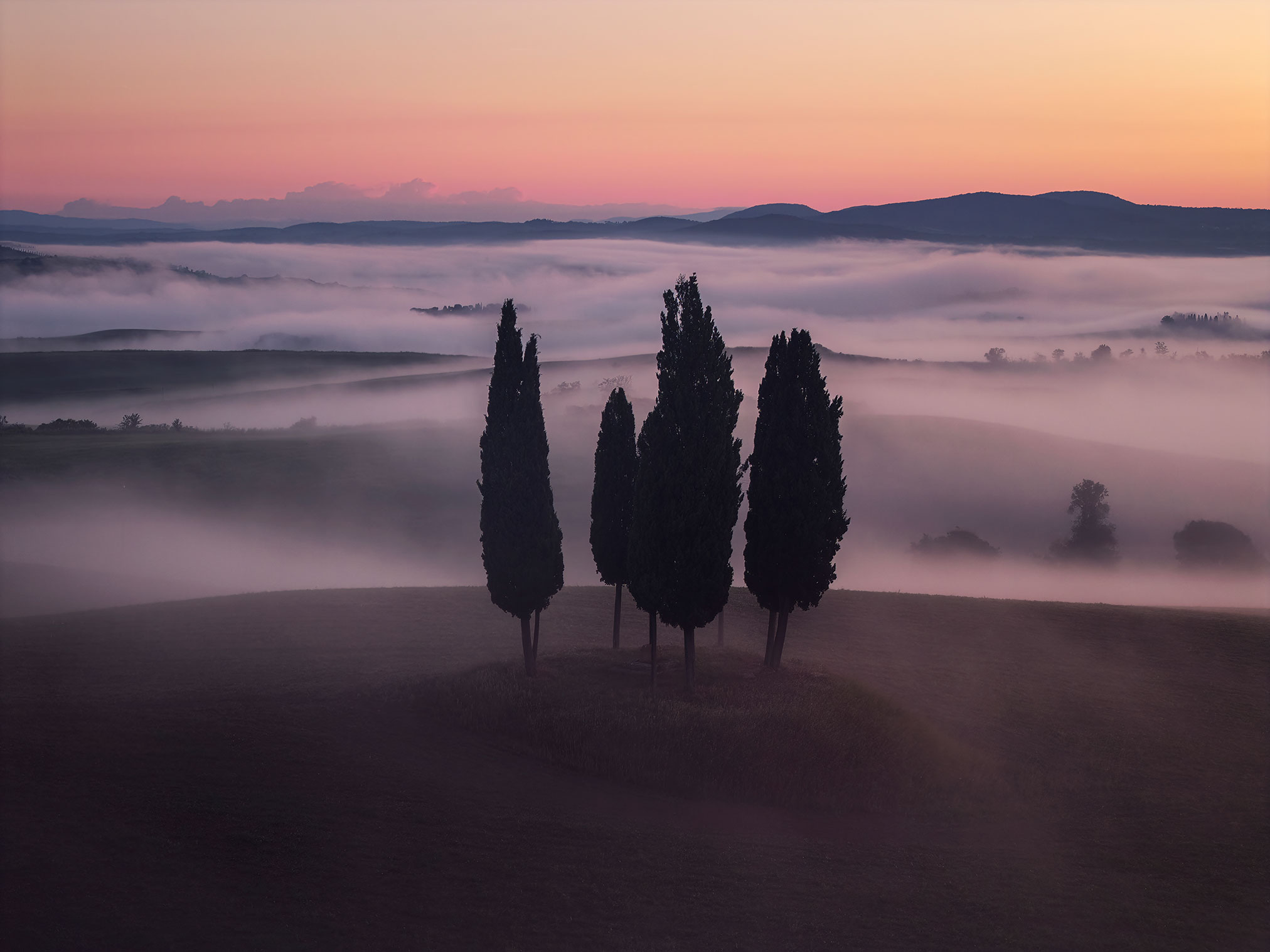
Shortly before six the drone was in the air, the sky still pink. A few minutes later the sun came over the horizon, and from then on it was one magical moment after another.
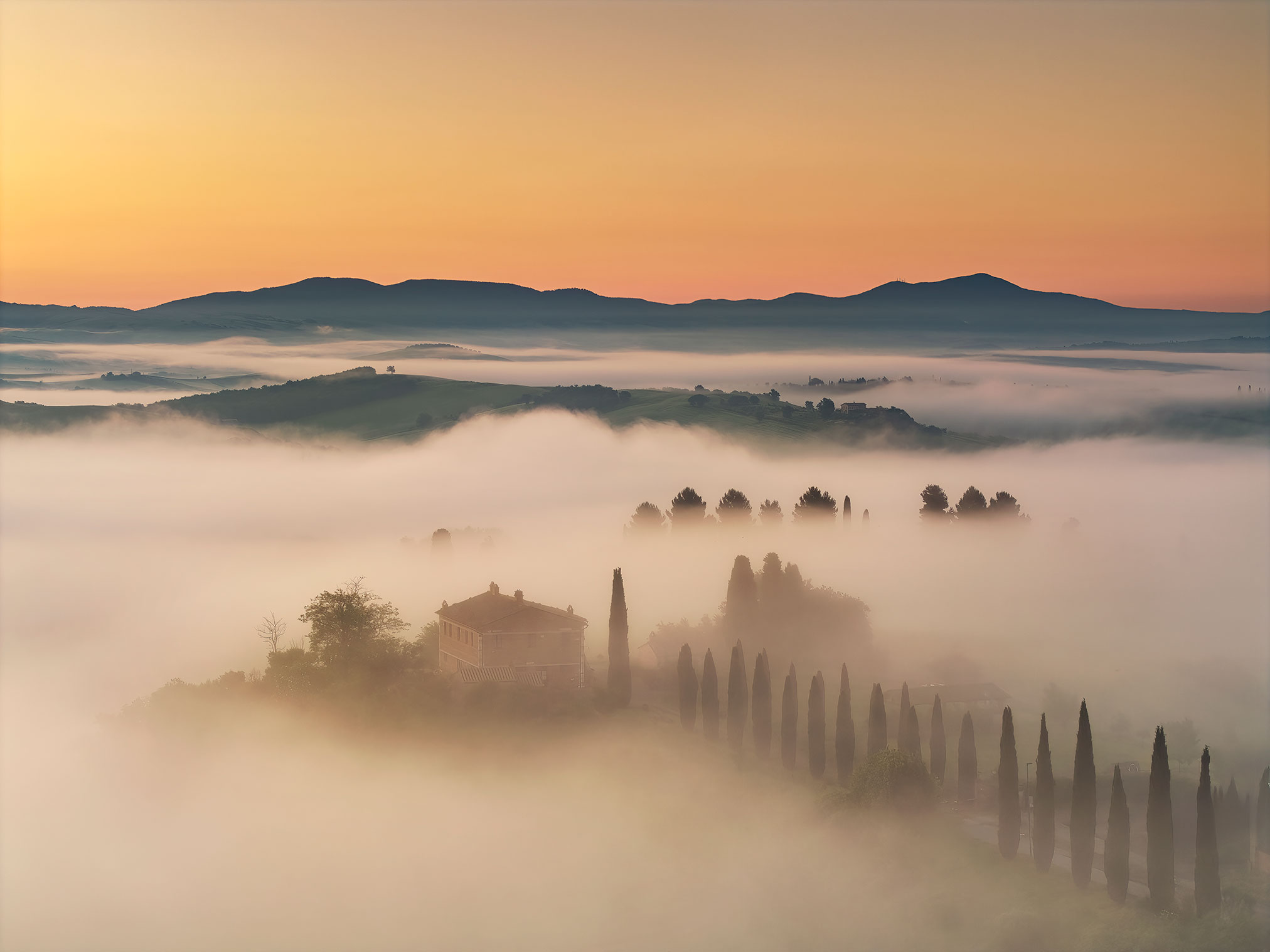
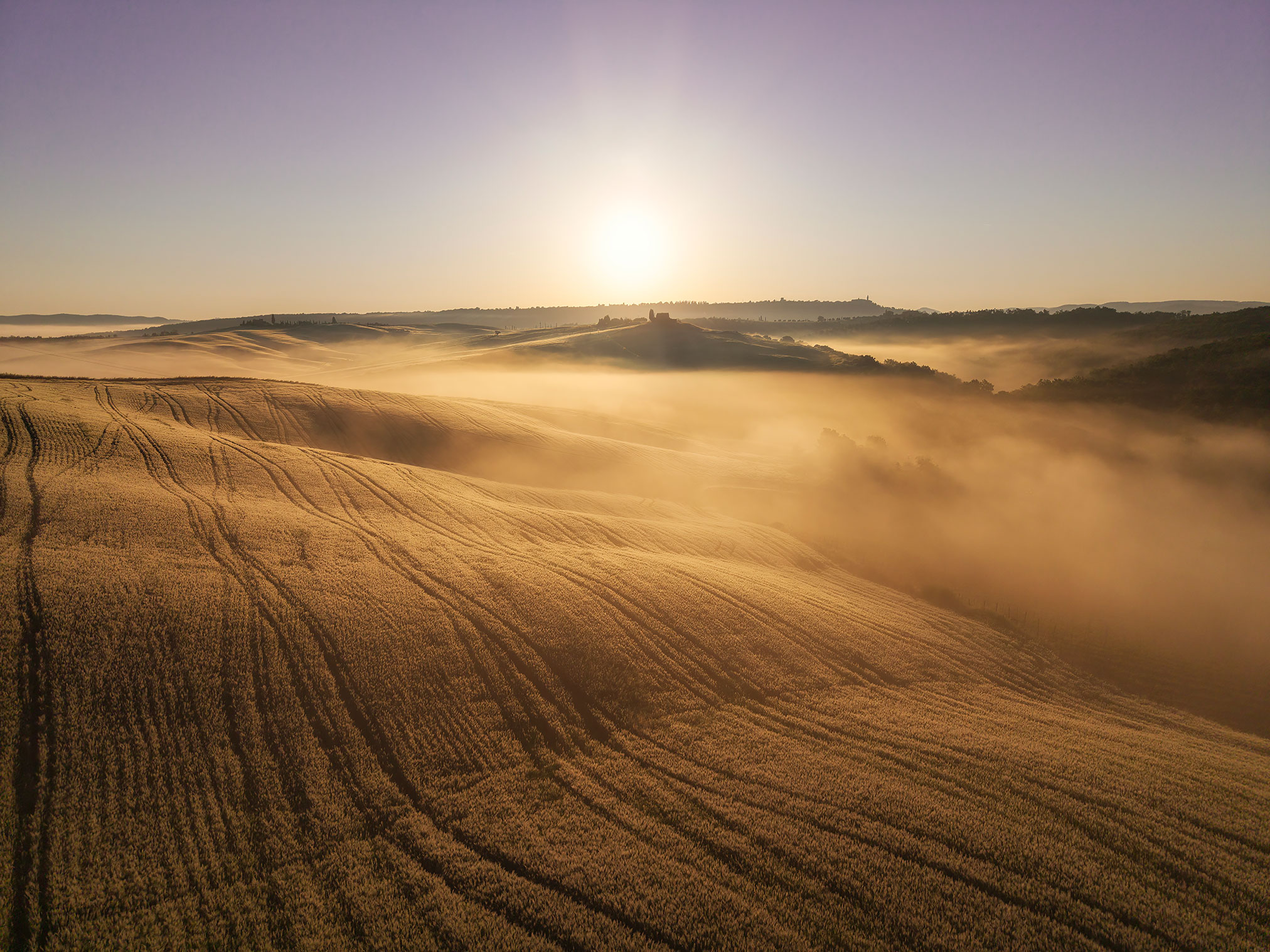
I drove from one spot to the next, and the fields of fog kept changing. No view stayed as it was. At first the fog lay bluish and cool in the valley. Then, against the light, it began to glow gold, and the trees cast long shadows into it.

The colours alone would have been worth the drive: the pink before sunrise, the gold after it, and beneath them the fresh green of the fields in May.
Barely an hour
It was a unique chance, and a brief one. Barely an hour later all the magic was over. My last picture of that morning was taken shortly after seven. By then the fog lay only in the valleys, and the sun was already on the slopes.
After all those attempts, this time it worked. I very nearly slept through it.
The pictures
Eleven aerial photographs from the Val d'Orcia, taken on 9 and 10 May 2025, in the order in which they were made.

Sources and further background
This story draws on the following sources.
- Val d'Orcia. Wikipedia (deutsch), mit Angaben der UNESCO zu Einschreibung, Gemeinden und Geschichte , accessed 10. November 2026
- Cappella della Madonna di Vitaleta. Wikipedia (italienisch) , accessed 10. November 2026
- Val d'Orcia. UNESCO World Heritage List , accessed 10. November 2026
Series
More from AIRSCAPES
Fine art prints on the theme
Related stories
All stories →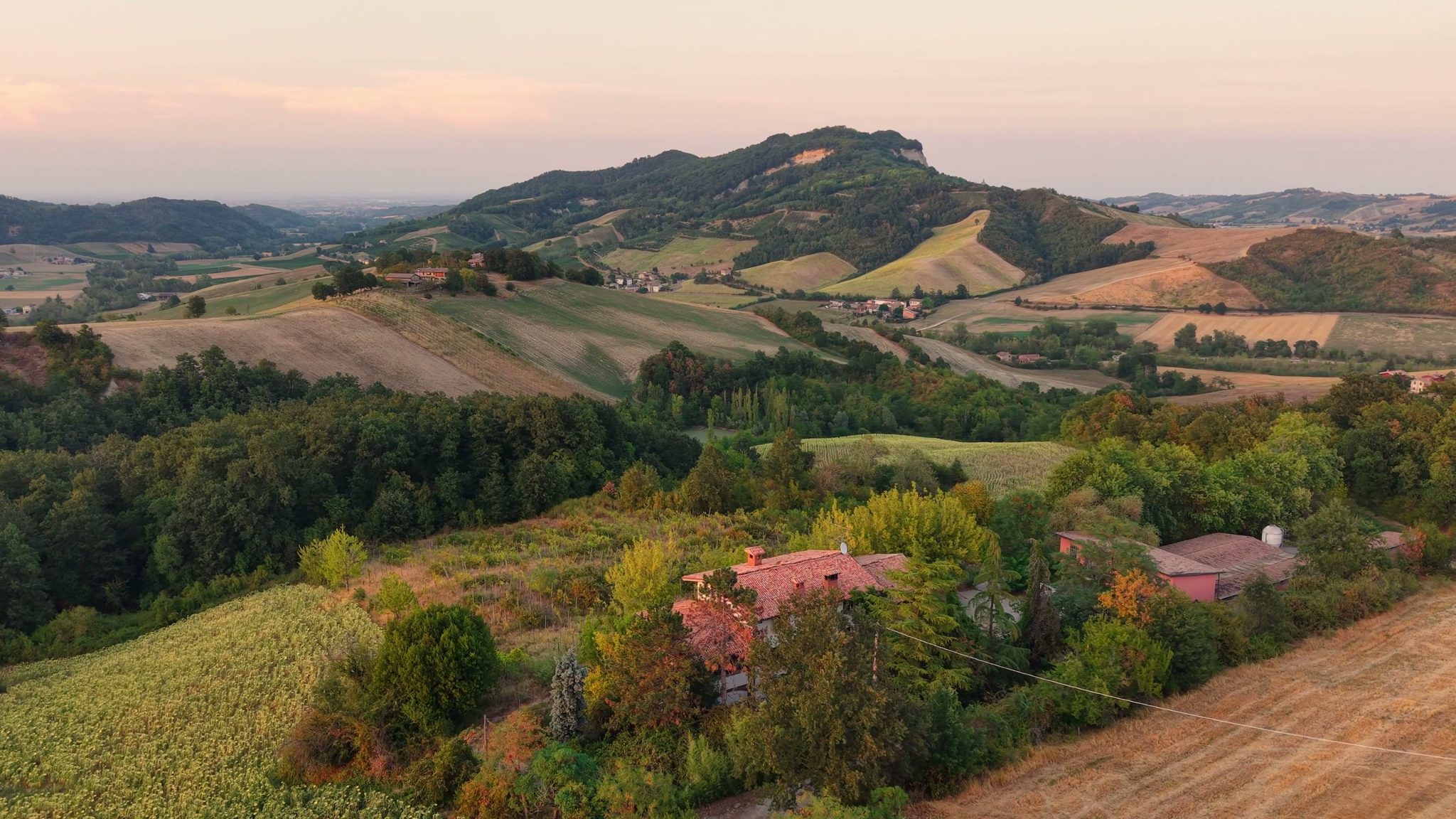

Share