


Stories · Places · Romania, Transylvania
Geamăna: The village beneath the toxic lake
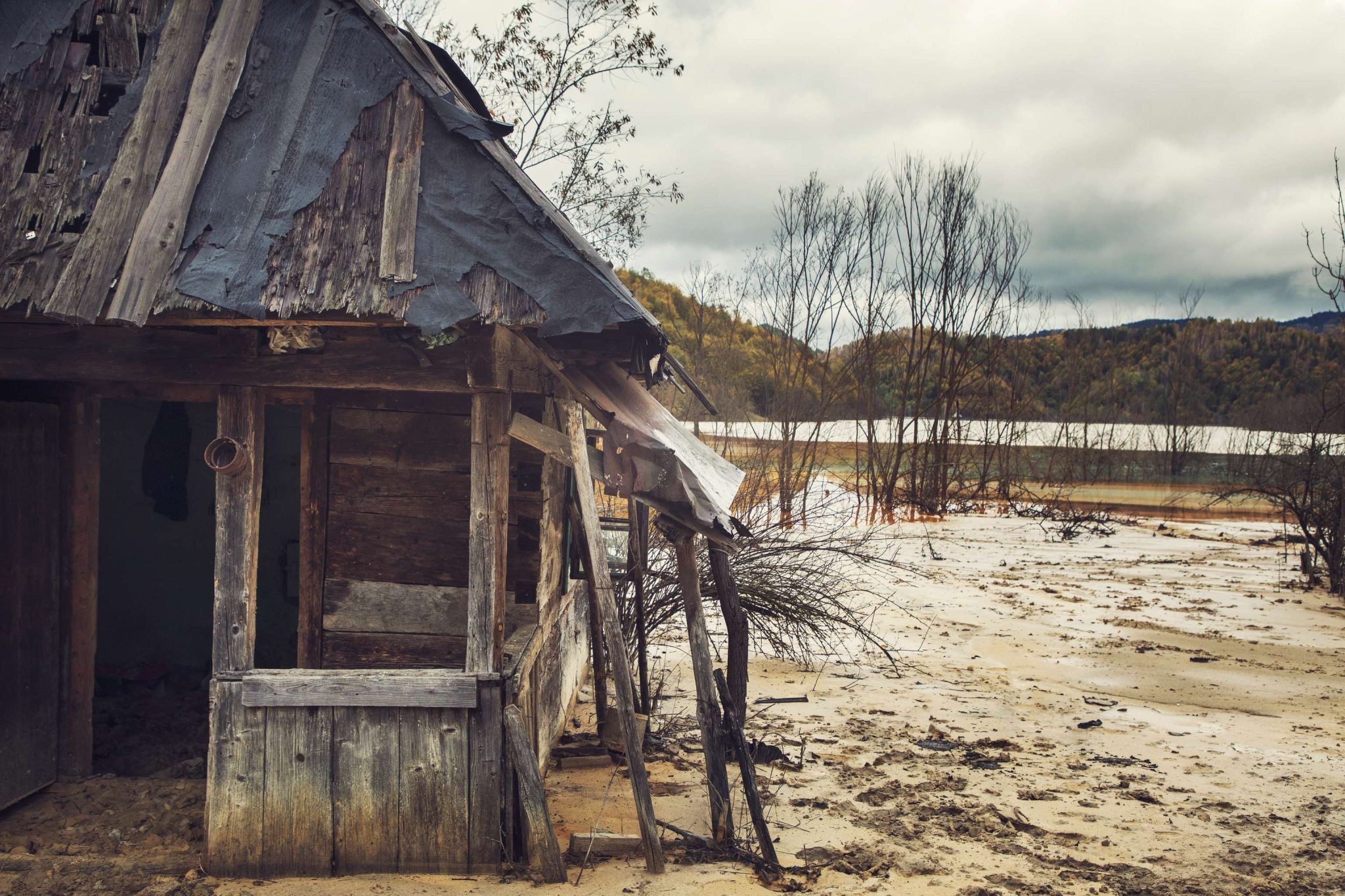
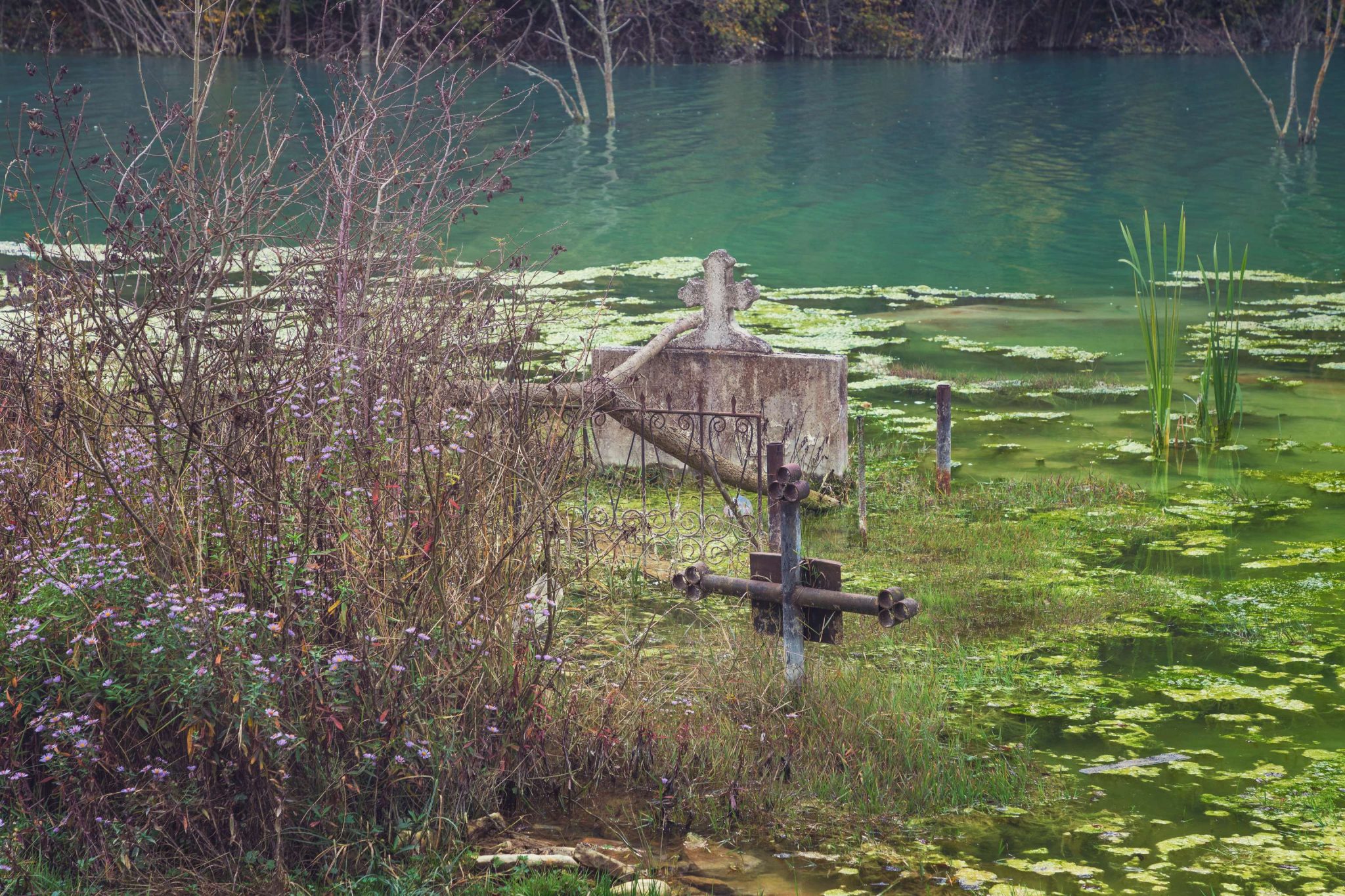
In Romania's Apuseni Mountains a village has been sinking into the waste of a copper mine since 1986. When I was there in October 2019 the church spire still rose from the sludge, and on the shore the pumpkin harvest was beginning.
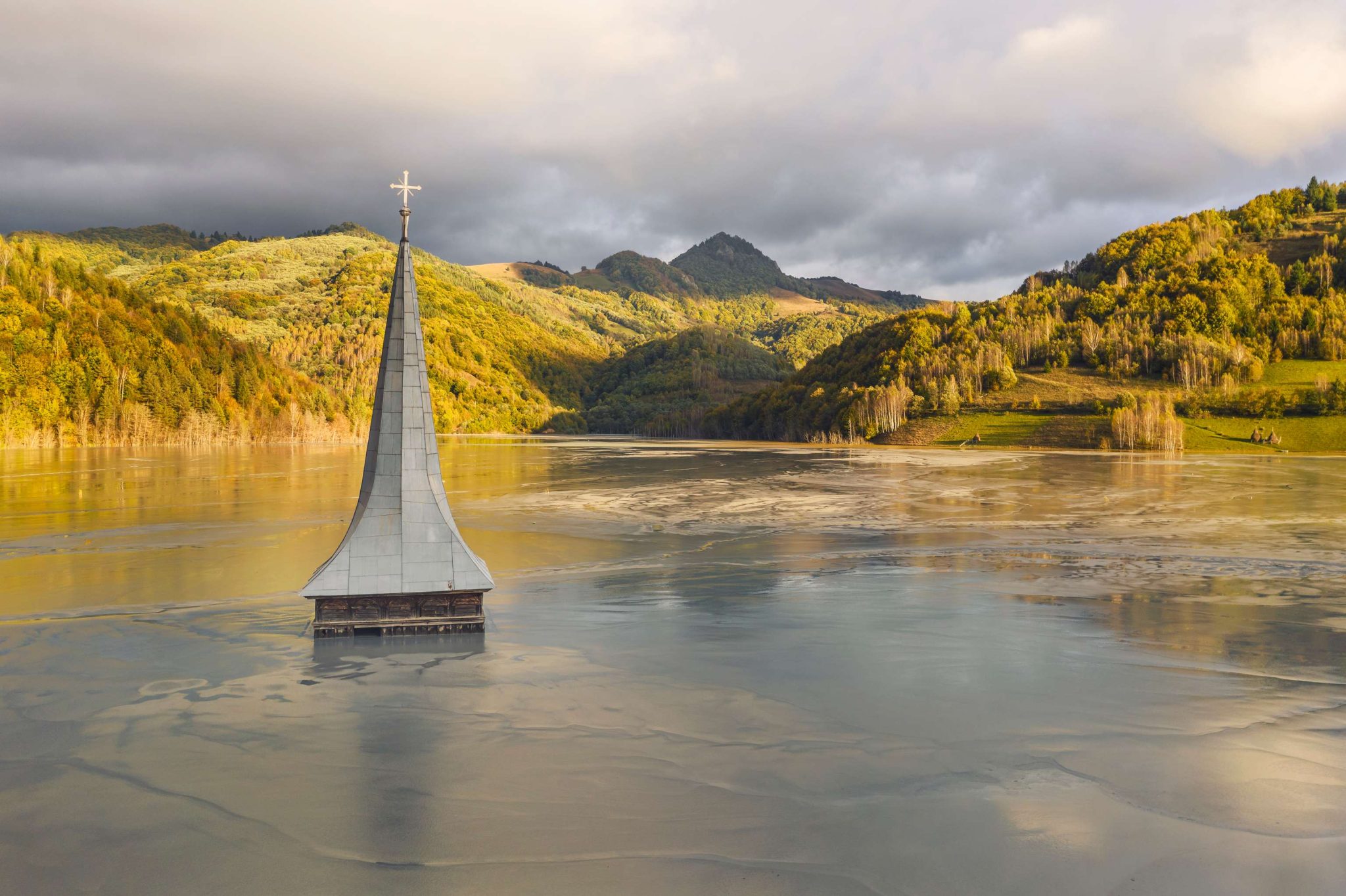
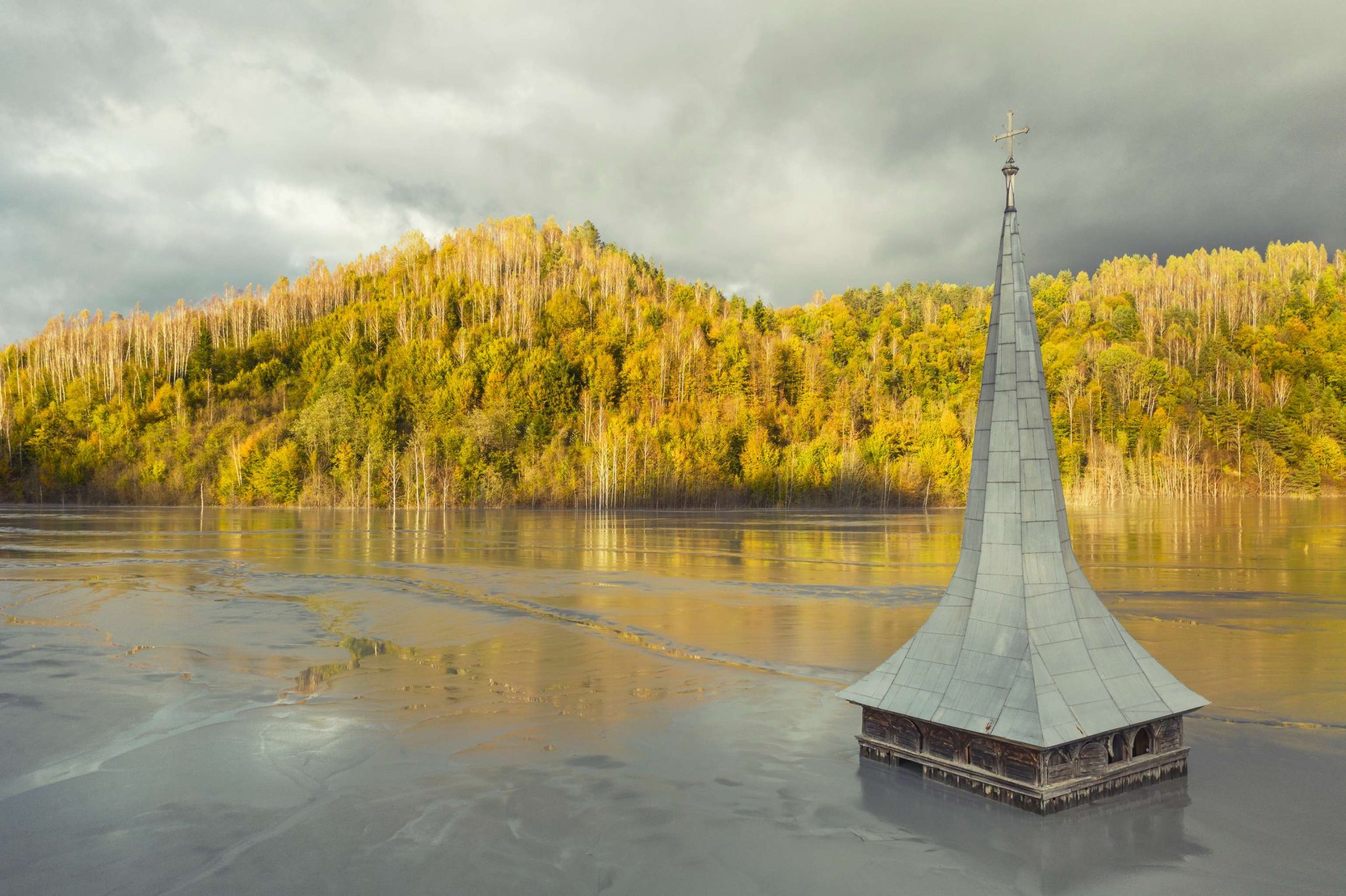
Geamăna was a village in the Apuseni Mountains of Romania. Today it lies beneath the tailings pond of the Roșia Poieni copper mine, a lake of mine waste and acid water that rises year after year. What still shows of Geamăna (often spelled Geamana) is the tip of the church spire.
At a glance
Geamăna (Geamana)
- Location
- Commune of Lupșa, Alba County, Apuseni Mountains, Romania
- Usage
- Village of seven hamlets with around 1,000 inhabitants; today the Valea Șesei tailings pond of the Roșia Poieni copper mine
- Abandoned since
- Expropriated after 1977, residents left from the early 1980s, tailings discharged since 1986
- Condition
- Village centre beneath the sludge; in October 2025 only the church spire could still be seen. The pond is in use and still growing
- Visited
- October 2019
What happened at Geamăna?
In 1977 Nicolae Ceaușescu had a copper combine founded at Roșia Poieni in Alba County. With more than a billion tonnes of ore the deposit counts among the largest in Europe; depending on the source it holds 60 to 65 per cent of Romania's copper reserves. The open pit needed a valley for its waste. The choice fell on the valley of the Valea Șesei stream, and in that valley lay Geamăna, a village of seven hamlets in the commune of Lupșa.
How many people had to leave is nowhere stated consistently. Romanian newspapers give between 300 and 480 families and around 1,000 inhabitants. They were expropriated and moved away little by little from the early 1980s, scattered across the country; compensation was small. One former resident remembers 60,000 lei in 1989, too little for a house. A new village nearby, which people had asked for, never came.
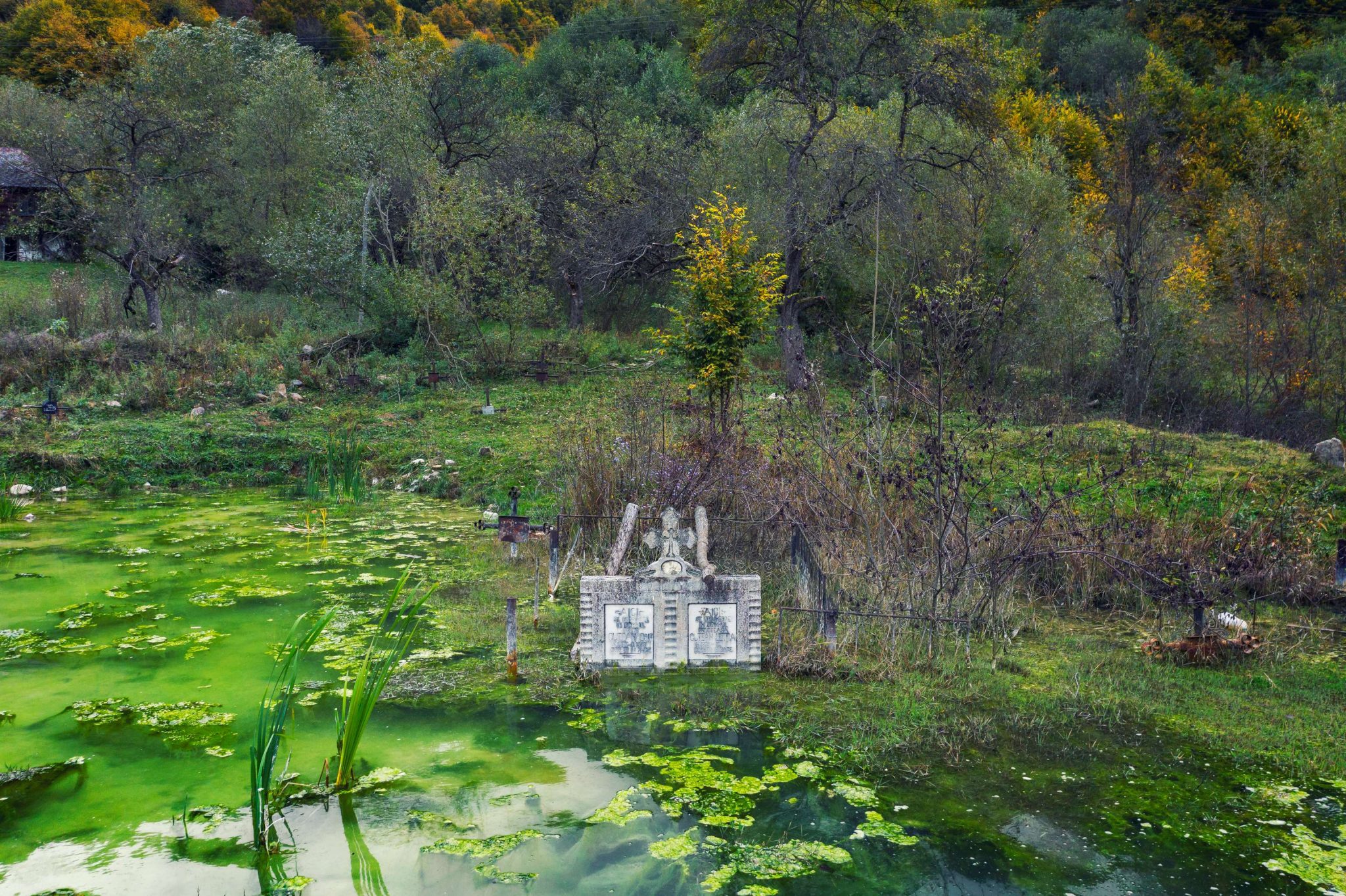
The dead stayed. According to former residents the promised reburial of the graves did not take place, and the cemetery now lies deep beneath the sludge.
A lake that is not a lake
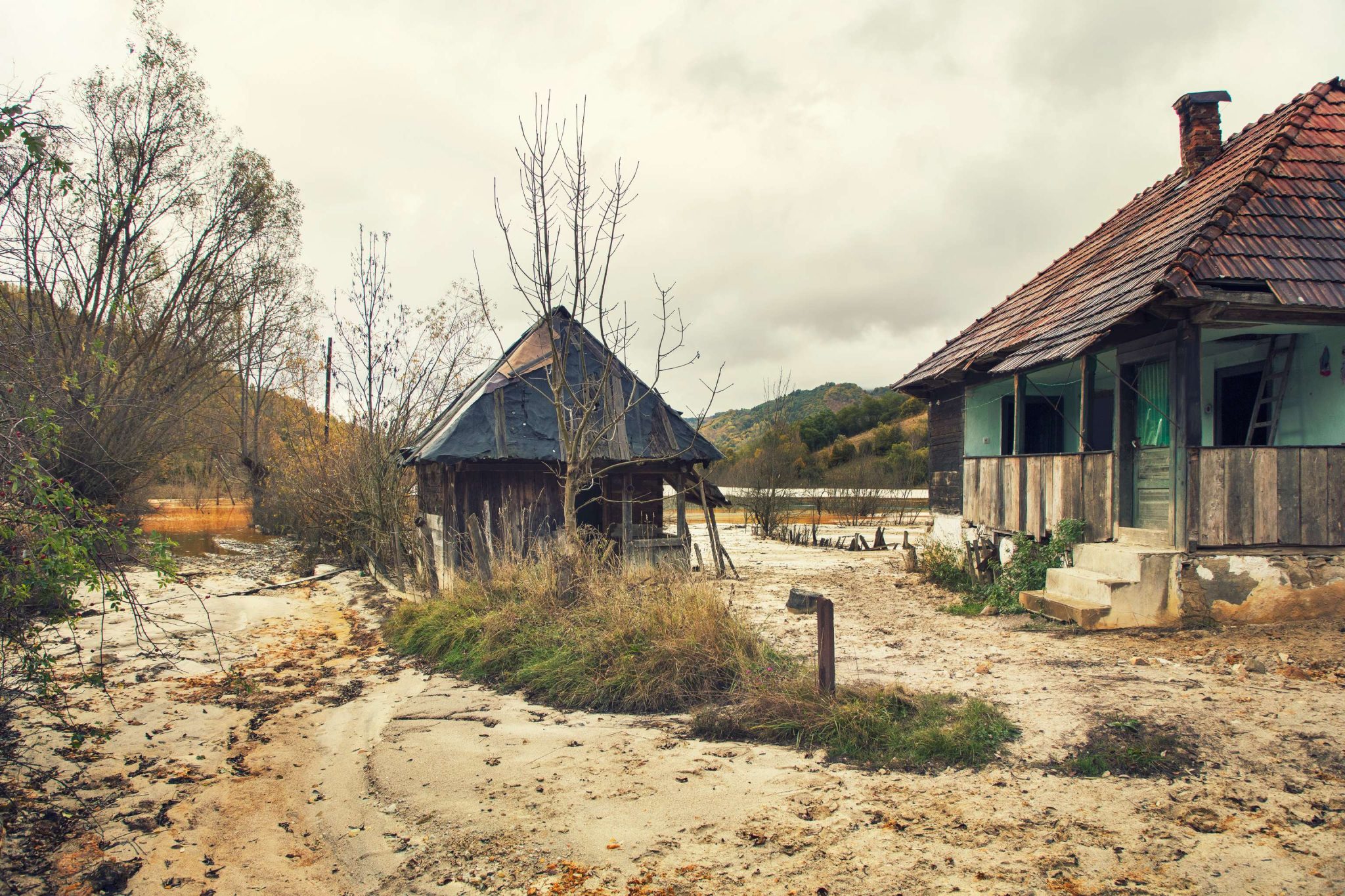
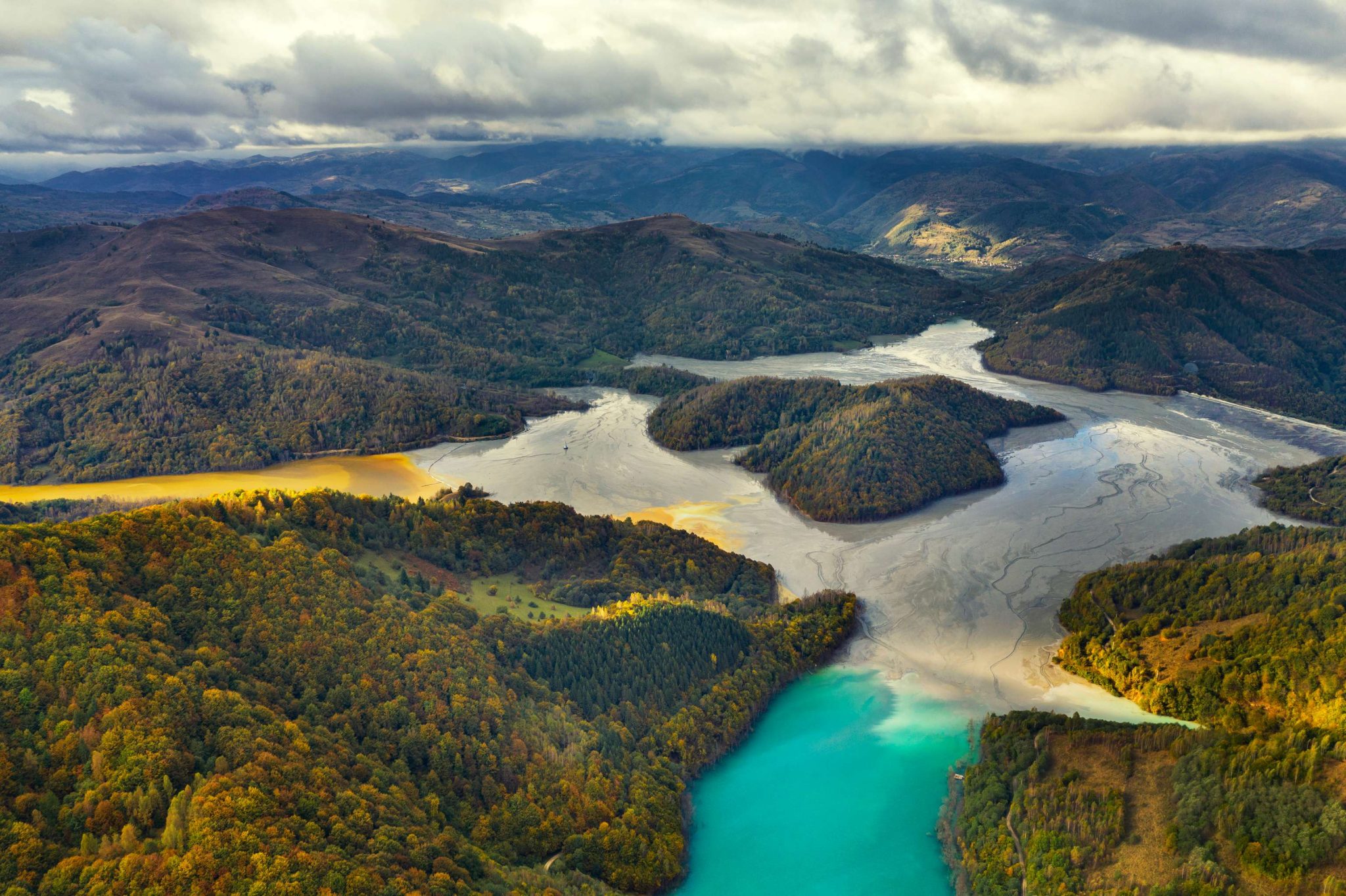
According to most accounts the slurry from ore processing has been flowing into the valley since 1986. The pond now covers around 140 hectares. In 2017 researchers measured a mean depth of 25 metres, and up to 70 at the dam. Reporters and former residents speak of about a metre by which the surface rises each year.
The water is acidic and laden with metals. In the 2017 study the pH of the inflow was about 2; large quantities of iron and aluminium were measured, along with zinc, copper, manganese and cadmium. Cyanide, which is often mentioned, was not found. The researchers put that claim down to confusion with the gold mine at neighbouring Roșia Montană.
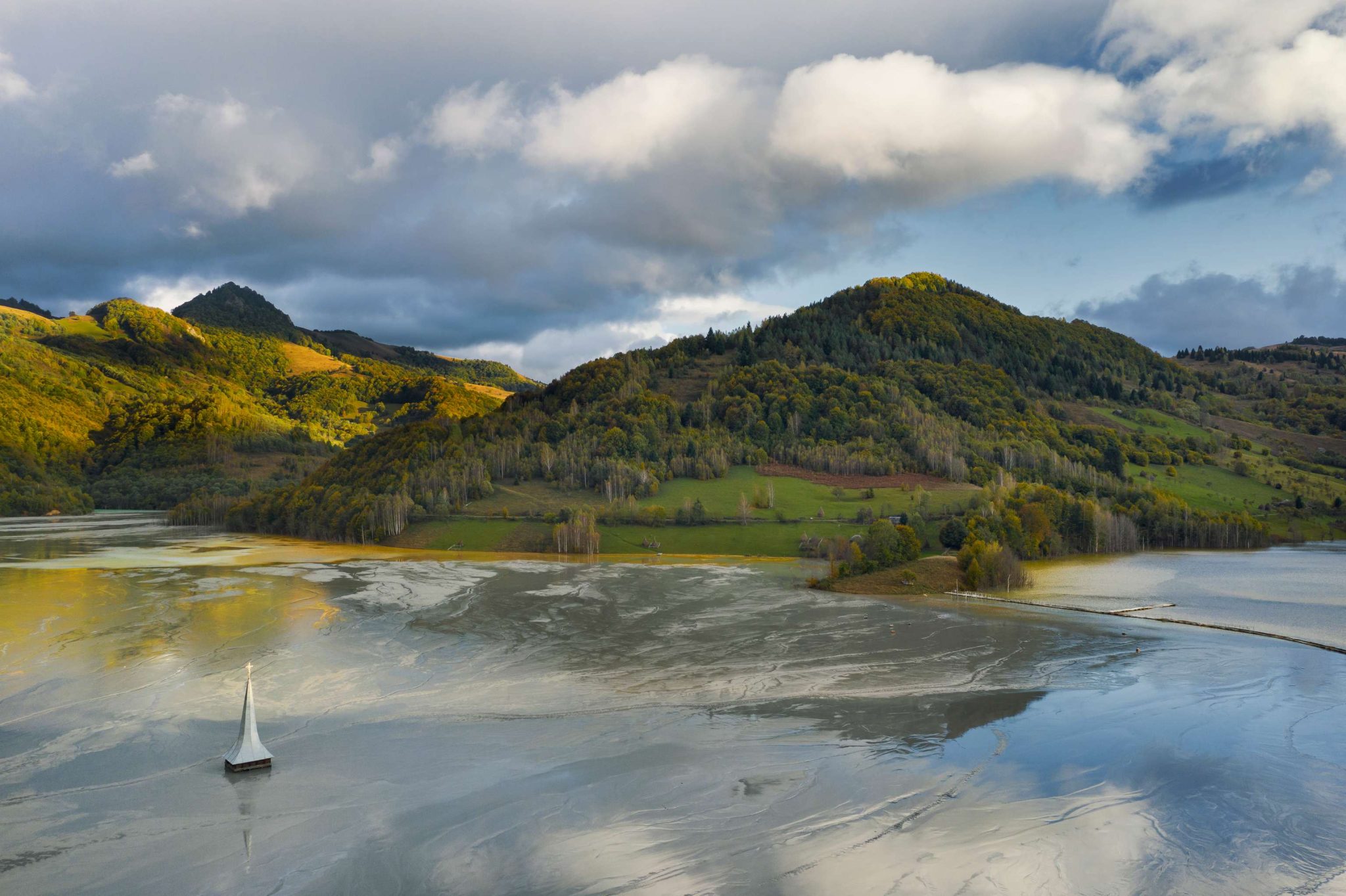
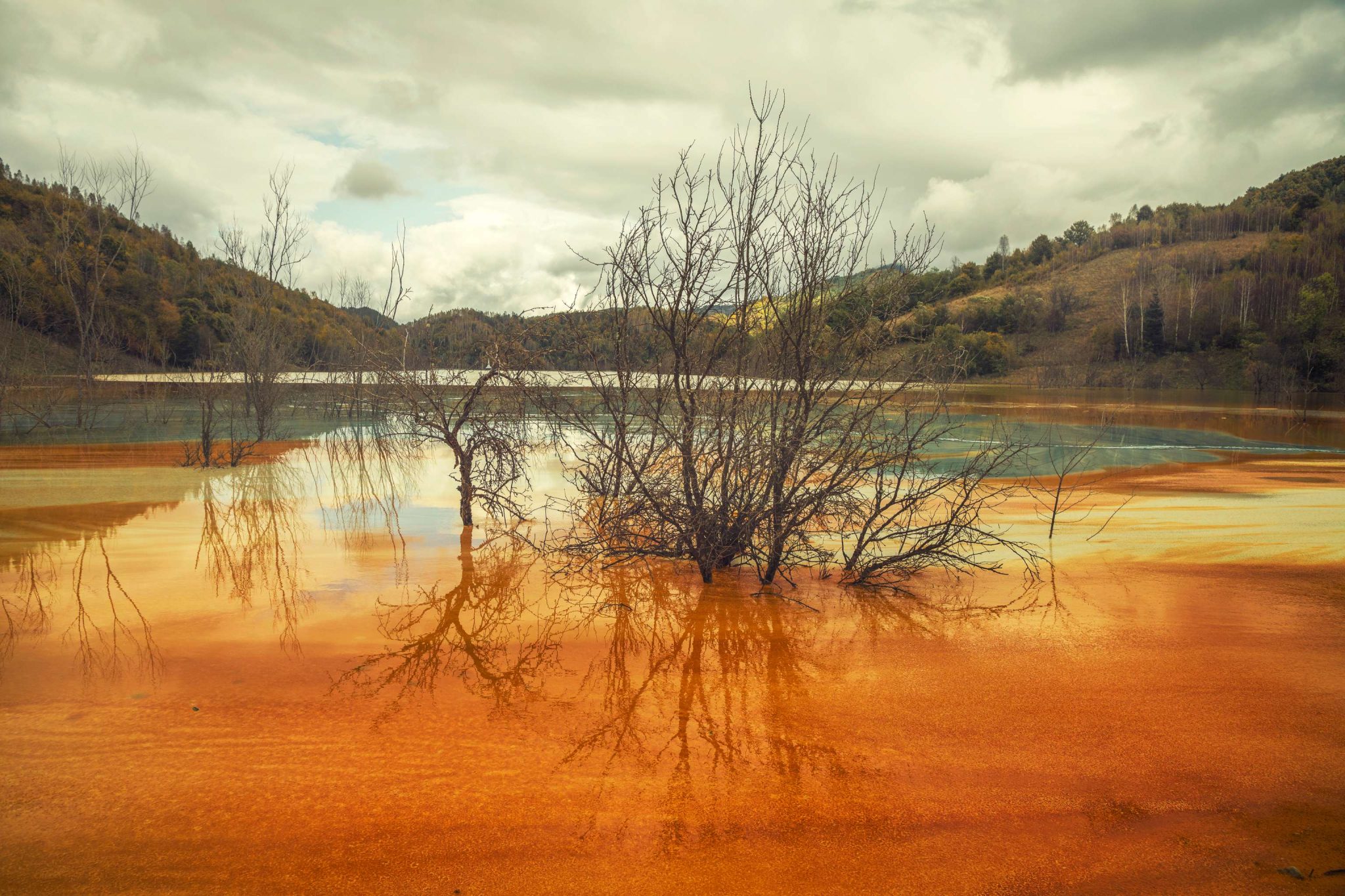
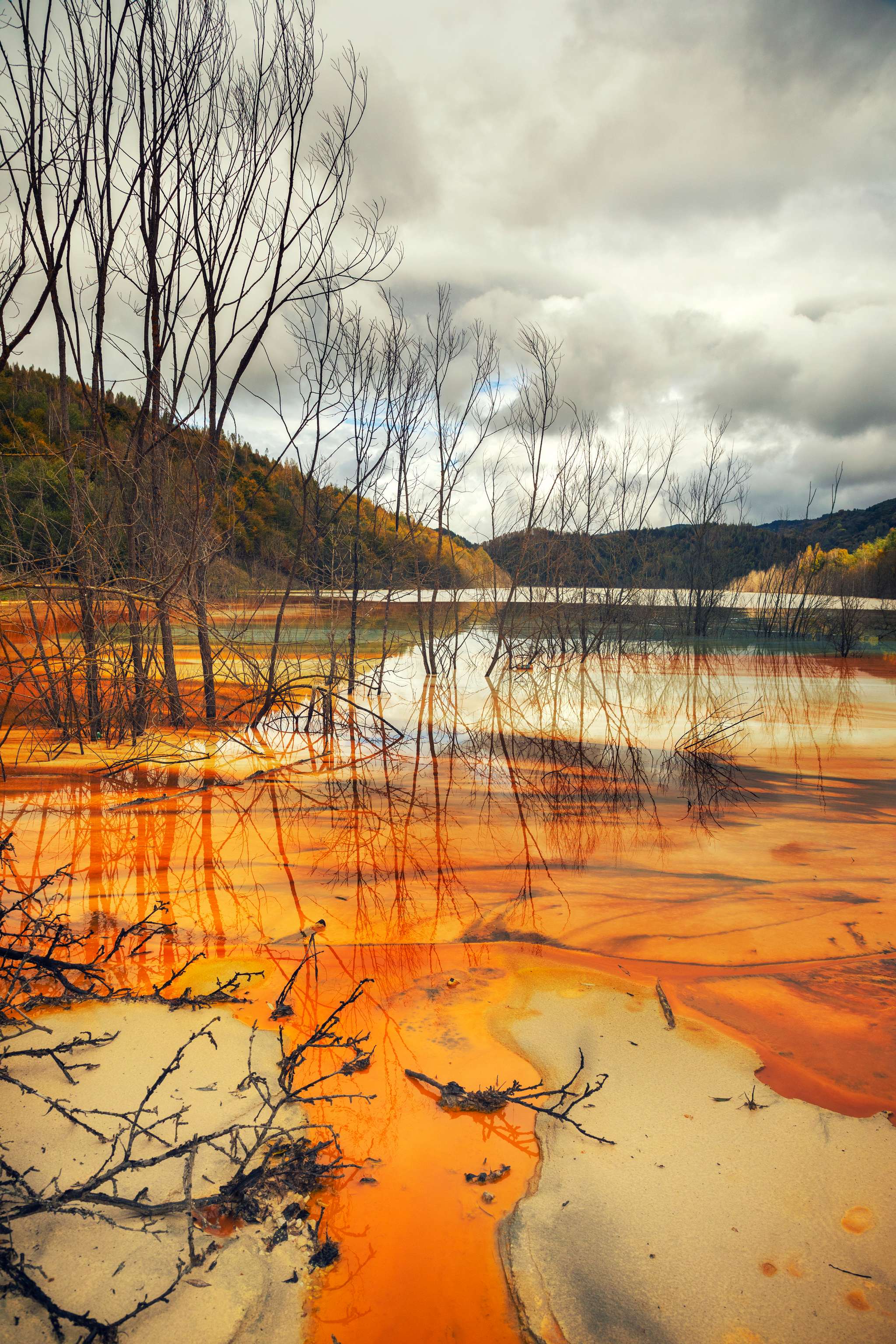
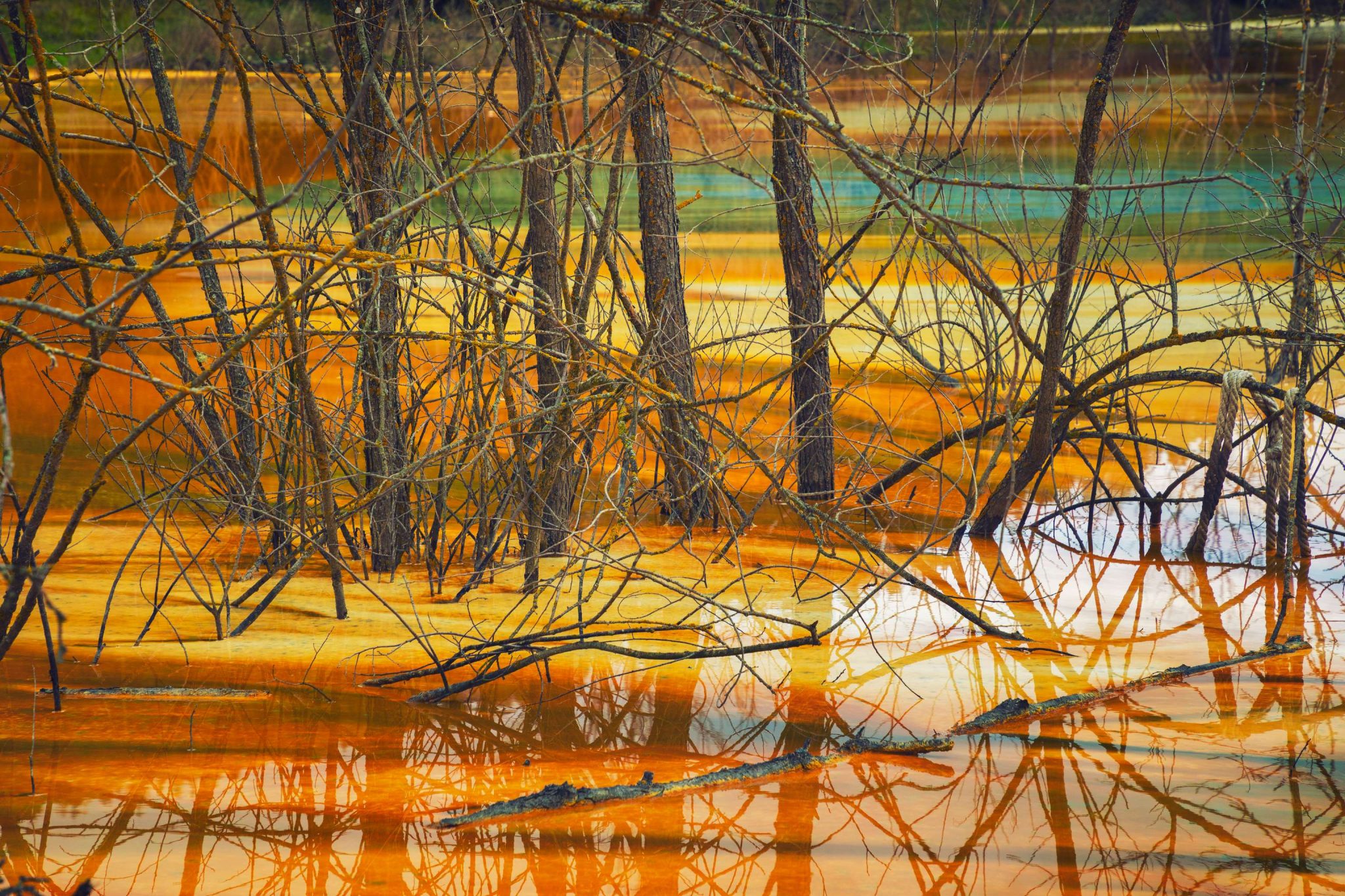
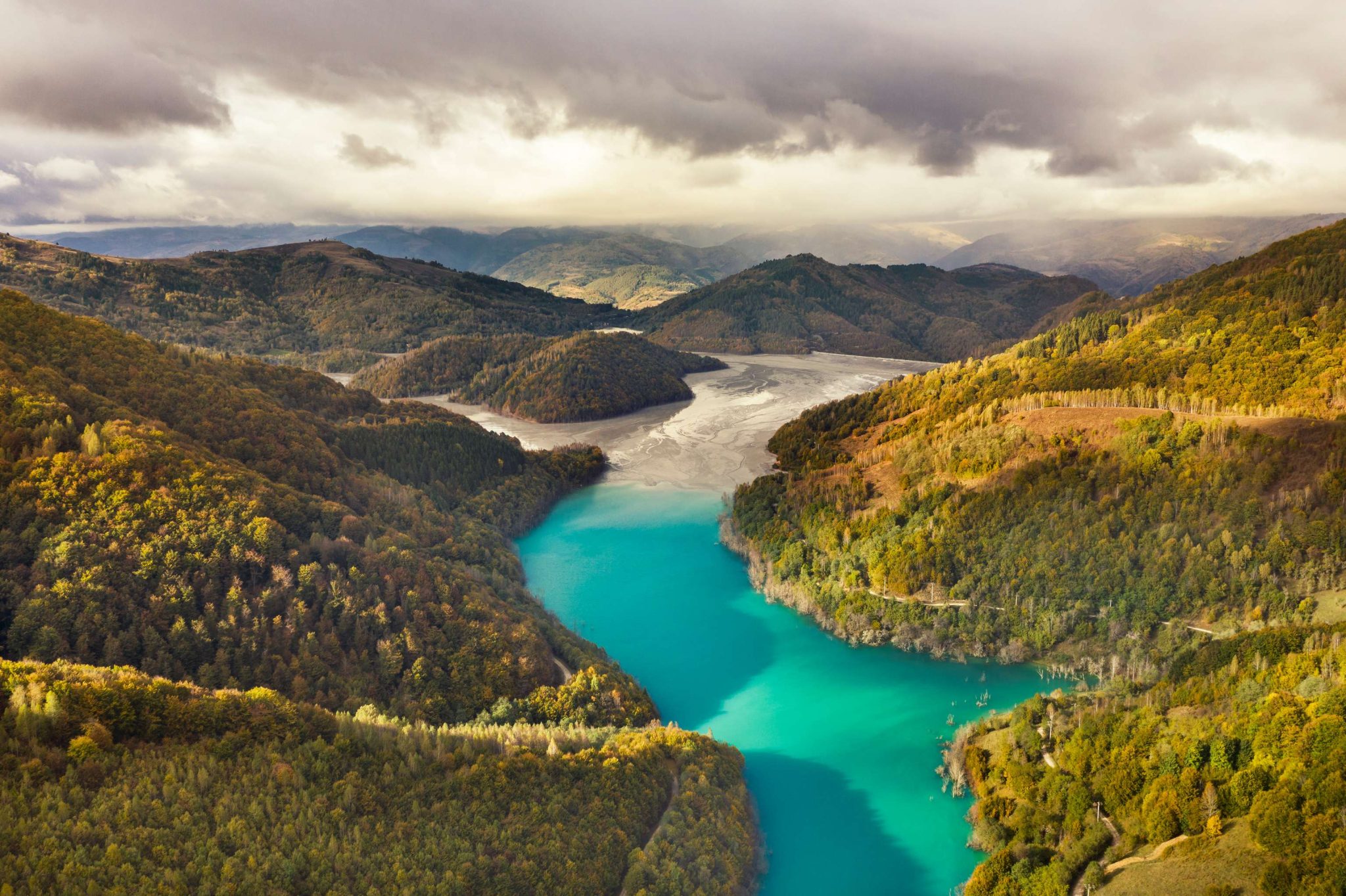
The colours change with whatever happens to be flowing in. Where acid mine water arrives the pond is orange to rust red. The operators feed in milk of lime to bind the acid, and Romania's water authority gives this as the reason why parts of the pond have appeared blue and turquoise for some years.
October 2019
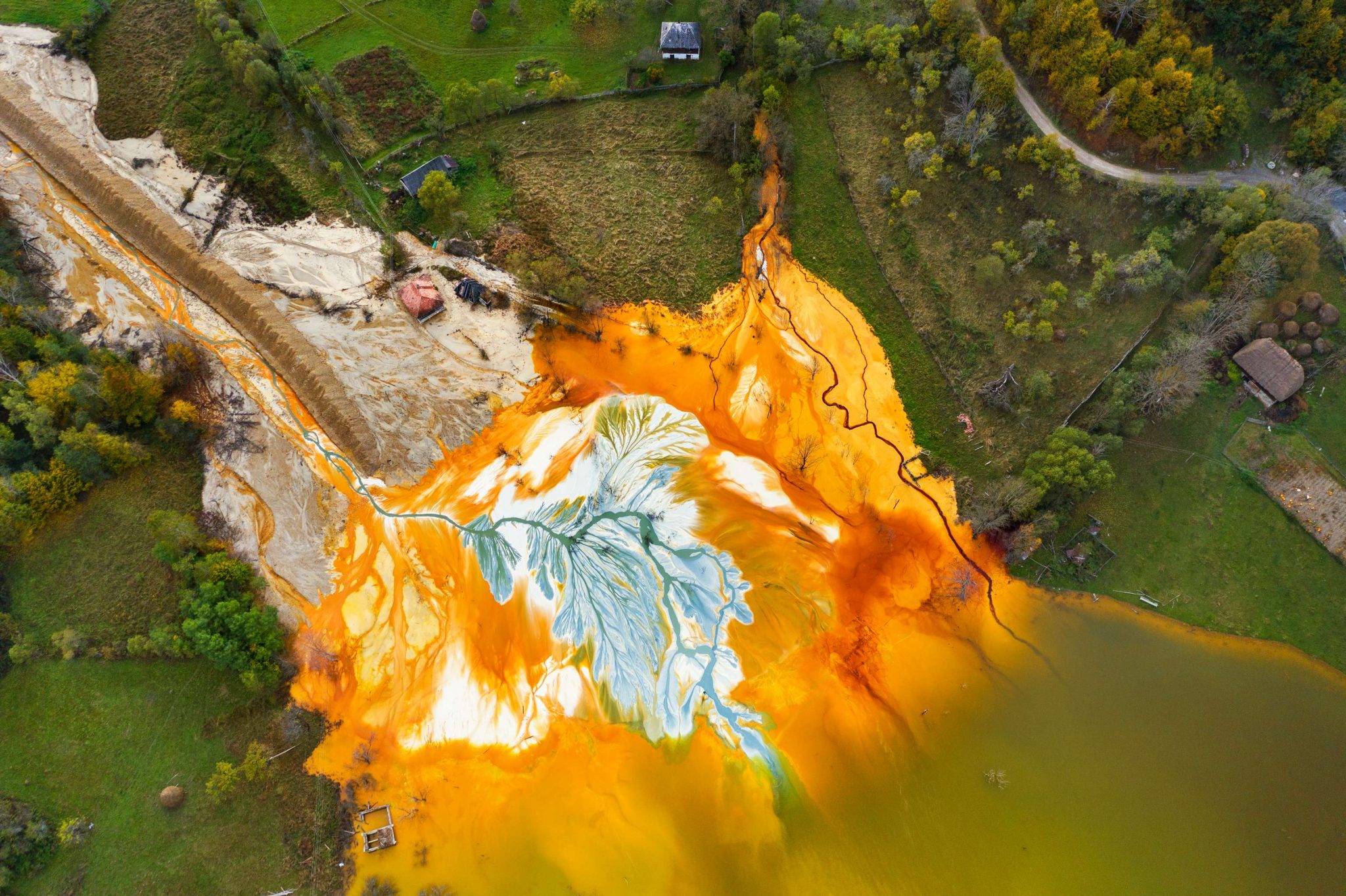
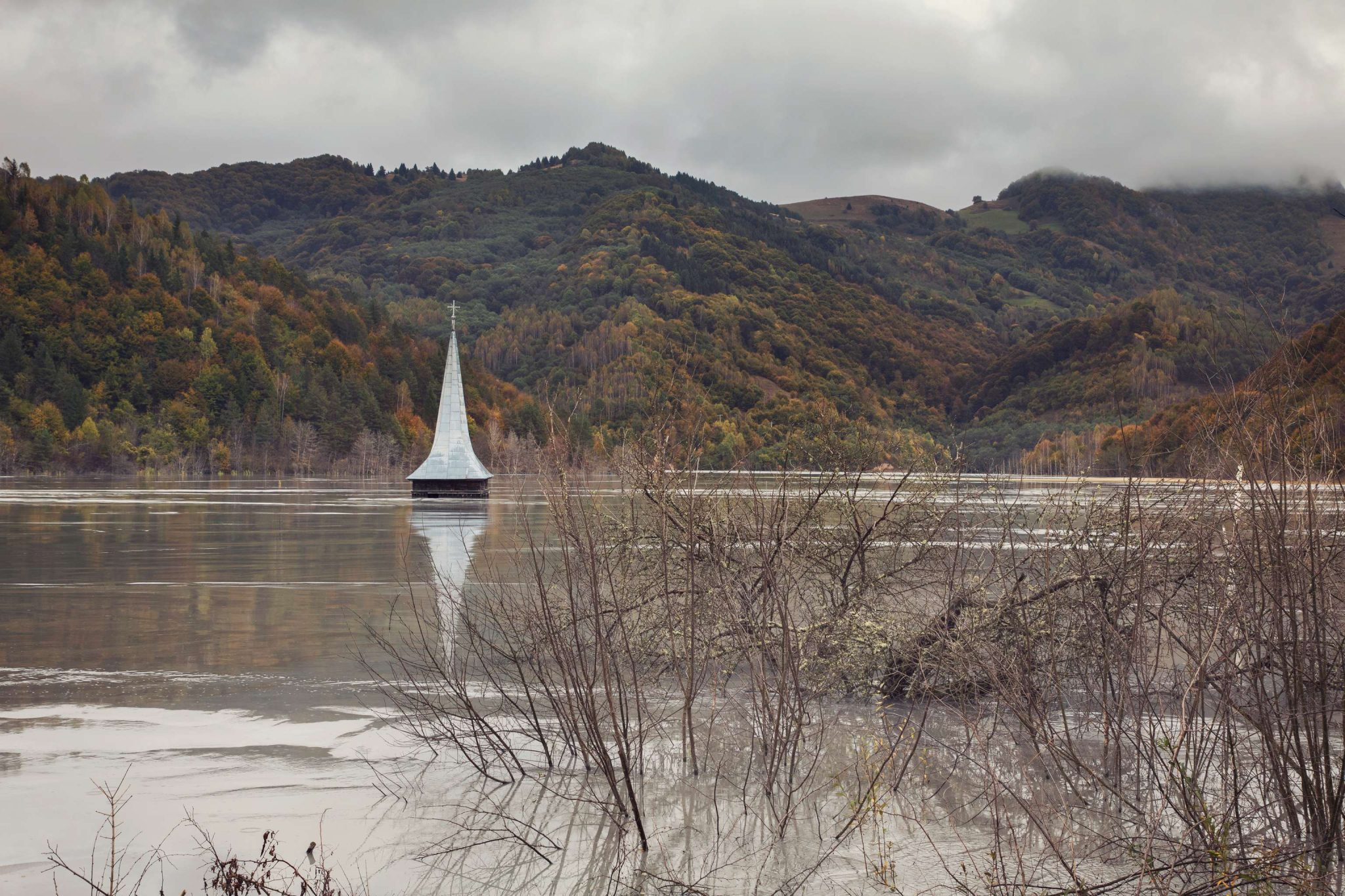
I was at Geamăna in October 2019, on my journey through Romania, and the church spire was still clearly visible then. By now only a small tip is left.
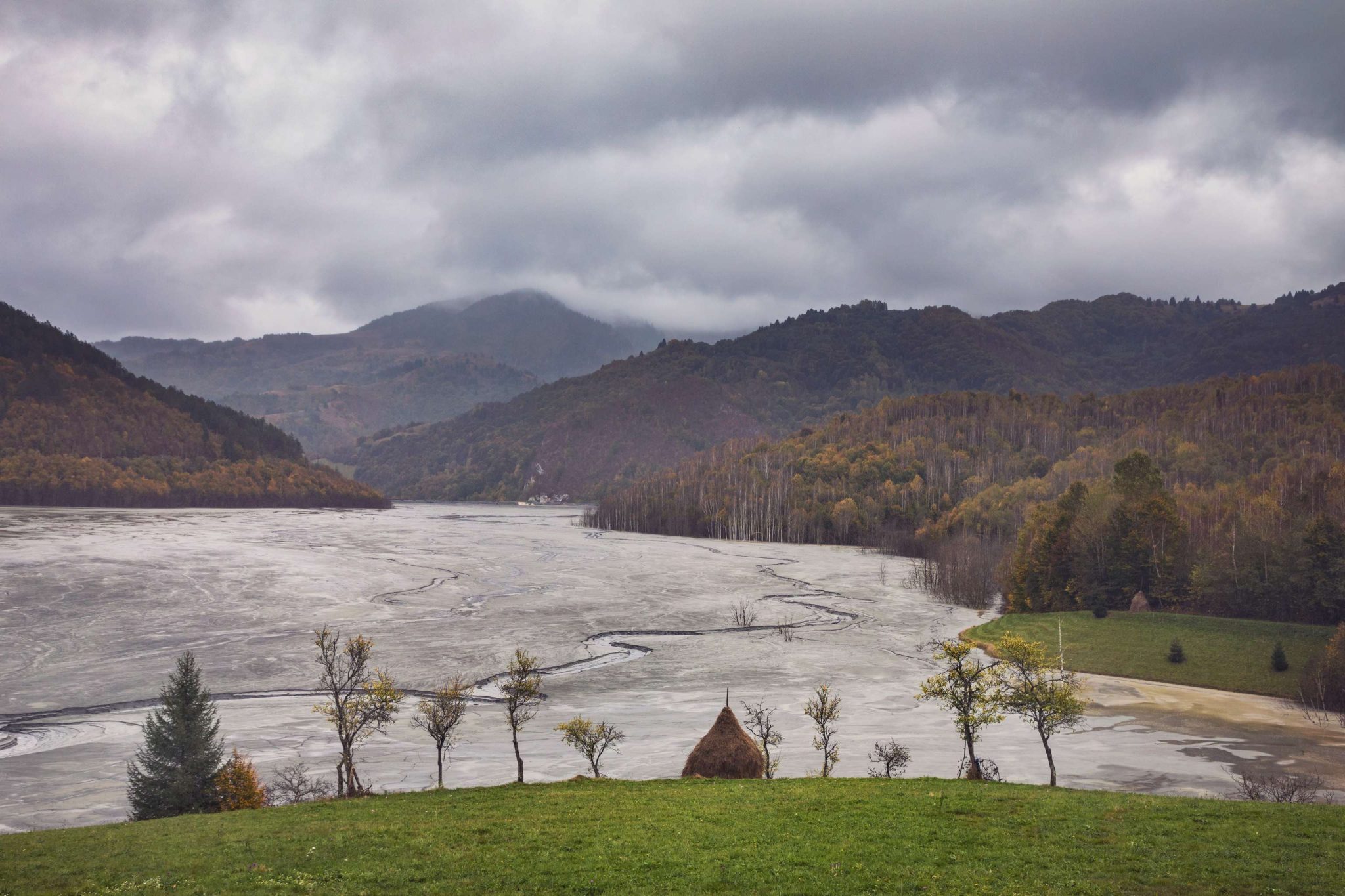
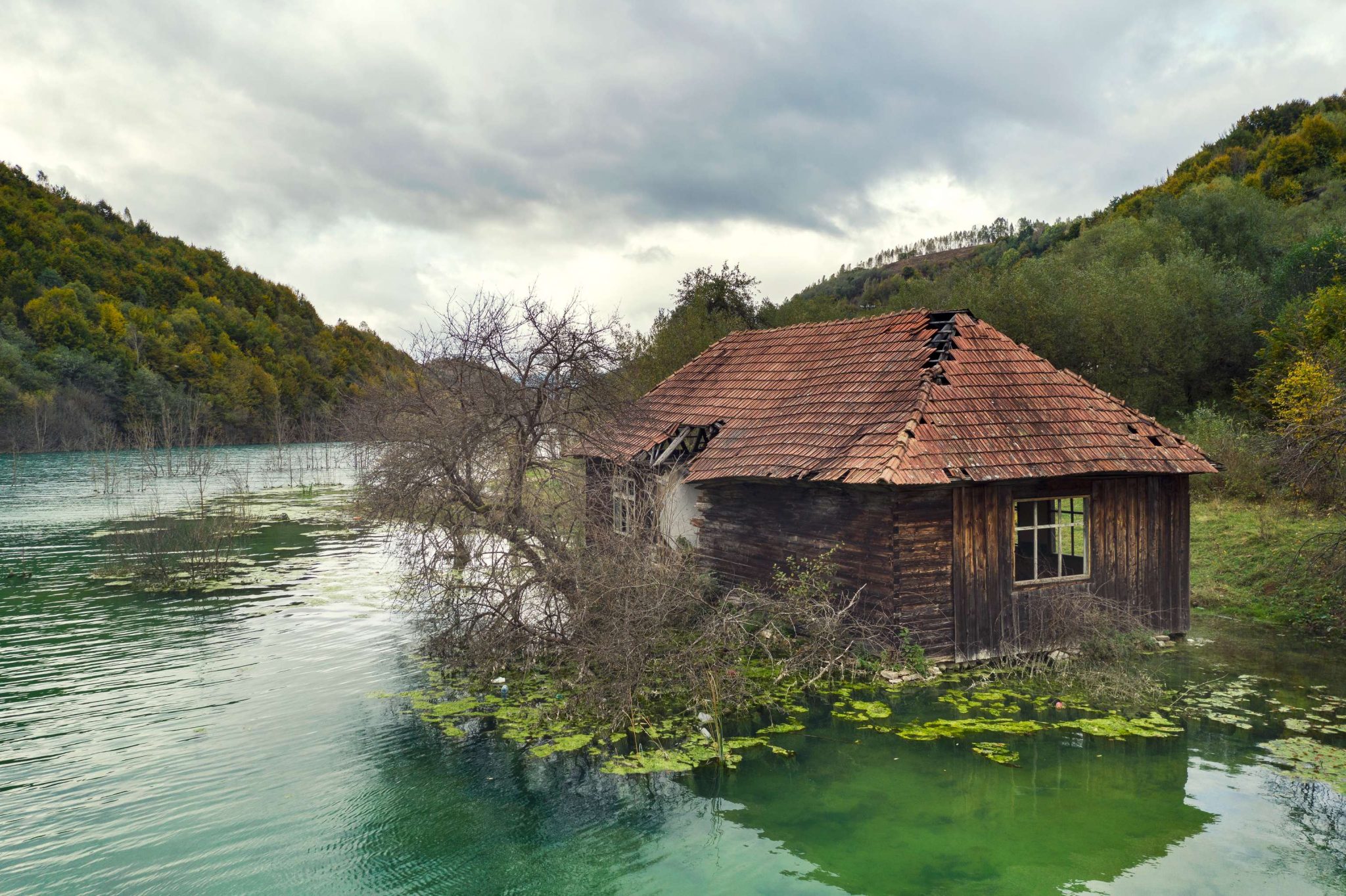
At first glance this thing looks beautiful, and that is exactly what is disturbing about it. The sludge lies in the valley grey, yellowish and fiery red, and in one part the water is an almost Caribbean blue, yet the shore is lined with dead trees and you hear no animals.
And still some life has remained. Only a few metres from the red sludge the pumpkin harvest was beginning in a field, with a few cows grazing beside it. I find it hard to imagine that people feed themselves from this soil and drink the milk of these cows.
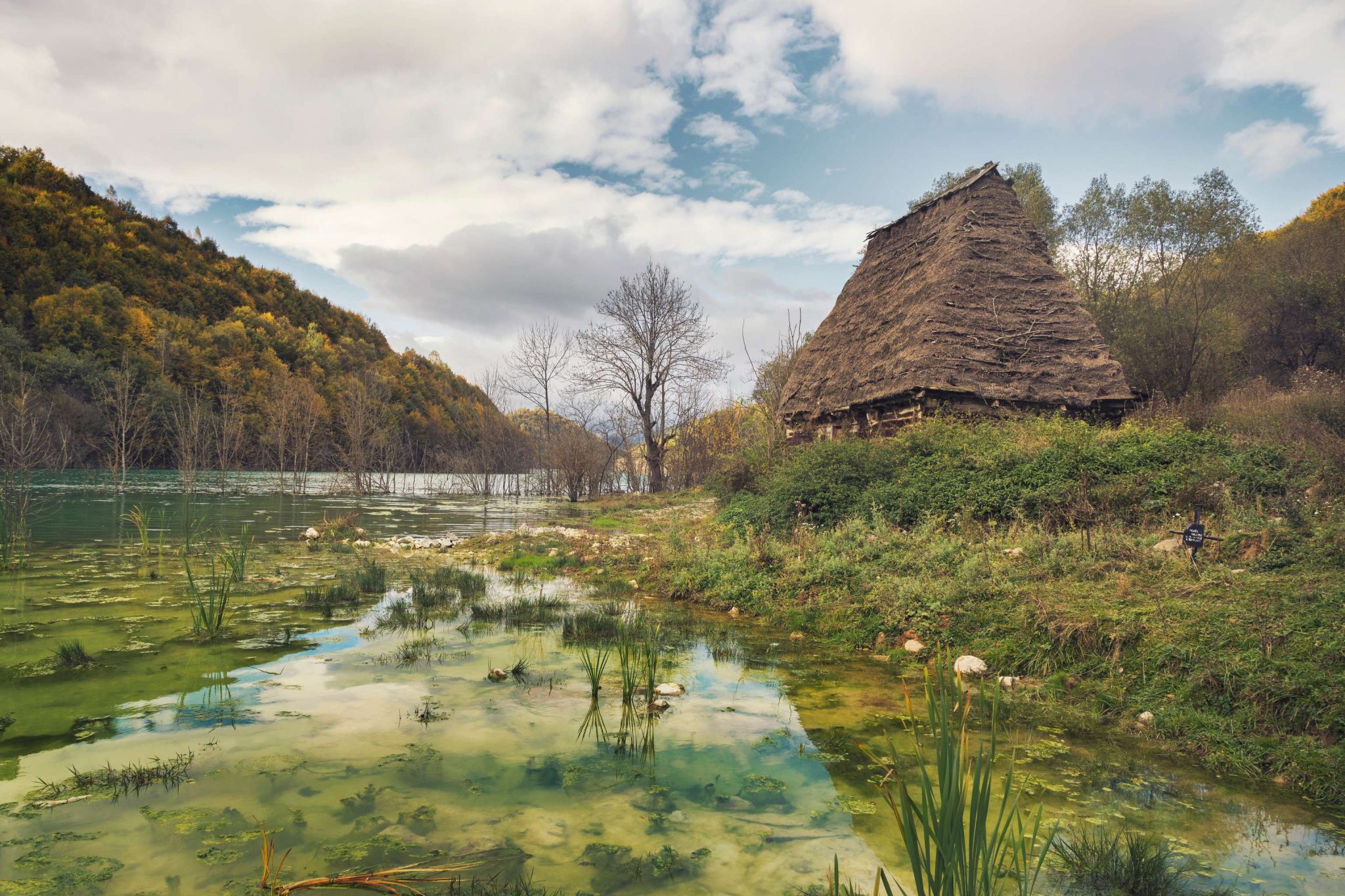
At the shore a gravestone stood in the water.
Who still lives at Geamăna?
Very few. In 2019 the regional newspaper Unirea counted about ten residents, most of them old and alone; other reports from those years give fifteen to twenty. They have moved up the slope as the sludge rose. In October 2025 a reporter from the same paper found only one woman left, 78 years old, the pond a few metres from her house. The water there can no longer be used; she fetches drinking water from two kilometres away.
The pond keeps growing
The mine now belongs to the state-owned Cupru Min of Abrud and is still working. In April 2017 an old discharge structure failed and about 6,000 cubic metres of water and sludge ran down the stream into the River Arieș; the environmental authority imposed a fine of 100,000 lei.
The dam, once 70 metres high, has since been raised to around 100 metres. In May 2026 Cupru Min applied to raise it by a further two metres. In 2023 the economy minister had said that future production depended on this pond.
The pictures
Eighteen photographs from Geamăna, taken in October 2019 from the shore and from the air.

Sources and further background
This story draws on the following sources.
- Drama locuitorilor din Geamăna, satul dispărut sub steril. Adevărul, 05.11.2023 , accessed 11. November 2026
- Satul idilic din Apuseni dispărut sub o mare de steril. Adevărul, 10.08.2018 , accessed 11. November 2026
- Viața tragică a locuitorilor care trăiesc în satul Geamăna. Ziarul Unirea, 28.10.2019 , accessed 11. November 2026
- O viață trăită lângă tău. Ziarul Unirea, 20.12.2025 , accessed 11. November 2026
- Geamăna, satul fericit din Apuseni devorat de un iaz de steril. G4Media, 18.11.2019 , accessed 11. November 2026
- The Slow Death Of A Romanian Village. Radio Free Europe/Radio Liberty, 2017 , accessed 11. November 2026
- Rzymski u. a.: The chemistry and toxicity of discharge waters from copper mine tailing impoundment in the valley of the Apuseni Mountains in Romania. Environmental Science and Pollution Research, 2017 , accessed 11. November 2026
- Cum și-a schimbat culoarea iazul de la Valea Șesii. Alba24, 10.05.2021 , accessed 11. November 2026
- Undă verde pentru supraînălțarea barajului de la Valea Șesei. Alba24, 03.10.2020 , accessed 11. November 2026
- Proiect pentru supraînălțarea barajului de la iazul de decantare Valea Șesei. Alba24, 19.05.2026 , accessed 11. November 2026
- Amendă de 100.000 de lei pentru Cupru Min. Alba24, 11.04.2017 , accessed 11. November 2026
- 6.000 de metri cubi de steril au ajuns în râul Arieș. Observator News, 04.04.2017 , accessed 11. November 2026
- Istoric. Cupru Min S.A. Abrud , accessed 11. November 2026
- Secretele marilor munți de cupru din România. Adevărul, 12.02.2025 , accessed 11. November 2026
- Producția viitoare de la Cupru Min depinde de iazul de decantare. Financial Intelligence, 21.08.2023 , accessed 11. November 2026
Related stories
All stories →

Share