


Stories · Places · United Kingdom, Scotland
Dunalastair House: A Scottish ruin in the autumn woods
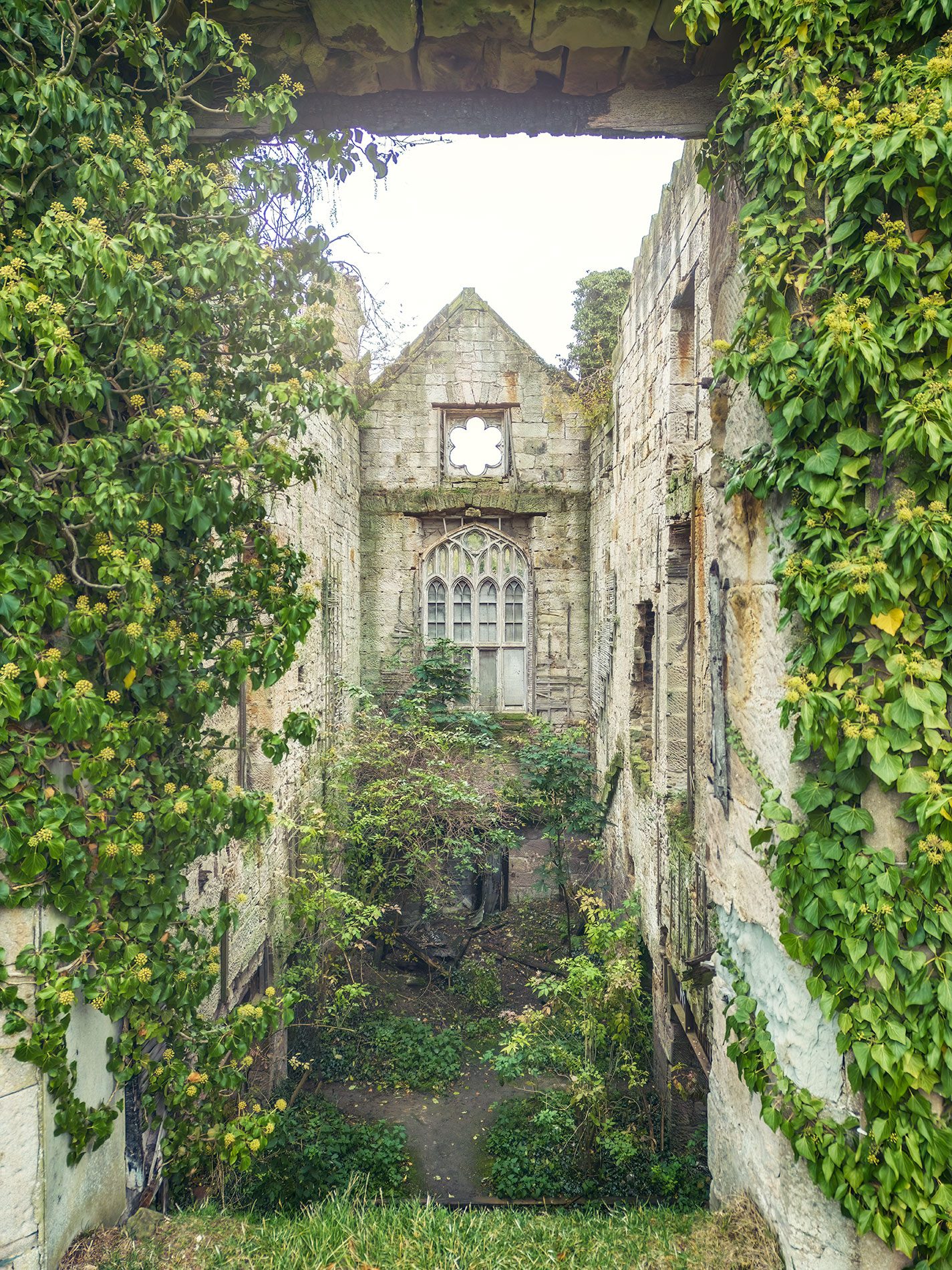
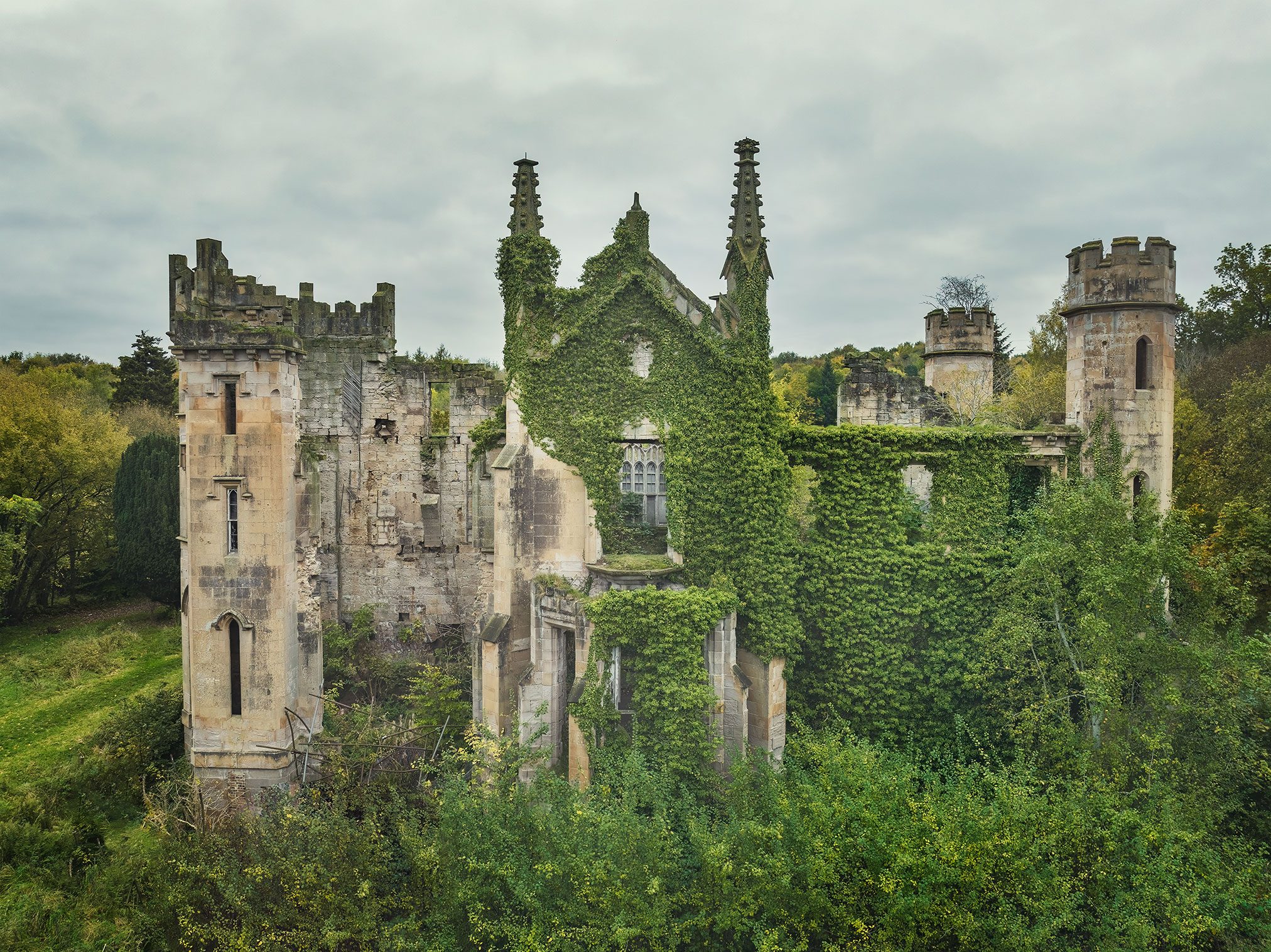
A general builds himself a turreted mansion in the Scottish Highlands. A hundred years later the lead has been stolen from the roof and the woods are closing in. I photographed Dunalastair House from the air in the autumn of 2022 and want to return, in every season.
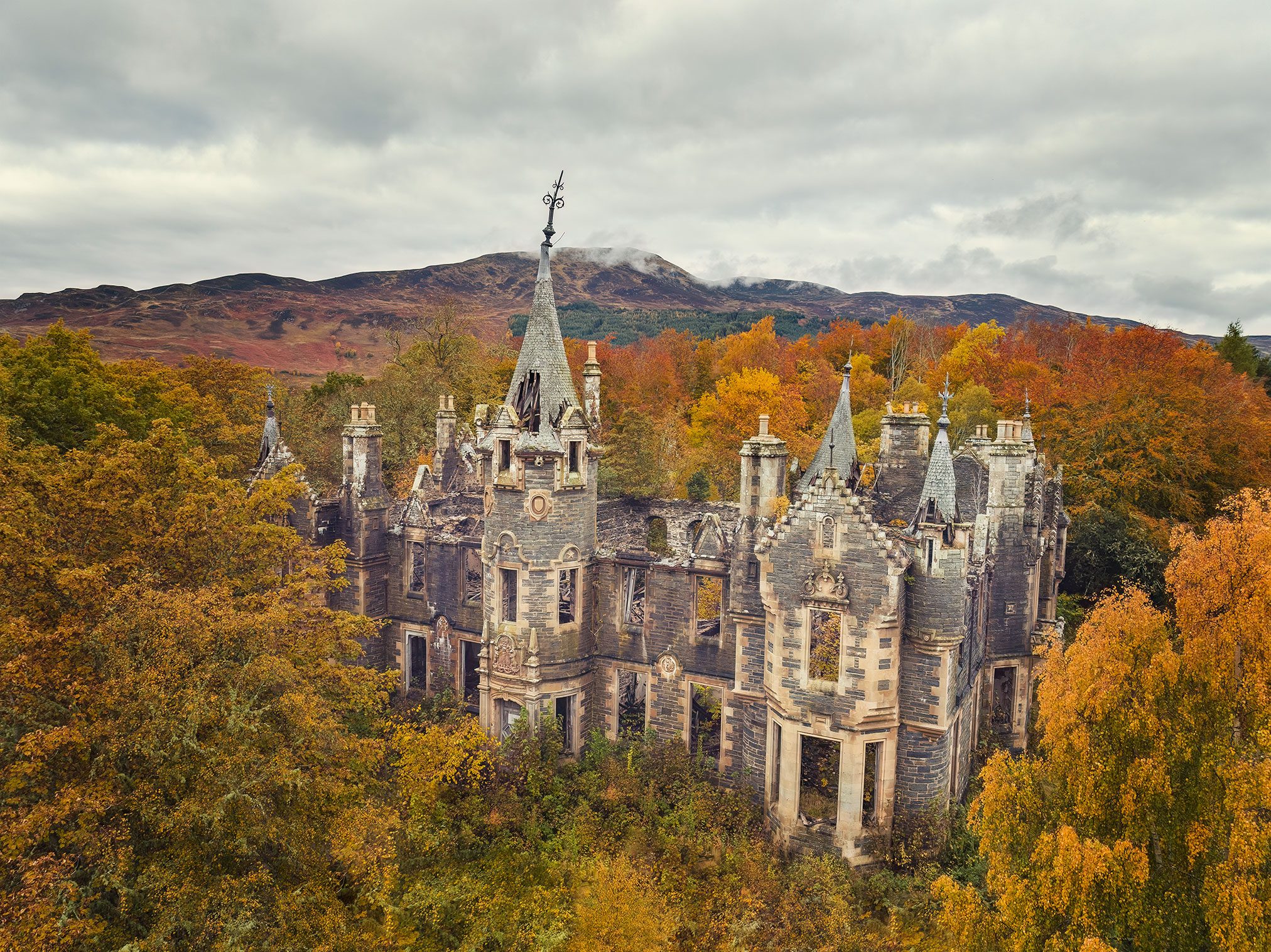
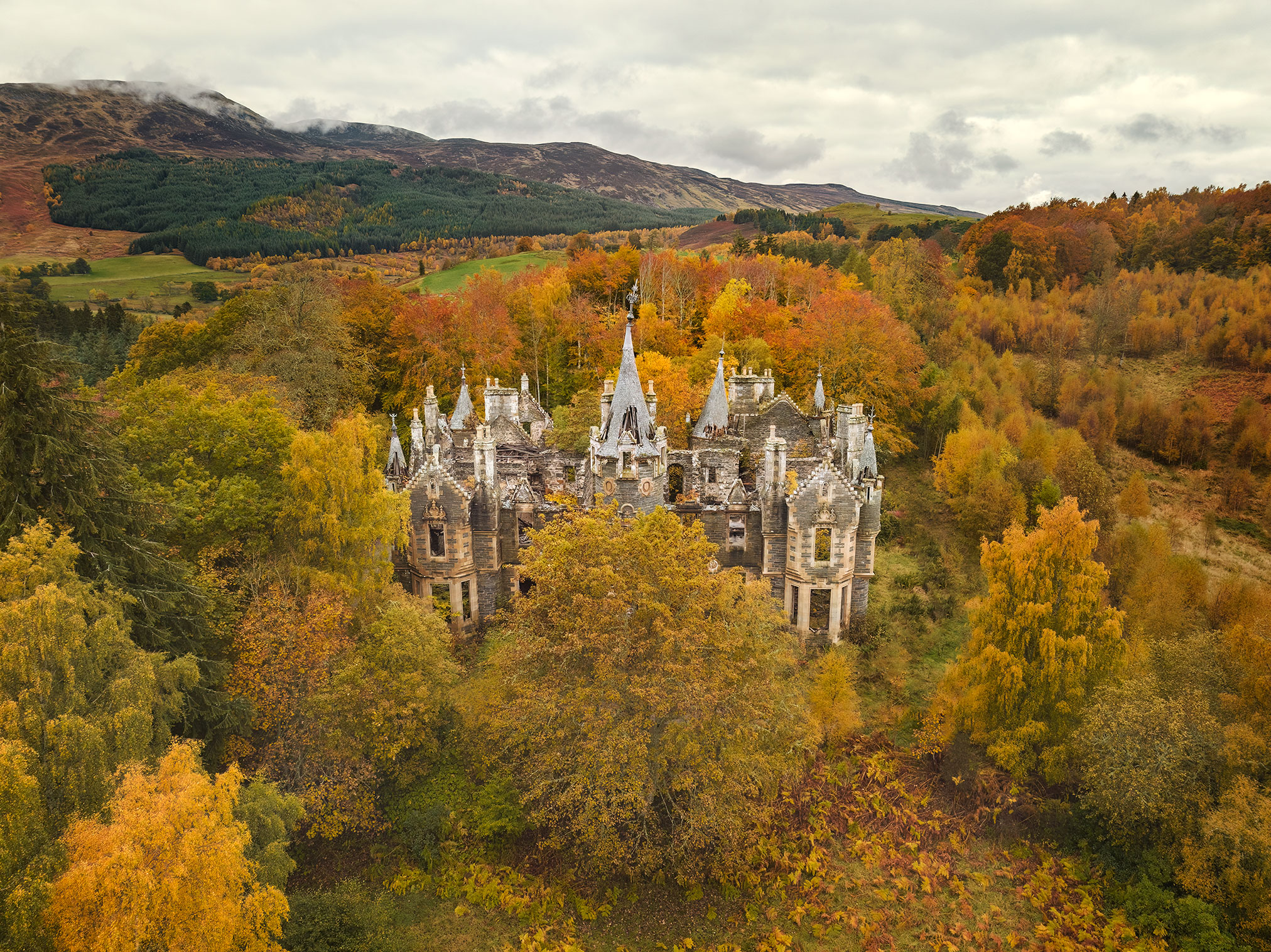
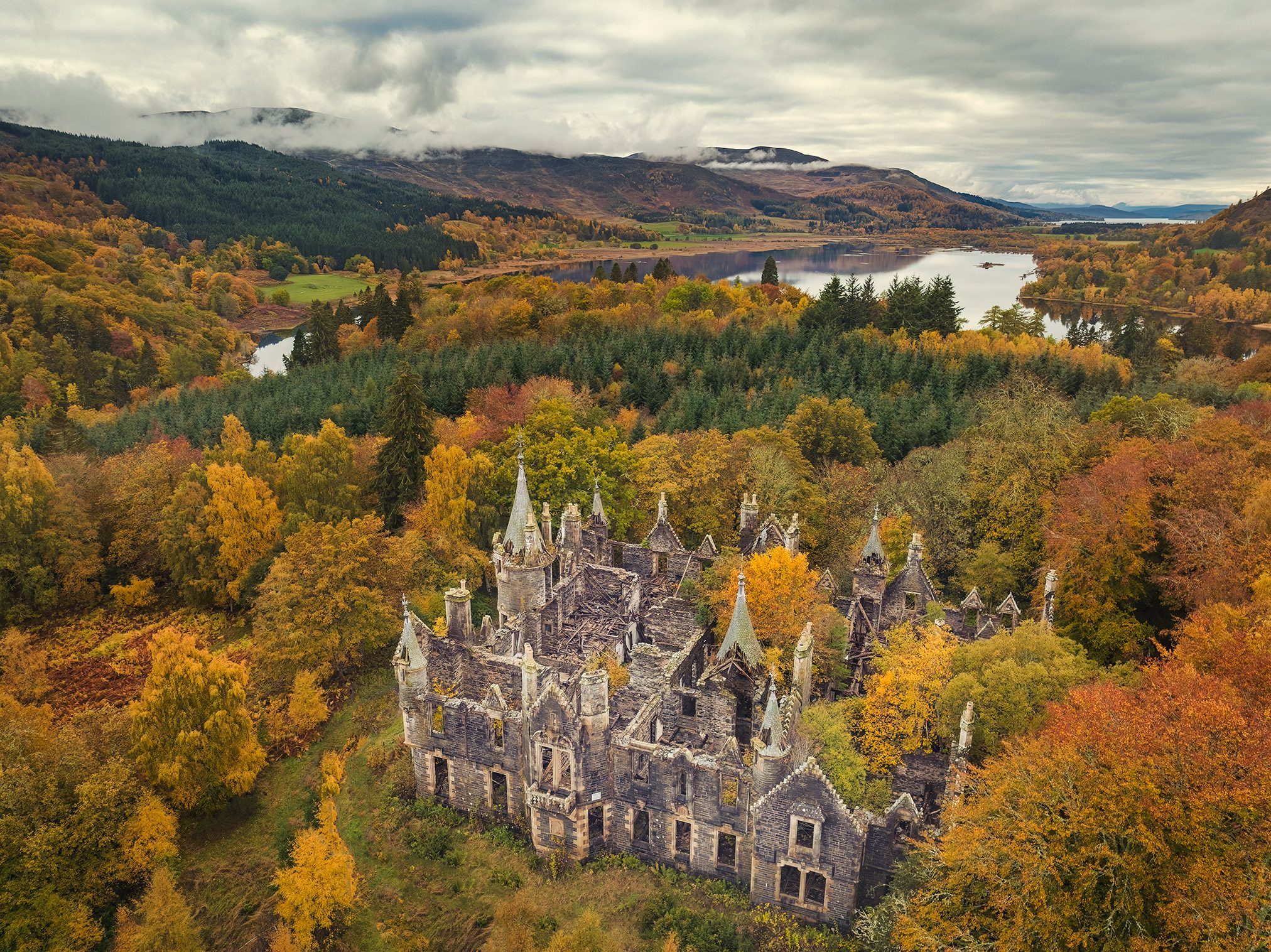
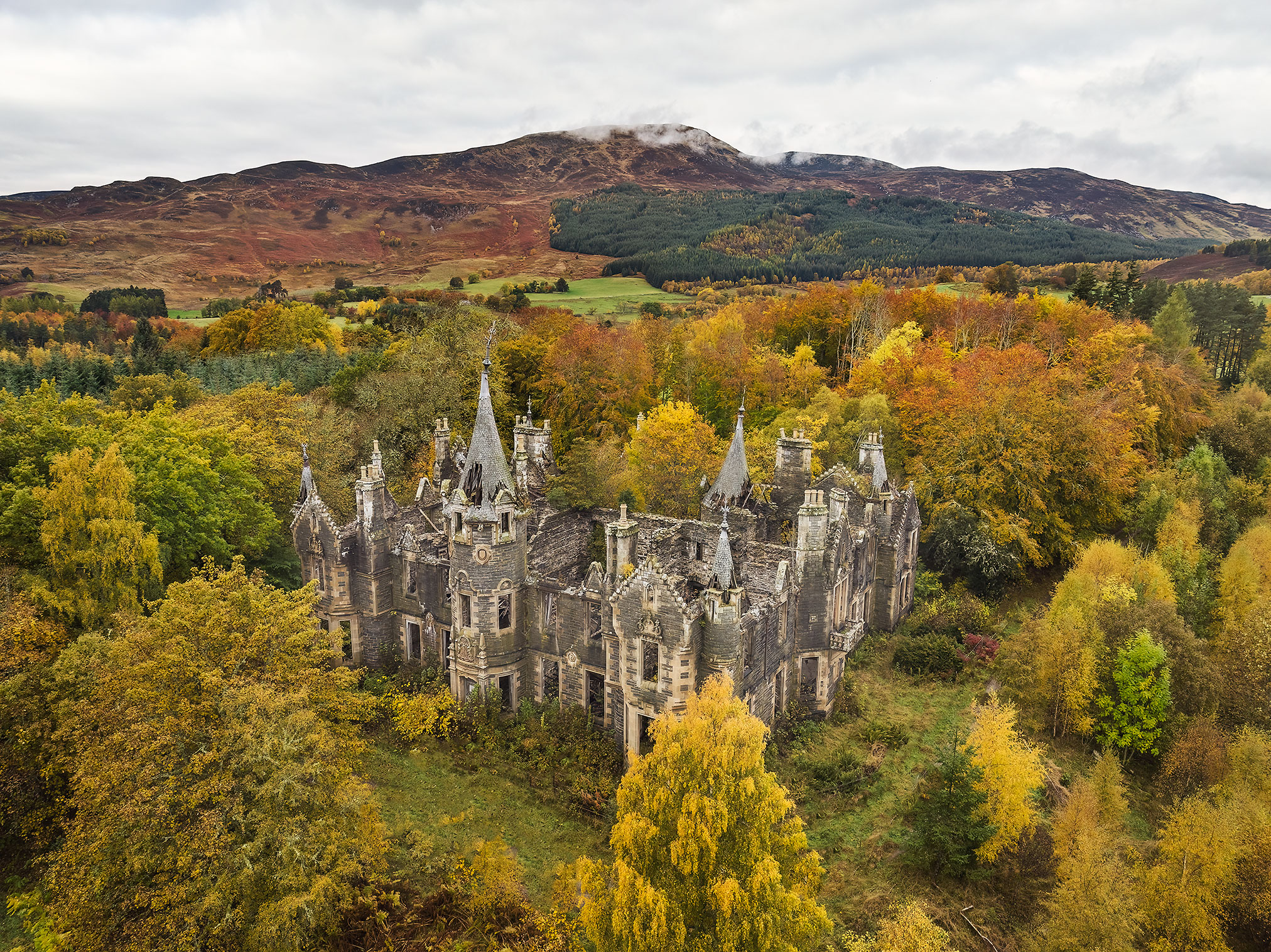
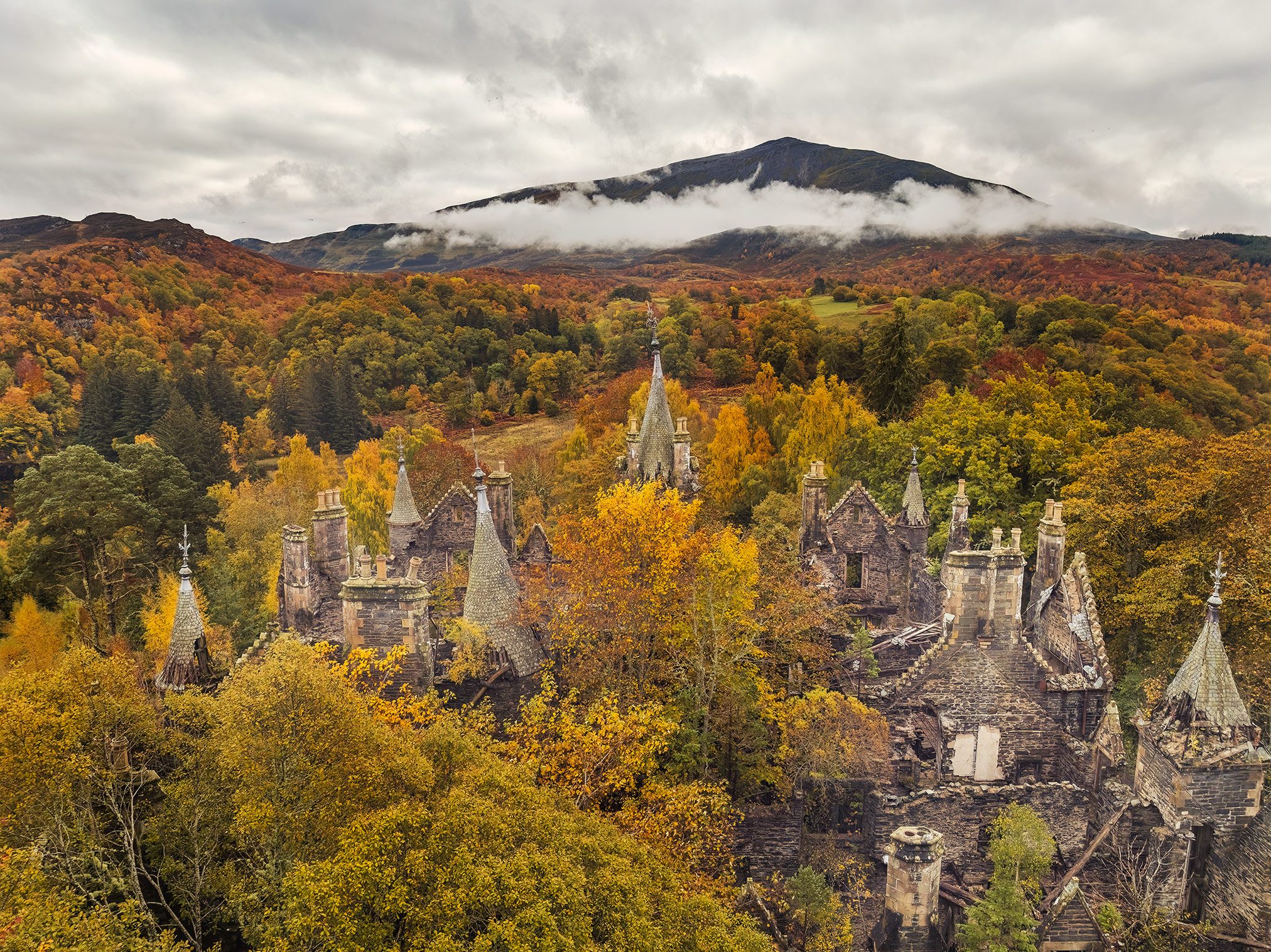
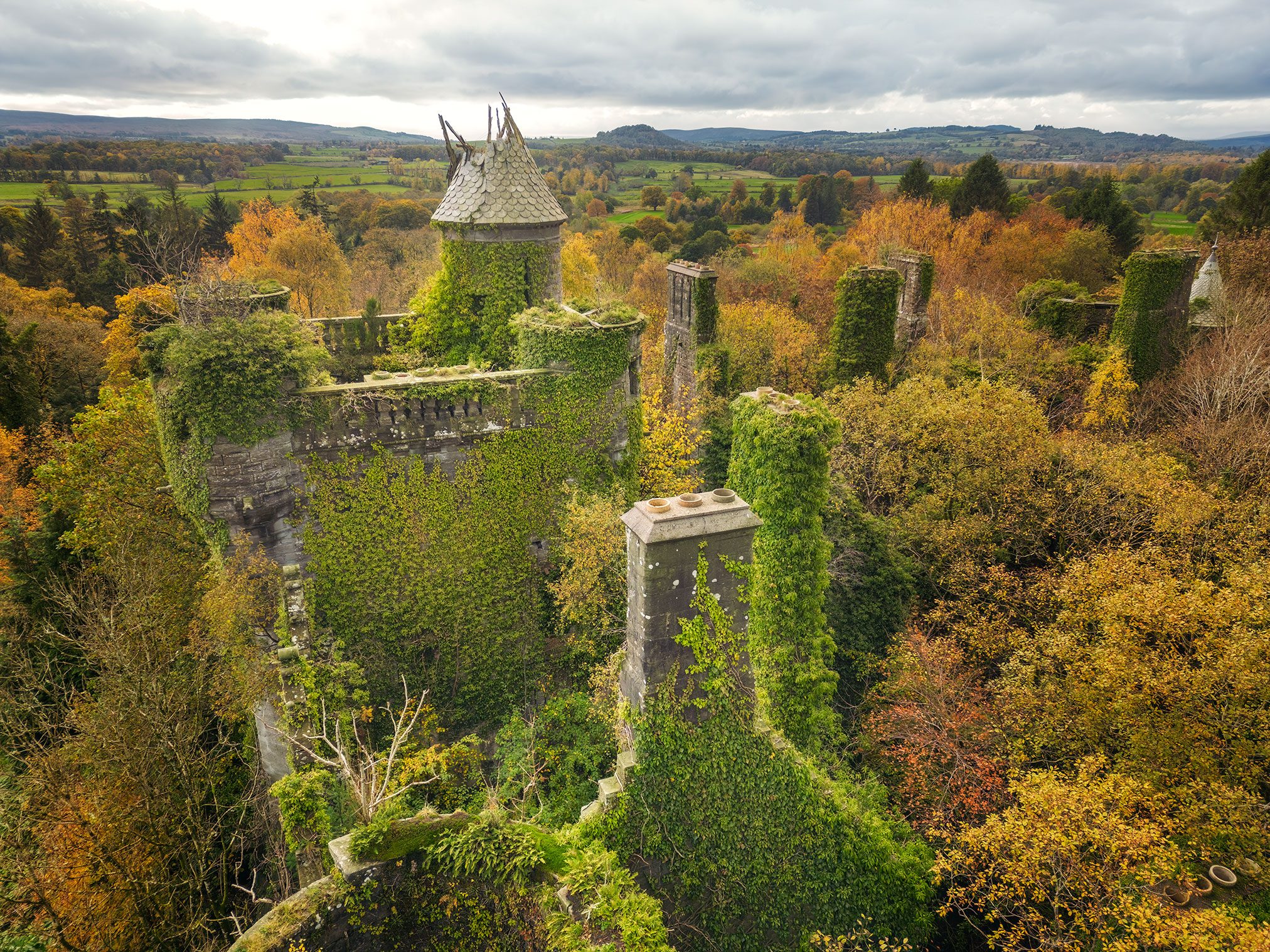
In the autumn of 2022 the leaves around Dunalastair House were exactly at their peak: gold, orange and rust right up to the walls. In the middle stands the ruin of a mansion with turrets and spires, roofless, uninhabited for more than seventy years. It lies in Perthshire in Scotland, between Loch Rannoch and Loch Tummel.
At a glance
Dunalastair House
- Location
- Dunalastair Estate near Kinloch Rannoch, Perthshire, Scotland
- Built
- after 1853, completed 1859 (register: 1852)
- Architect / client
- Andrew Heiton, Perth, for General Sir John Macdonald of Dalchosnie
- Usage
- Mansion; a school for Polish children during the Second World War
- Abandoned since
- 1952
- Condition
- Roofless ruin, listed, recorded in the buildings at risk register as ruinous and at high risk; private property
- Visited
- Autumn 2022
- Series
- RUINS AND REVERIE
A house for a general
For centuries the land belonged to the Robertsons of Struan, chiefs of Clan Donnachaidh. One of them, the poet and Jacobite Alexander Robertson, lived here in a house he called the Hermitage. After the rising of 1745 it burned down. Around 1800 a double tower house named Mount Alexander was built on the site.
In 1853 the 18th chief sold the estate to General Sir John Macdonald of Dalchosnie. He had the old house pulled down and a new one built to designs by the Perth architect Andrew Heiton. The estate's own history gives 1859 as the year of completion; Scotland's register of buildings at risk lists the house under 1852.
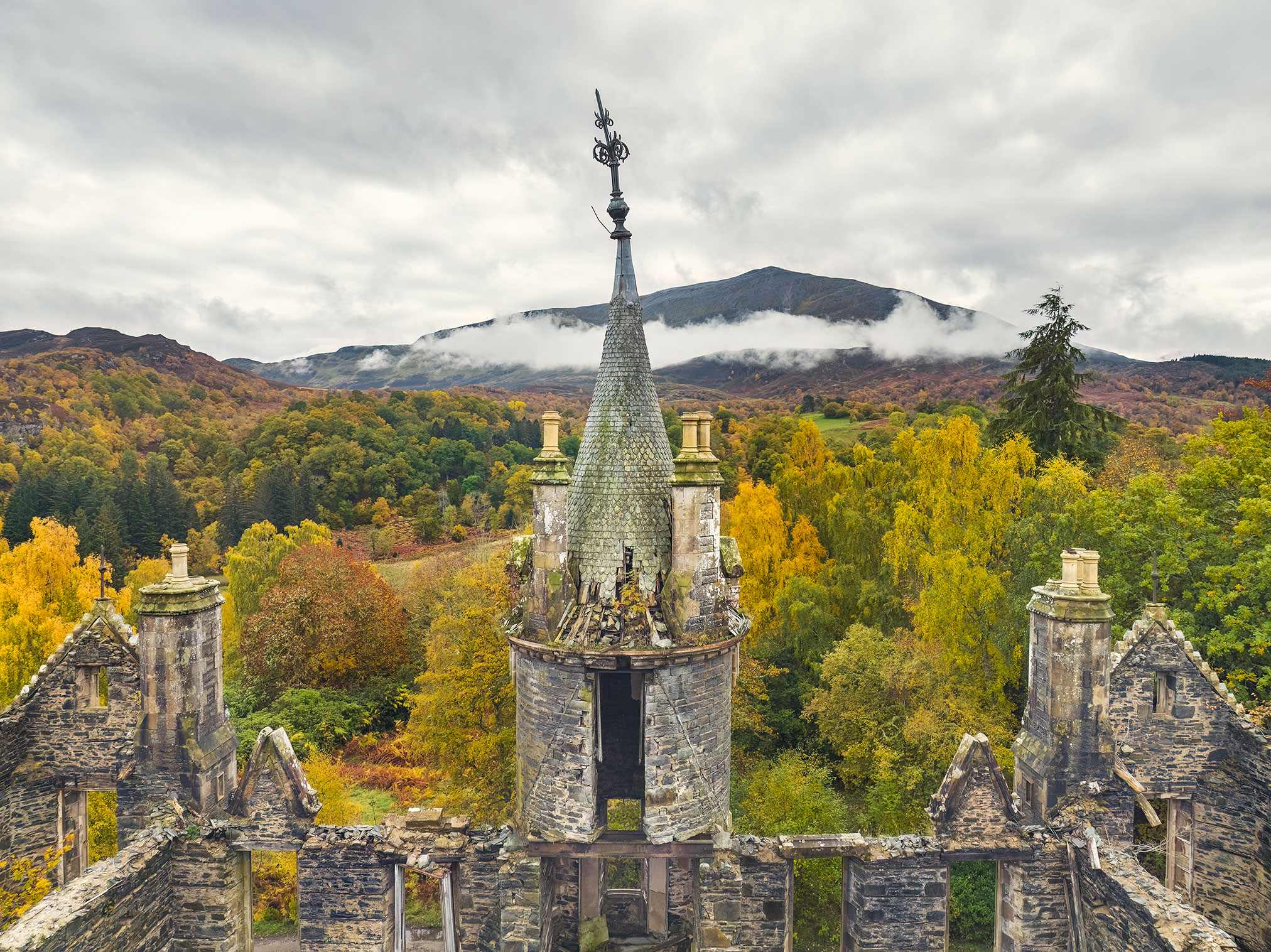
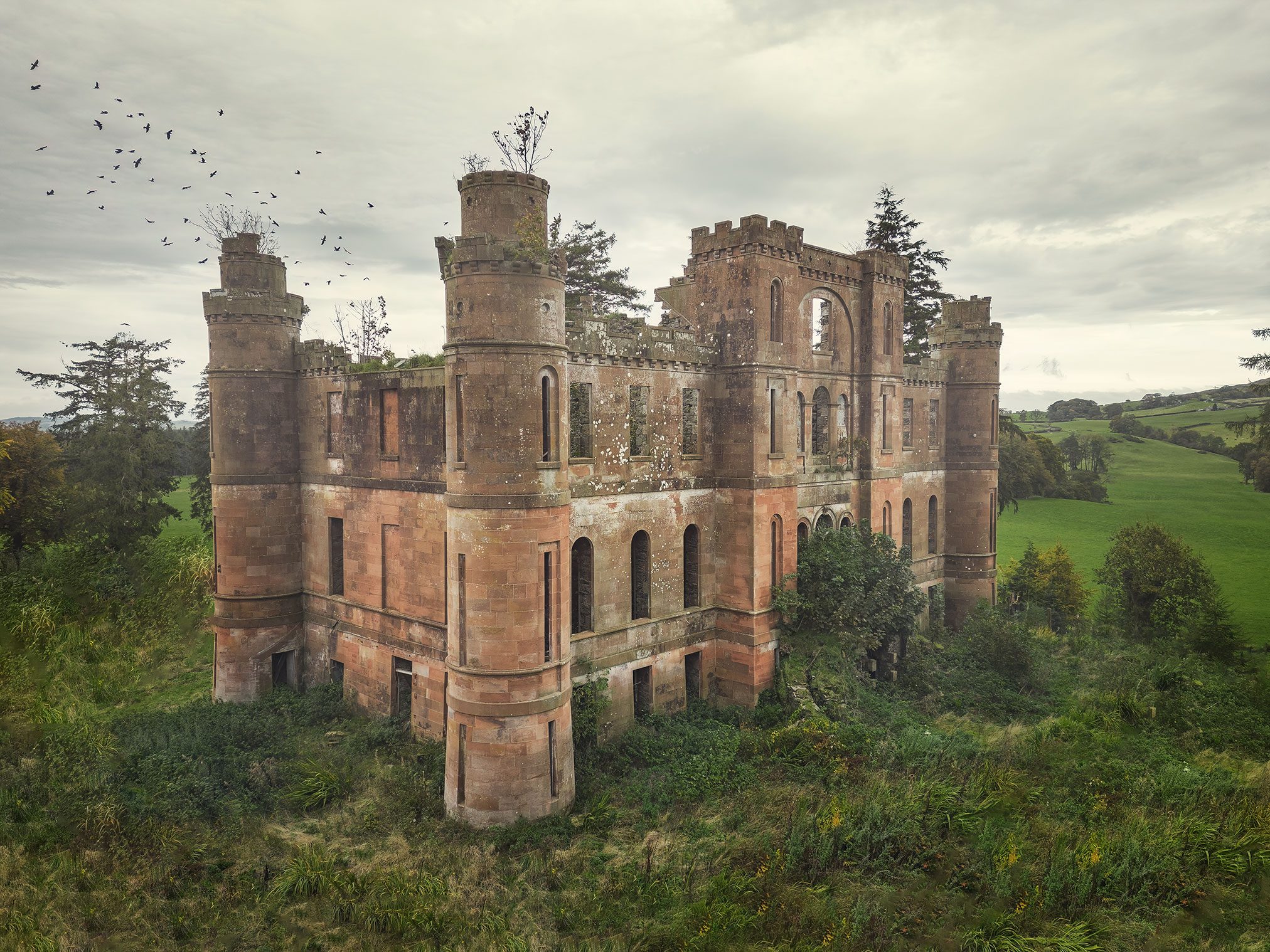
Heiton built in the Baronial style: two storeys on a square plan, a round entrance tower in three stages, bays, gables and conical roofs with iron finials. The present ruin therefore has nothing to do with the clan. What remains to the Robertsons is a walled graveyard in the grounds where five of their chiefs lie buried.
How does a mansion become a ruin?
Around 1881 Alastair Macdonald sold the estate to Hugh Tennent, who died in 1890 at the age of 27. In 1891 it was bought by James Clark Bunten, chairman of the Caledonian Railway. His descendants own and run the estate to this day.
According to the family, the house was used as it was meant to be only until the First World War. In the Second World War it was requisitioned and served as a school for Polish boys and later for girls. It was badly damaged in those years, and a painting by Millais was lost in a fire in the drawing room.
By 1952 the house stood empty; in the mid-fifties its contents were sold. In the sixties thieves stole the lead from the roof, and vandalism followed. In 1990 the register described the house as rapidly becoming a roofless shell. In 2009 it noted: roof lost except for a few turrets, floors collapsed.
The house is a listed building; the register records its condition as ruinous and the risk as high. There have been several ideas for restoring it. The cost would be very great, the family writes, and so far nothing has come of any of them.
Between two lochs
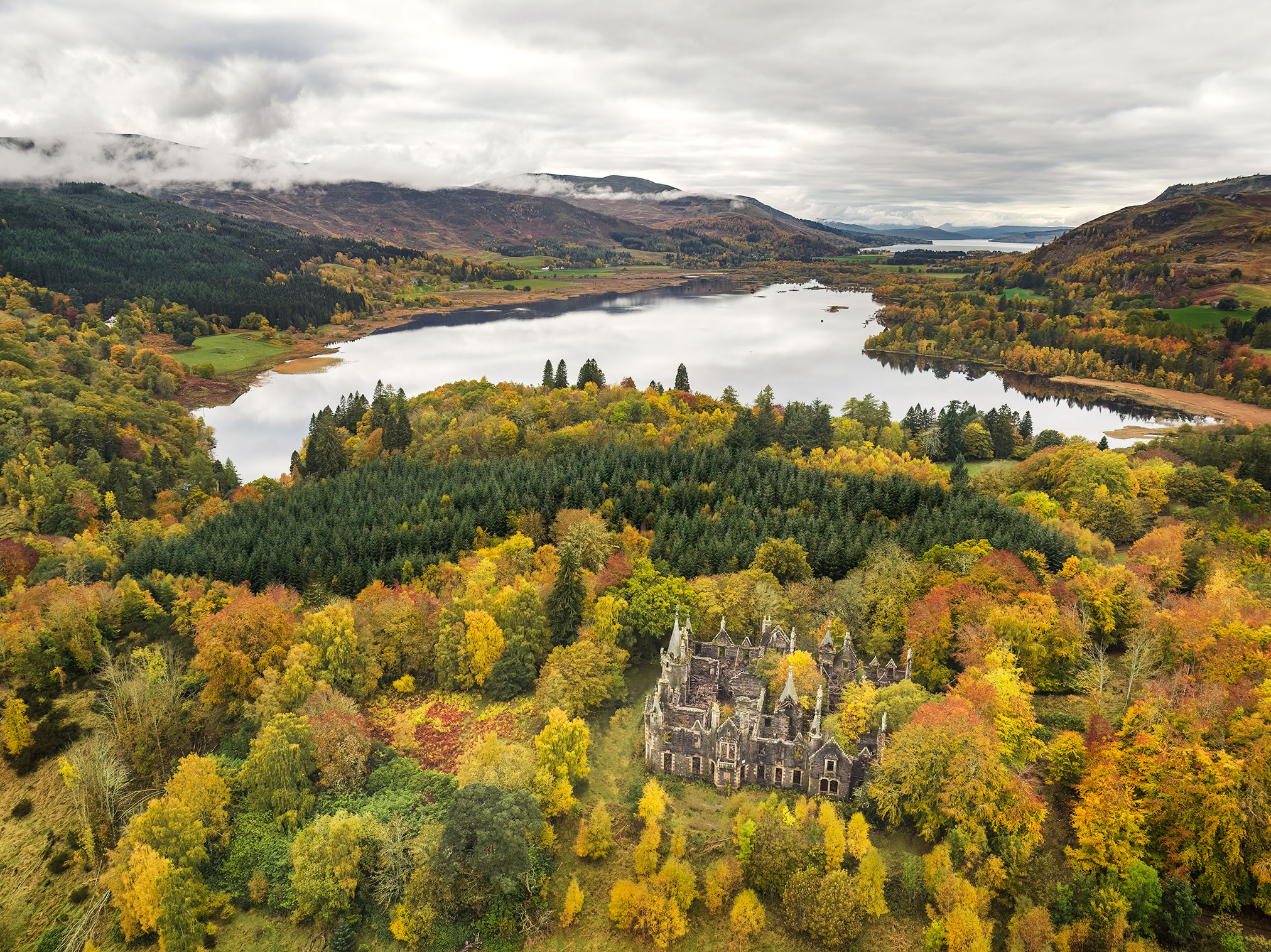
Dunalastair lies on the River Tummel, between Kinloch Rannoch to the west and Tummel Bridge to the east, 18 miles west of Pitlochry. The water below the ruin is not a natural loch. Dunalastair Water was created in 1933, when the Grampian Electric Supply Company dammed the Tummel for a hydro-electric scheme. To the south Schiehallion stands above the valley.
The estate is private property. The family still runs it and has let holiday cottages since 1971.
Once in every season
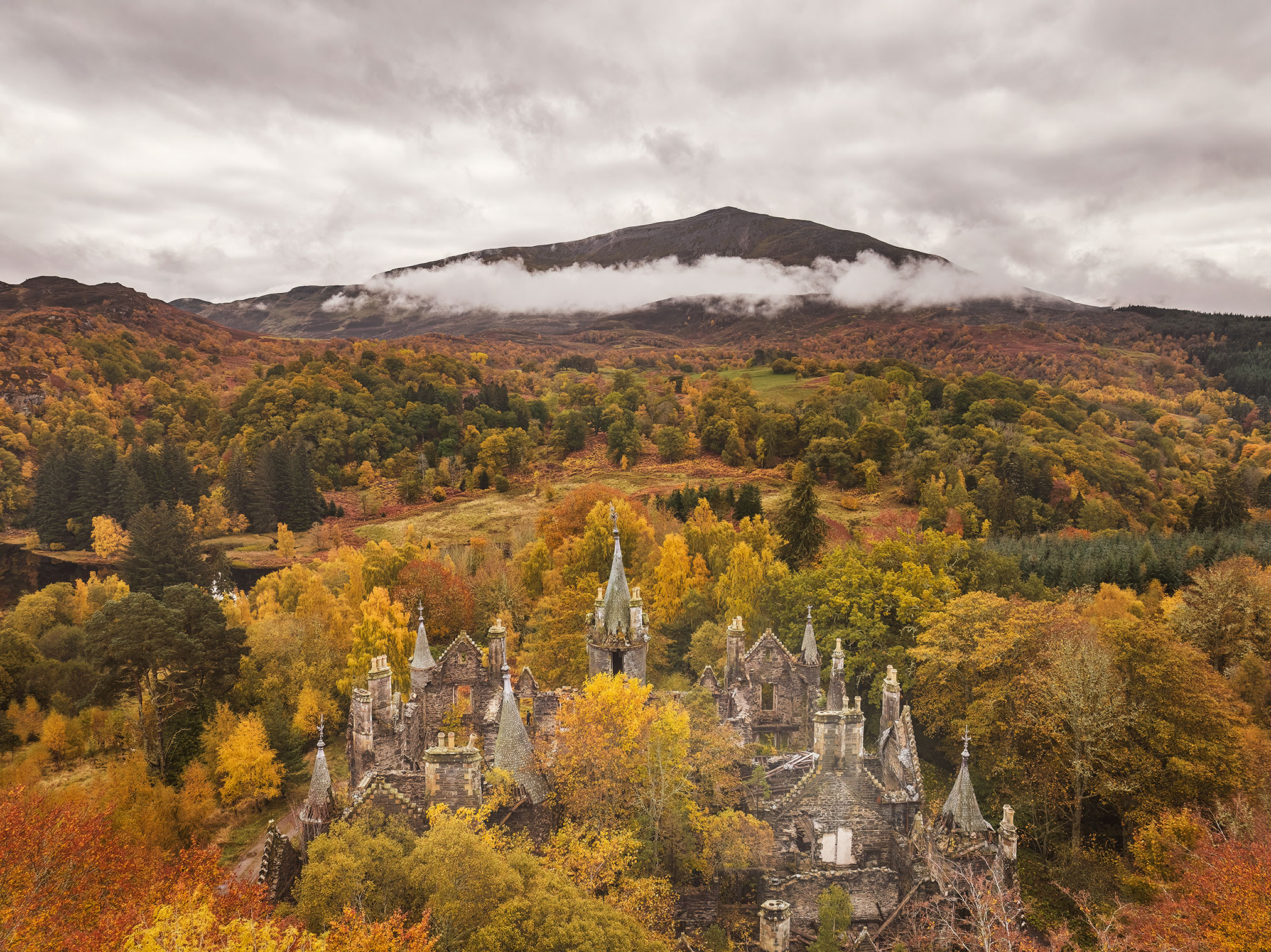
My photographs were taken in 2022, at the perfect moment of autumn. To me Scotland does not need villas full of frescoes. What the country lacks in surviving interiors it makes up for with its colours, its vegetation and its mountains.
And still I dream of seeing and experiencing this ruin once in every season, before it falls apart entirely.
The pictures
Eight photographs of Dunalastair House from the autumn of 2022. Three of them belong to the series RUINS AND REVERIE.
Sources and further background
This story draws on the following sources.
- History of Dunalastair Estate. Dunalastair Estate , accessed 10. November 2026
- Dunalastair House, Kinloch Rannoch. Buildings at Risk Register for Scotland , accessed 10. November 2026
- Dunalastair. Wikipedia (englisch) , accessed 10. November 2026
- Dunalastair Water. Wikipedia (englisch) , accessed 10. November 2026
- Clan Robertson. Wikipedia (englisch) , accessed 10. November 2026
- Lost-Places-Bildband: Auf der Suche nach Europas verlorener Pracht. Der Spiegel, 19.12.2023 , accessed 10. November 2026
Series
More from RUINS AND REVERIE
Fine art prints on the theme
Related stories
All stories →

Share