


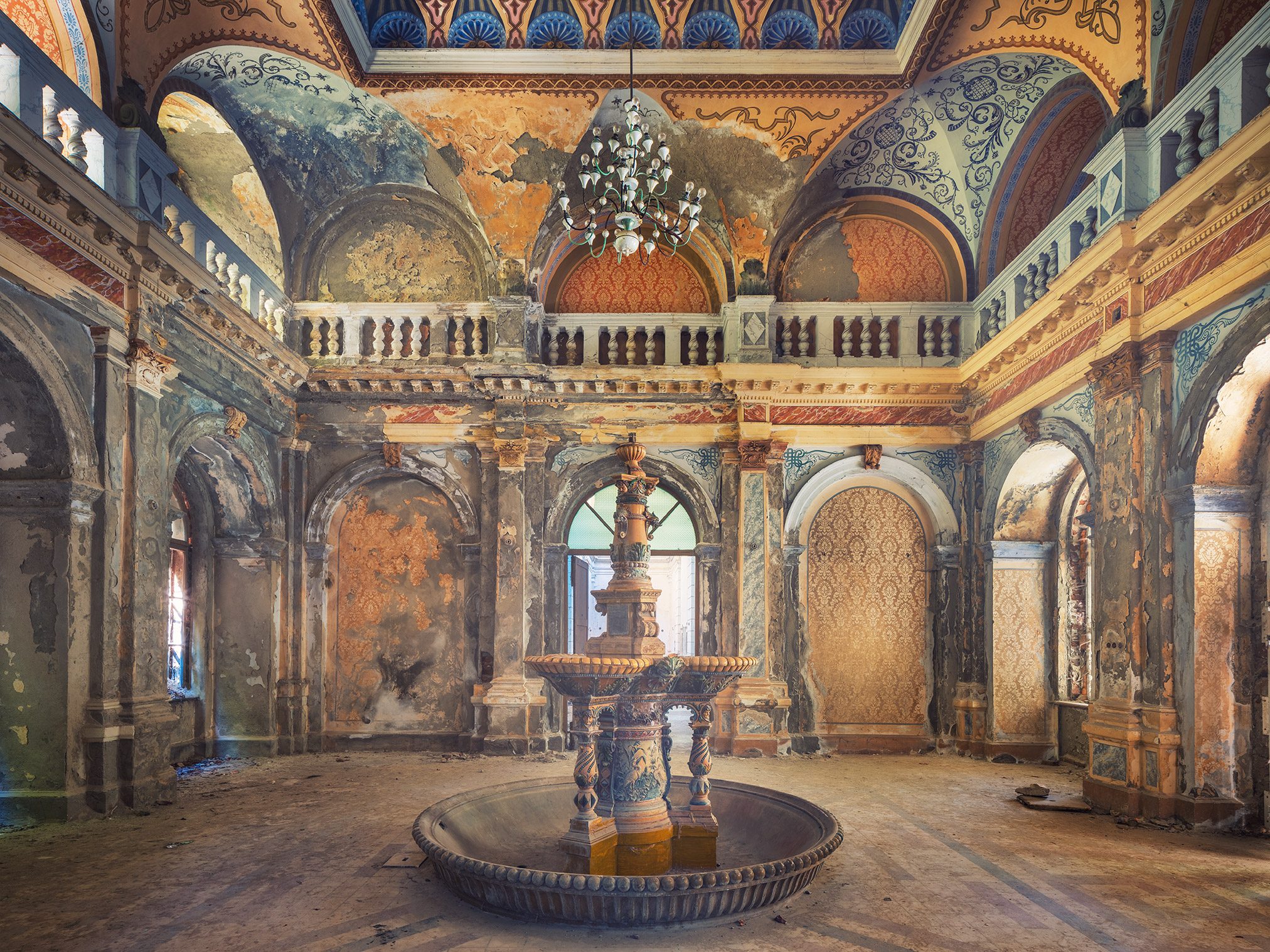
Băile Herculane, in German Herkulesbad, is a spa town in the Cerna valley in the Romanian Banat. The Romans already bathed here in hot sulphurous water, and in the nineteenth century Emperor Franz Joseph and Empress Elisabeth came. The largest bath house of that era, the Neptune Baths of 1886, has long stood empty and has collapsed in several places.
At a glance
Băile Neptun (Neptunbad), Băile Herculane
- Location
- Băile Herculane (Herkulesbad), Caraș-Severin County, Banat, Romania
- Built
- 1883–1886
- Architect / client
- Ignác Alpár
- Usage
- Bath house with sulphur and salt baths, 70 treatment cabins
- Abandoned since
- after 1989
- Condition
- Class A monument, partly collapsed (2019, 2021), emergency-secured since 2019; on Europa Nostra's “7 Most Endangered” list in 2022
- Visited
- October 2019
- Series
- SANCTUARIES OF BLISS
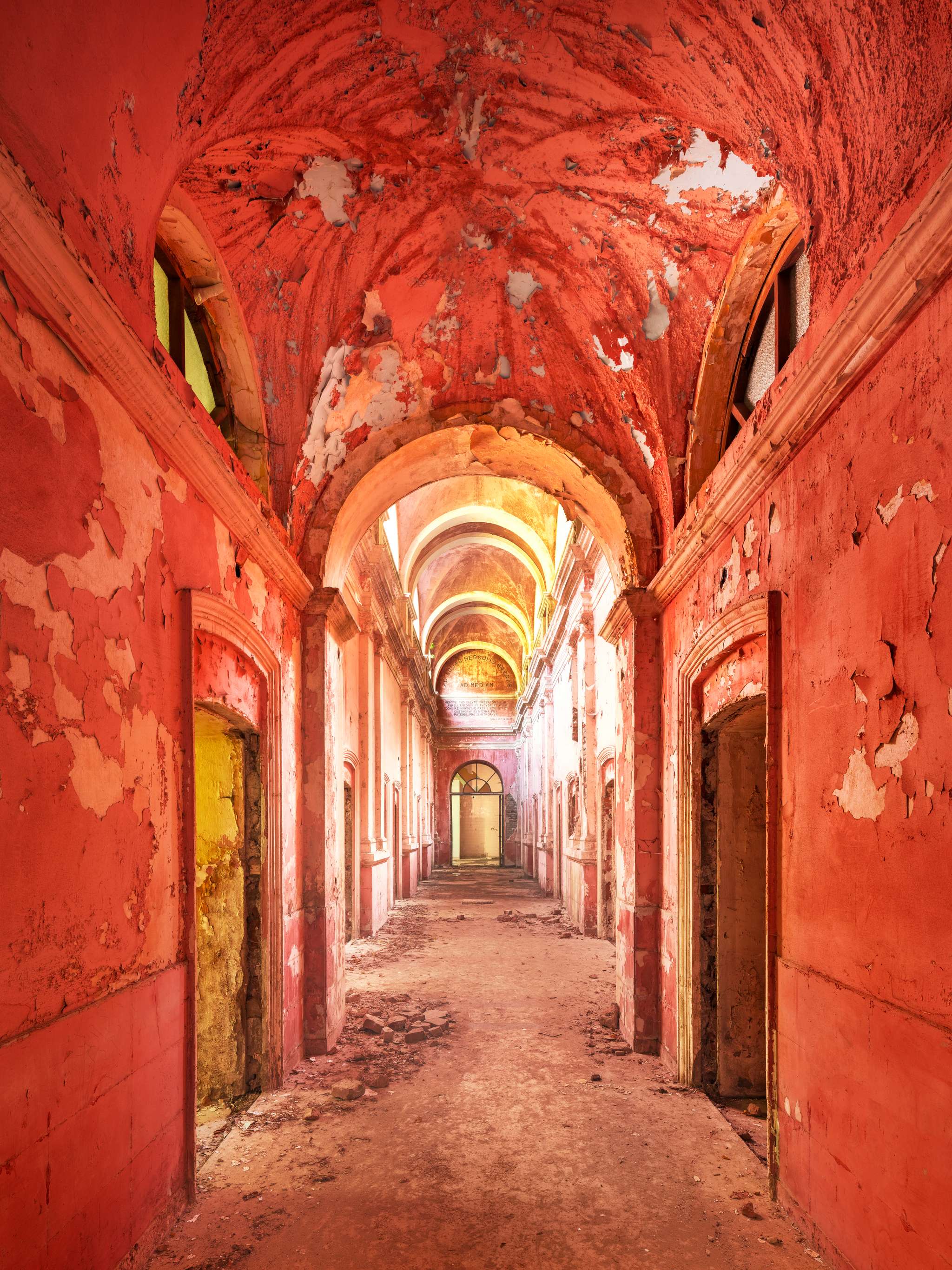
Blue, red and pink
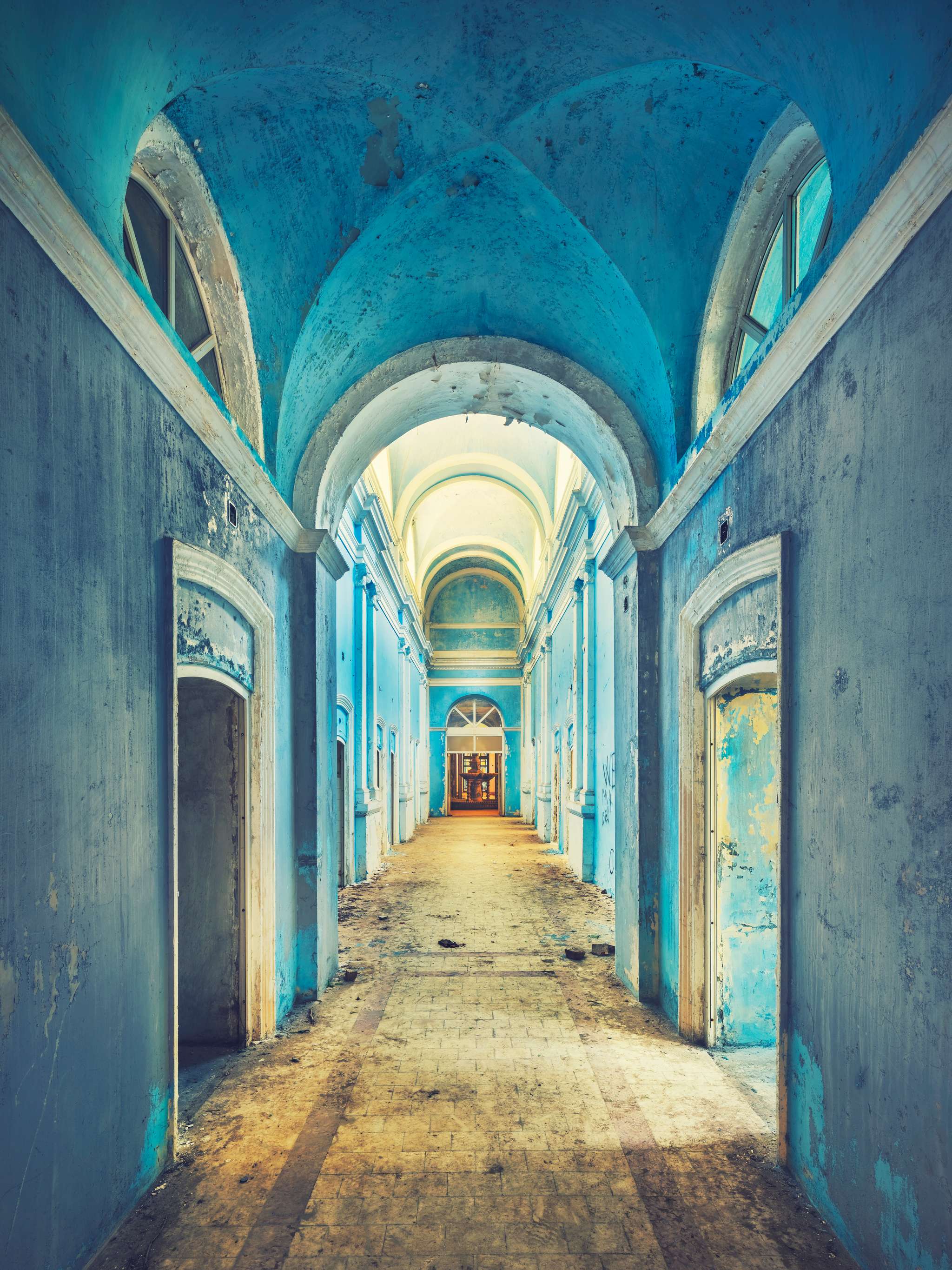
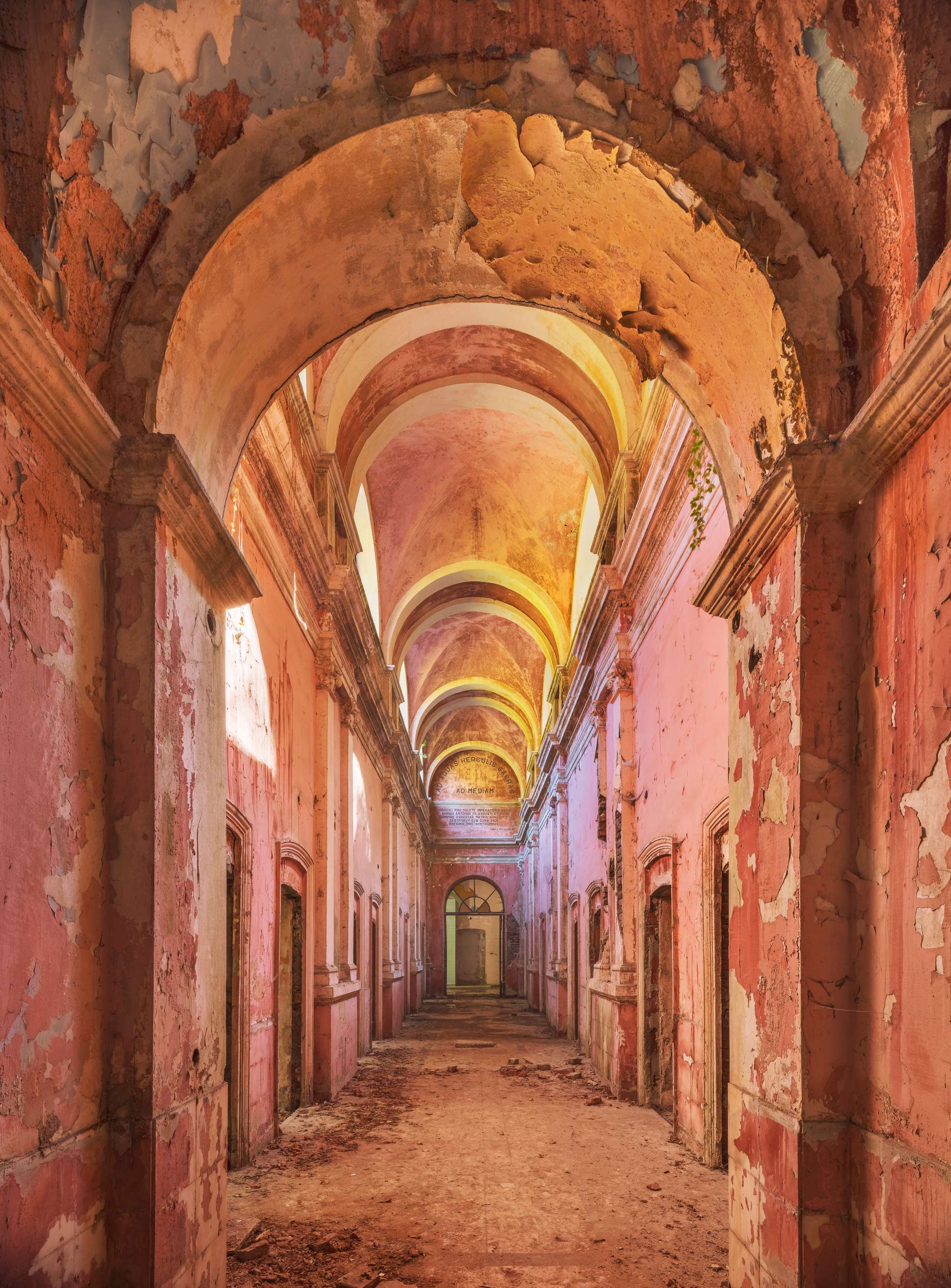
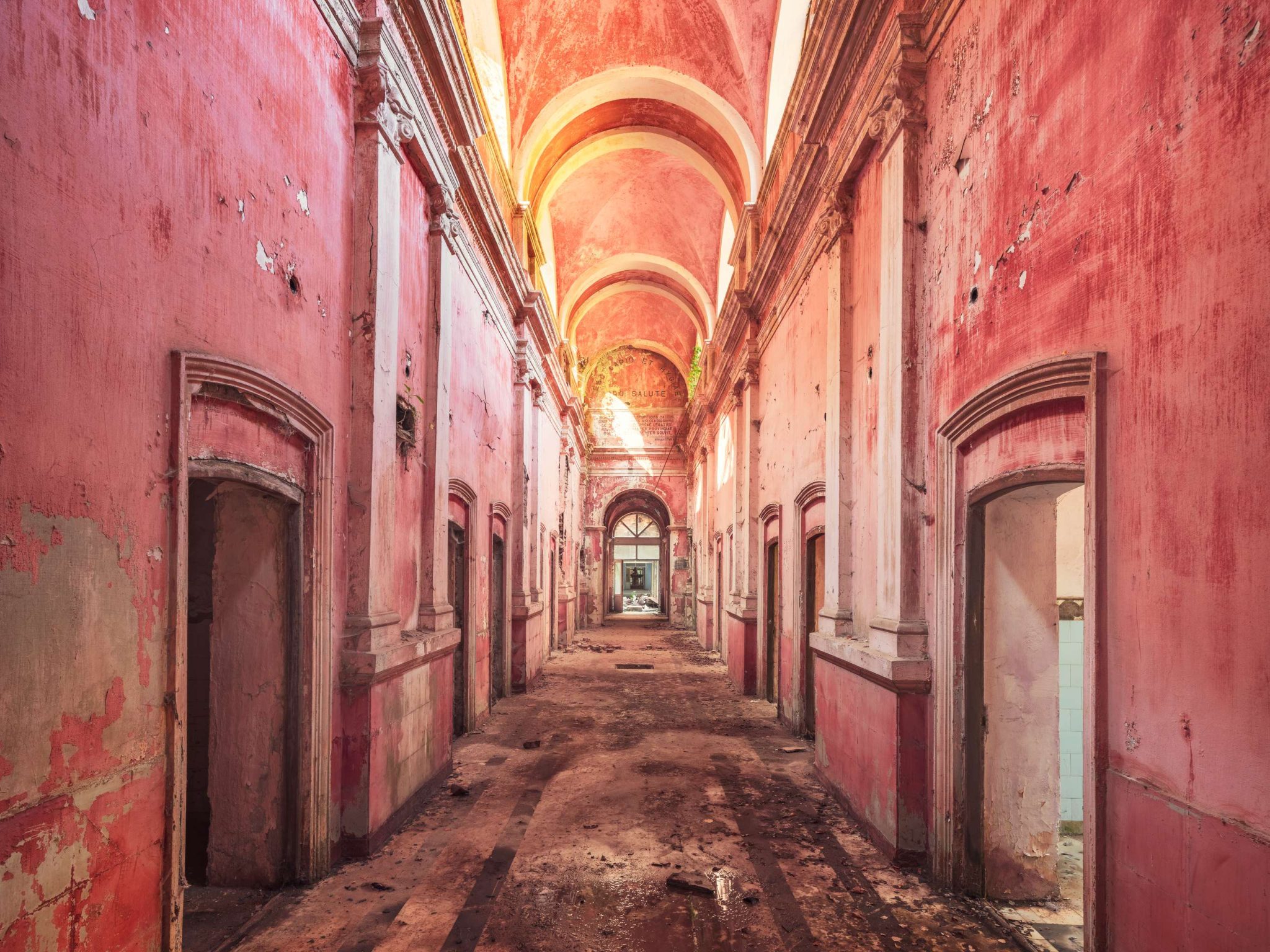
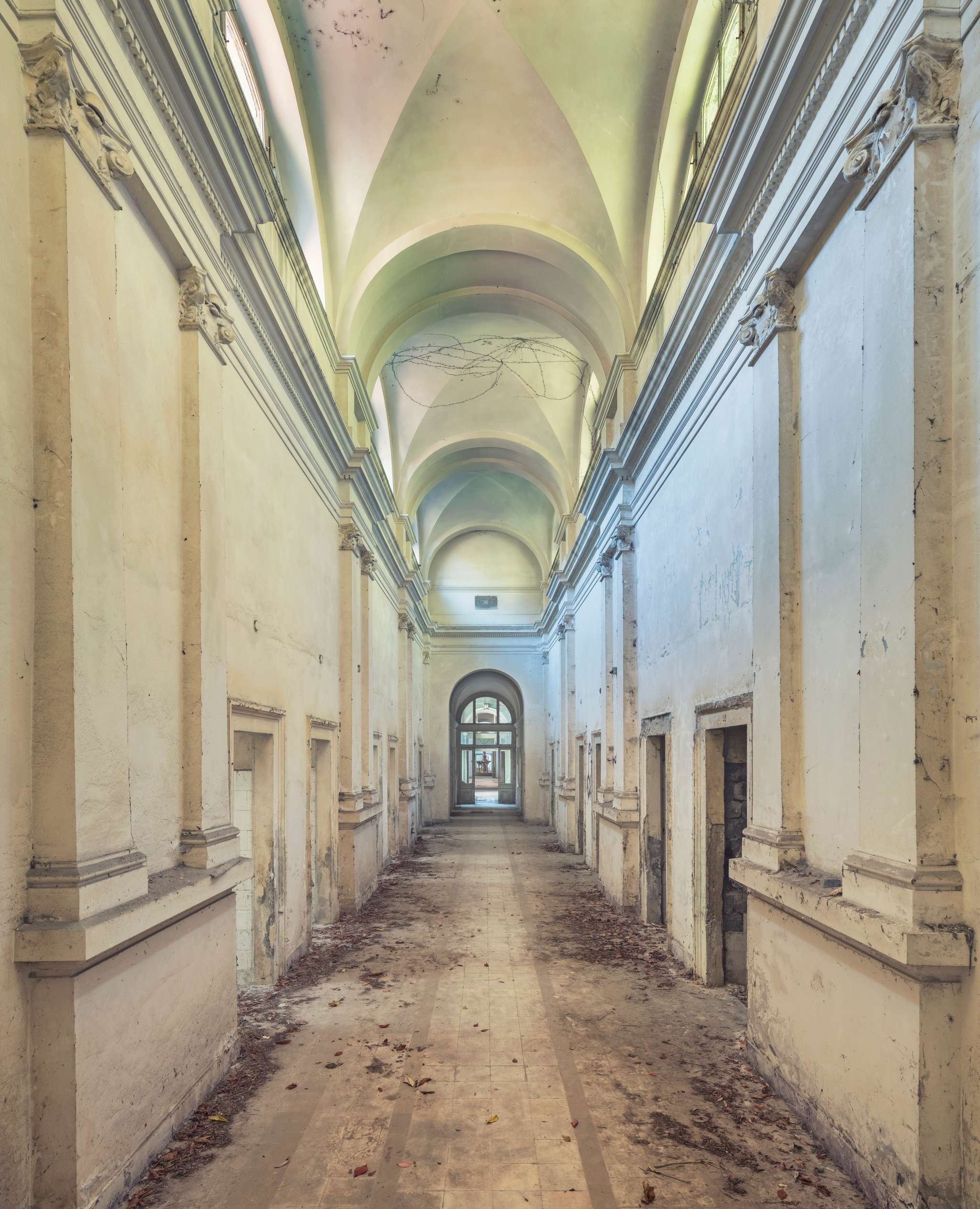
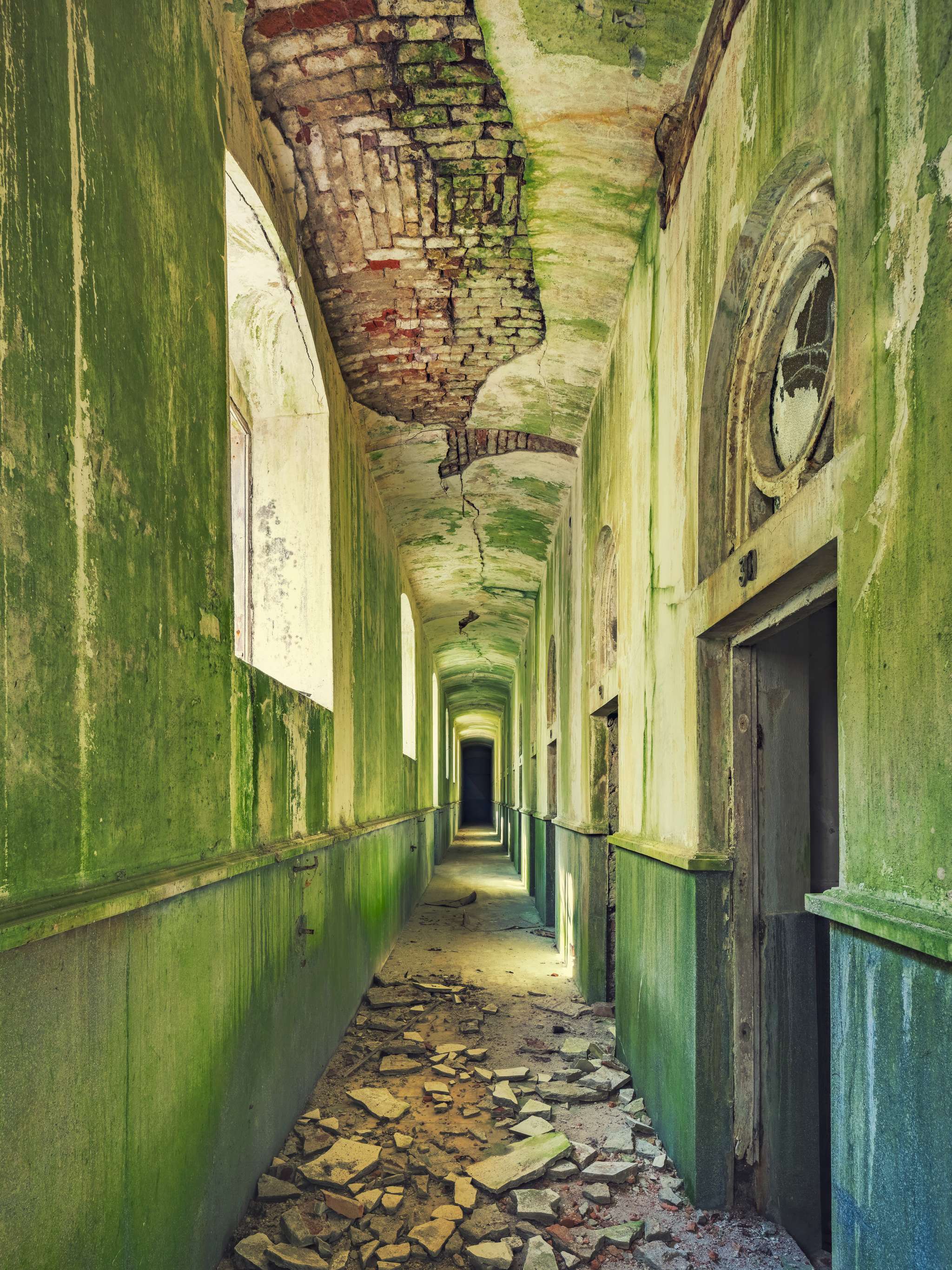
For me the Neptune Baths are among the absolute high points of majestic architecture that I saw on my journey through Romania in October 2019, unique above all for their endless corridors and their coloured columns.
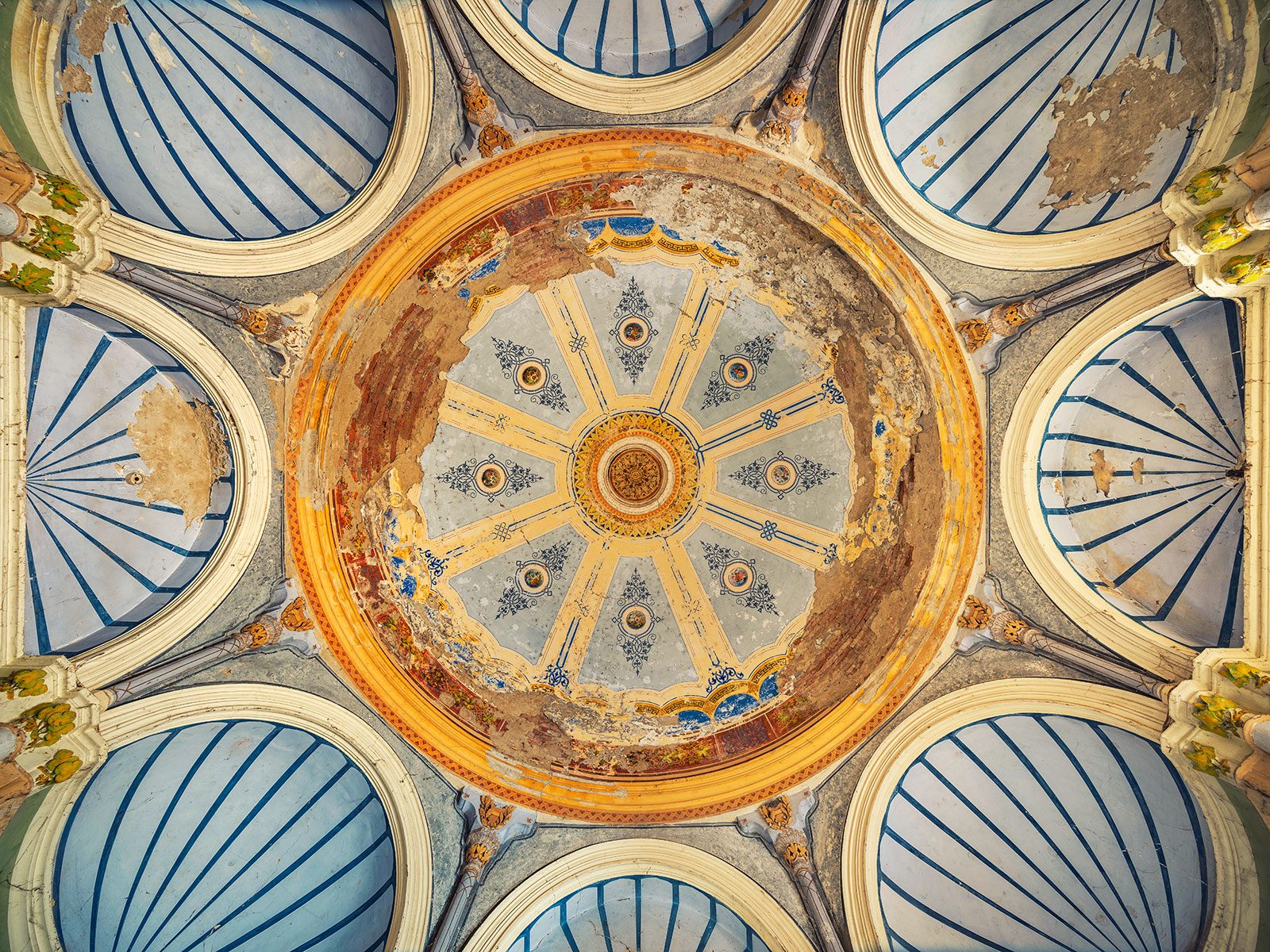
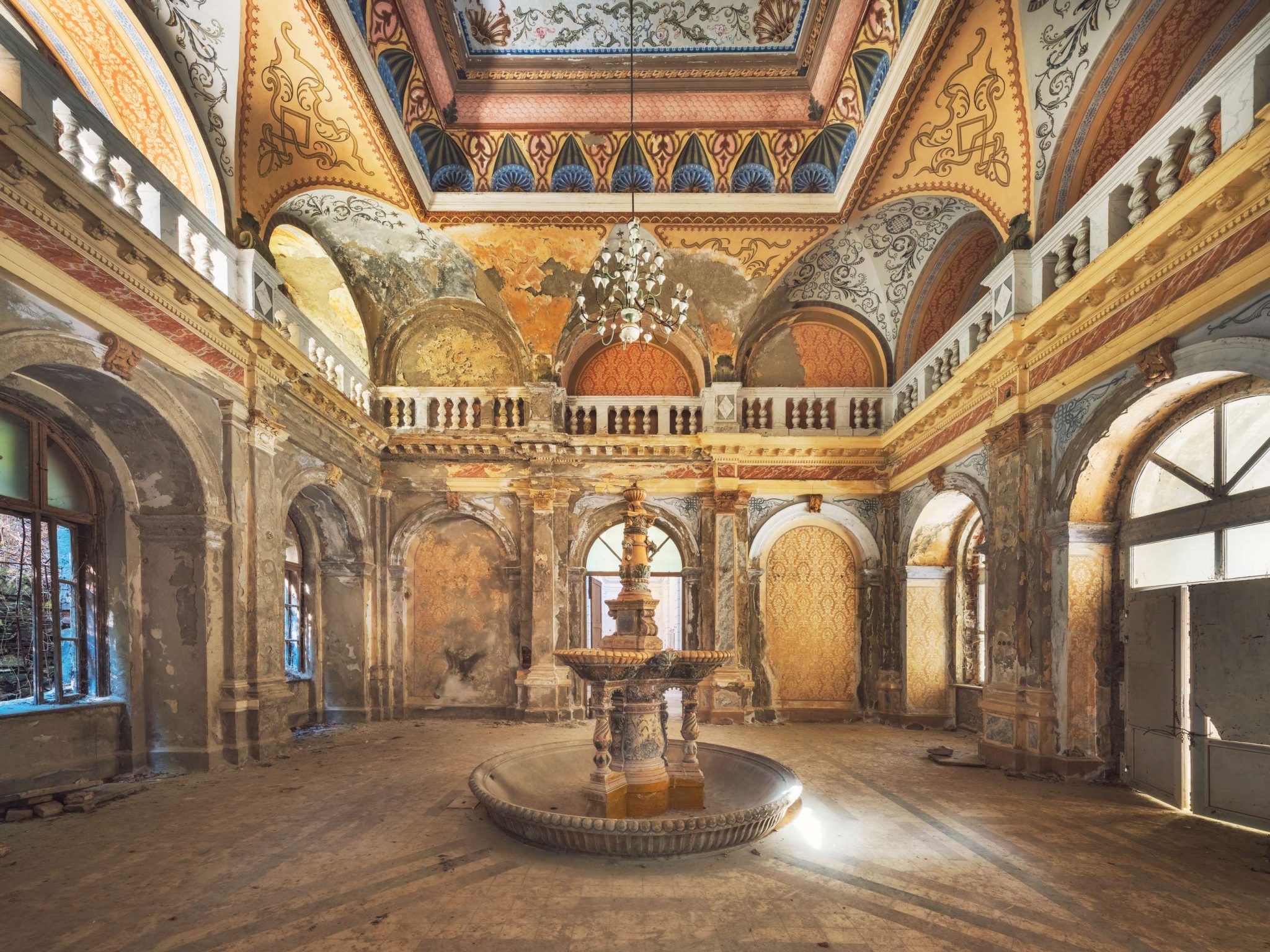
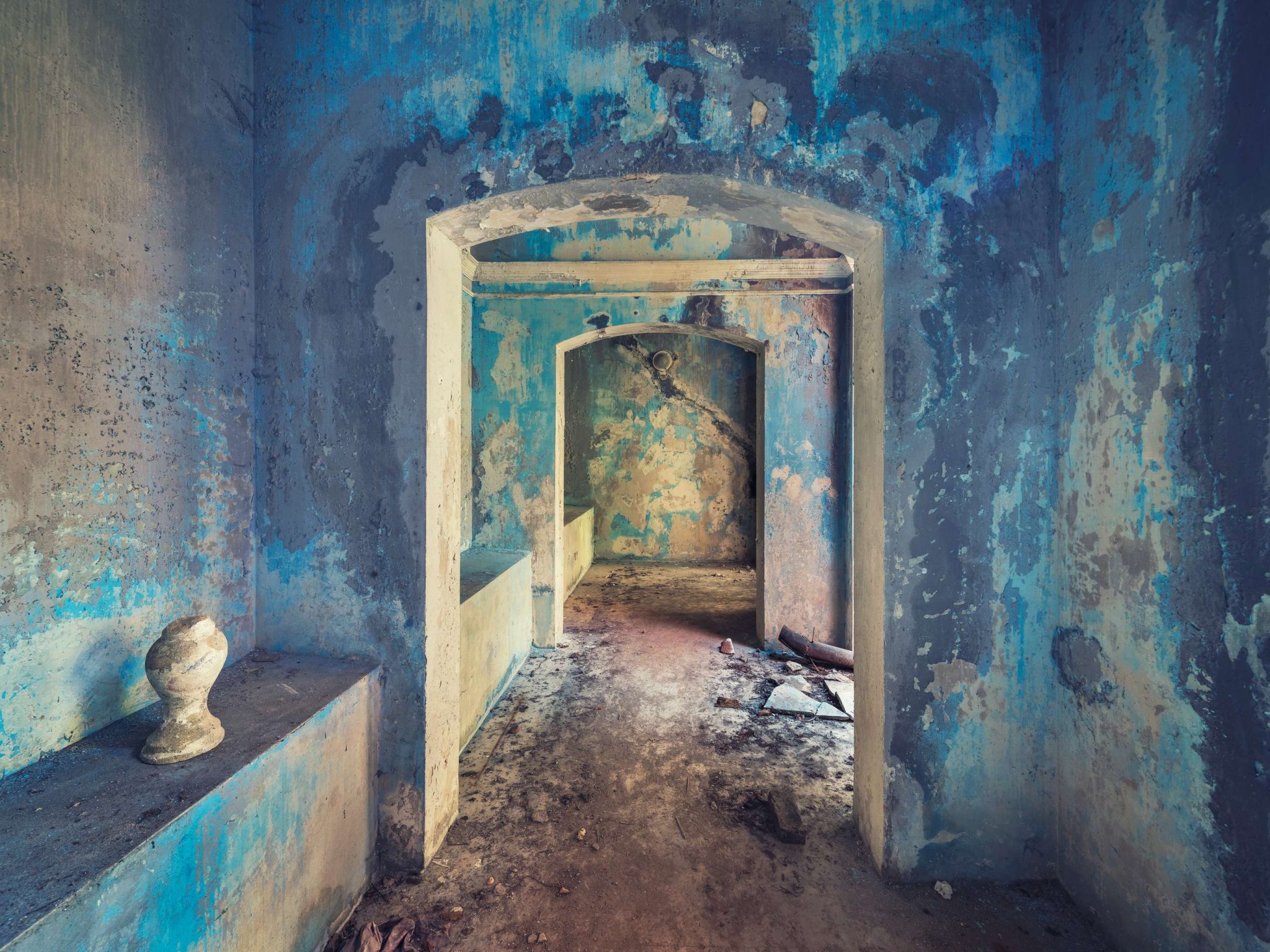
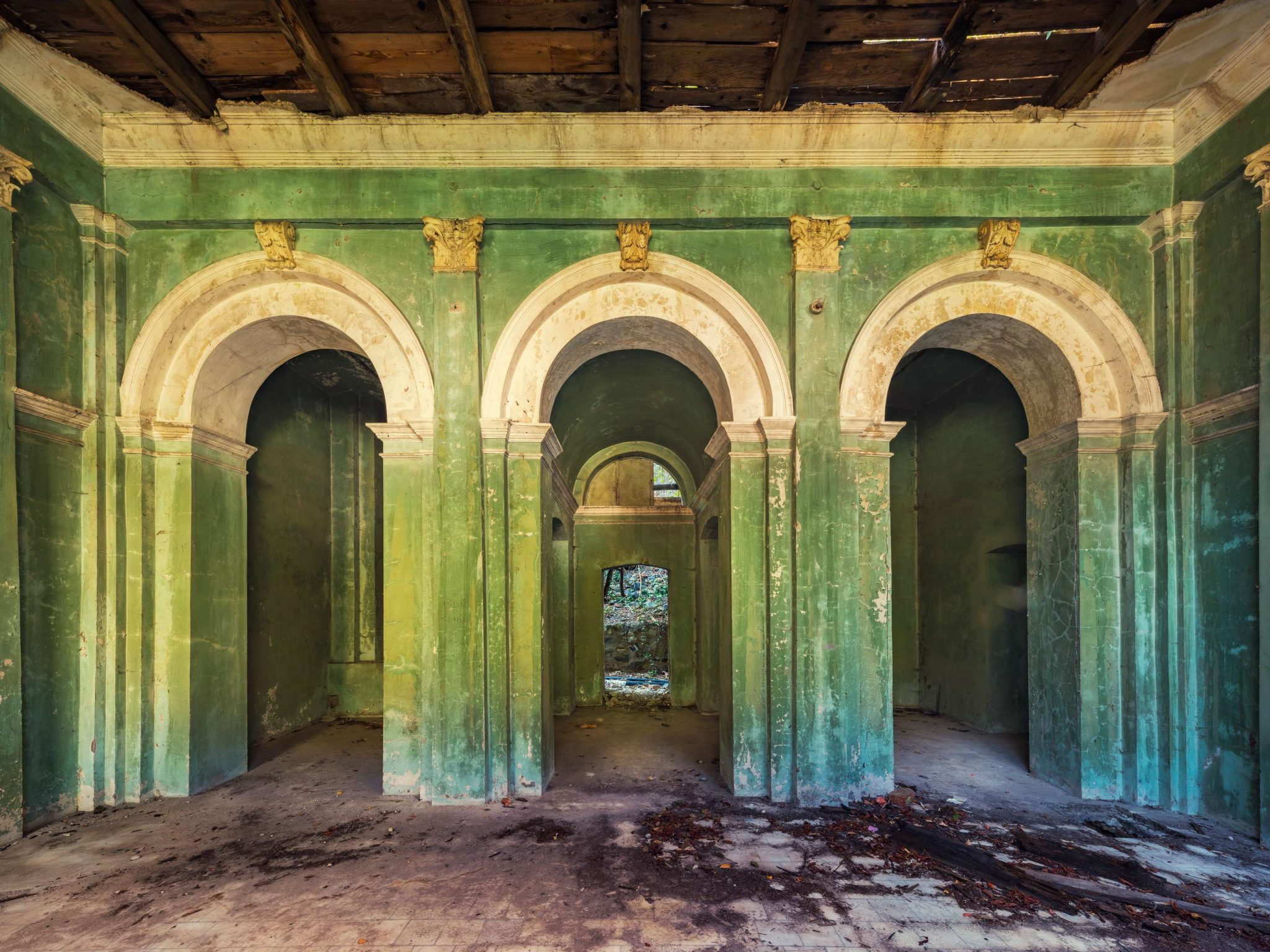
It is those corridors most of all. One is blue from the floor to the vault, the next red, a third pink, and along each the doors of the bathing cabins are ranged. The paint is coming away from the walls in large flakes. In the middle of the building lies the fountain hall with its painted ceiling, the chandelier and the majolica fountain.
From Roman bath to the emperors' spa
The earliest inscription attesting the baths dates from AD 153. The Romans called the place Ad aquas Herculi sacras, at the sacred waters of Hercules. After 1718 the Banat belonged to Austria; the place lay on the Military Frontier and was rebuilt by the army. In 1811 it counted 944 spa guests.
The ensemble that still stands took shape in the nineteenth century. In 1847 the statue of Hercules was cast in Vienna. Between 1862 and 1864 the Viennese architect Wilhelm von Doderer built the casino with its colonnades. Emperor Franz Joseph visited in 1852 and is said to have called it the most beautiful spa on the continent; the town hall itself treats the remark as local tradition, and there is no source for it. Empress Elisabeth stayed for six weeks in 1887 and returned three more times. In September 1896 the emperor and the kings of Romania and Serbia met in the casino's assembly hall.
The Neptune Baths
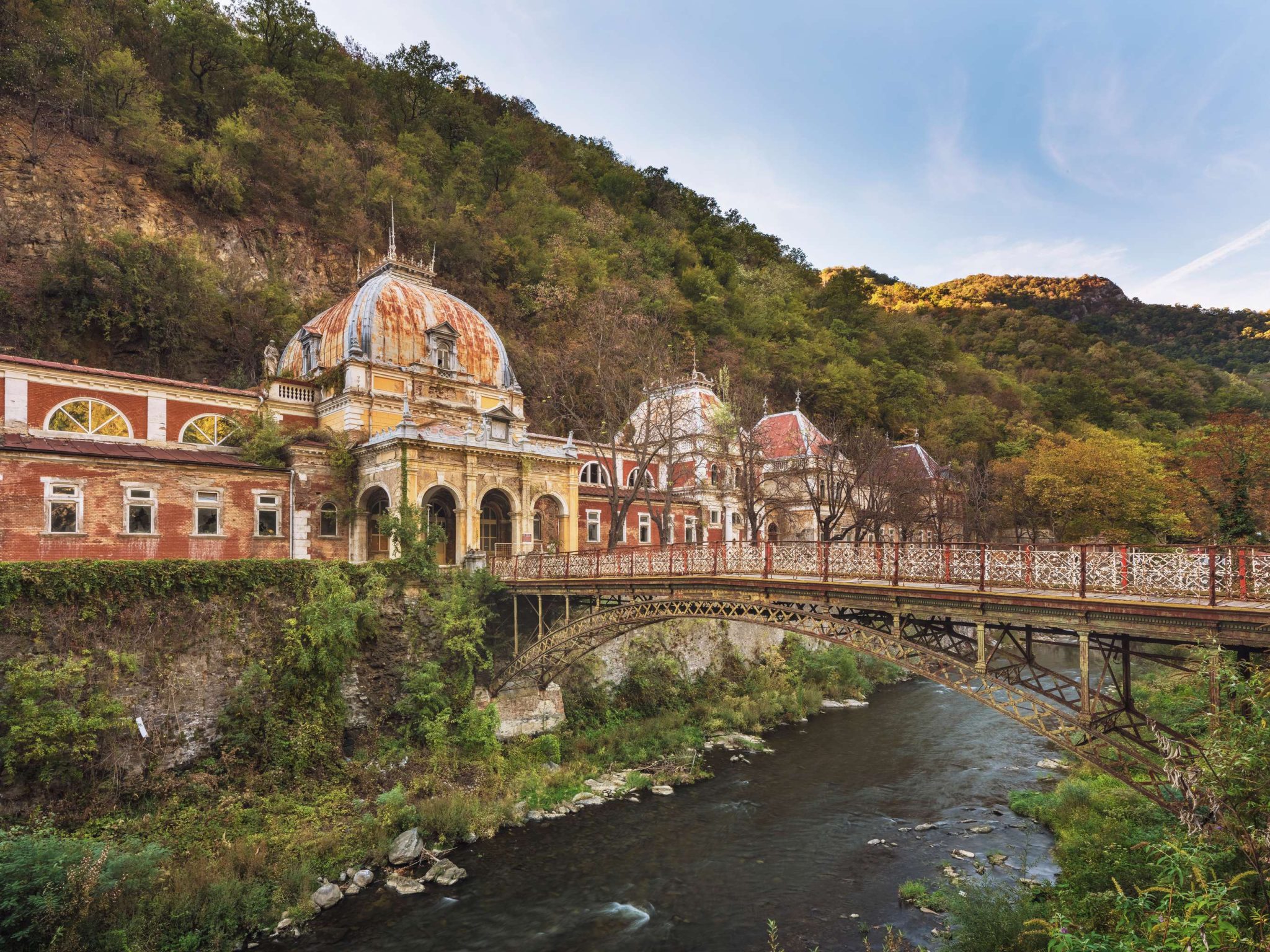
They were built from 1883 to 1886 to designs by the Hungarian architect Ignác Alpár, who had won a competition held by the finance ministry with seven entries. The building cost 220,000 forints. At first it bore the name of the finance minister, Szapáry, between the wars that of Queen Marie, and in the communist period it became Neptun.
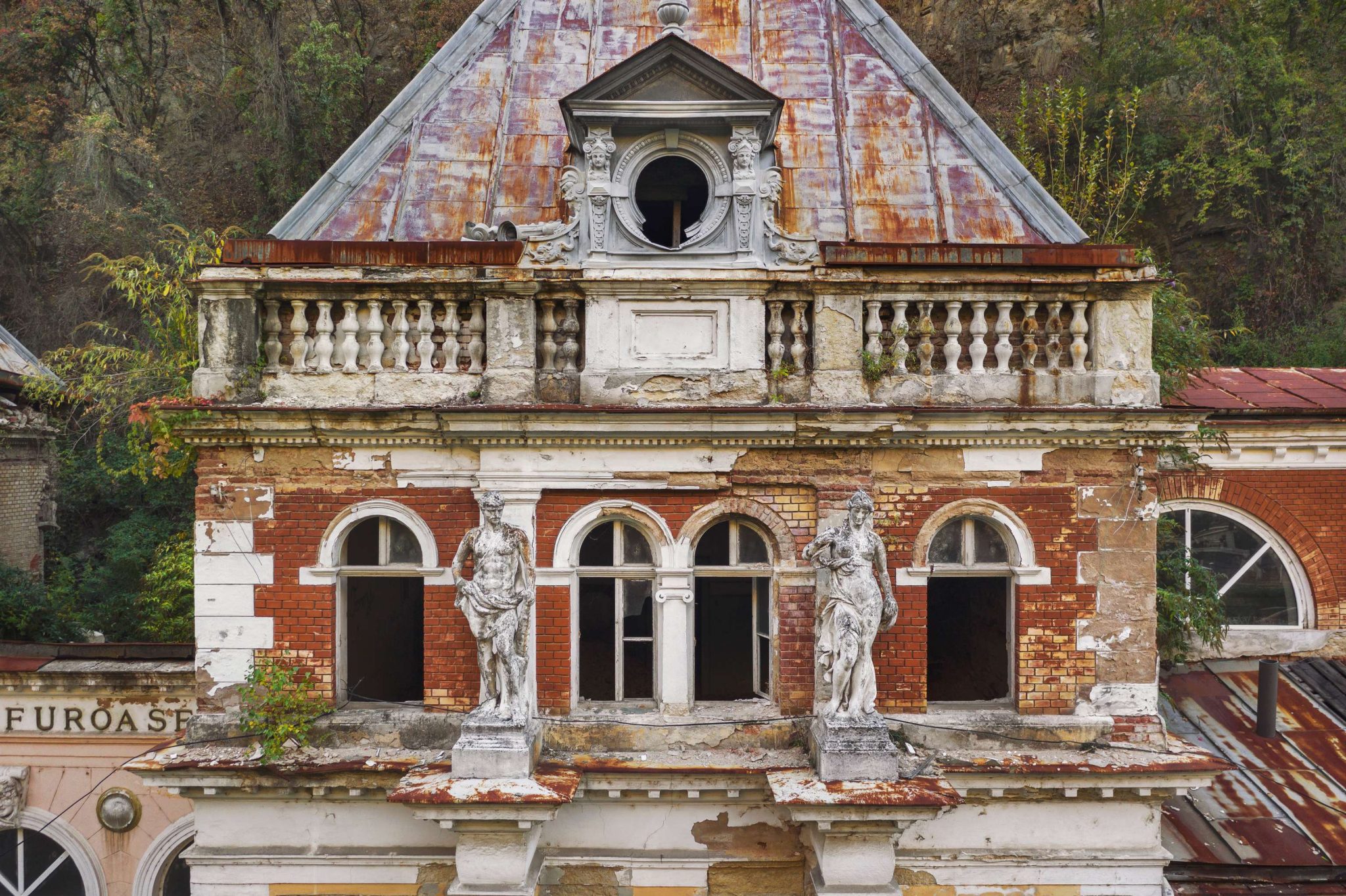
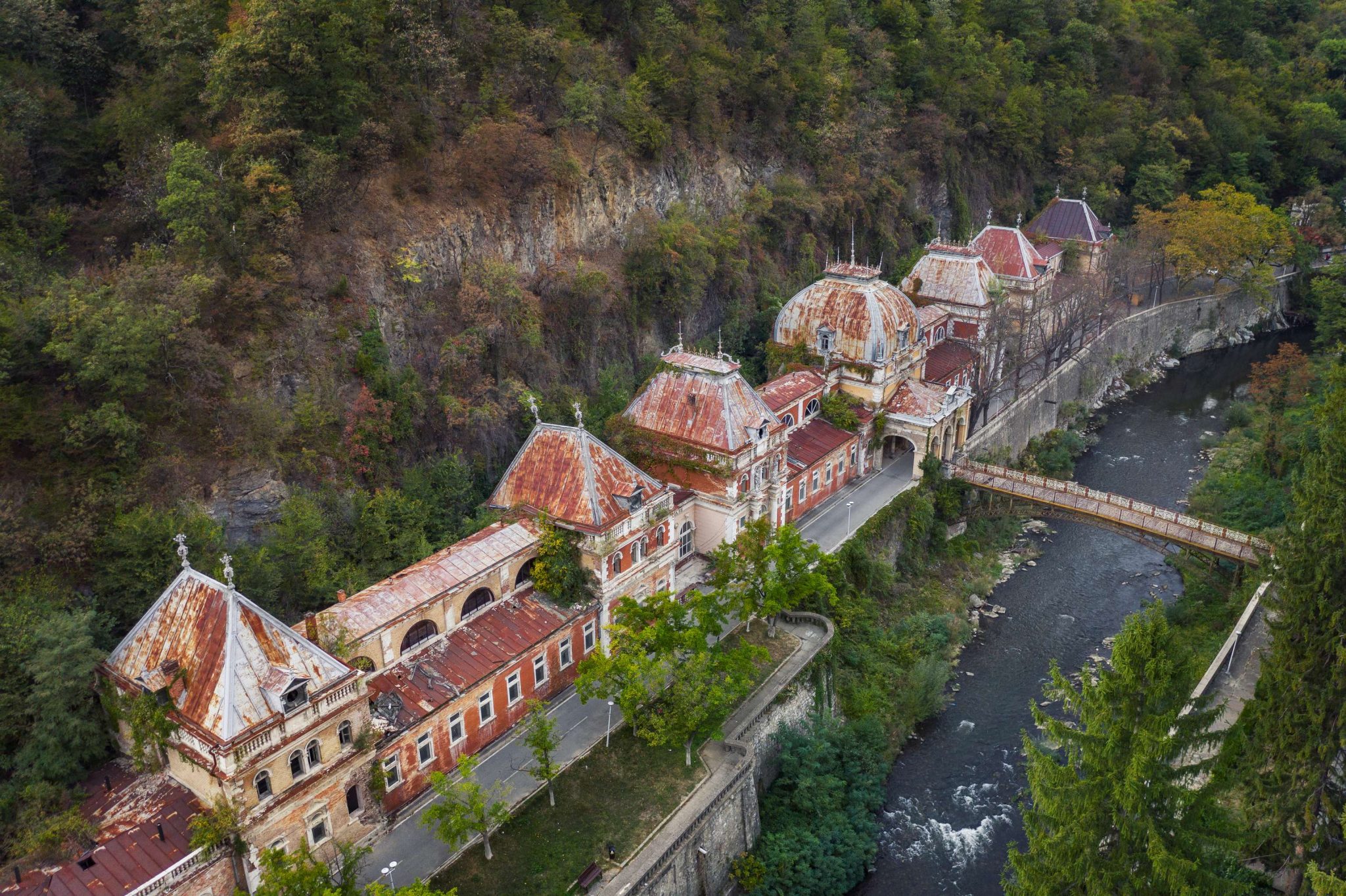
The site is a narrow strip between the river and the rock face. On it Alpár set a long building of seven taller sections with roofs of their own, the central one with a dome. One wing was intended for sulphur baths, the other for salt baths. There were 70 treatment cabins, along with stone tubs, saunas and inhalation rooms, and about a hundred people could bathe at once. In one of my pictures the remains of the sign for the sulphur baths can still be read on the façade.
A cast-iron bridge links the baths with the other bank of the Cerna, where the casino stands. It is closed today.
The Apollo Bath
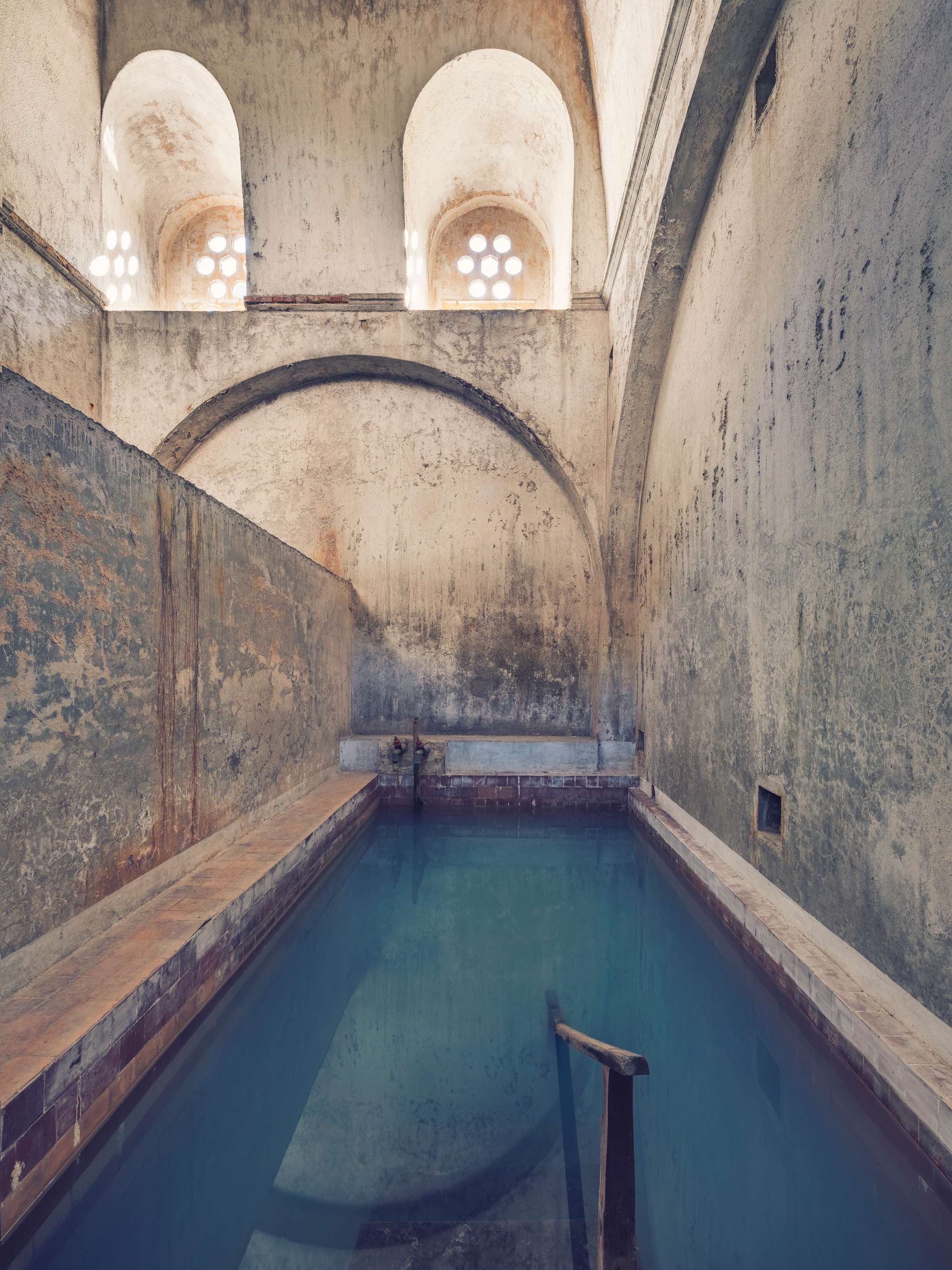
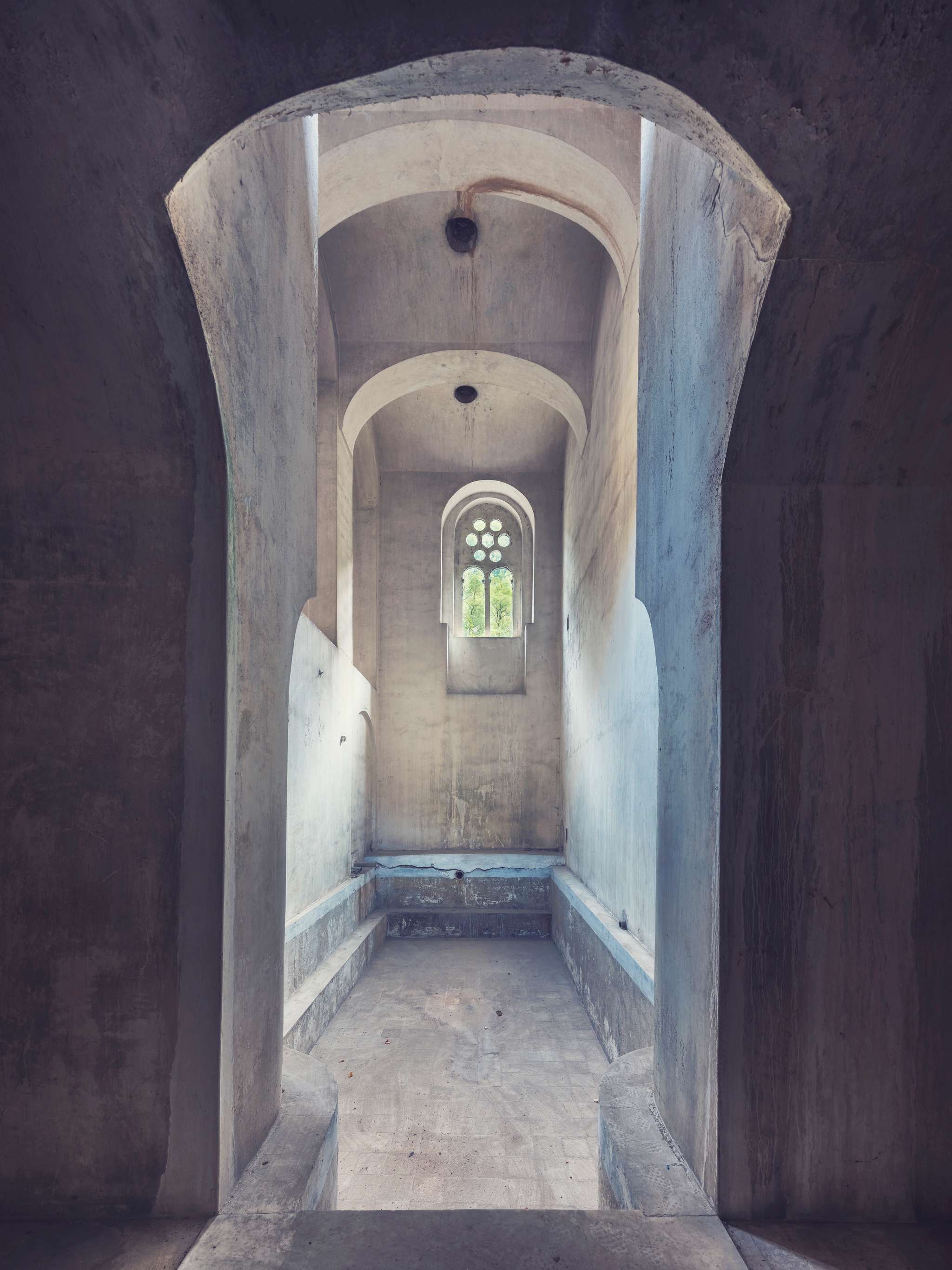
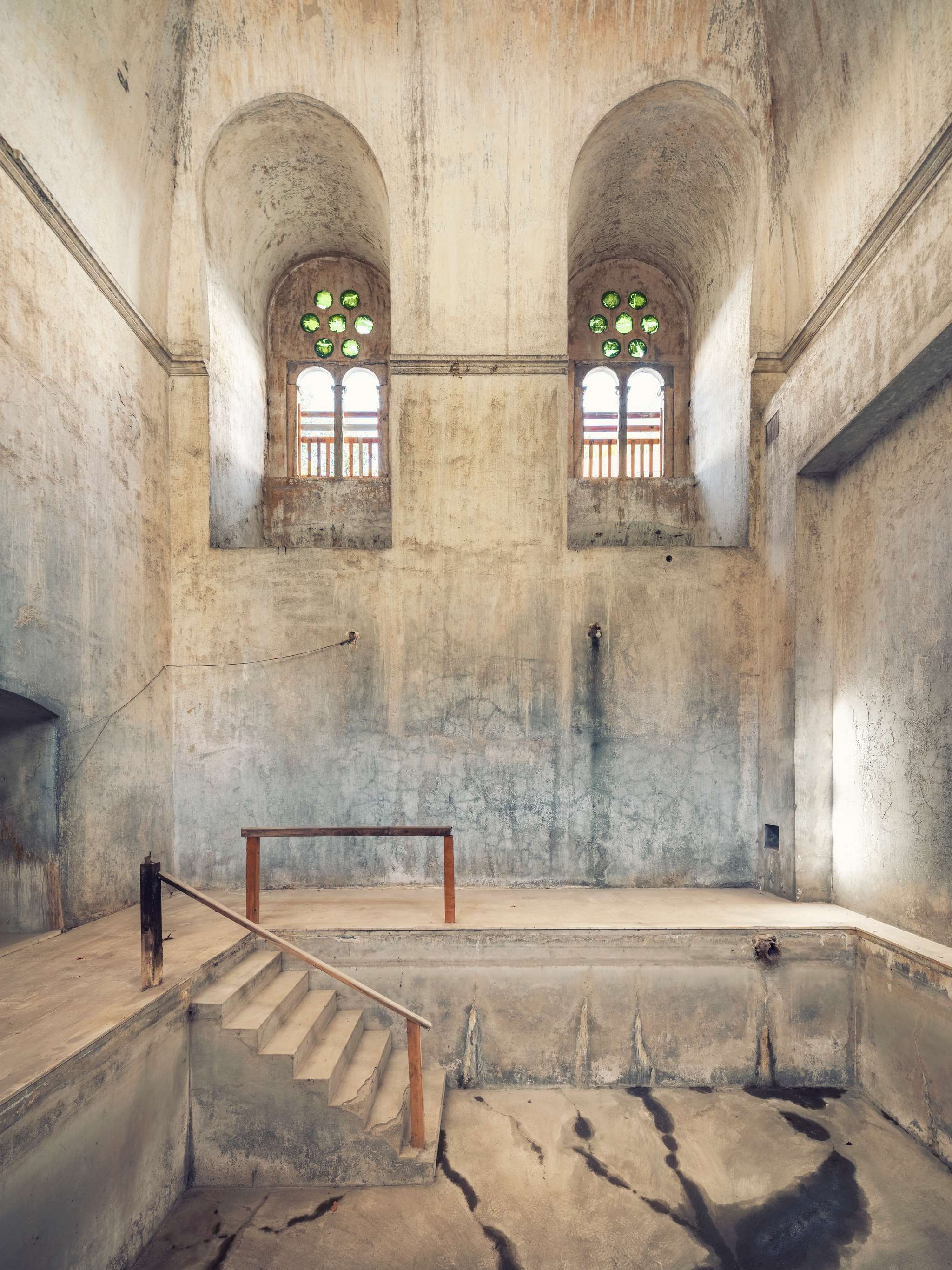
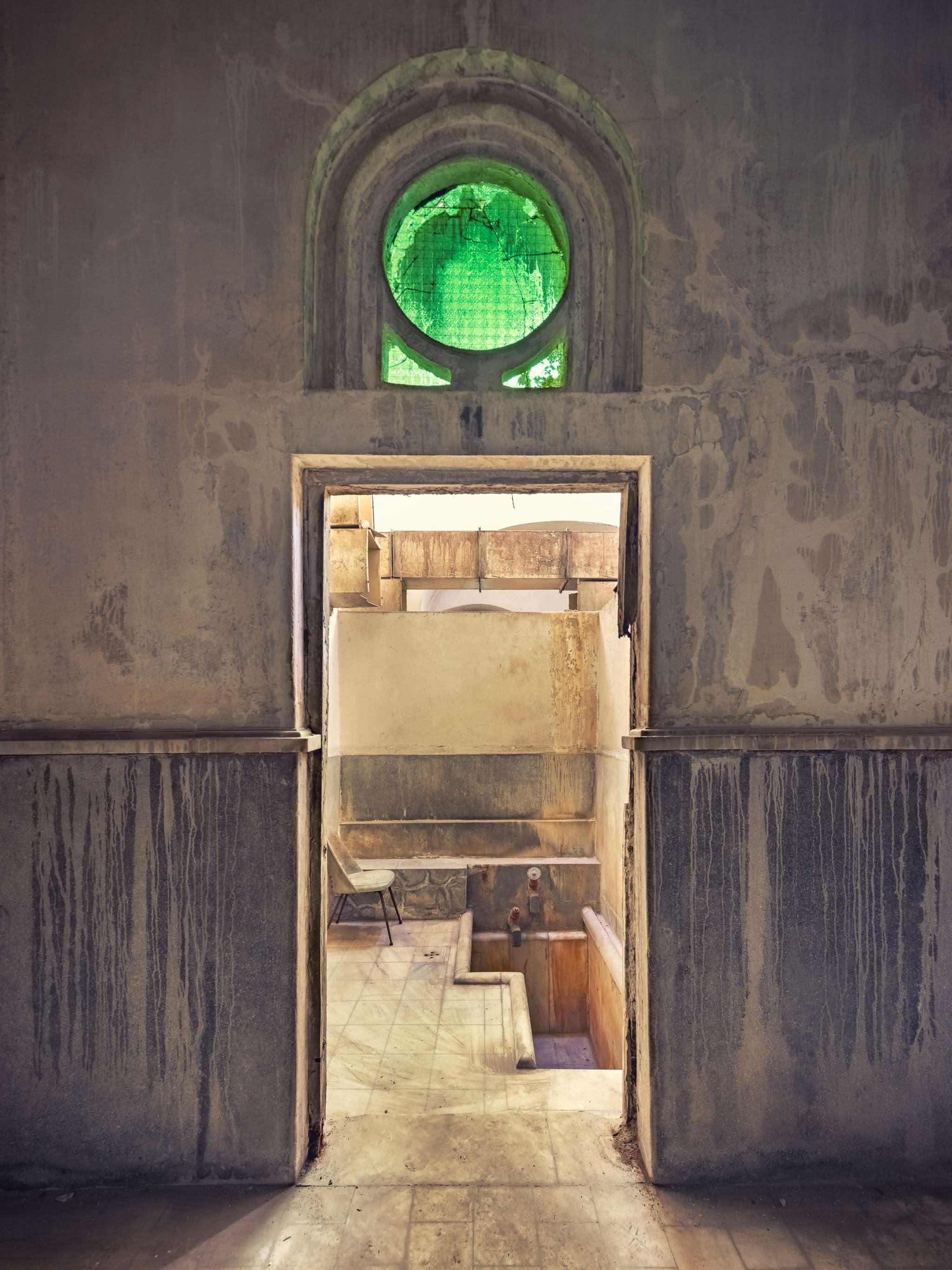
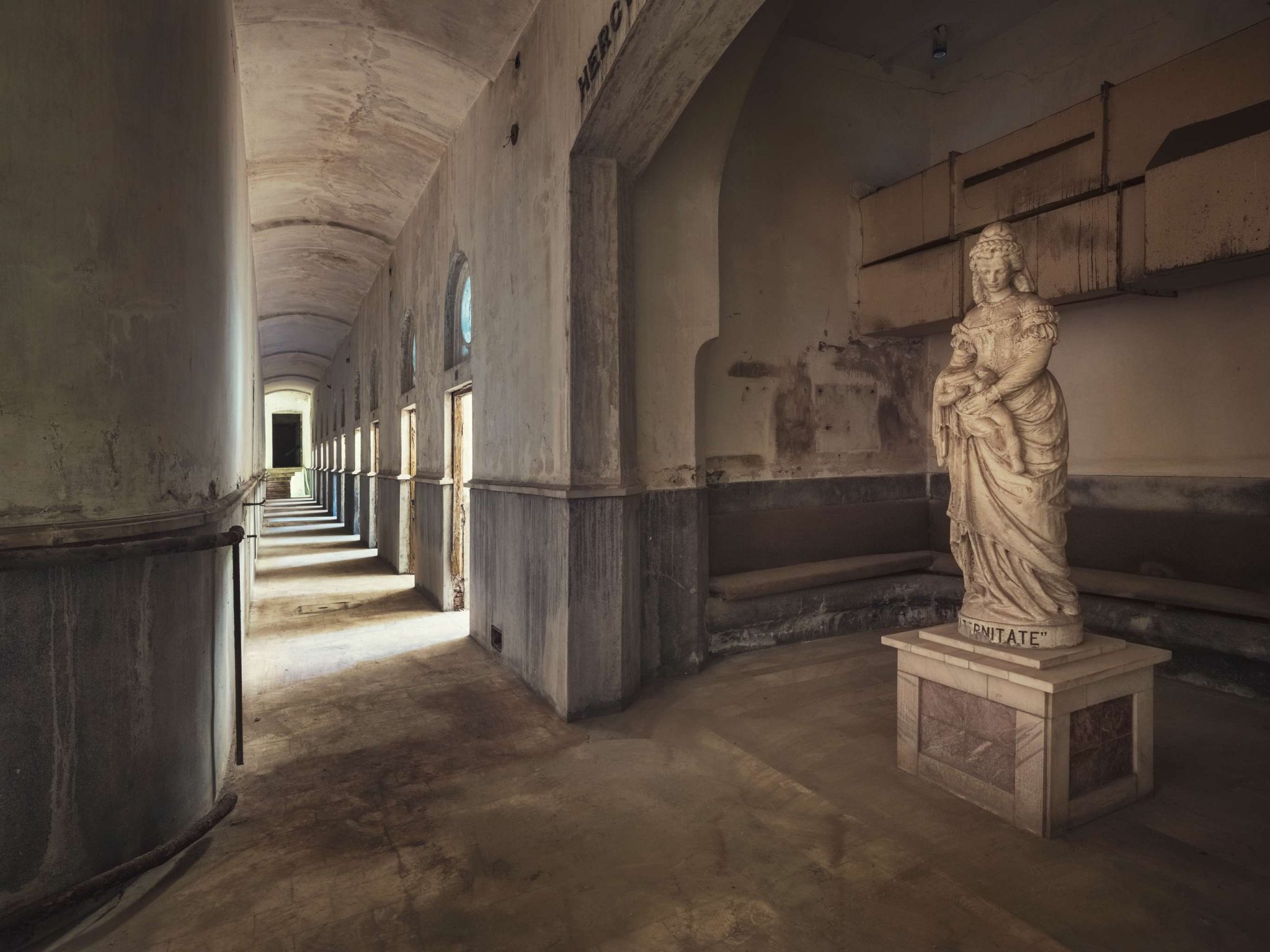
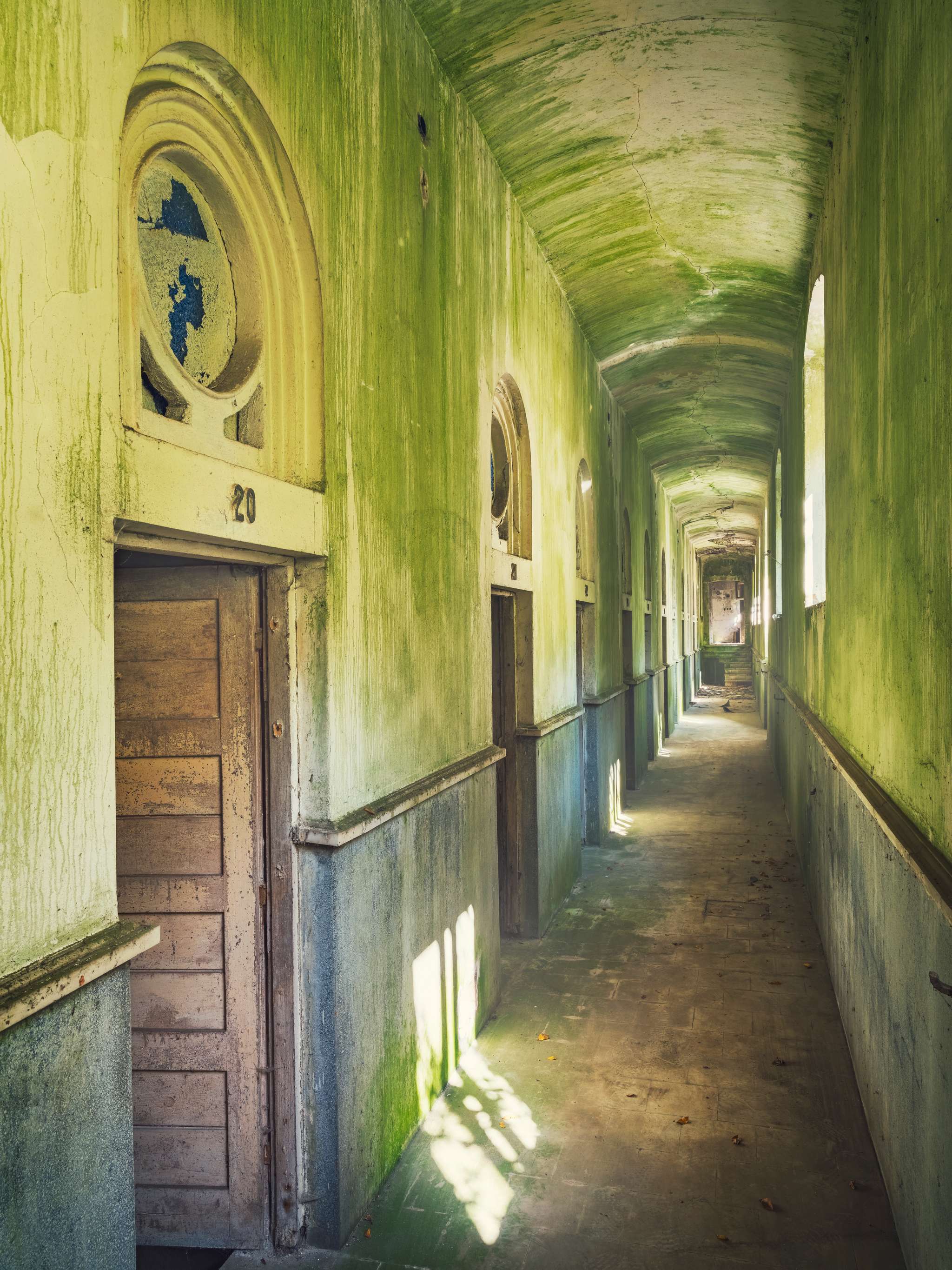
A few hundred metres away lies the Apollo Bath, the second building I photographed, and it is quite different. No colours, no columns, but tall, bare halls with pools, one of them still holding water. The light comes through small windows of green glass. In one corridor stands the figure of a mother and child; a few steps further on moss has covered the walls of a passage completely.
The bath on Hercules Square goes back to a communal bath of the eighteenth century and was given its present form in 1852. It was in use until after 1989 and has been in private hands since 2010.
Why is Herkulesbad decaying?
In 2001 the Romanian state sold the company that owned some fifty buildings in the resort and the rights to the thermal water. What followed has occupied prosecutors since 2016: by their account 22 properties were stripped from the company through sham transactions between 2007 and 2016. In November 2025 the Timișoara Court of Appeal convicted six defendants and ordered 19 properties returned to the state, among them the casino and several baths. The judgment is not final.
At the Neptune Baths the situation is especially tangled. The building has belonged to the town since 2012, the land beneath it belonged to two private individuals, and without the land the town could obtain no funding. In February 2019 two load-bearing walls and a roof collapsed, and in December 2021 another wall.
Since 2017 the Locus association from Timișoara has been looking after the baths through its “Herculane Project”. Volunteers have cleared rubble, propped roofs and built emergency coverings, paid for by donations. In 2022 Europa Nostra placed the Neptune Baths on its list of Europe's seven most endangered heritage sites. According to the town hall in October 2026, a full restoration has not been decided.
One would dearly like to rescue such buildings oneself after a visit. One can only hope that here it succeeds in time.
The pictures
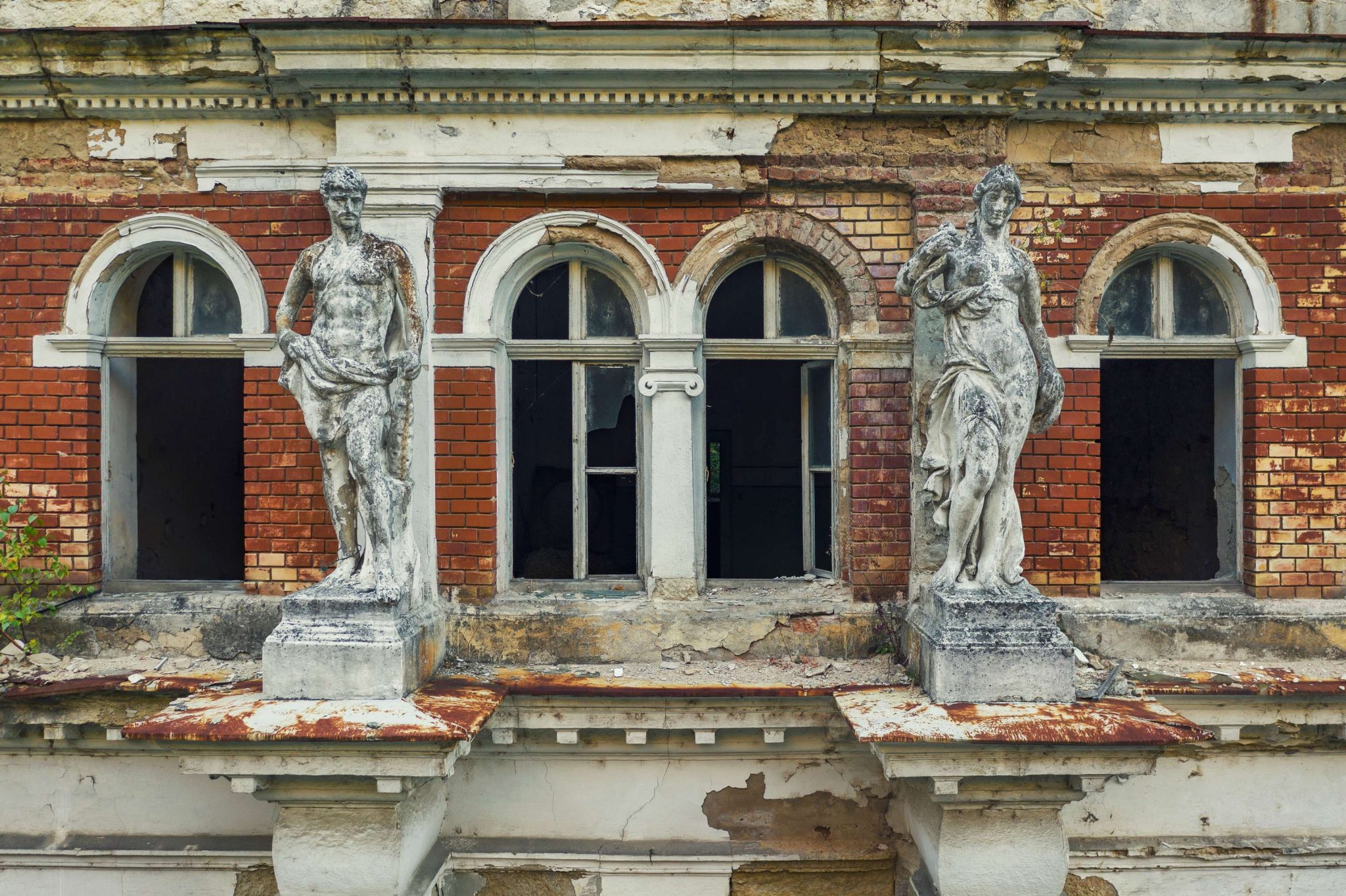
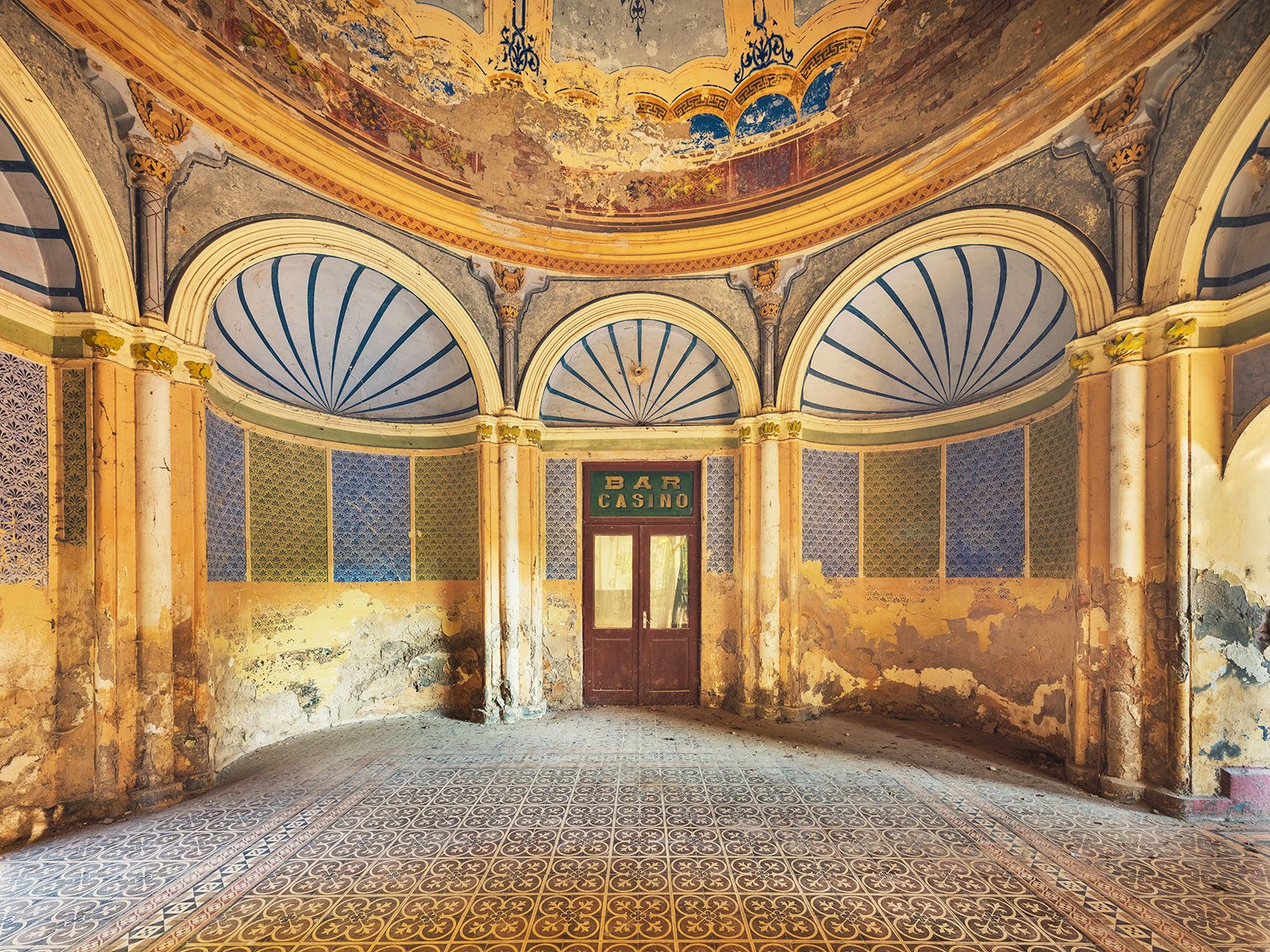
22 photographs from Băile Herculane. Six of them belong to my series SANCTUARIES OF BLISS, BOUNDLESS and VERTICALITY.
Sources and further background
This story draws on the following sources.
- Baia Neptun Herculane, istoric. Herculane Project (Asociația Locus) , accessed 11. November 2026
- Reactivarea Băilor Neptun. Herculane Project , accessed 11. November 2026
- Băile Neptun din Băile Herculane. Primăria Băile Herculane, 19.10.2026 , accessed 11. November 2026
- Stațiunea Băile Herculane. Primăria Băile Herculane, 14.10.2026 , accessed 11. November 2026
- Statuia lui Hercules. Primăria Băile Herculane, 05.10.2026 , accessed 11. November 2026
- Băile Neptun – The Neptune Baths. Patrimoniu Balnear, 26.11.2020 , accessed 11. November 2026
- Baia Apollo – The Apollo Bath. Patrimoniu Balnear, 08.02.2020 , accessed 11. November 2026
- Cazinoul – The Casino. Patrimoniu Balnear, 26.11.2020 , accessed 11. November 2026
- Europe's 7 Most Endangered heritage sites 2022. Europa Nostra, 29.03.2022 , accessed 11. November 2026
- Vacanțe la Băile Herculane. Radio Europa Liberă România, 15.08.2022 , accessed 11. November 2026
- Condamnări în dosarul DIICOT privind devalizarea stațiunii Băile Herculane. Economedia, 15.11.2025 , accessed 11. November 2026
- Băile Herculane, paradisul Banatului montan, blocat. Adevărul, 16.07.2026 , accessed 11. November 2026
- Road to ruins: once world-famous spa in tragic decay. Átlátszó, 26.07.2023 , accessed 11. November 2026
- Băile Herculane. Wikipedia (deutsch) , accessed 11. November 2026
Series
More from SANCTUARIES OF BLISS
Fine art prints on the theme
Related stories
All stories →
Share