


Stories · Places · United Kingdom, Wales
Dinorwic: Through the slate quarry of Llanberis in a storm
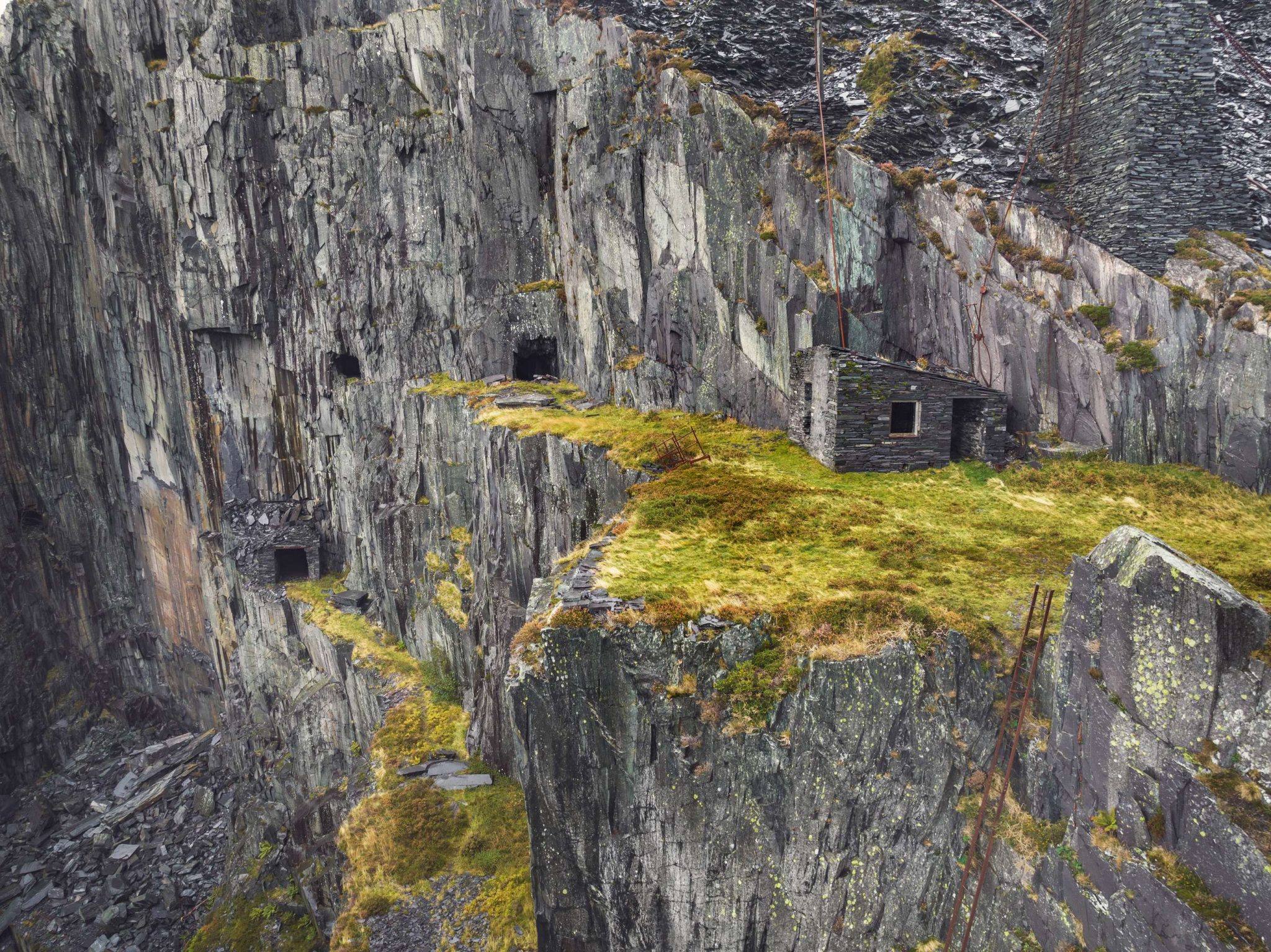
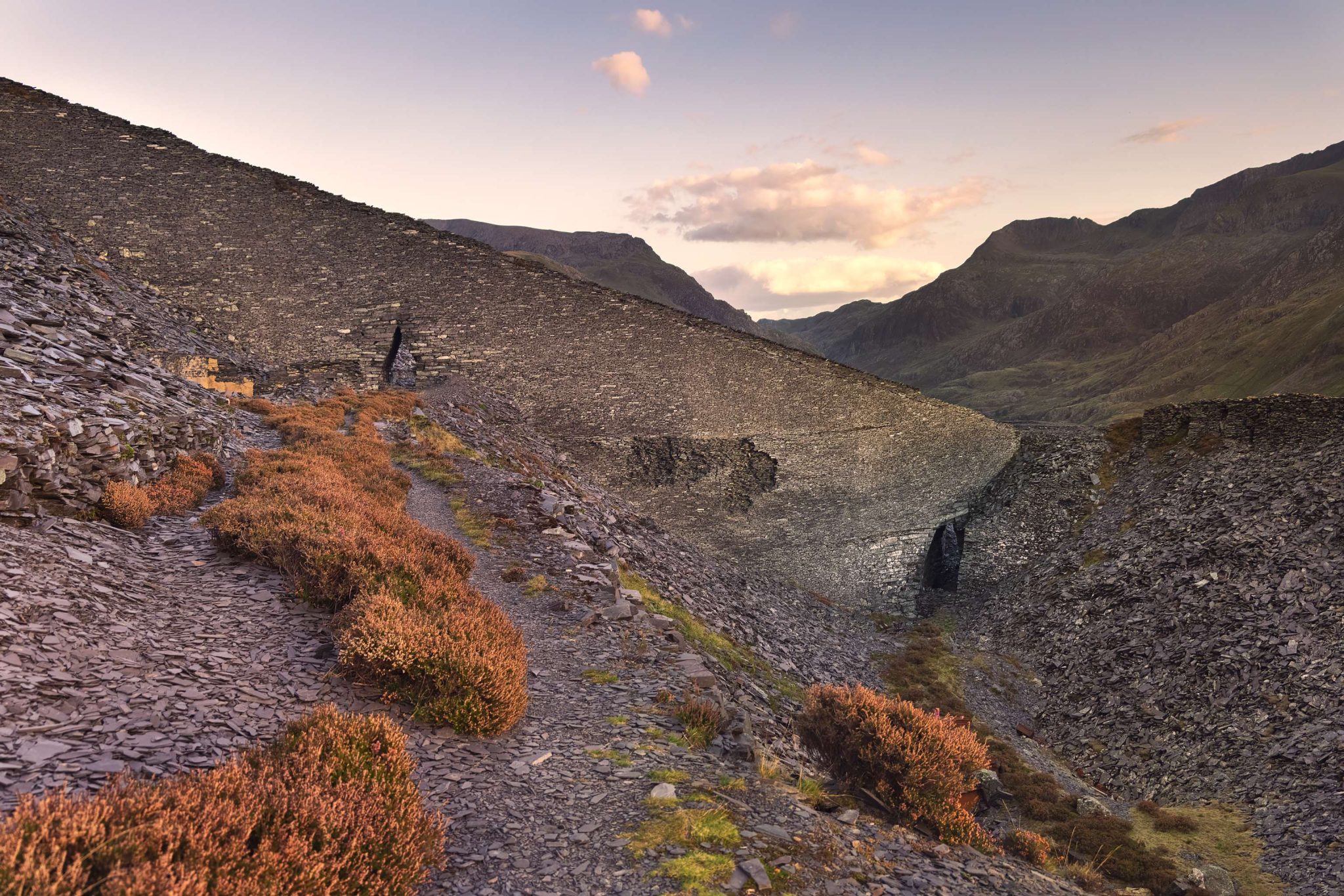
Once the second largest slate quarry in the world, silent since 1969: Dinorwic in North Wales. In November 2022 I climbed up from the Anglesey Barracks in heavy rain, through a landscape that felt like Mordor.
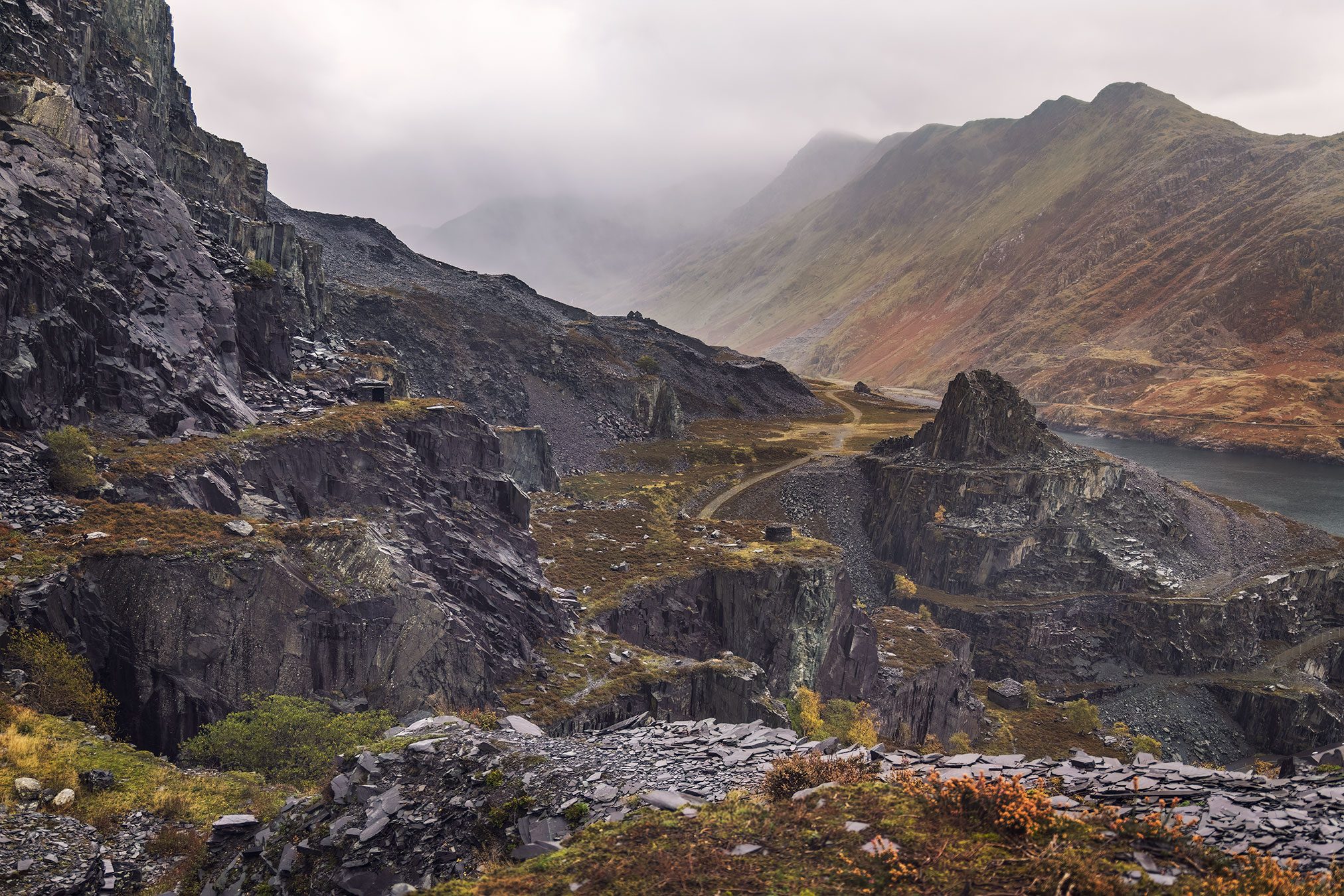
Dinorwic slate quarry (Dinorwig in Welsh) lies near Llanberis in North Wales, on the flank of Elidir Fawr above the lake of Llyn Peris. Slate was quarried here from 1787 to 1969, at times by around 3,000 men, and in its day the quarry was reckoned the second largest in the world. What remains are terraces, tips, inclines and the ruins of the Anglesey Barracks.
At a glance
Dinorwic Slate Quarry (Chwarel Dinorwig)
- Location
- Near Llanberis, Gwynedd, North Wales, on Elidir Fawr above Llyn Peris
- Built
- Quarried from 1787; Anglesey Barracks c. 1860 to 1873
- Architect / client
- Assheton Smith family, Vaynol estate (owners)
- Usage
- Slate quarry with more than 30 galleries, at times around 3,000 workers
- Abandoned since
- 1969; barracks uninhabited since 1937
- Condition
- Ruins, tips and inclines; barracks and mill listed; UNESCO World Heritage since 2021
- Visited
- November 2022 and September 2025
A day in the storm
Dinorwic was the high point of my journey through Wales, and as a setting it surpassed everything I had imagined. A raw autumn day at the beginning of November 2022 promised the best conditions for light and colour, yet at the same time I was accompanied by signs of storm and rain that would later catch me out quite thoroughly.
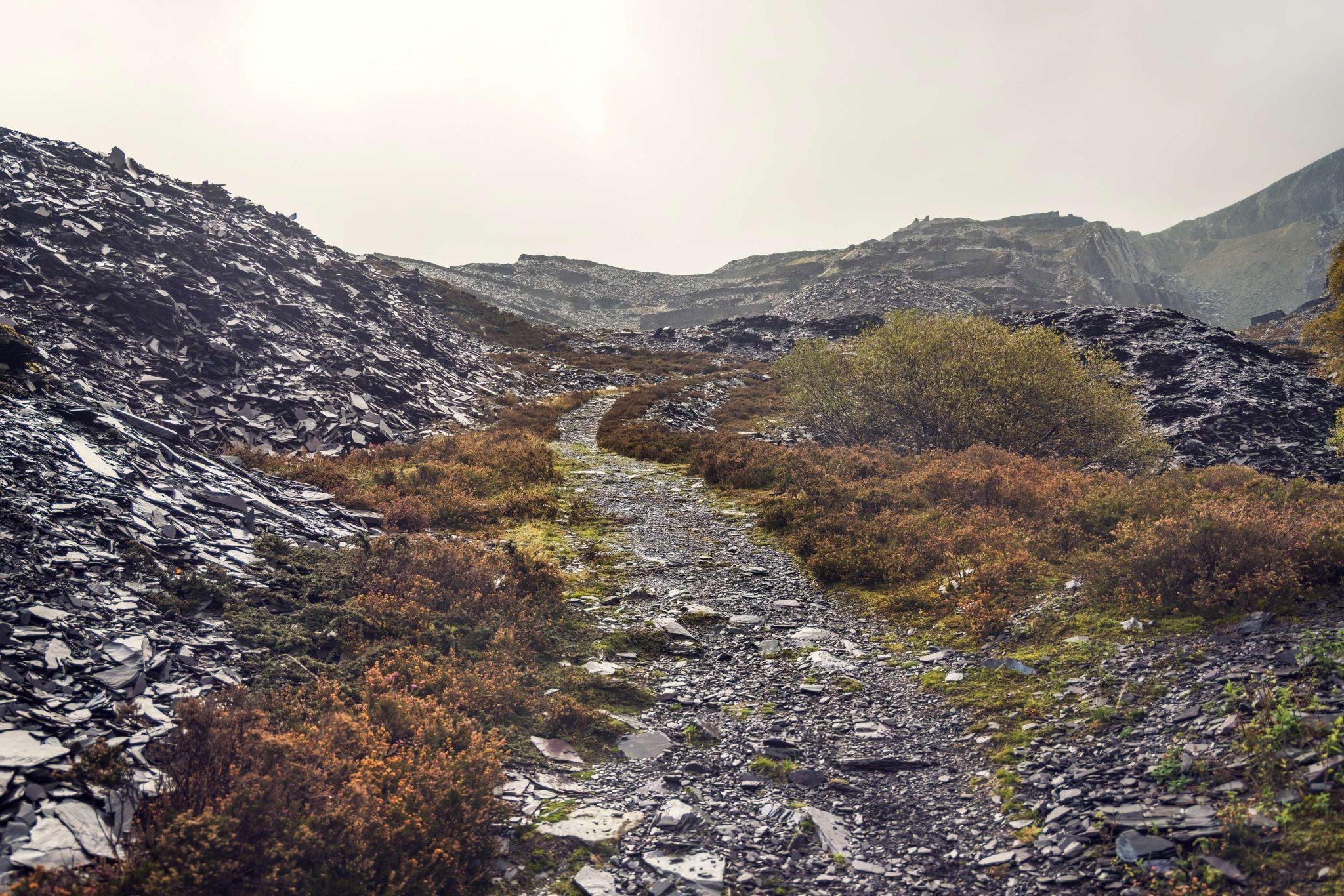
From Llyn Peris the way led up narrow steps and passages of slate, first to the Anglesey Barracks. After that I wanted to follow the tramways and levels right to the top, and had set the whole day aside for it. But before long came heavy rain and squalls; clothes and equipment were soaked through, the wind whipped the rain into my face, and it became a constant struggle between giving up and carrying on.
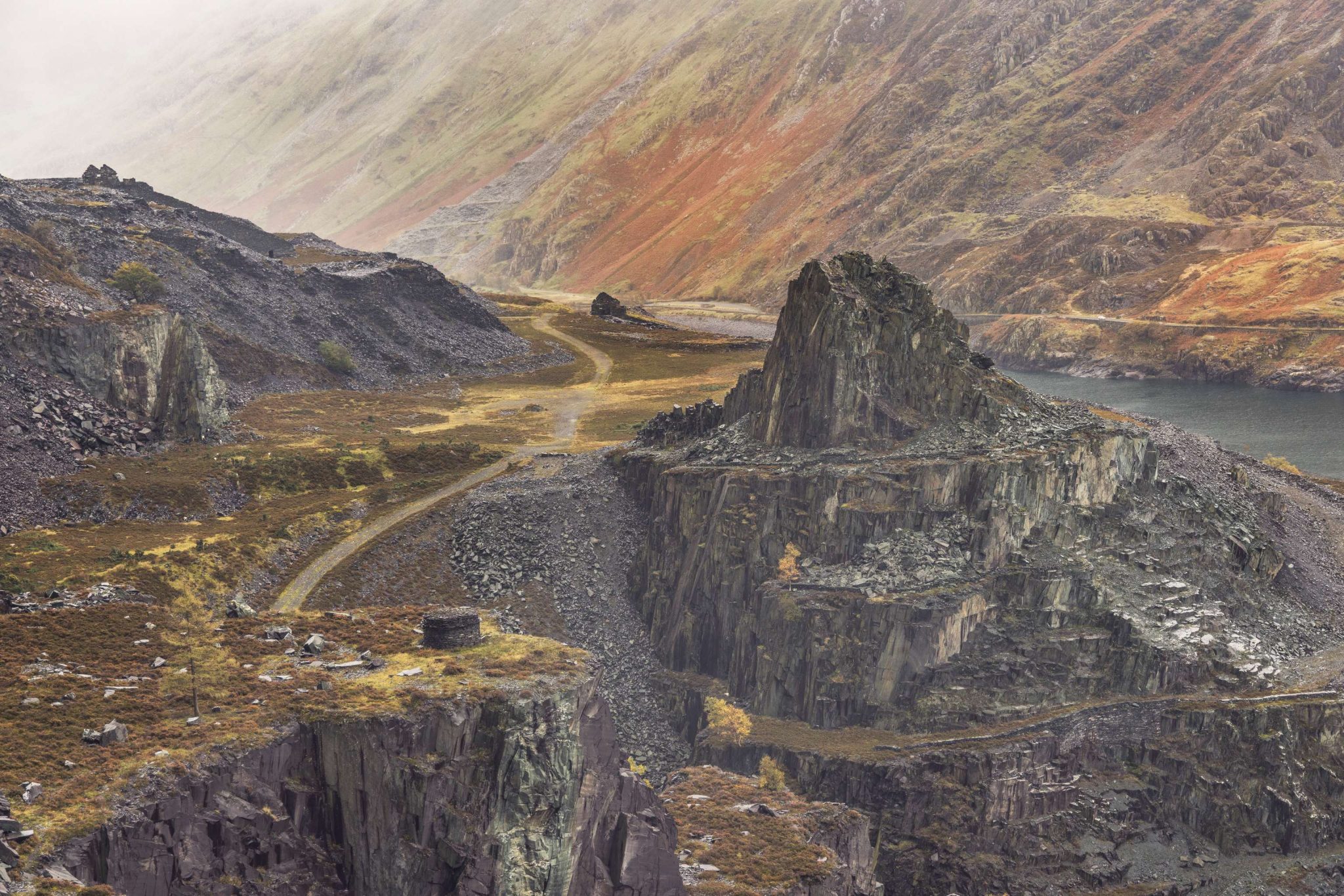
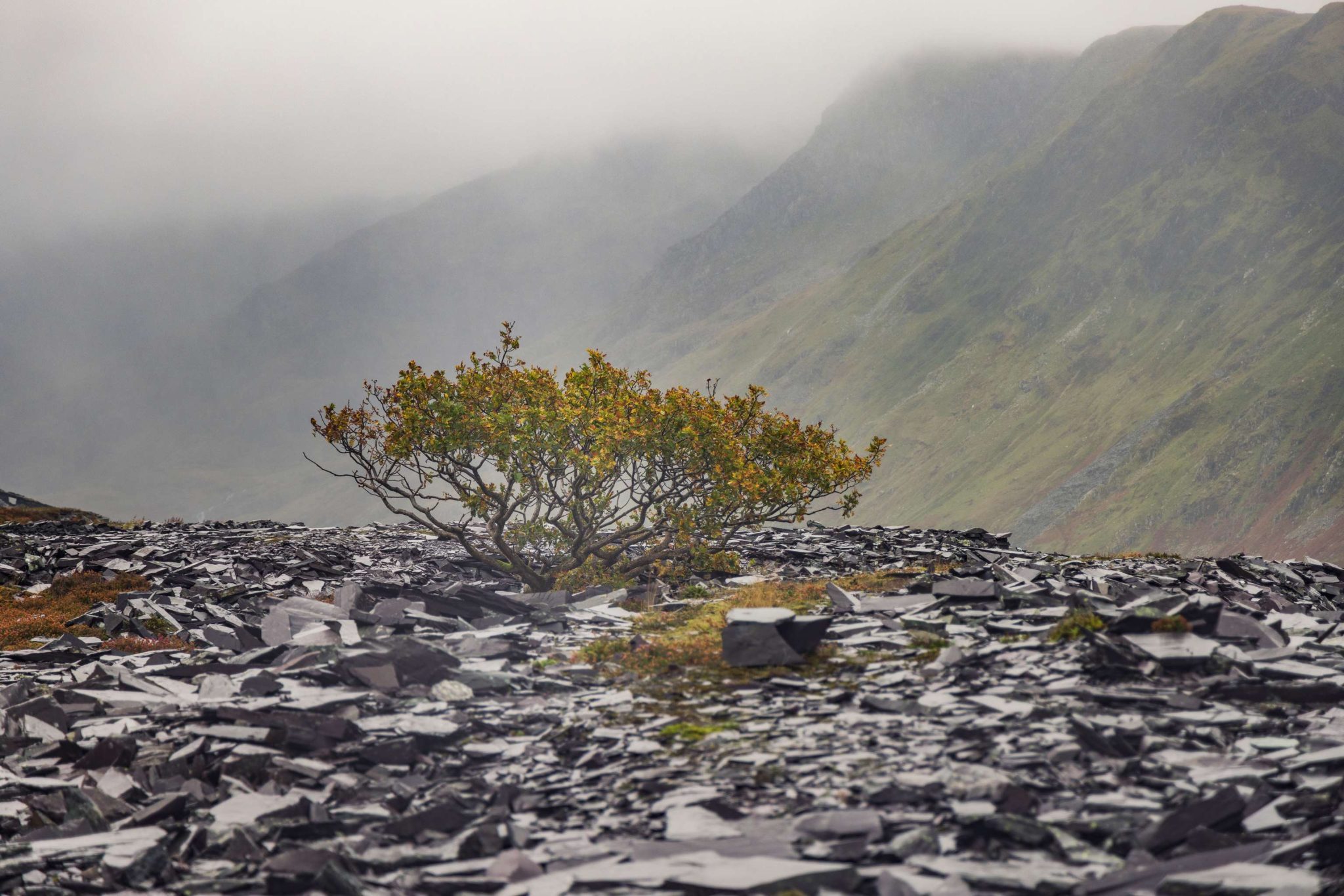
And still the fascination won. Black deserts, mountains and valleys of broken slate, gleaming black in the rain, with enormous clouds and drifts of mist above: it felt like a journey straight through Mordor. My only companions were a few goats now and then, which crossed the mountain with ease and were presumably laughing at me.
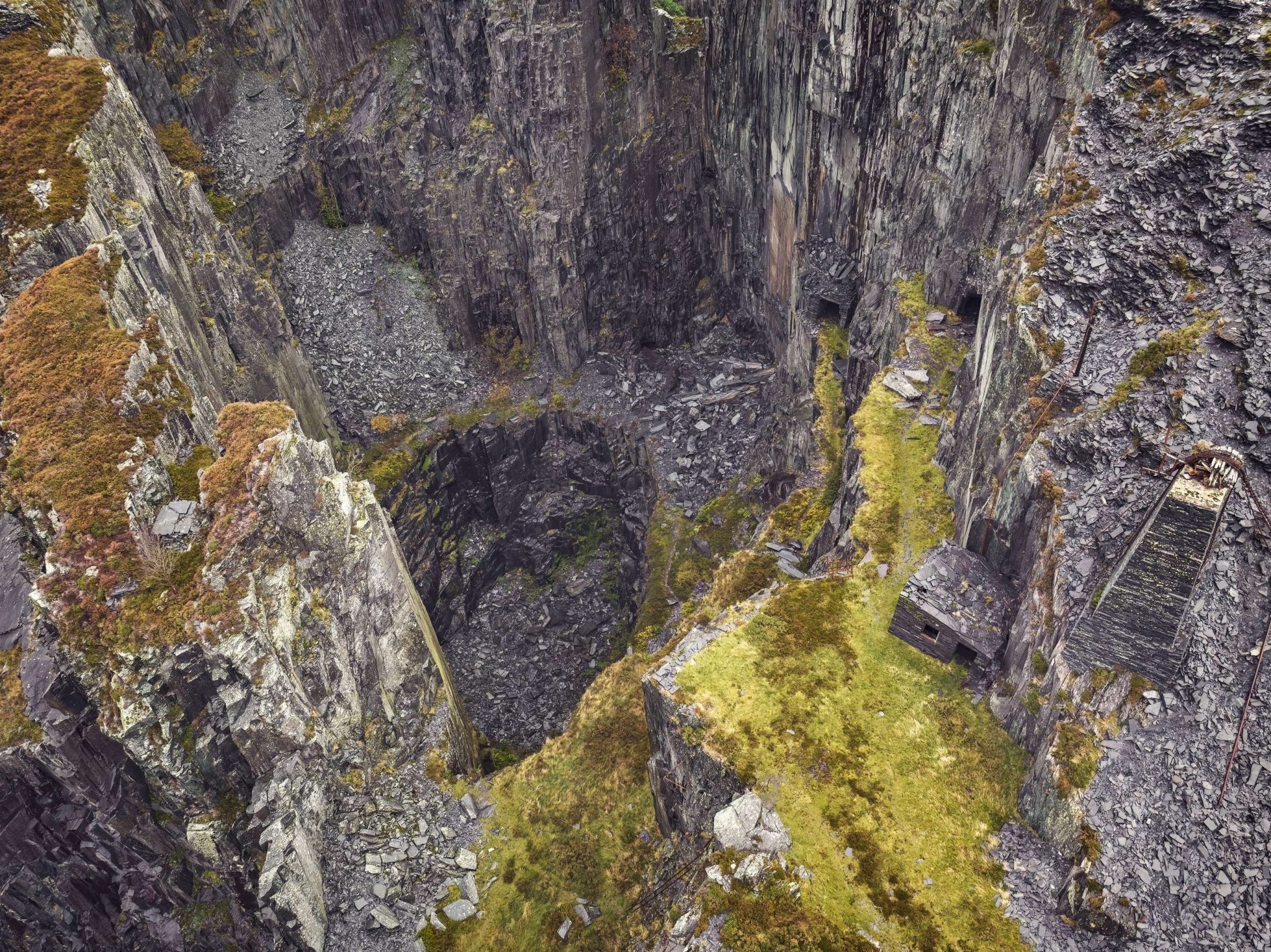
Only shortly before dark were there a few breaks in the rain for aerial photographs. I climbed about 400 metres that day, and in the dark I stood at the lake again.

How big was Dinorwic slate quarry?
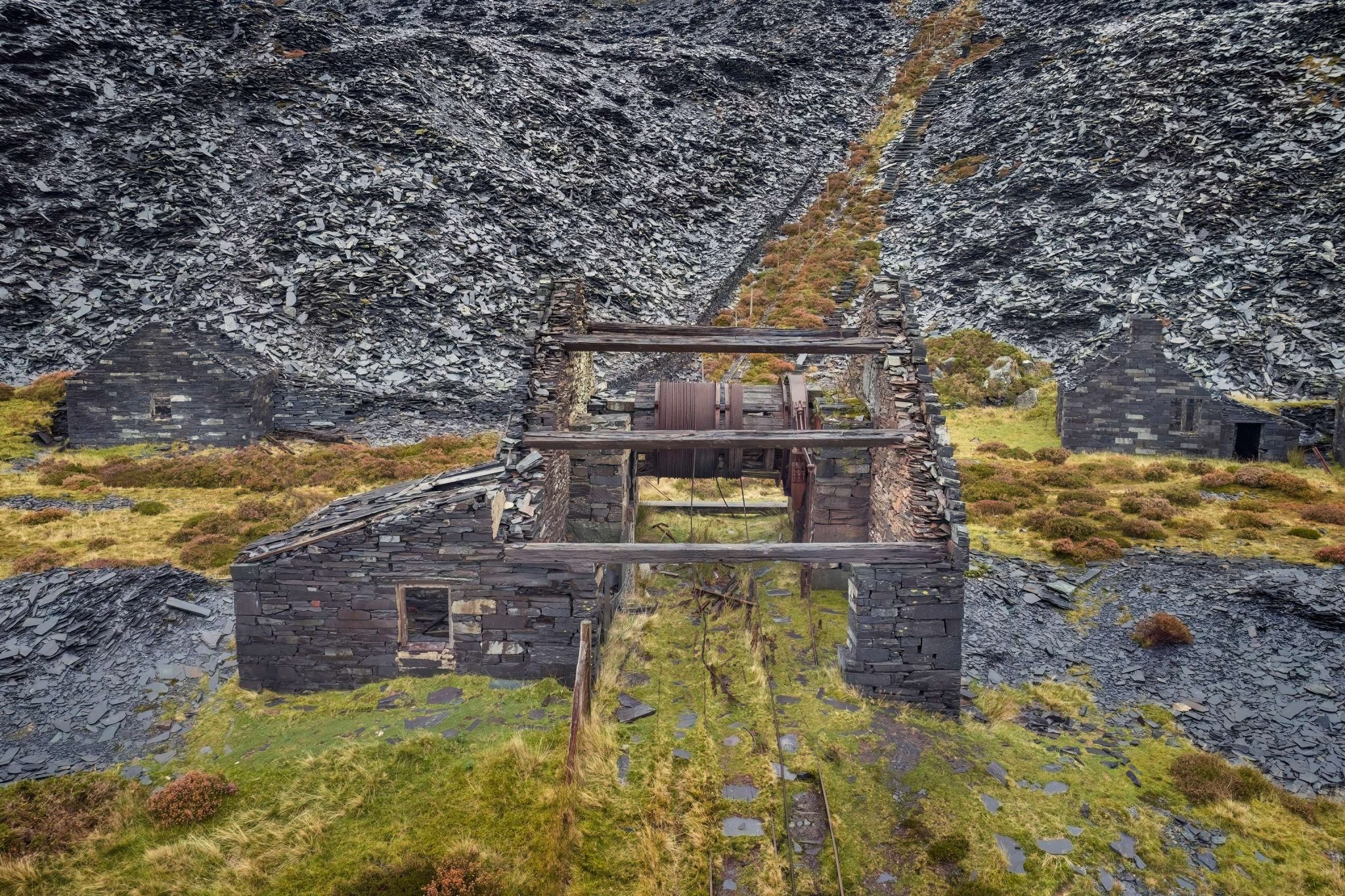
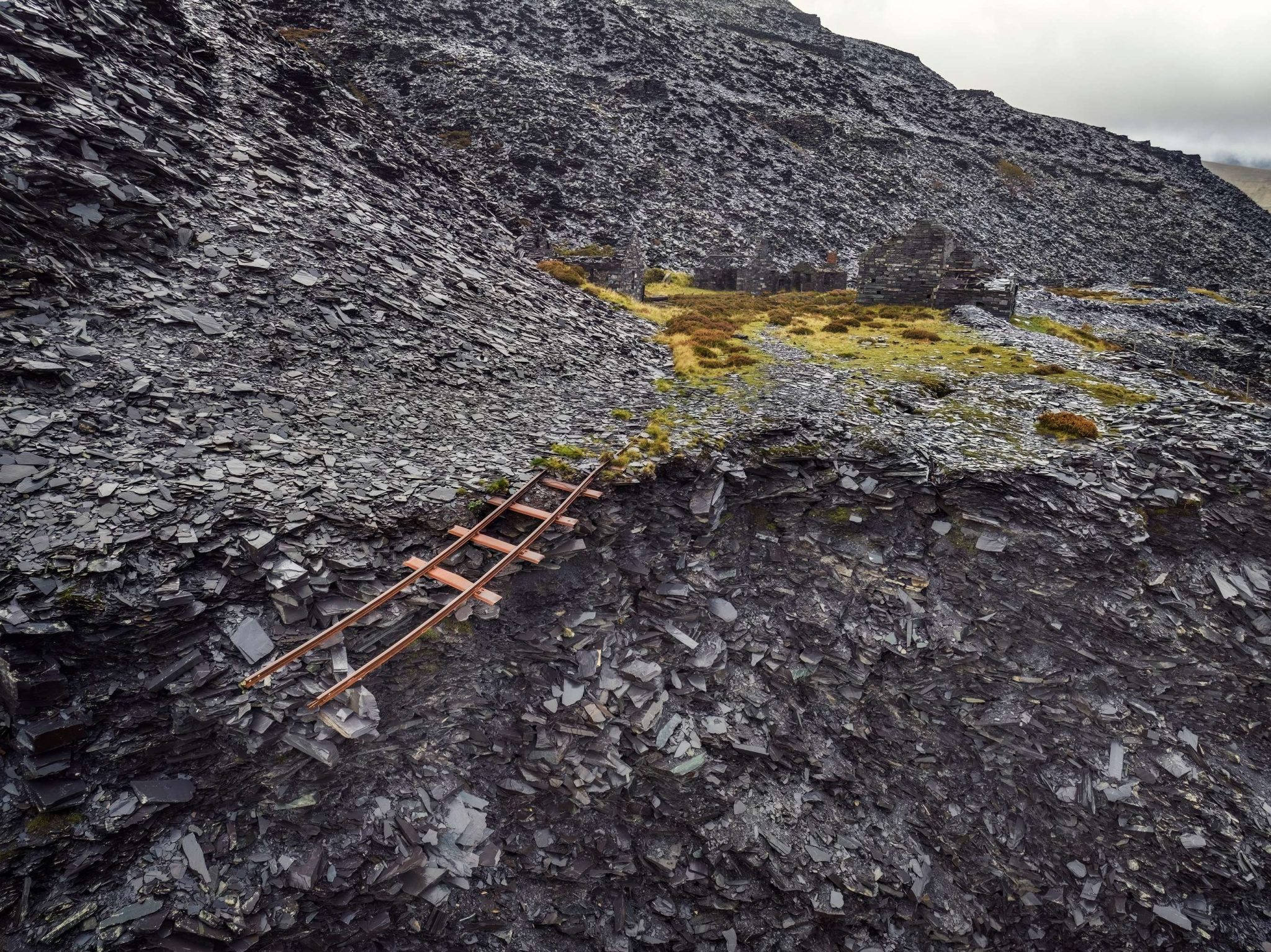
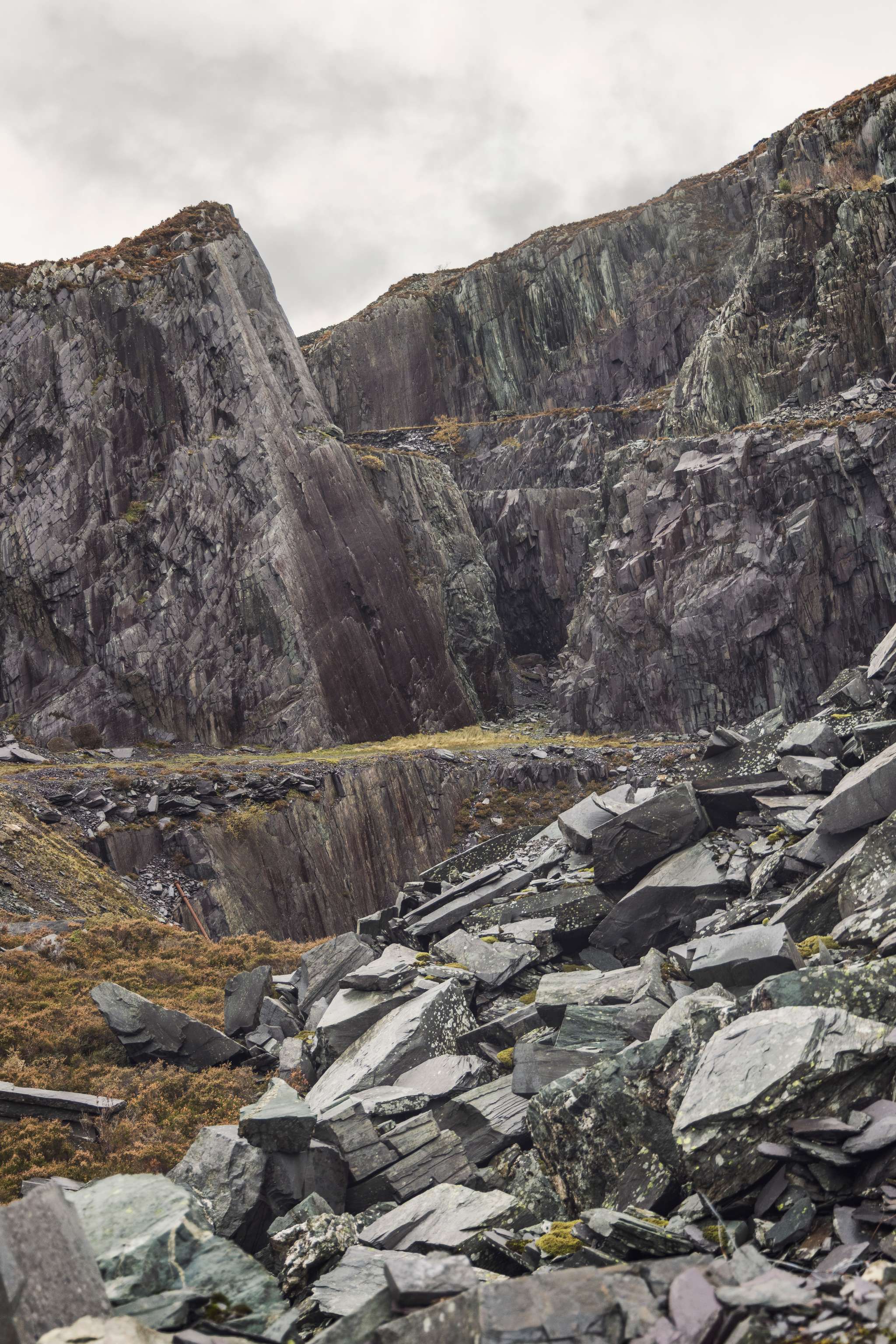
Quarrying began in 1787 on the land of the Assheton Smith family of the Vaynol estate. Coflein, the Welsh historic environment record, describes the quarry as a landform of stepped rock faces, inclined planes and tips rising 500 metres from the valley floor. More than 30 galleries lie one above another, each with its own tip and each connected to a system of inclines on which the loaded wagons hauled the empty ones up.
In the late 1890s Dinorwic produced about 100,000 tonnes of slate a year. Down by the lake stood the workshops of Gilfach Ddu. From there, from 1843, the Padarn Railway carried the slate to the company's own harbour of Port Dinorwic, today's Y Felinheli on the Menai Strait.
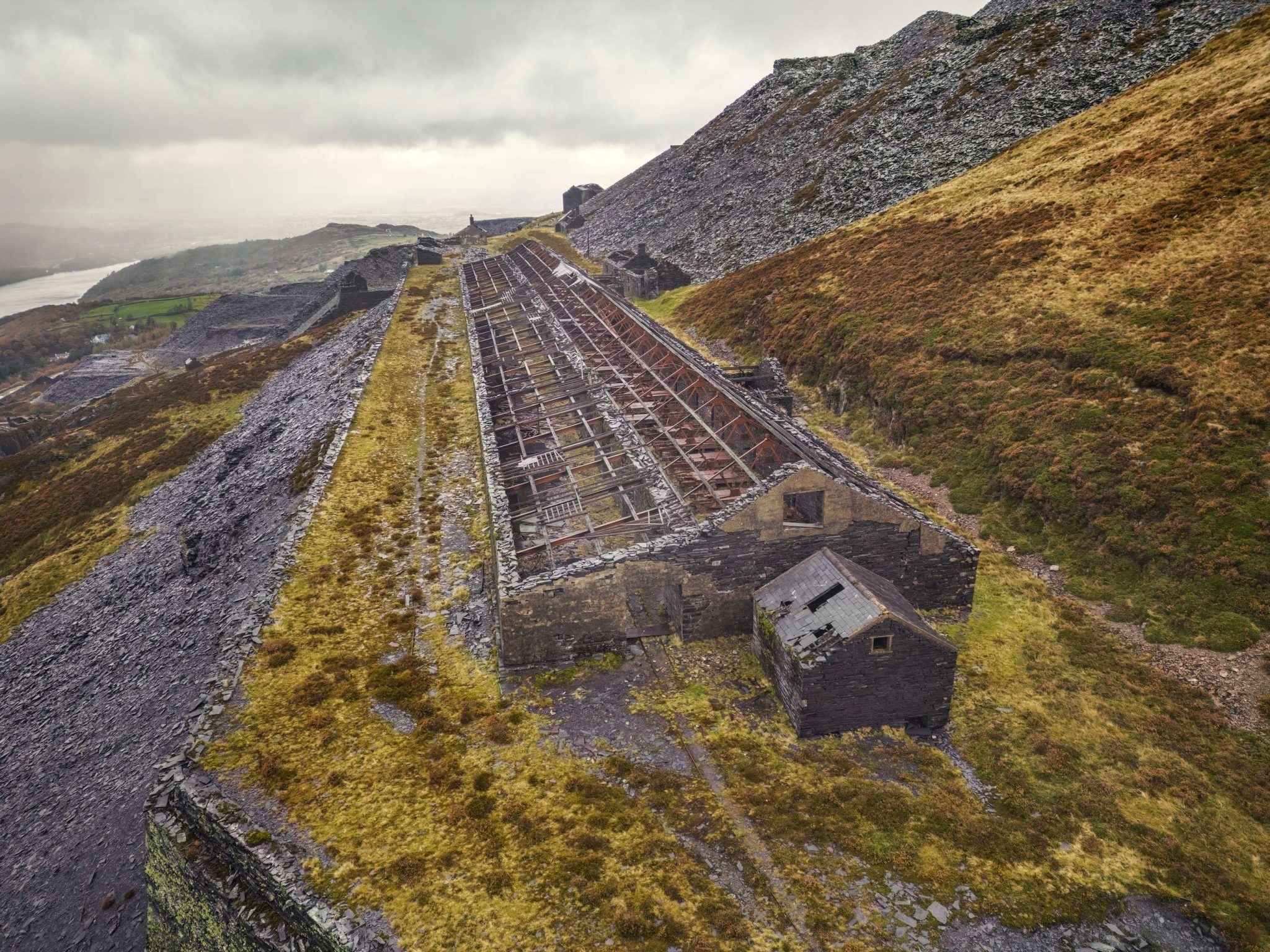
High up, on the side of the quarry known as Braich, stands the Australia Mill of the late nineteenth century. It ran first on steam and after 1905 on electricity, and worked until 1969; according to the listing its 36 saw tables survive virtually intact.
The Anglesey Barracks
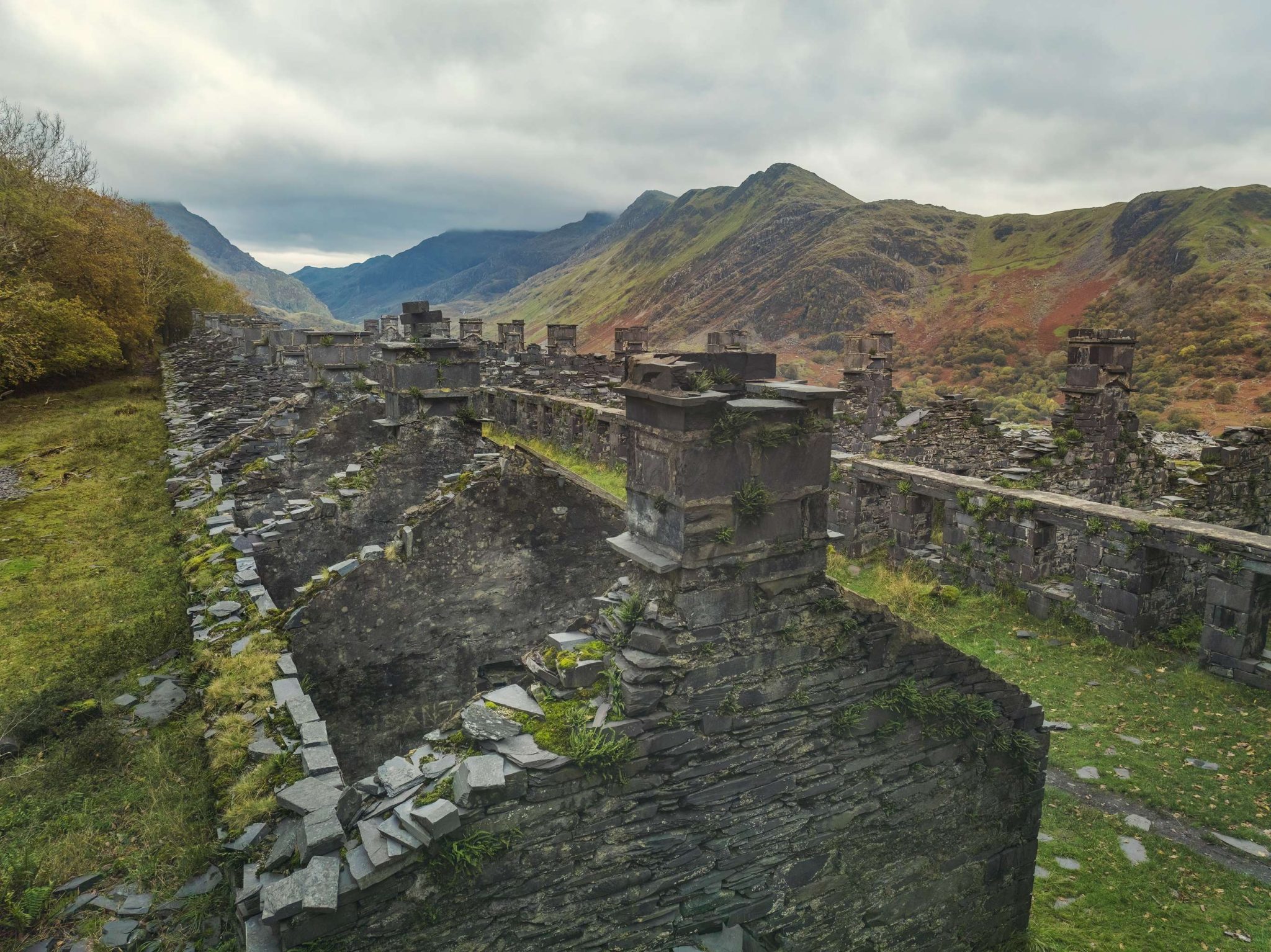
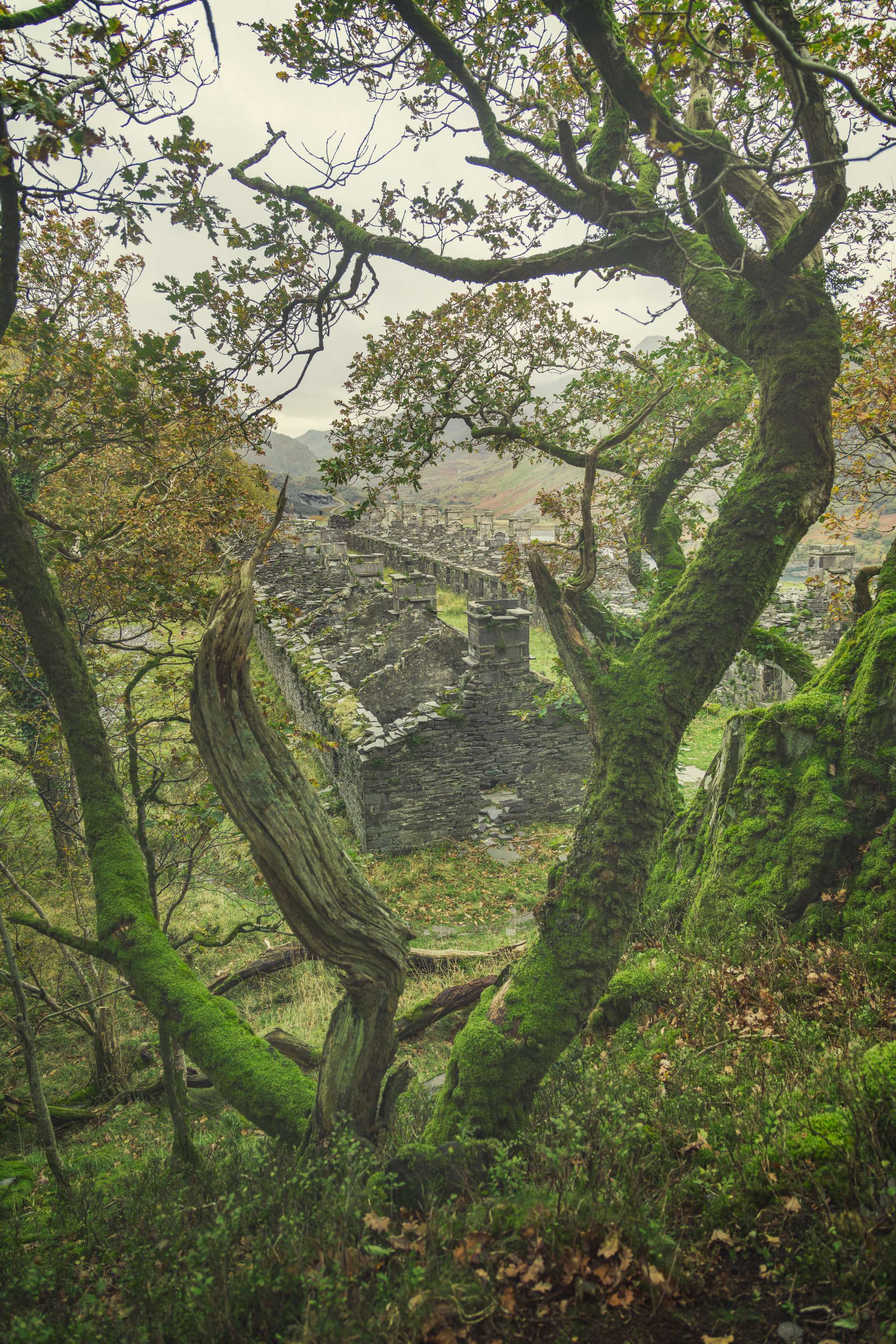
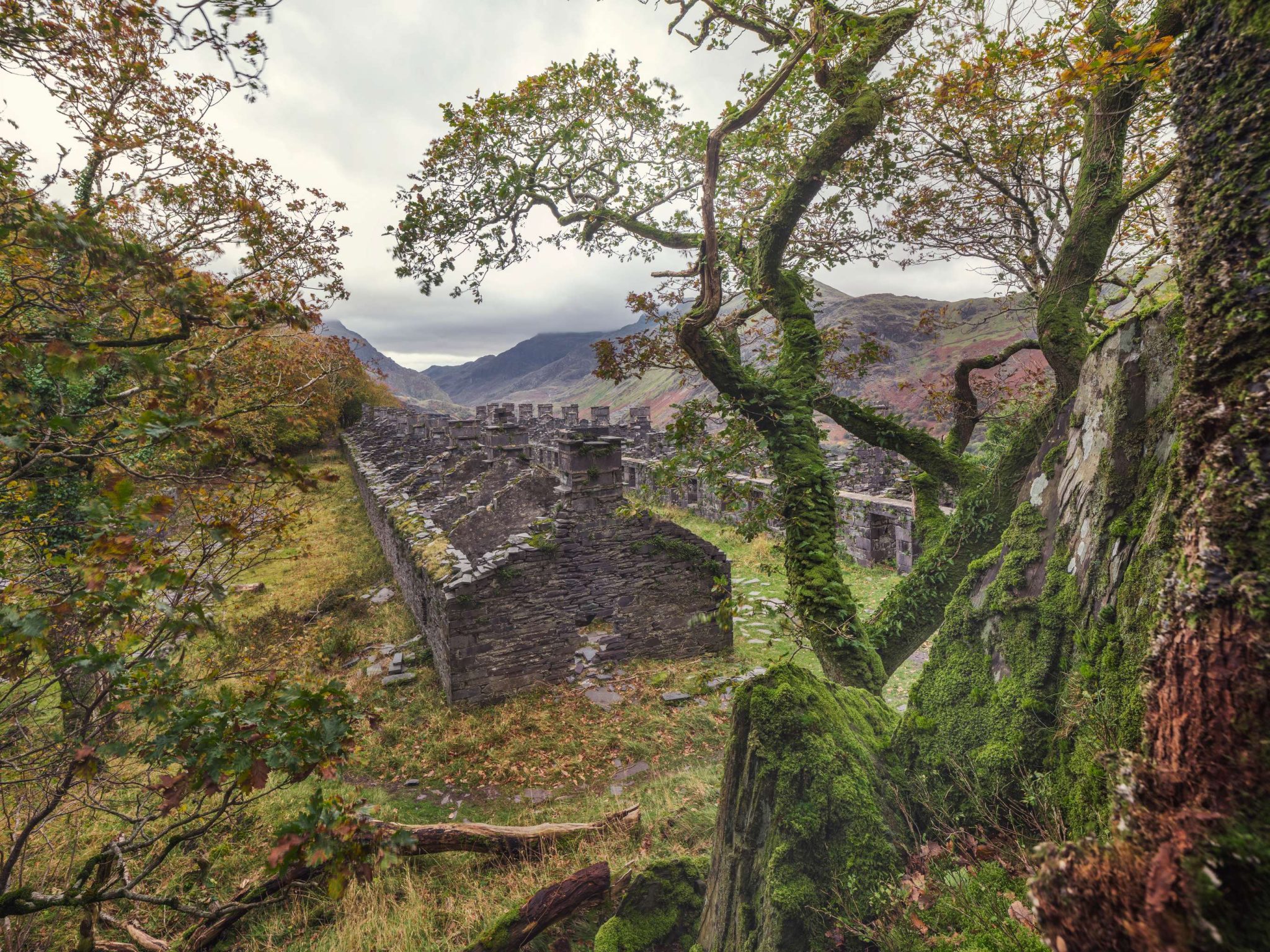
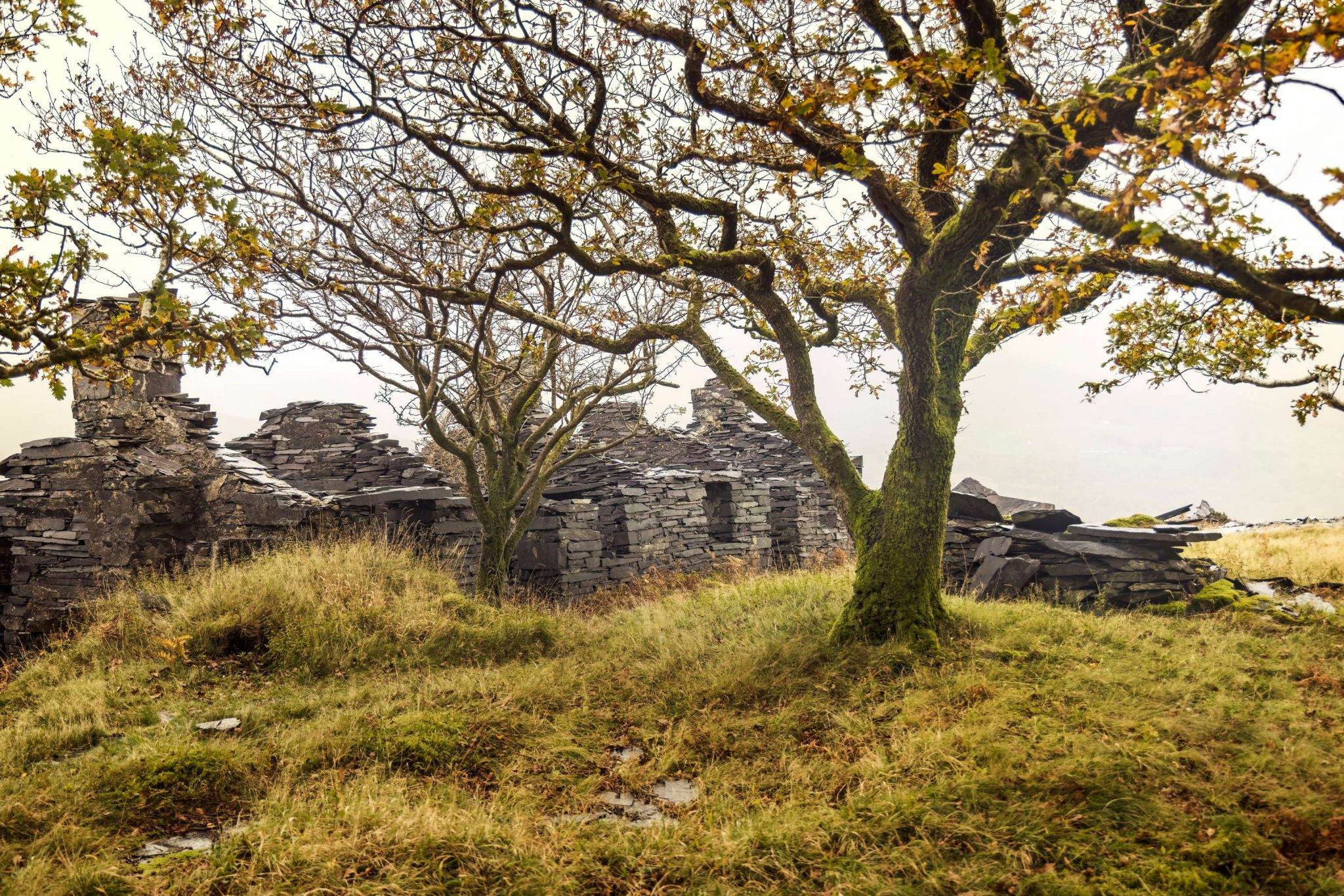
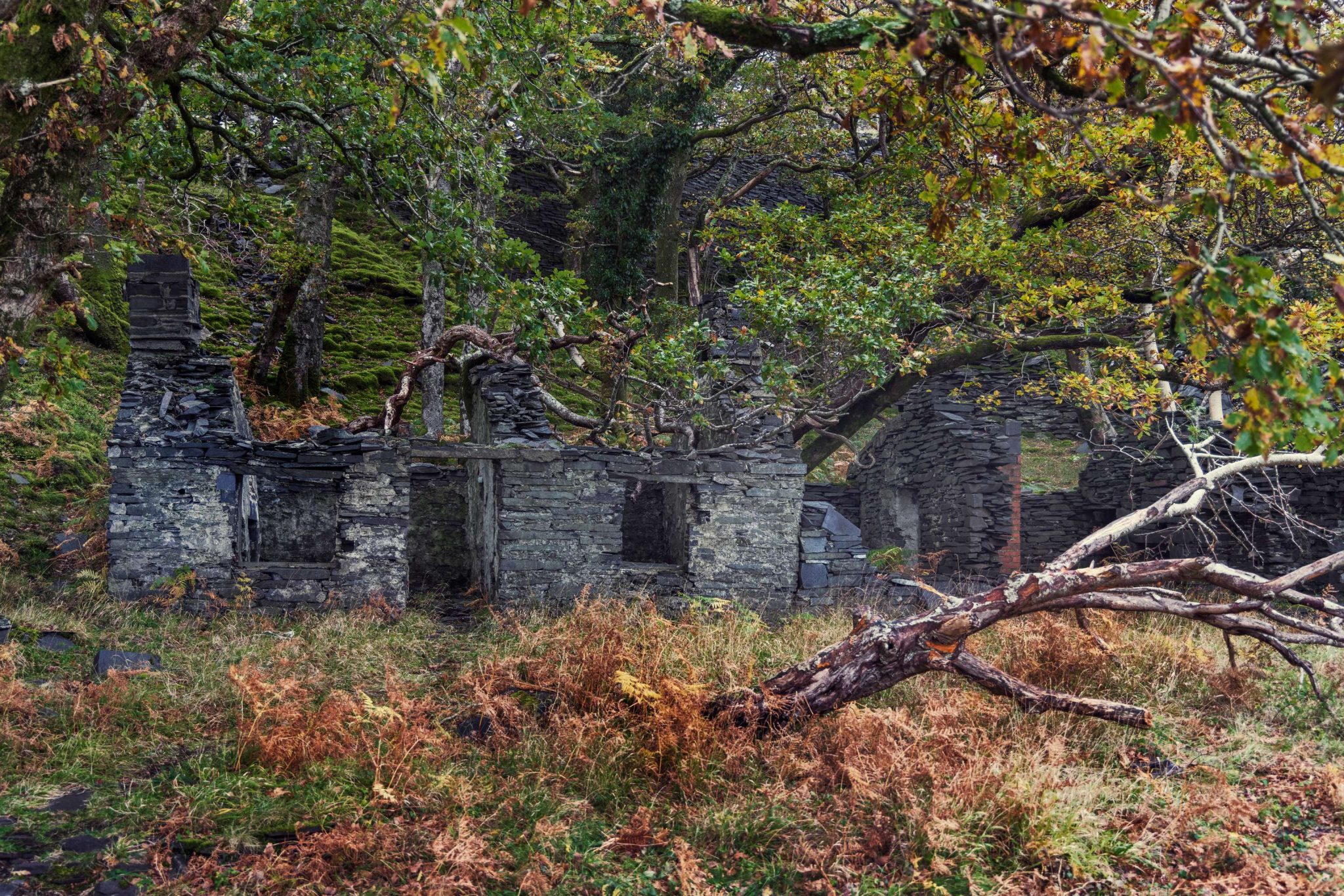
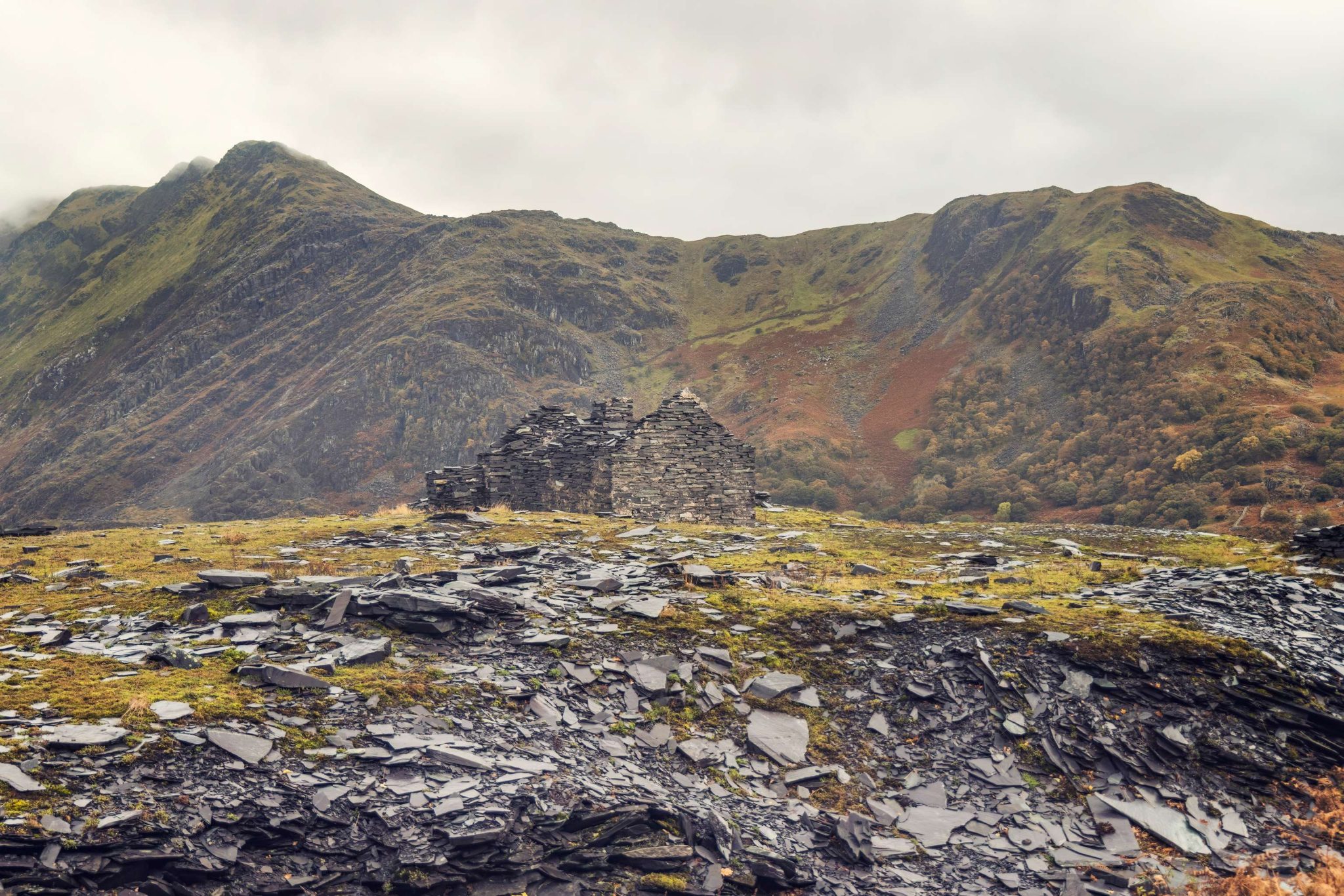
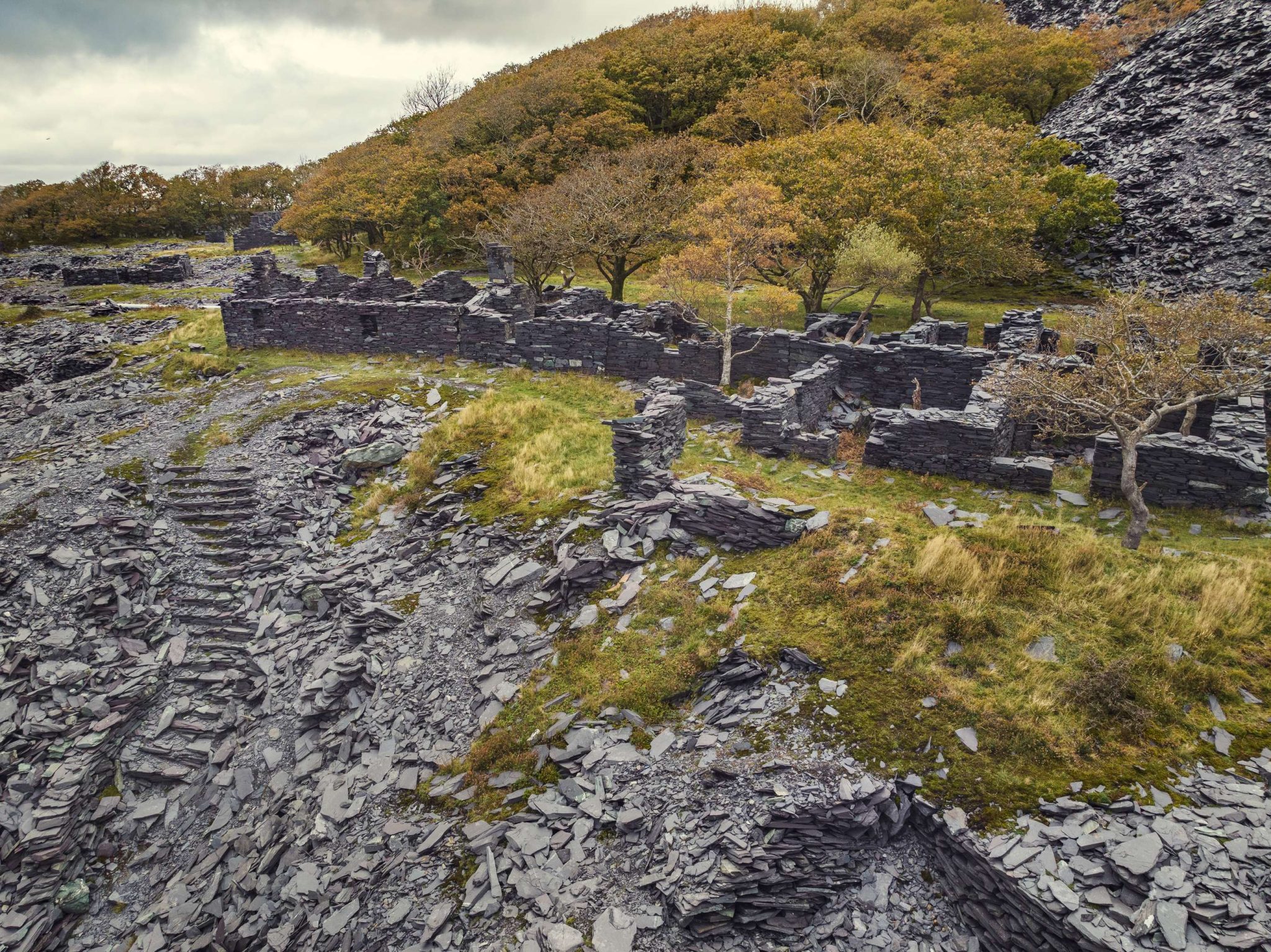
Two rows of houses face each other on a shelf above the lake, roofless, with a chimney on every party wall. In Welsh they are called Dre Newydd, the new town. Here lived workers whose homes were too far away for a daily journey, among them men from the island of Anglesey. They stayed on the mountain through the week.
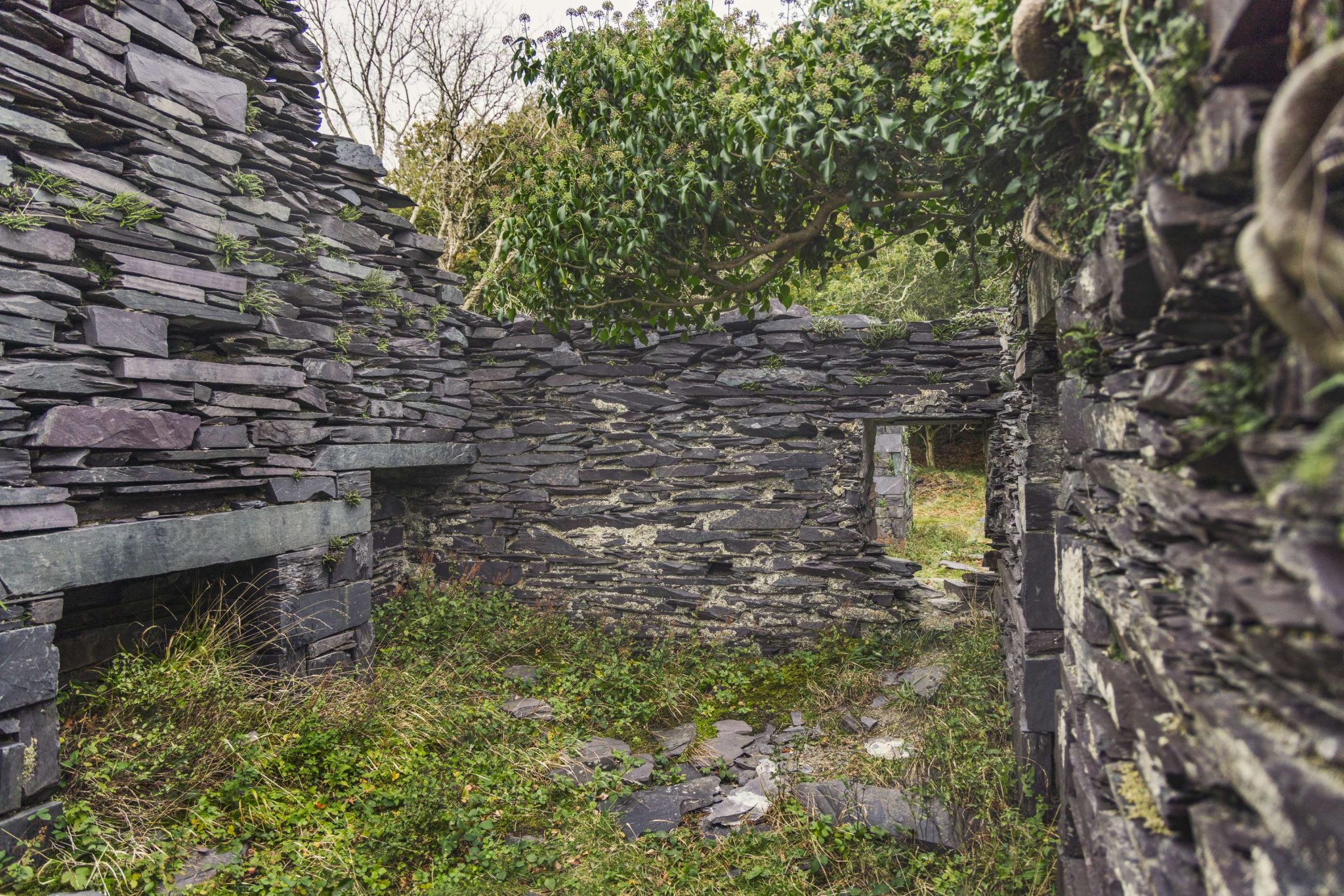
Each unit had two small rooms, the larger with a hearth. The sources disagree on the details: the heritage body Cadw counts two rows of eleven houses and dates them to about 1860, while Coflein counts two rows of twelve and gives the years after 1869. The barracks were inhabited until 1937.
As simple and bare as the quarters were, their position above the mountains and the lake is sublime. I only wonder whether the workers were ever really able to enjoy that view.
Work, conflict and a hospital of their own
In 1874 the region's workers founded the North Wales Quarrymen's Union. In October 1885 the Dinorwic management locked out around 2,700 men after they had attended a mass meeting. The dispute lasted five months and ended in defeat for the workers.
Above Llyn Padarn stands the quarry hospital, built in 1860 and paid for from the men's contributions. It owned one of the earliest X-ray machines in North Wales.
Why did Dinorwic close?
Demand for slate fell in the twentieth century; around 1930 some 2,000 men were still working in the quarry. In 1966 a rock fall put part of the workings out of use. The end came in the summer of 1969: the last 300 or so workers lost their jobs, machinery and locomotives were auctioned that same year, and the land in 1970.
What the working quarry looked like is shown in three short silent films from 1950, 1960 and 1963, made available by the British Film Institute from the Welsh film archive: blasting, locomotives on the galleries, the inclines in motion, the splitting of slates by hand.
What is there today?
Inside Elidir Fawr the Dinorwig pumped-storage power station has been operating since 1984, with Llyn Peris as its lower reservoir. The Gilfach Ddu workshops became the slate museum of Wales in 1972; it has been closed for redevelopment since November 2024. Since July 2021 Dinorwic has been part of the UNESCO World Heritage Site of the Slate Landscape of Northwest Wales.
The mountain has not come to rest. The British Mountaineering Council reports rock falls again and again; in April 2025 a climber was seriously injured in one.
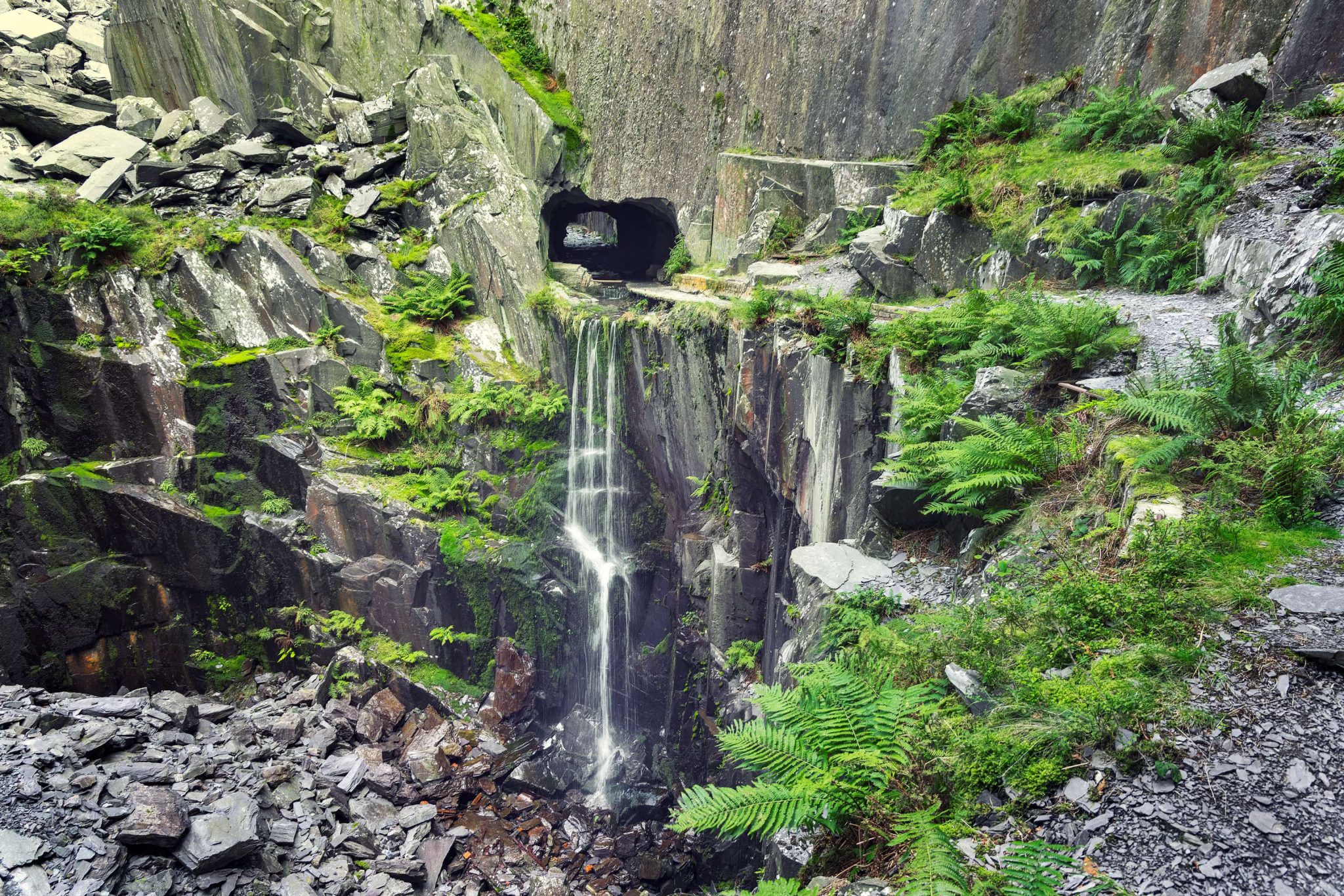
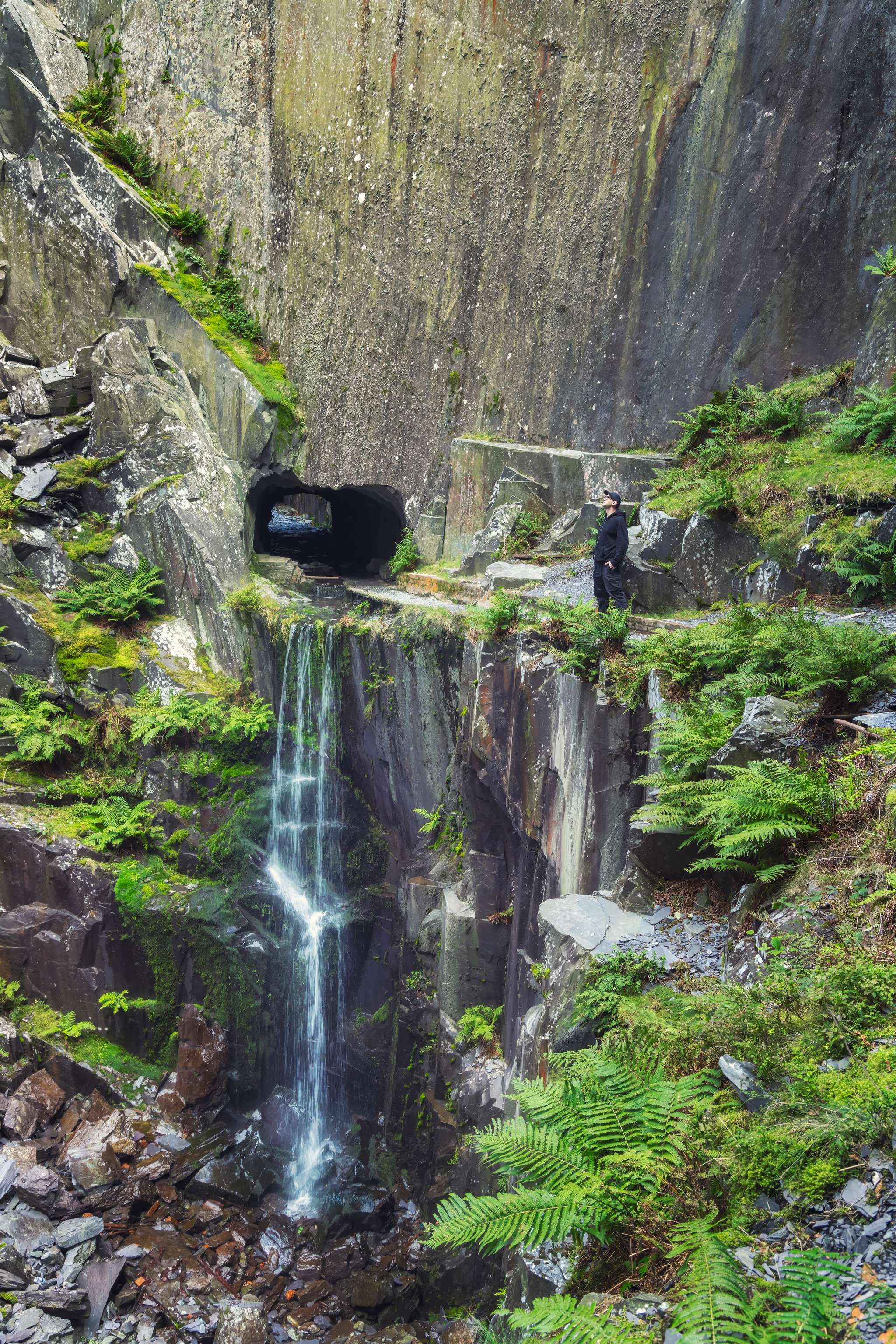
In September 2025 I returned to Dinorwic. The waterfall and the evening picture at the end of the sequence come from that trip, and I can be seen in both.
The pictures
22 photographs from Dinorwic, most of them from November 2022, the last three from September 2025. Three belong to my series DREAMSCAPES, ELEMENTAL and RUINS AND REVERIE.
Sources and further background
This story draws on the following sources.
- Dinorwic Slate Quarry. Coflein, Royal Commission on the Ancient and Historical Monuments of Wales , accessed 11. November 2026
- Dre Newydd (Anglesey Barracks), Dinorwic Quarry. Coflein , accessed 11. November 2026
- Quarryworkers' Barracks, Llanddeiniolen. Cadw, Listed Building 22654 , accessed 11. November 2026
- Slate Dressing Mill (Australia Mill). Cadw, Listed Building 22655 , accessed 11. November 2026
- Dinorwig Slate Quarry Mountain Landscape. Llechi Cymru, Wales Slate World Heritage Site , accessed 11. November 2026
- The Dinorwic lock-out 1885–86. People's Collection Wales, Gwynedd Archives , accessed 11. November 2026
- Former Hospital, Llanddeiniolen. British Listed Buildings (Cadw-Eintrag) , accessed 11. November 2026
- Dinorwic Quarry sale catalogues. Amgueddfa Cymru – Museum Wales , accessed 11. November 2026
- National Slate Museum to close temporarily. Amgueddfa Cymru, 10.10.2024 , accessed 11. November 2026
- Dinorwig Slate Quarries. British Mountaineering Council, Regional Access Database , accessed 11. November 2026
- Dinorwic quarry. Wikipedia (englisch) , accessed 11. November 2026
- Padarn Railway. Wikipedia (englisch) , accessed 11. November 2026
- Dinorwig Power Station. Wikipedia (englisch) , accessed 11. November 2026
- Slate Landscape of Northwest Wales. Wikipedia (englisch) , accessed 11. November 2026
- Mr Bealing's Wales II – slate quarrying, Llanberis (1950). BFI Replay , accessed 11. November 2026
- Dinorwic and Penrhyn Slate Quarries (1960). BFI Replay , accessed 11. November 2026
- Dinorwic Quarry (1963). BFI Replay , accessed 11. November 2026
Related stories
All stories →
Share