


Stories · Countries and regions · Czechia
Czech Republic: The island church of Mušov and Marienbad in the mist
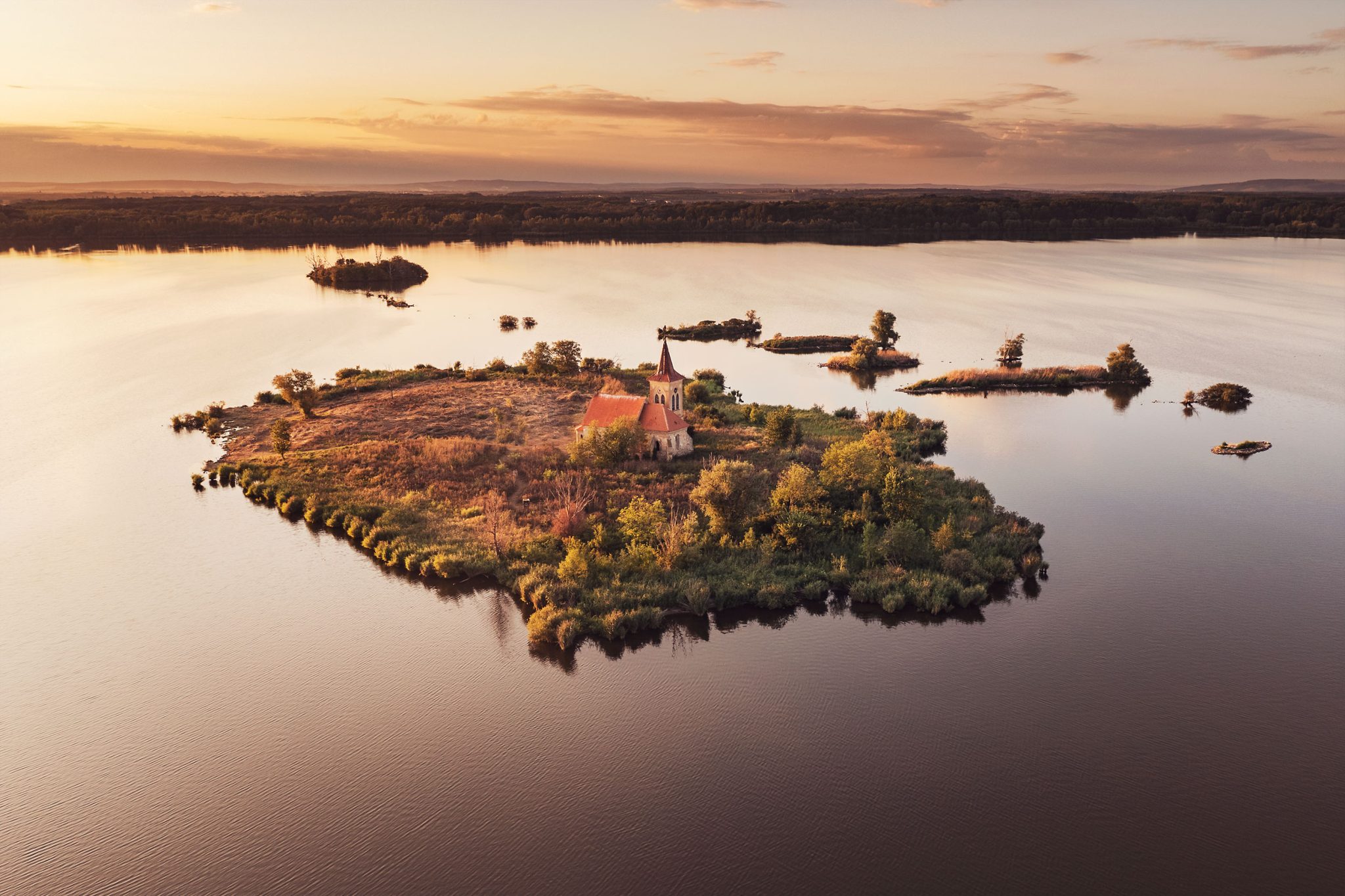
Between 2020 and 2022 I was in the Czech Republic several times. Inside, the castles have mostly been stripped bare, and many are being saved right now. My finest evening was in the south, by a reservoir from which the church of a drowned village rises on a small island.
At a glance
- Location
- Czechia
- Series
- AIRSCAPES
In the Czech Republic many manor houses, castles and churches stand empty, above all in the border regions from which some three million Germans were expelled after the Second World War. Much is now being restored. Between 2020 and 2022 I was in the country several times, in summer and in late autumn.
A country I discovered late
The Czech Republic was never in my focus at first and in fact only came into closer view during my work on MEMENTO, because of its cemeteries. During my research in the country I soon noticed the beautiful nature that runs through it, from the Ore Mountains across the Bohemian forests: mountain ranges, endless woods and lake landscapes.
Simply crossing the country is a pleasure. At times, though, it is already too developed for tourism for my taste. More than one fascinating gorge or landmark rather put me off with its coaches.
Why is so little preserved inside?
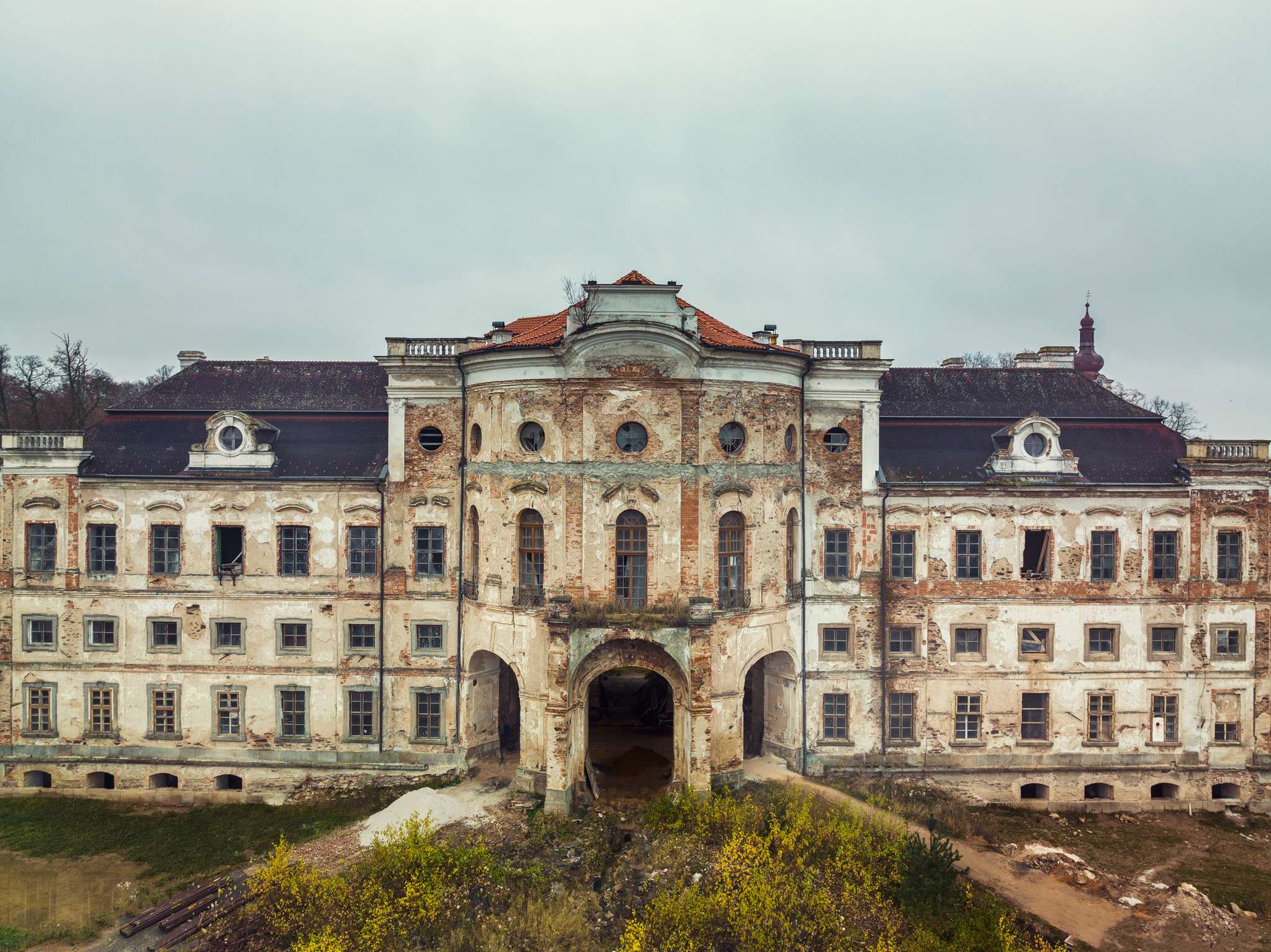
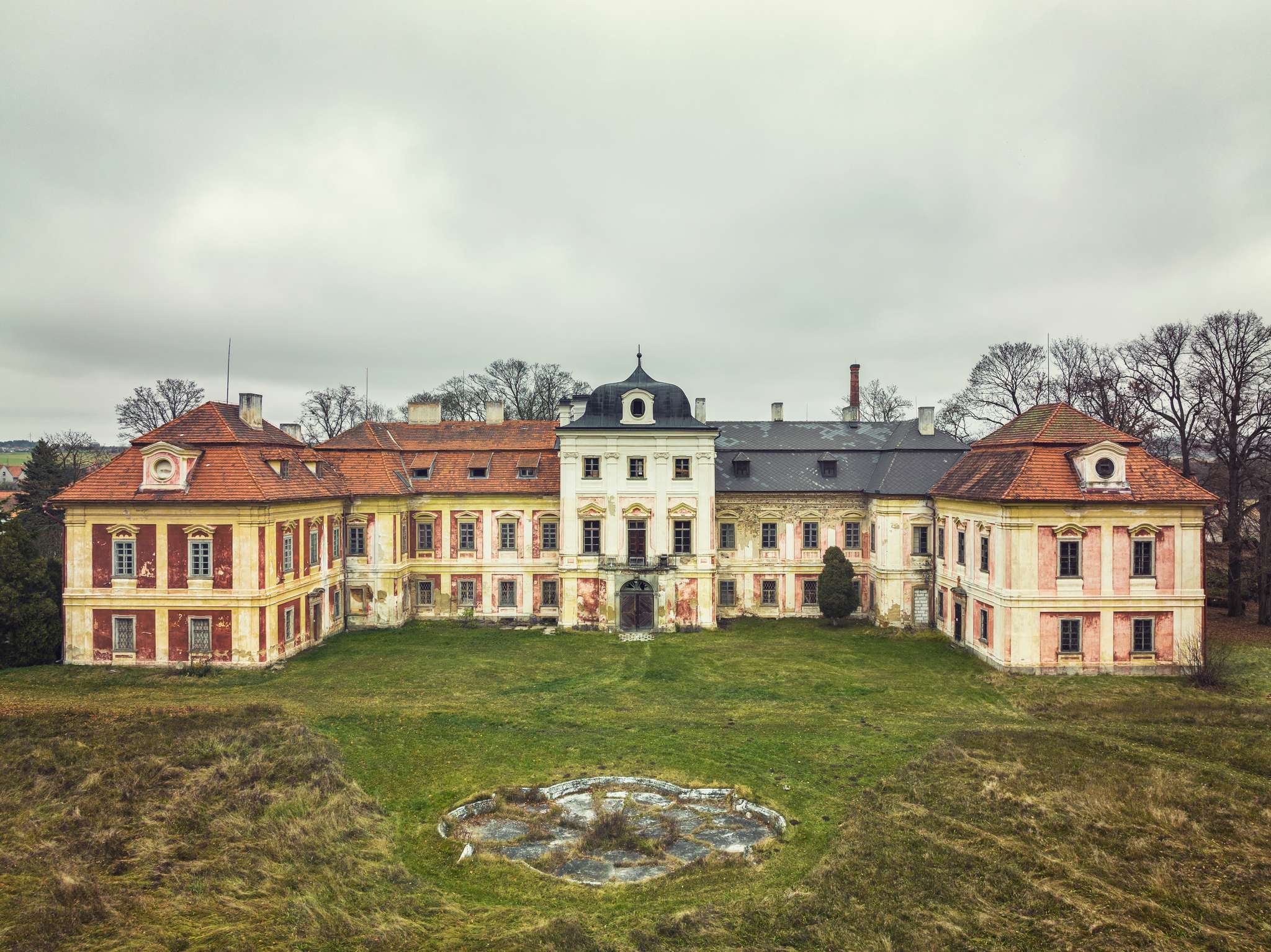
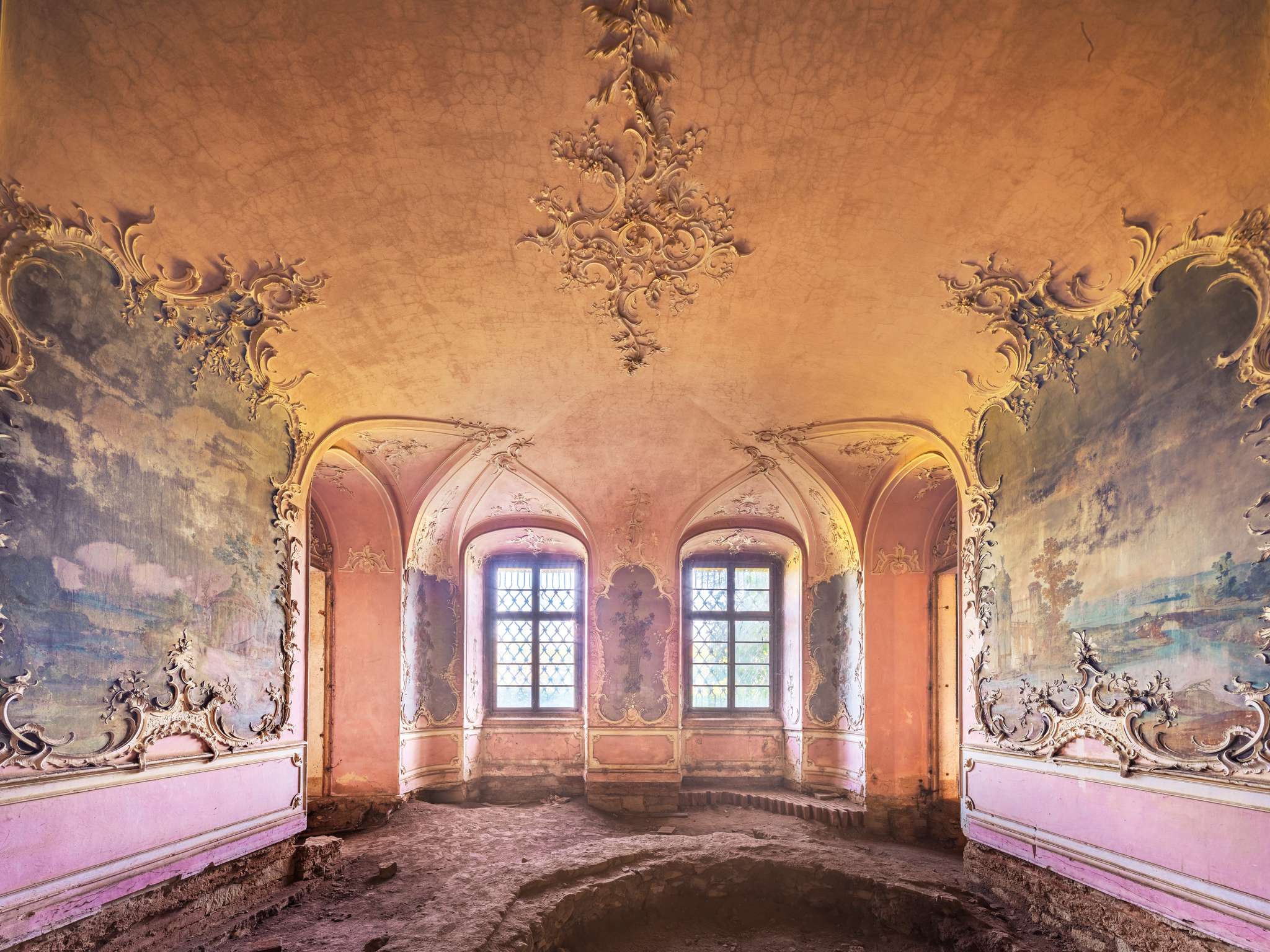
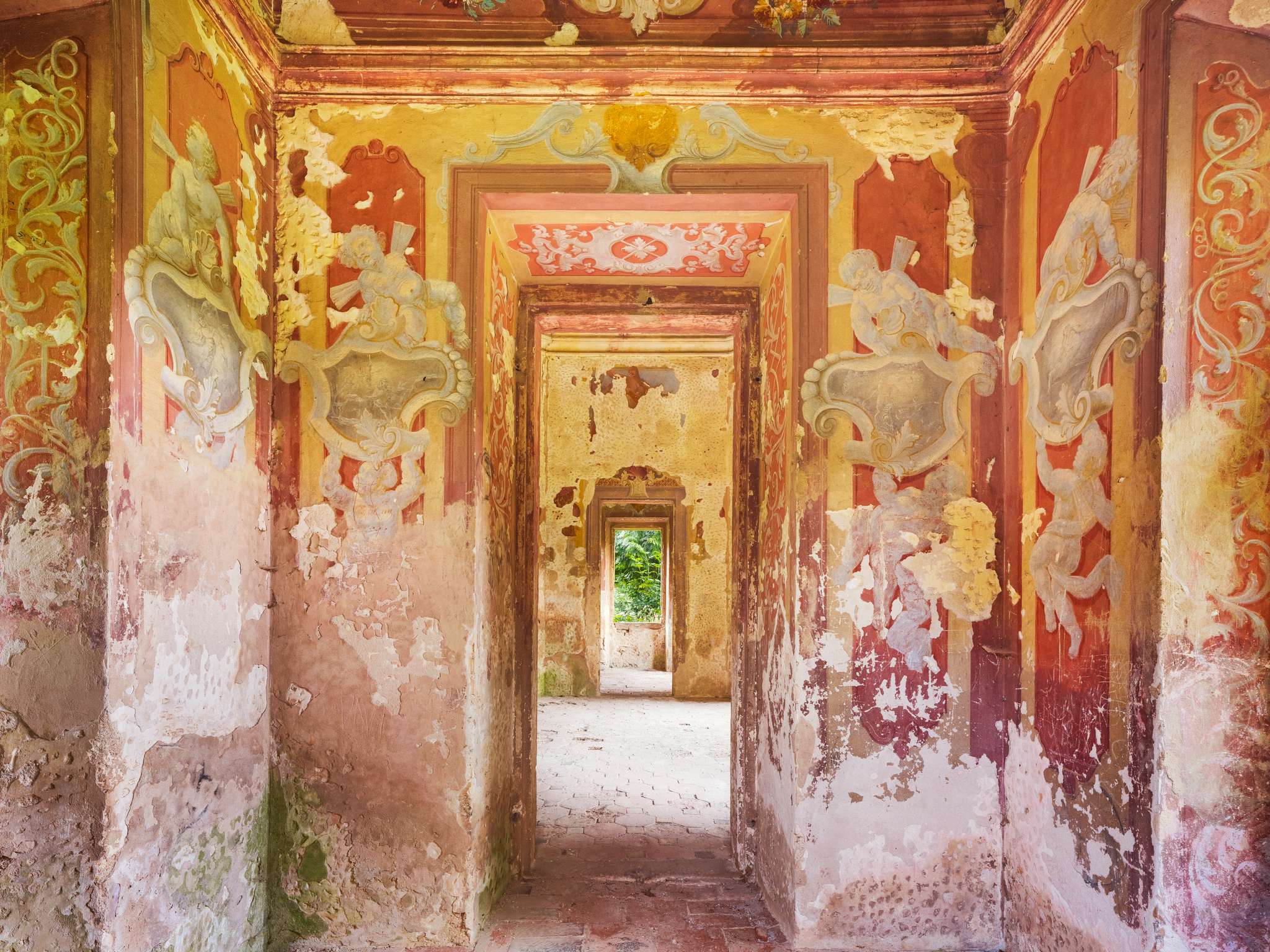
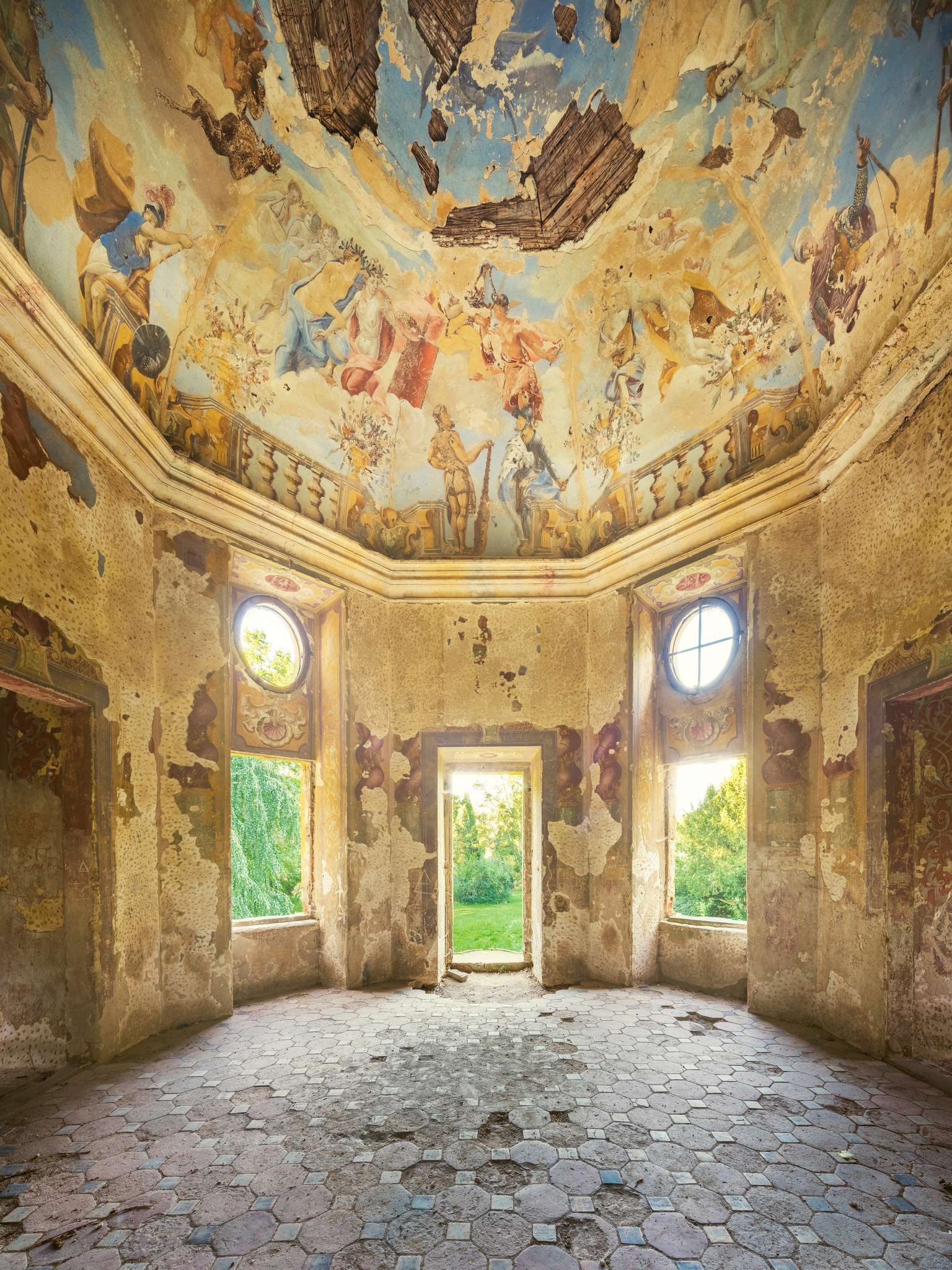
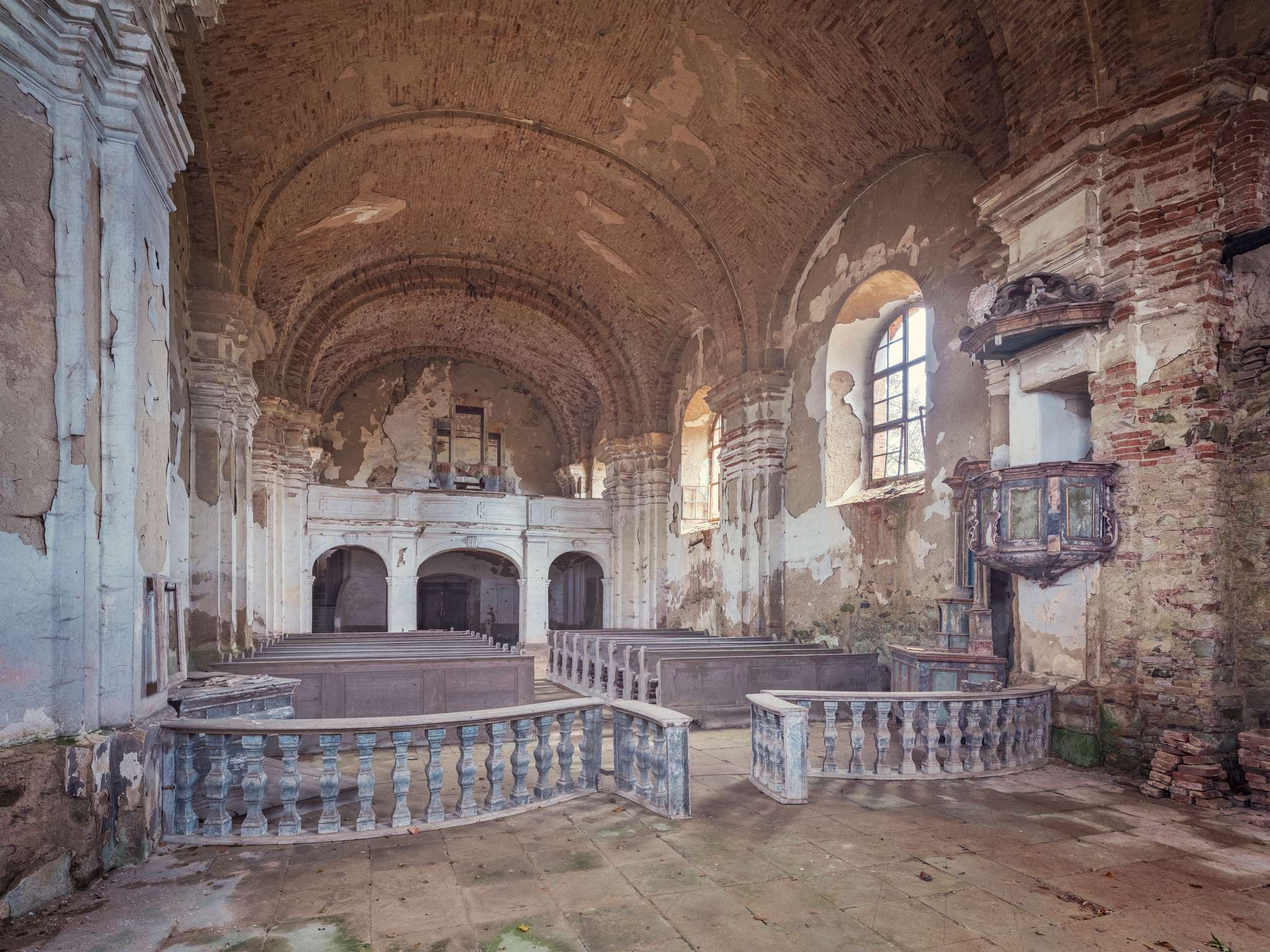
When you look for architecture you find an enormous number of old manor houses, castles and churches. You notice a great deal of activity and effort going into restoration, which succeeds well in many places. I had many castles on my list that had been abandoned until recently and were now already being renovated.
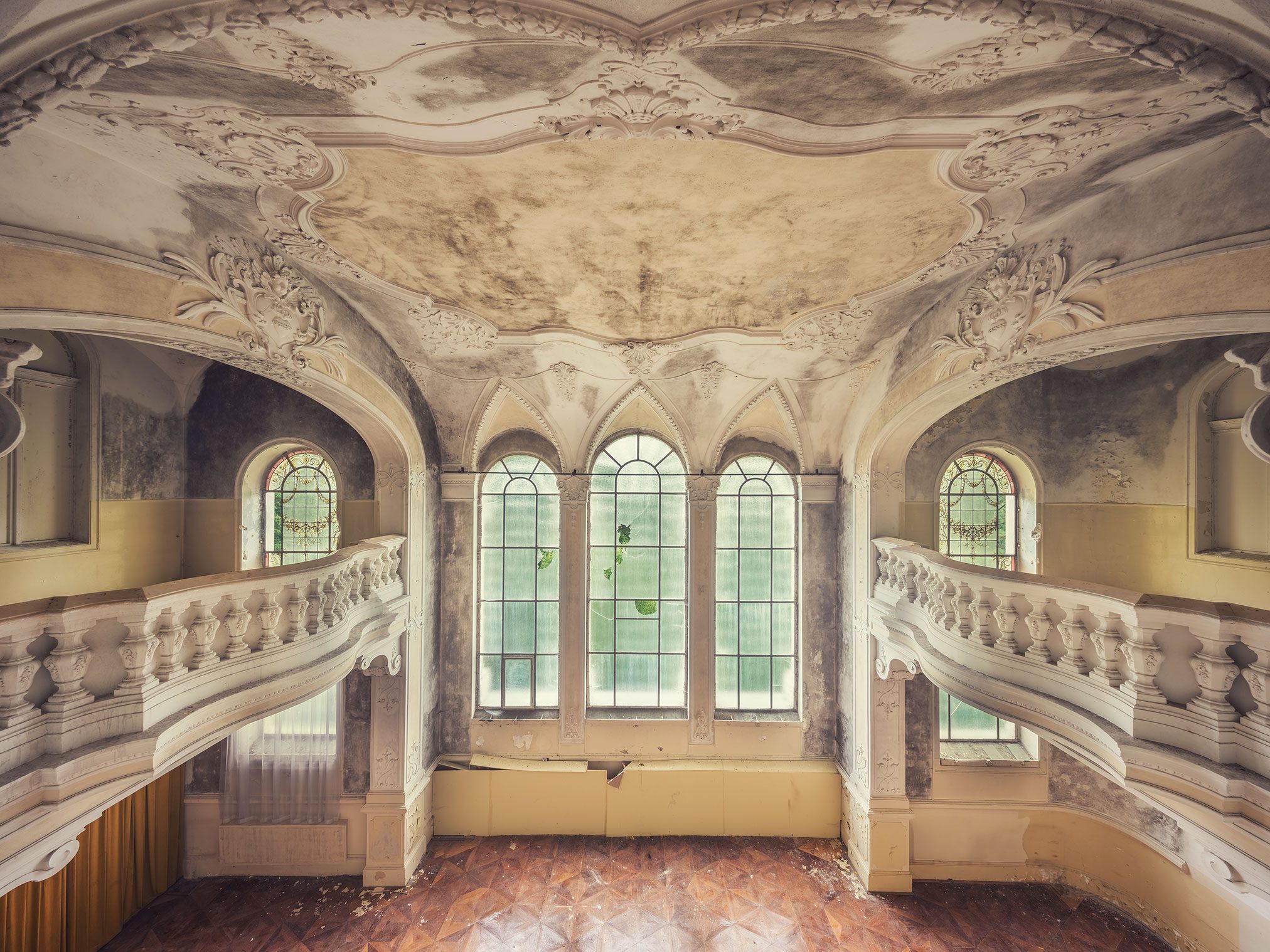
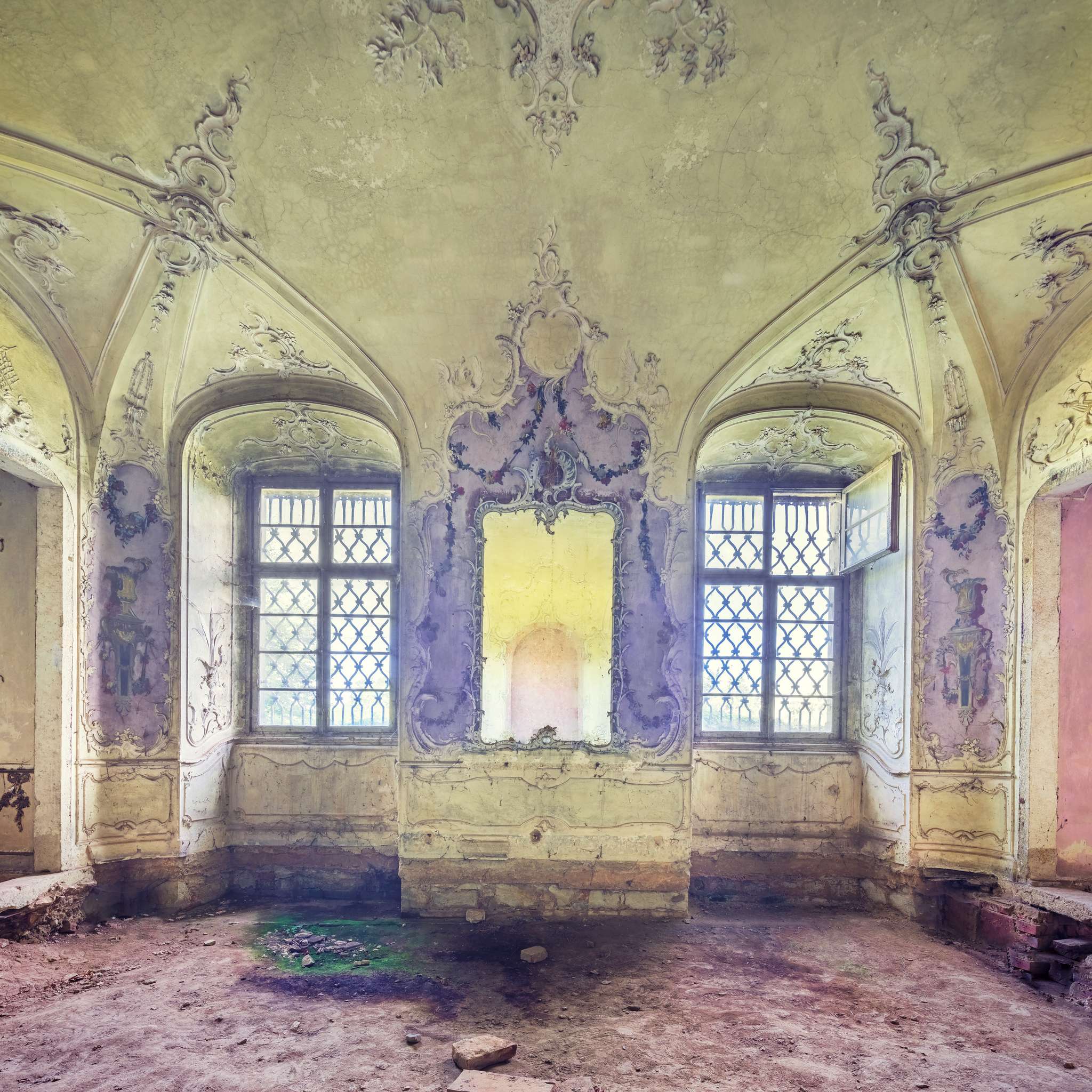
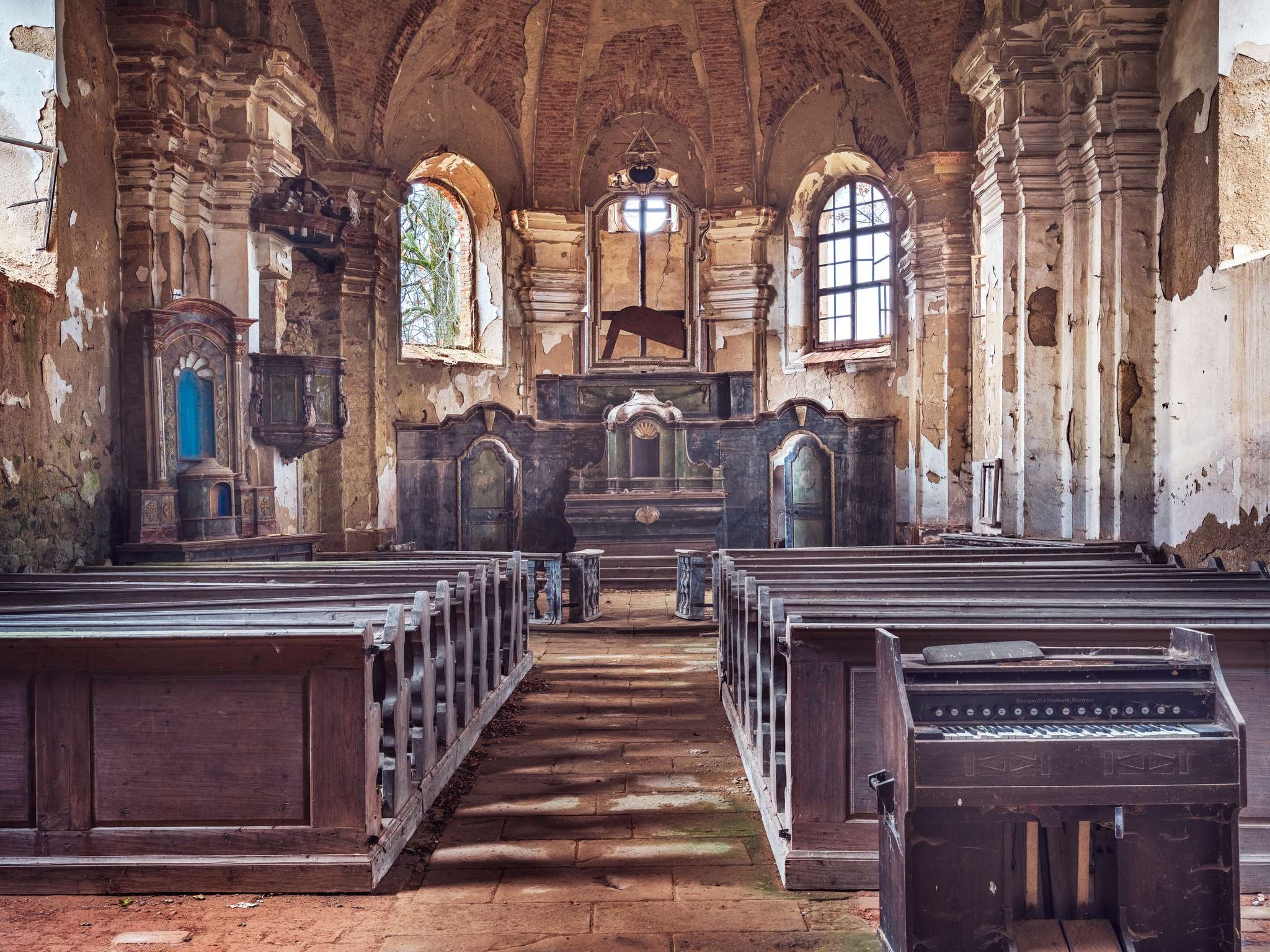
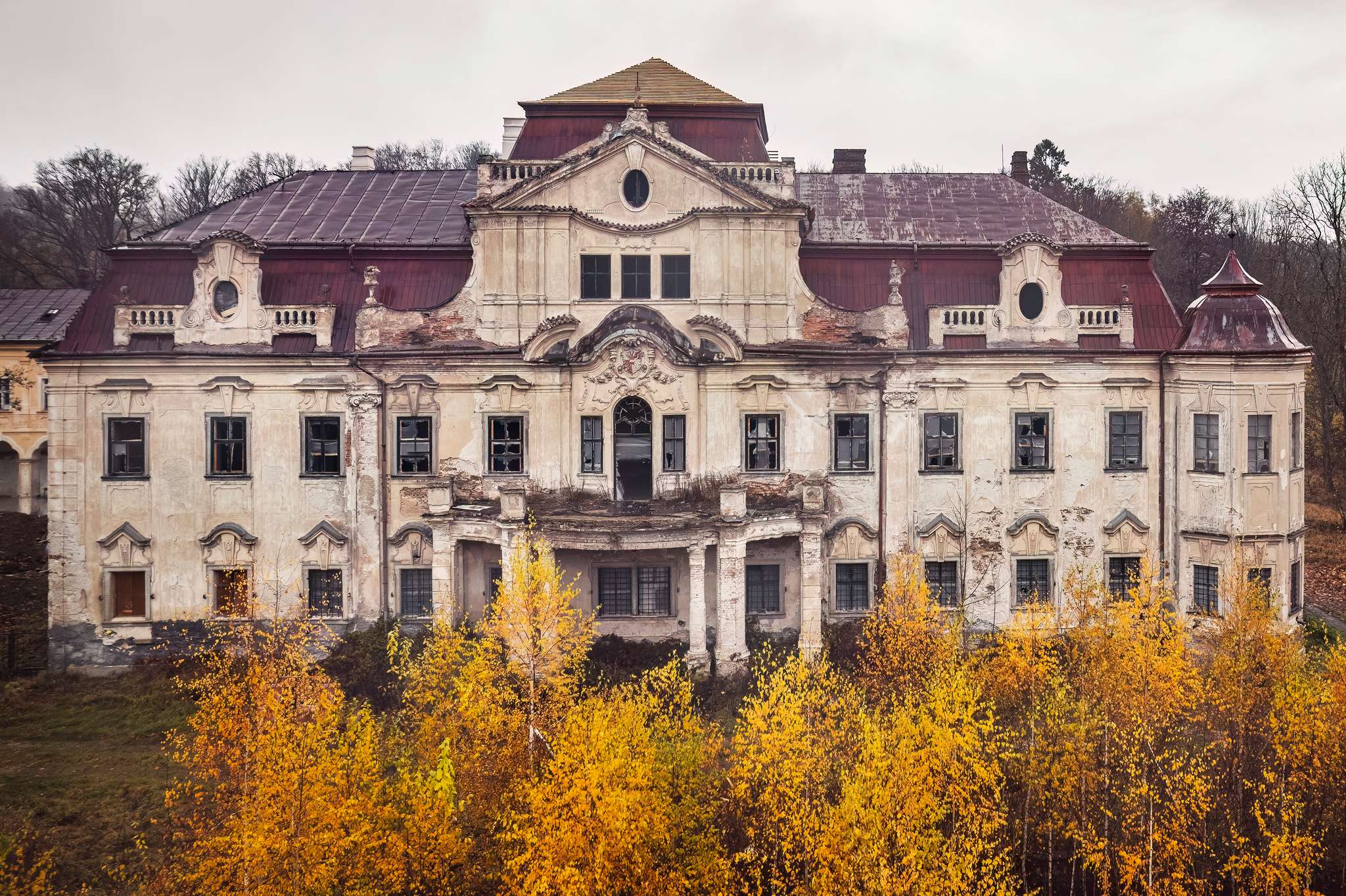
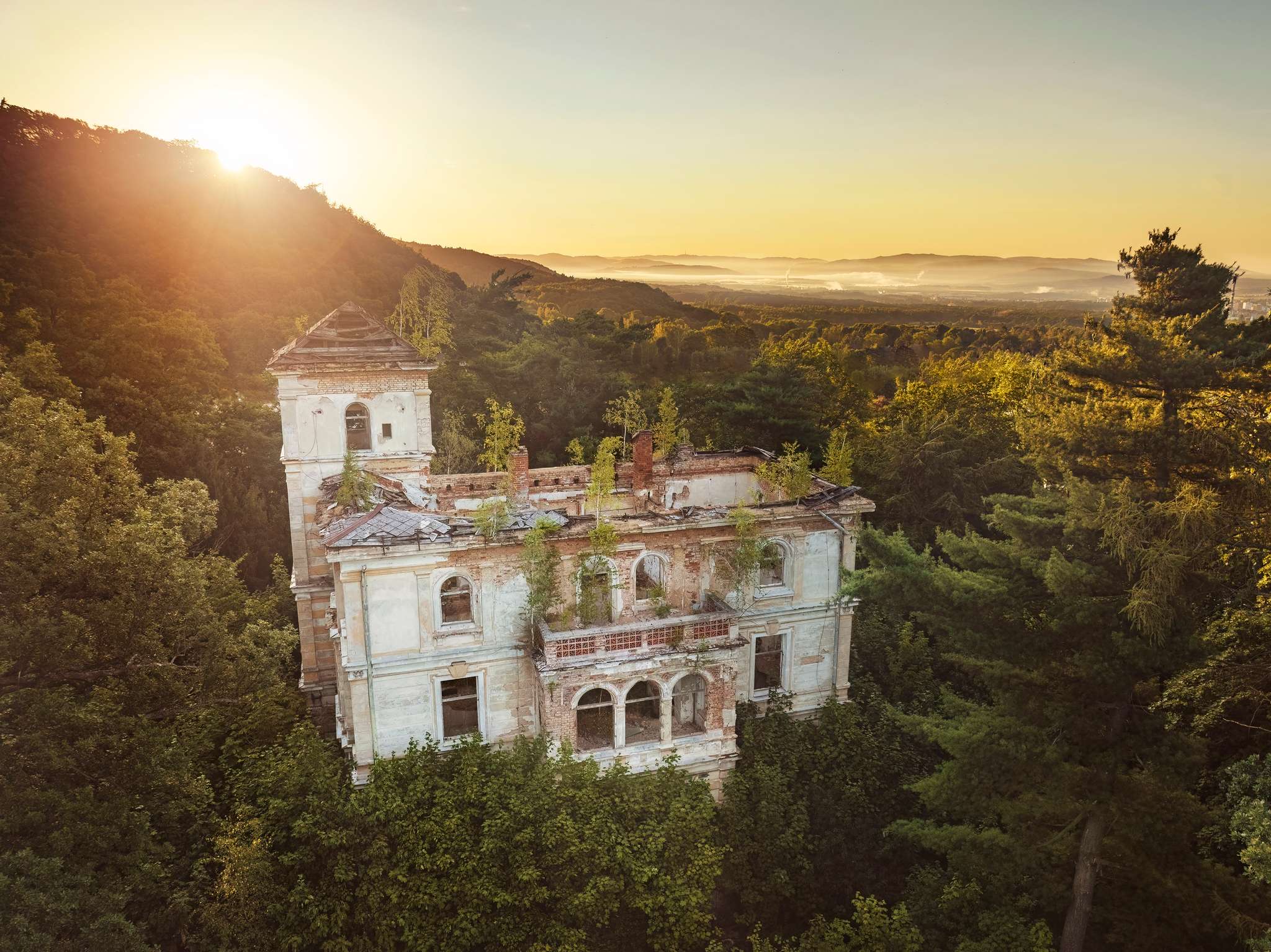
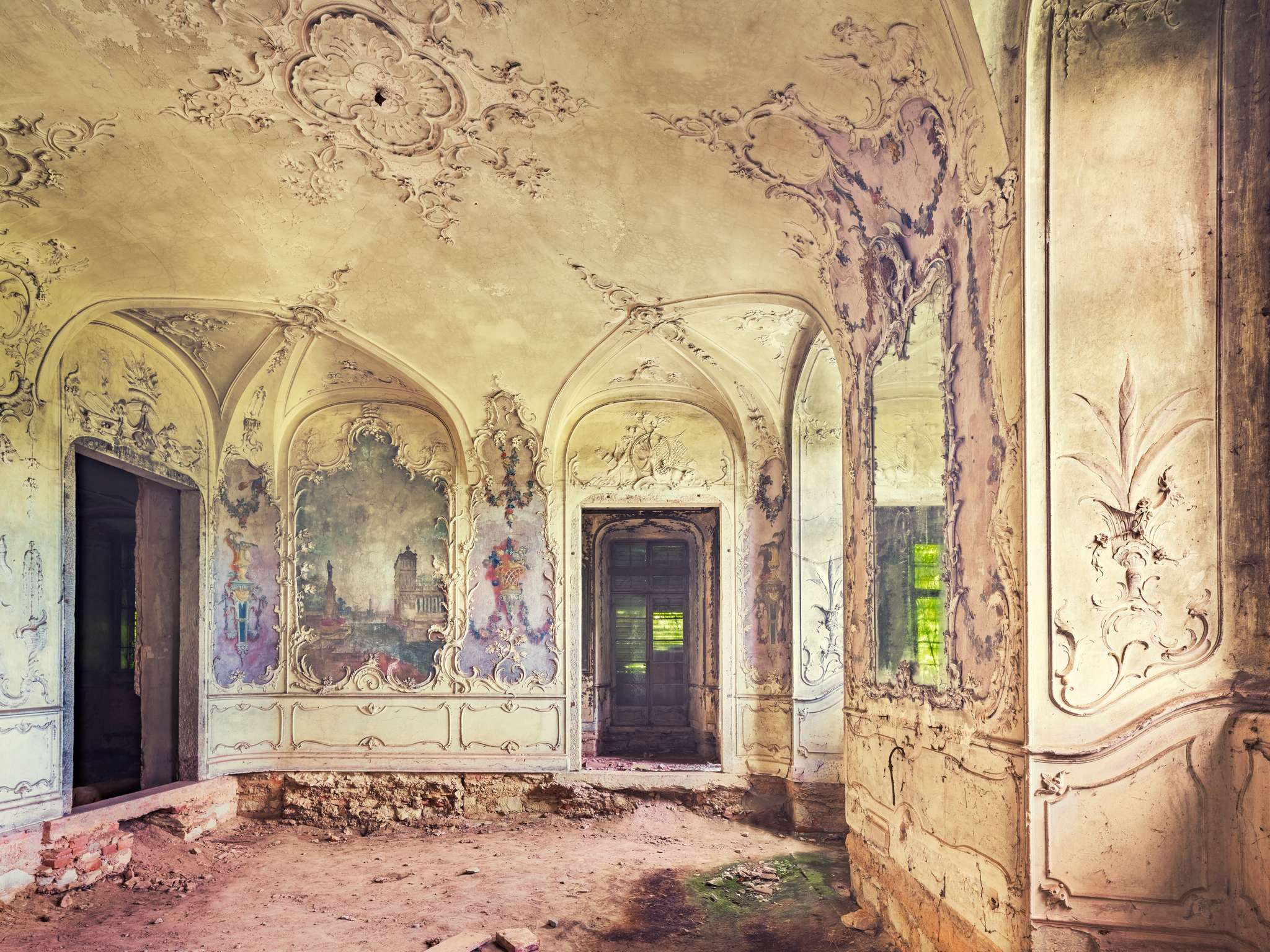
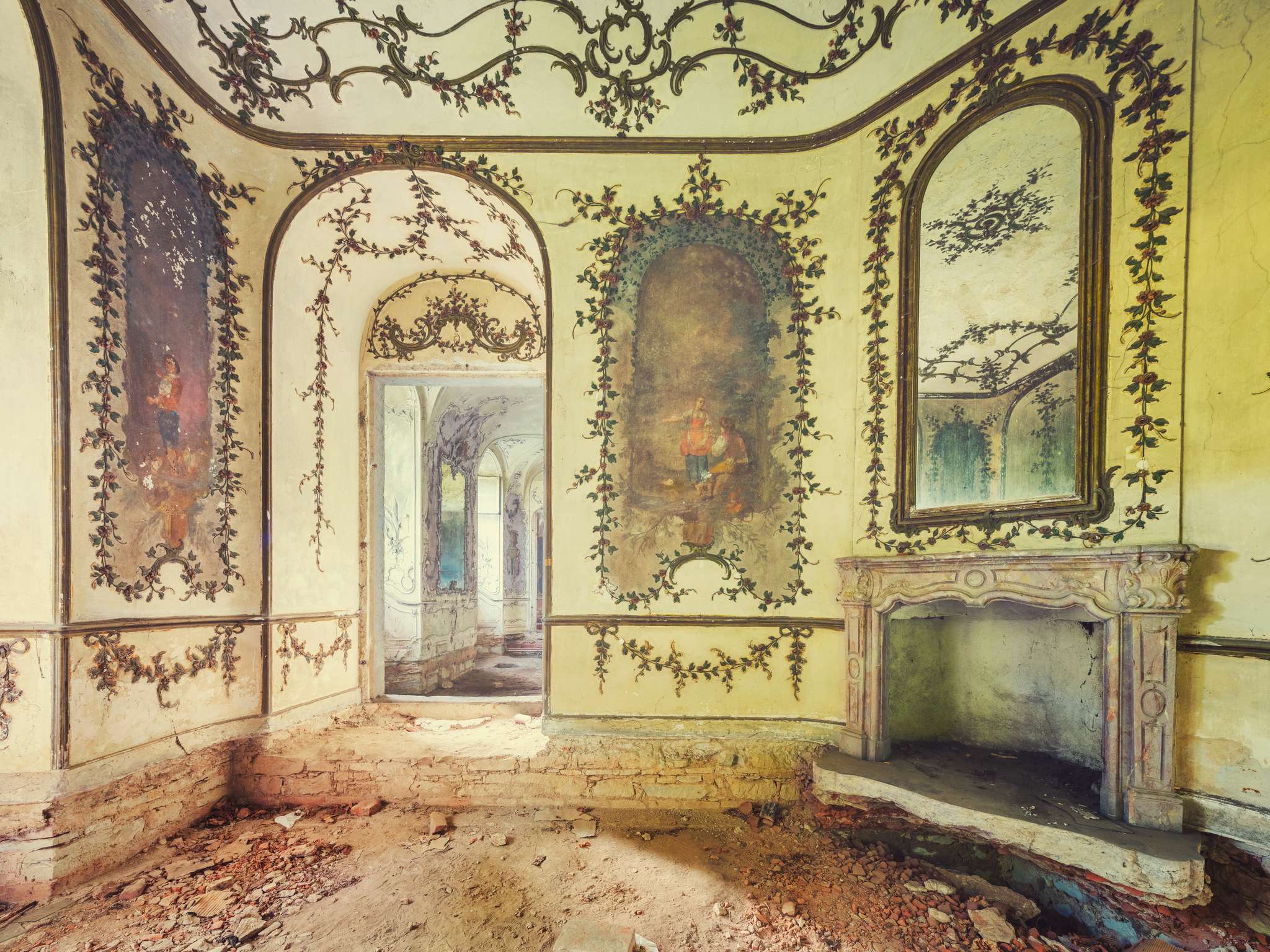
What is striking is that interiors of the kind I know from Italy are only very rarely to be found. In the past everything that could be sold or reused was often stolen or cleared out, usually including the electrical wiring. And yet many of the old walls still delight, simply through their exterior or their setting. That is why drone photographs predominate among my pictures from the Czech Republic.
The history behind this is above all that of the border regions. After the Second World War Czechoslovakia expelled some three million Germans. Conservationists see this as one cause of the decay of many buildings in northern Bohemia. After 1959 more than 34,000 abandoned buildings were demolished in the depopulated areas.
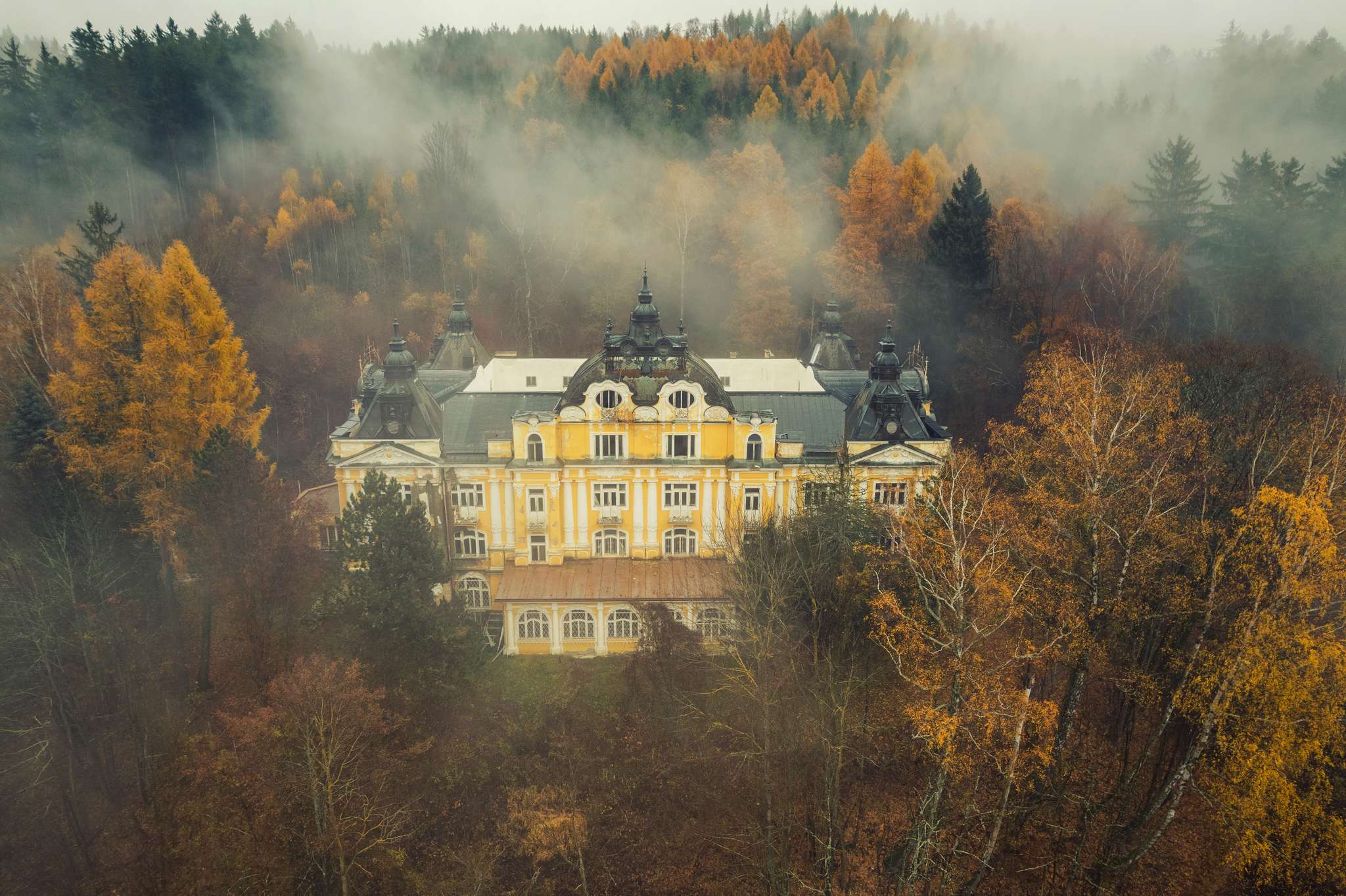
Marienbad in the morning mist
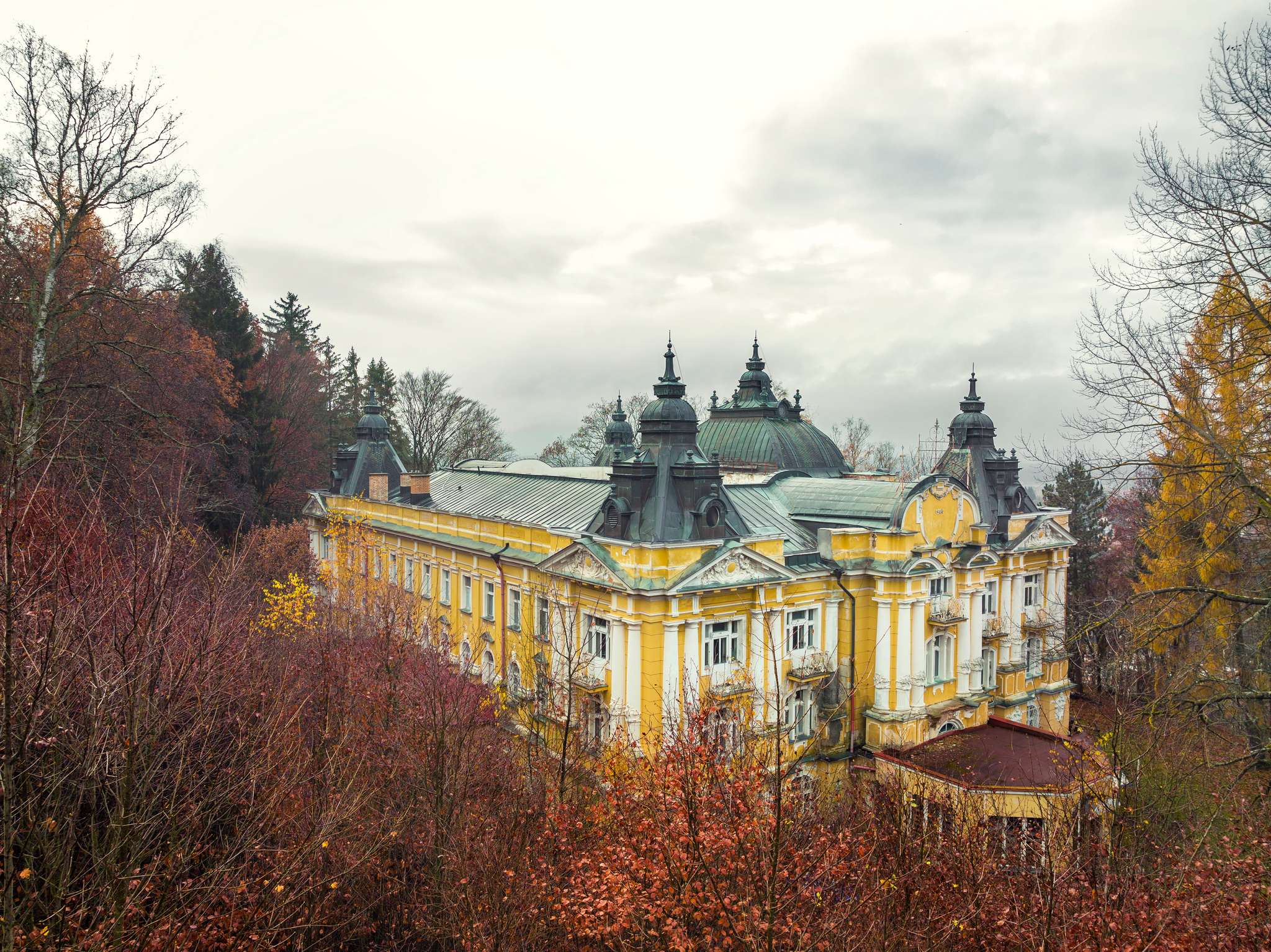
My autumn journey took me to Mariánské Lázně, Marienbad, a sleepy spa town in the West Bohemian spa triangle. King Ferdinand had the springs examined as early as 1528. In 1818 Marienbad was declared a public spa, and in 1865 it was granted town status. Under communist rule the baths were nationalised. Since July 2021 the town has been a UNESCO World Heritage site as one of the “Great Spa Towns of Europe”.
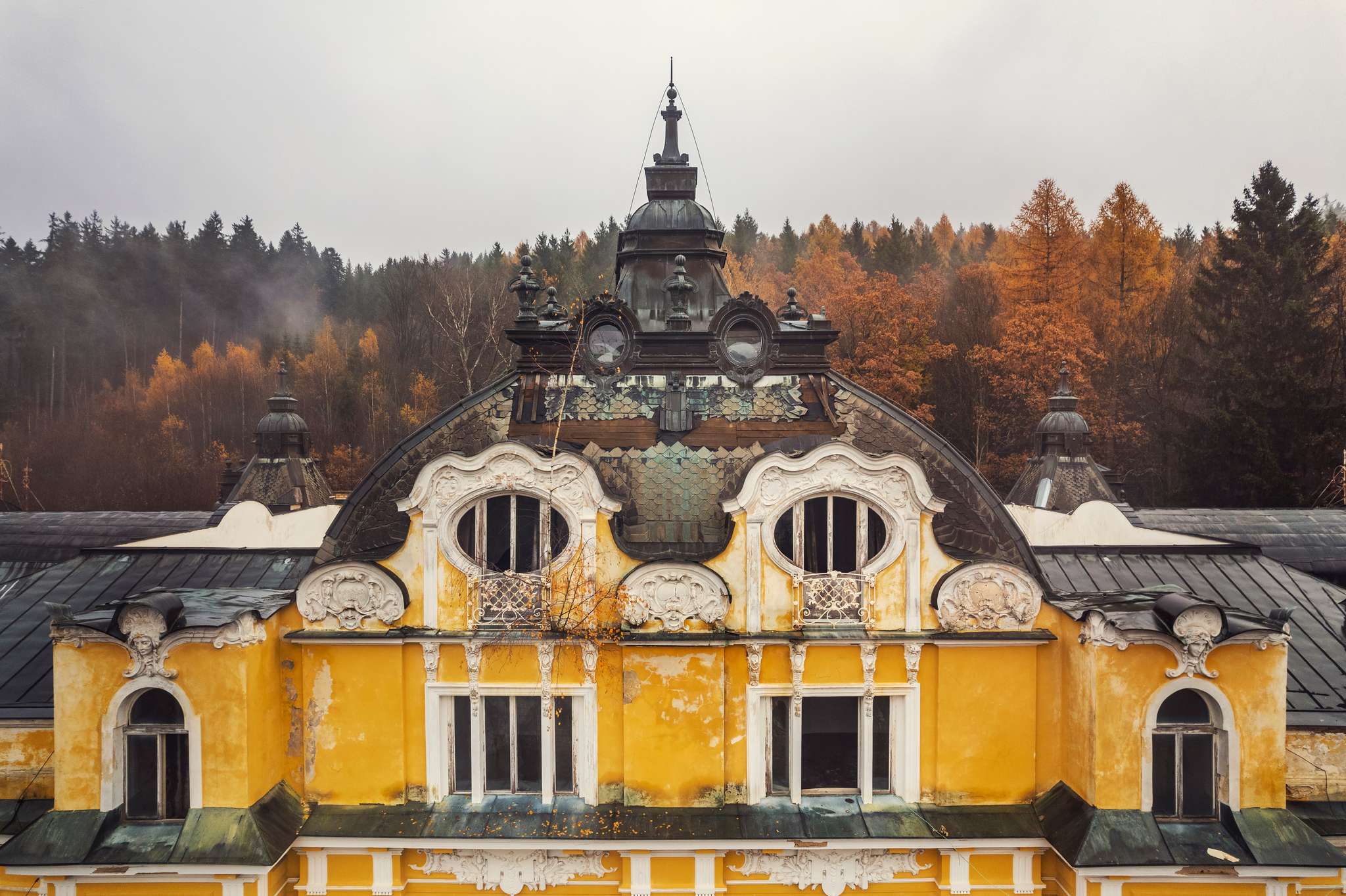
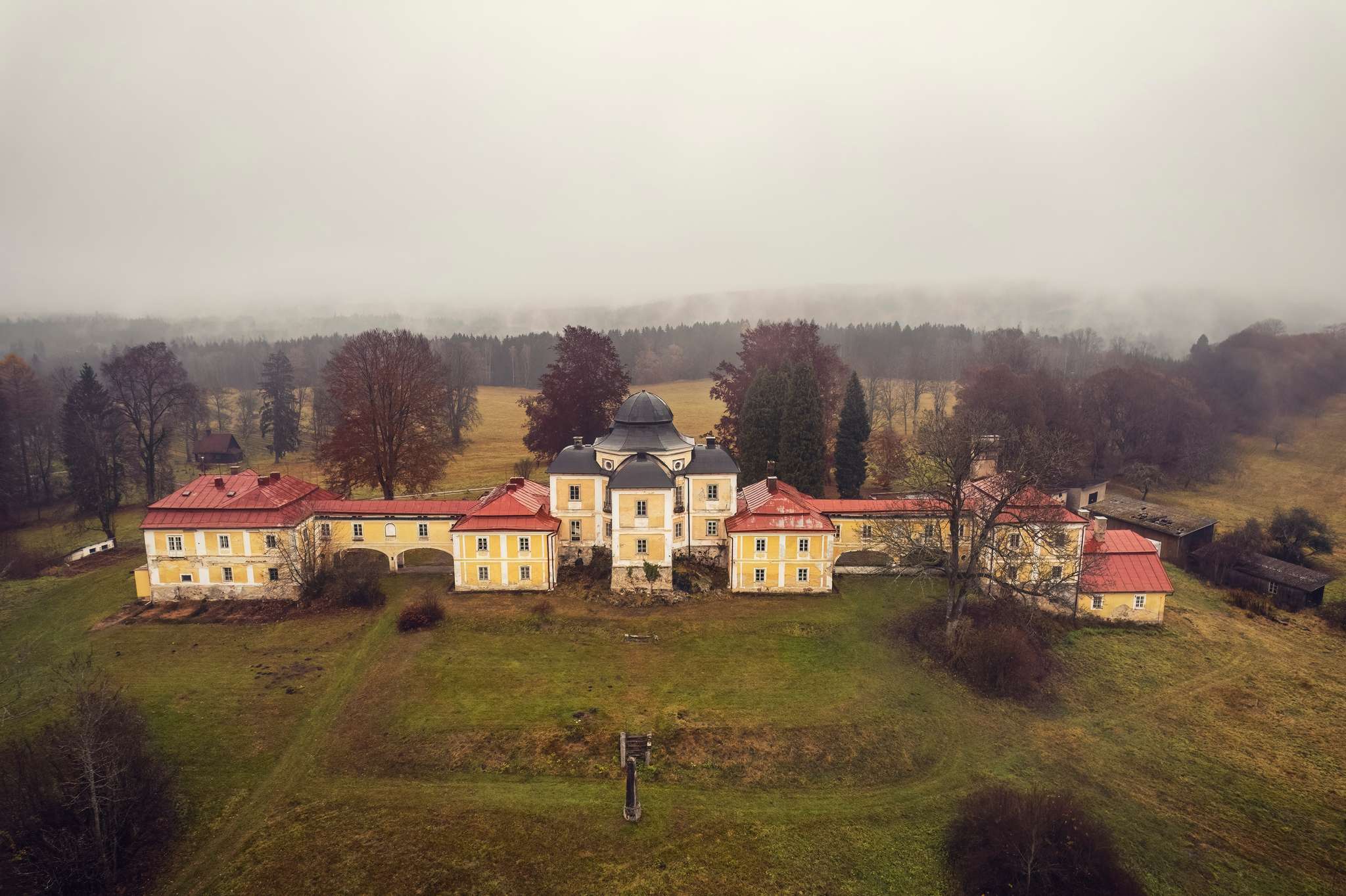
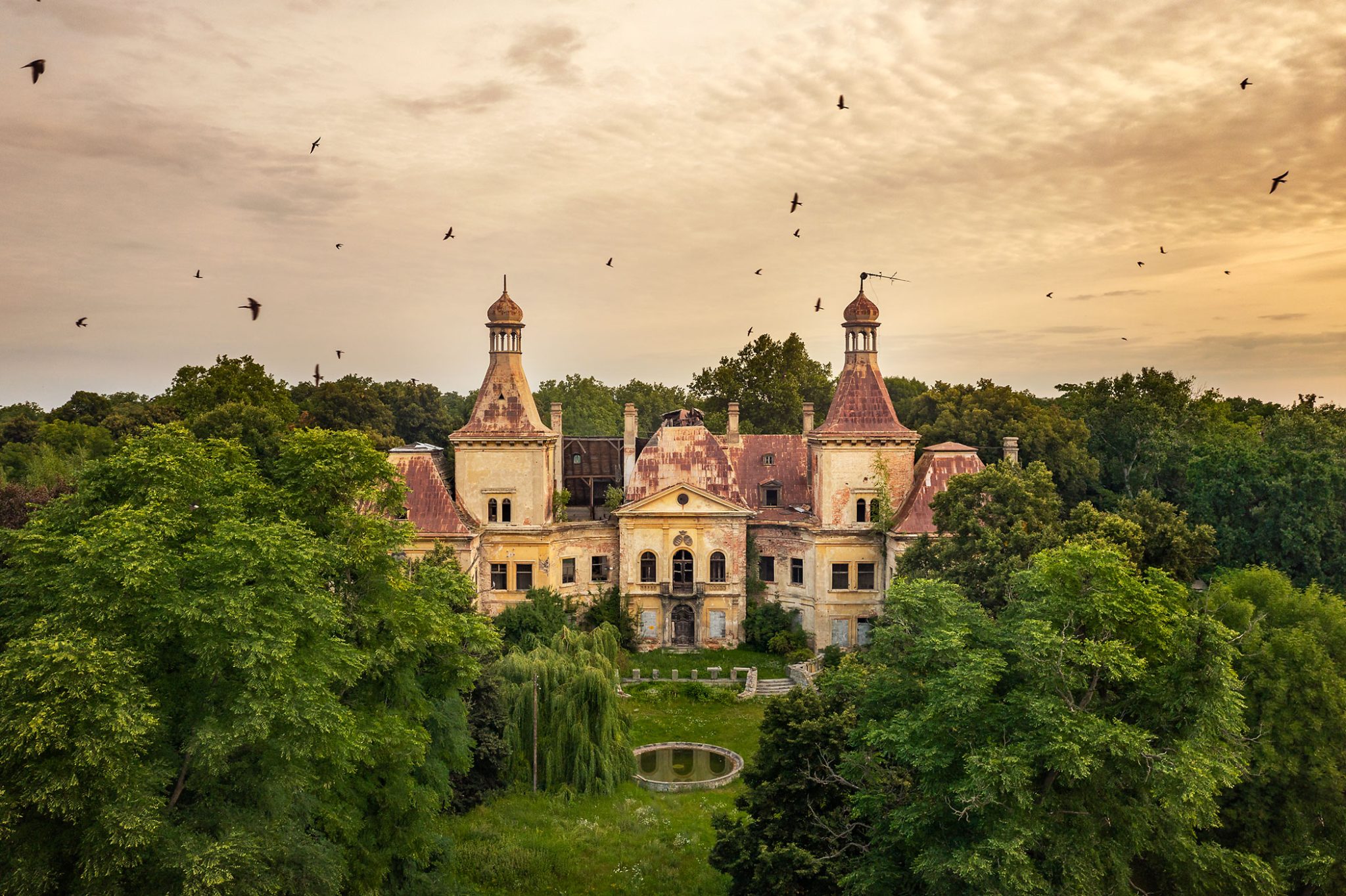
The town is well on its way back to its former glory, and yet there was still some forgotten splendour to track down. I could not explore the interior myself. The true beauty showed itself outside, set in the woods above the spa park: a mighty yellow façade with lovingly designed turrets and stucco work, as the autumn morning mist slowly cleared the view.
The evening at the church of Mušov
What was probably my finest moment came far away in the southernmost part of the country. A small hint and a chance find drew my attention to the former church of Mušov. It was built on slightly higher ground, and that is the reason it still exists at all.
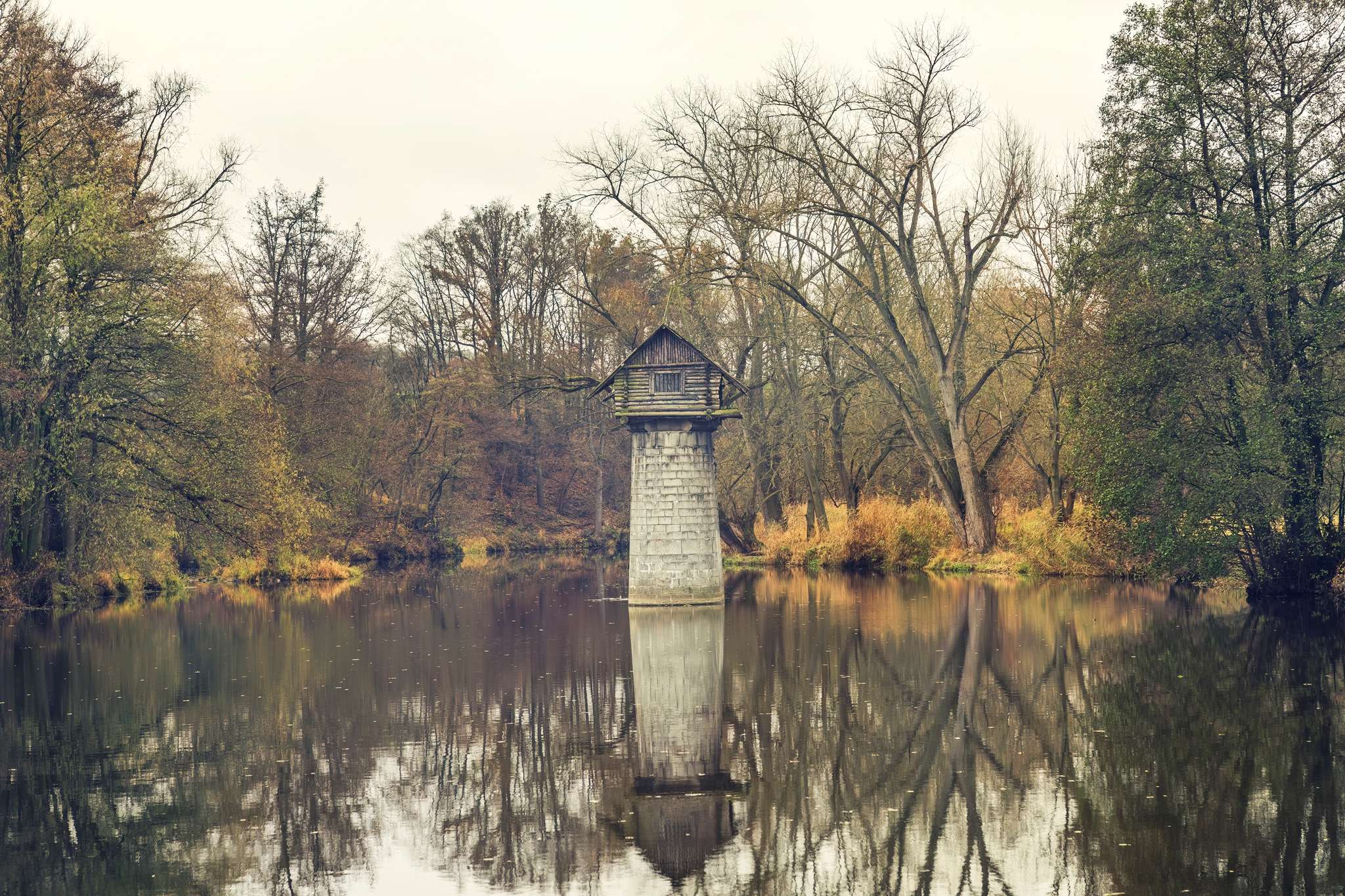
The church of St Leonard was built before the middle of the thirteenth century. In 1975 the evacuation of the village was ordered, in January 1980 Mušov was struck from the list of municipalities, and then the water of the Nové Mlýny reservoirs rose. The middle lake is now a reserve for nesting birds, and the church stands on a small island. Since 2015 the heritage authority has kept it on its list of endangered monuments. The roofs are to be repaired first.
Reaching it meant a long detour, and I was all the happier to be able to take in the scene after a lengthy walk. I had chosen the last evening light for my photographs, and that proved worth its weight in gold: a perfect evening with the loveliest light and wonderfully calm water. I stayed on the shore for a long time and watched the moon slowly rise as a great ball while the opposite side was still embraced by warm light.
Sauersack
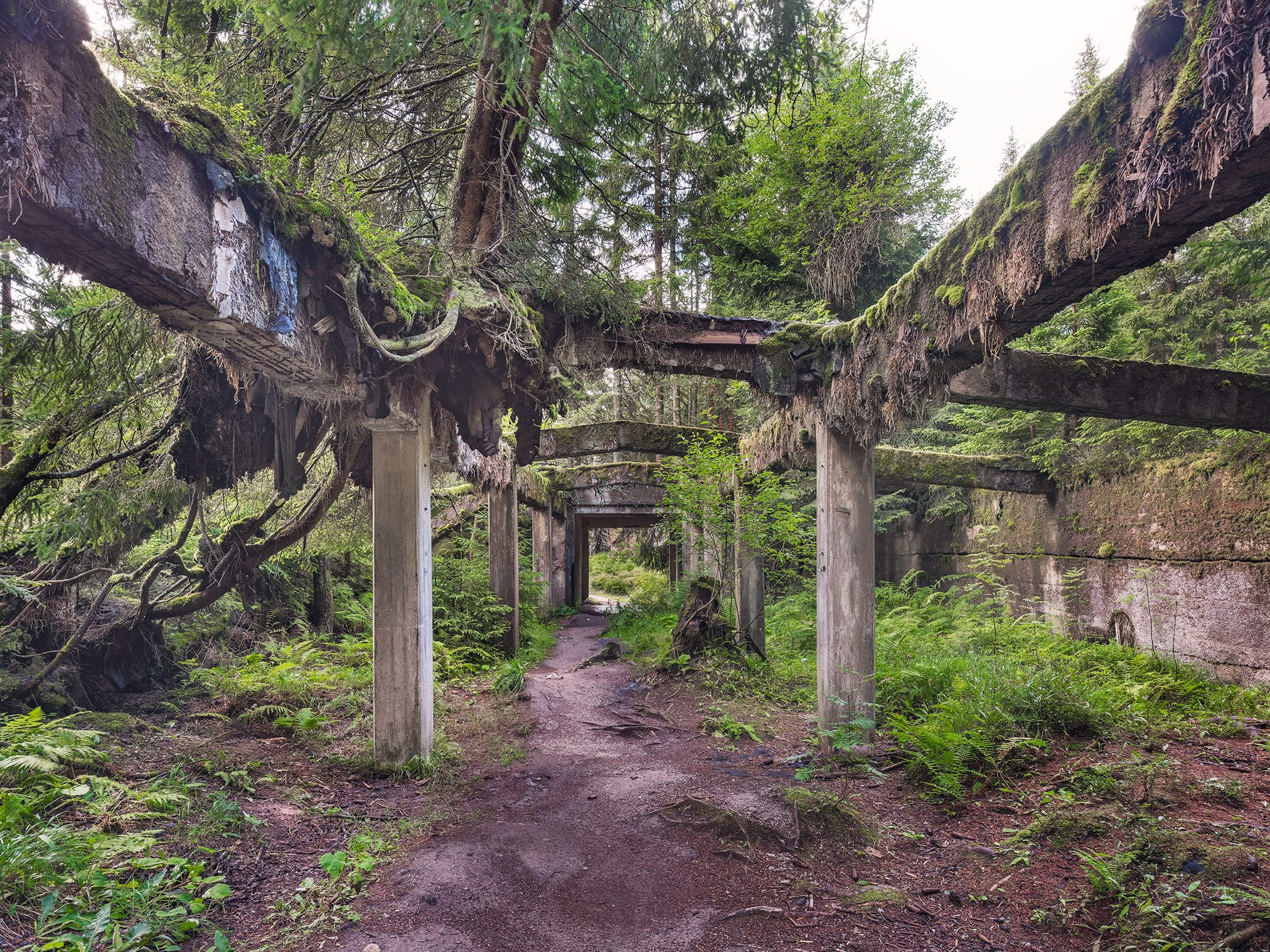
In the Ore Mountains, close to the German border, stand the remains of the Rolava tin mine, in German Sauersack. From 1940 a mine with a camp for prisoners of war was built here by the company Zinnbergbau Sudetenland. Mining began on 1 August 1942. Since 2012 the site has lain within a national nature reserve, and the forest is growing over the concrete.
What I still hope to record
It is wonderful to see how the country is gradually saving most of its manor houses from final decay. Yet I hope to be able to document a few of them still in their authentic state.
The Czech Republic is one of the twelve countries in my book VERGESSENE PRACHT, published by Frederking & Thaler in 2023.
The pictures
Photographs from the Czech Republic from the years 2020 to 2022.
Sources and further background
This story draws on the following sources.
- ČT24: Kostely sudetských Němců (03.10.2018) , accessed 11. November 2026
- Deník: Deset nejohroženějších památek (24.01.2009) , accessed 11. November 2026
- Český rozhlas: Sudetenland (10.06.2016) , accessed 11. November 2026
- Mariánské Lázně: The history of the town , accessed 11. November 2026
- Ensana: Mariánské Lázně, spa history , accessed 11. November 2026
- Národní památkový ústav: The Great Spa Towns of Europe , accessed 11. November 2026
- ČT24: 30 let od zatopení Mušova (03.08.2017) , accessed 11. November 2026
- ČT24: Novomlýnské nádrže (03.03.2019) , accessed 11. November 2026
- Novinky: Památkáři chtějí zastavit chátrání kostela uprostřed nádrže (05.03.2026) , accessed 11. November 2026
- ČT24: Sauersack (09.08.2018) , accessed 11. November 2026
Series
More from AIRSCAPES
Fine art prints on the theme
Related stories
All stories →
Share