


Stories · Places · Georgia, Abkhazia
The railway stations of Abkhazia: Last stop in the middle of nowhere
A railway on the Black Sea, stations like small palaces and a blown-up bridge where everything has ended since 1992. In May 2019 I travelled the line from Gagra to the Enguri, and more than once I was taken for a spy.

Along the Black Sea coast of Abkhazia runs a railway that once linked Russia with Georgia and Armenia. Since the bridge over the Enguri was blown up in August 1992 it has ended in nothing. Its stations from the Stalin era, built like small palaces, stood empty for decades. In May 2019 I travelled the line, from Gagra to the bridge.
At a glance
Abchasische Eisenbahn / Abkhazian Railway
- Location
- Black Sea coast of Abkhazia, from Gagra via Sukhumi to the river Enguri
- Built
- Line 1923 to 1949, station buildings 1940s and 1950s
- Usage
- Main line between Russia, Georgia and Armenia; resort traffic
- Abandoned since
- Through traffic interrupted since 14 August 1992
- Condition
- Passenger services from Russia as far as Sukhumi again; several stations repaired since 2023; bridge on the Enguri destroyed
- Visited
- May 2019
- Series
- BOUNDLESS
A line for the war and for the Riviera
The railway was built in two halves. From the south the first train reached Abkhaz soil in 1931, and regular services between Sukhumi and Tbilisi began in 1938. From the north the first passenger train from Sochi arrived in Gagra on 28 July 1941. In the middle of the war, in 1942, the gap was closed; the line went into permanent operation only in 1949. By 1956 it was electrified as far as the Russian border.
After that it carried the traffic between Russia and the South Caucasus along the coast, and the holidaymakers of the “Soviet Riviera”. At the beginning of 1992, 16 pairs of passenger trains and 17 pairs of freight trains ran on the Abkhaz section every day, with about ten million tonnes of freight a year.
Palaces by the track
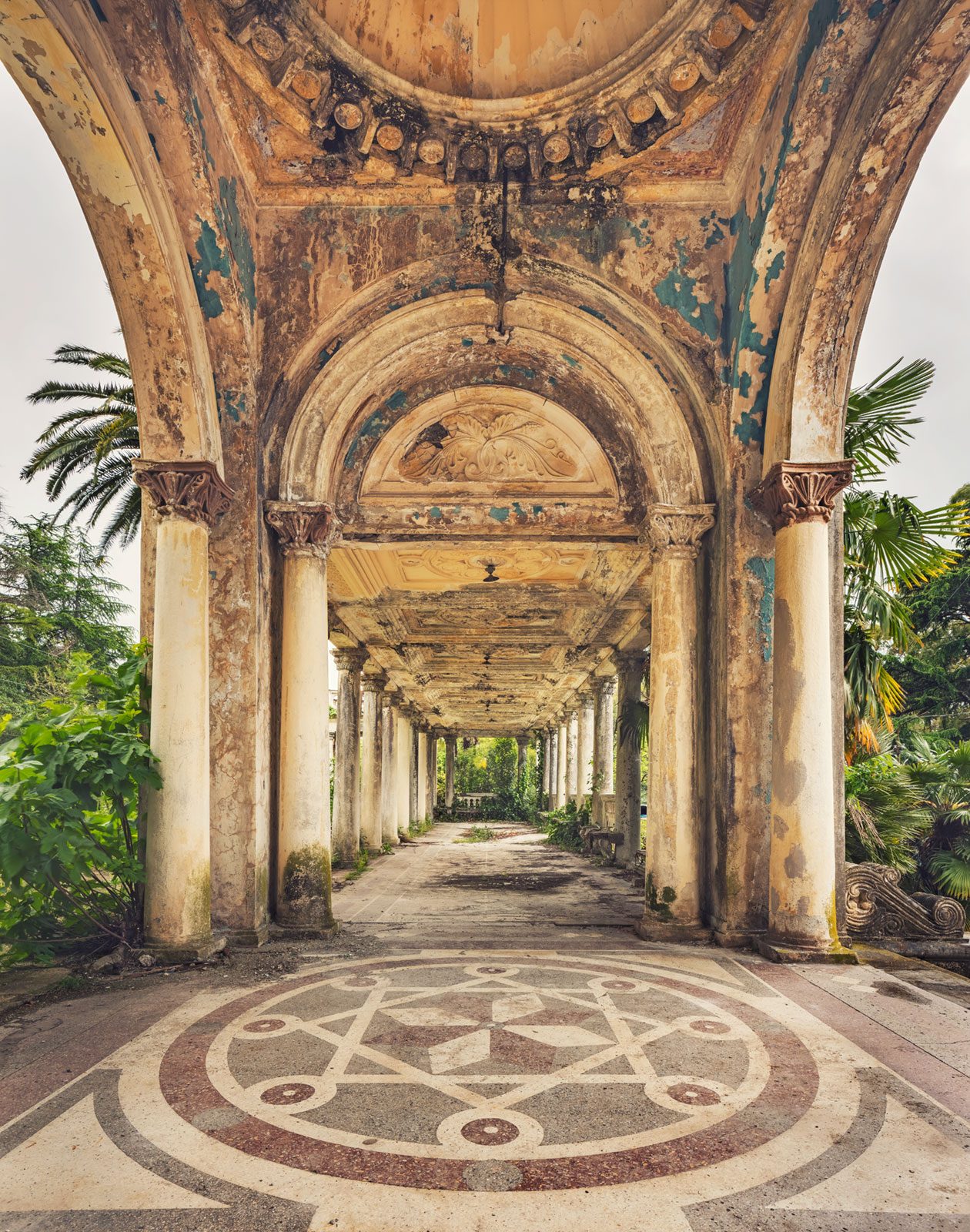
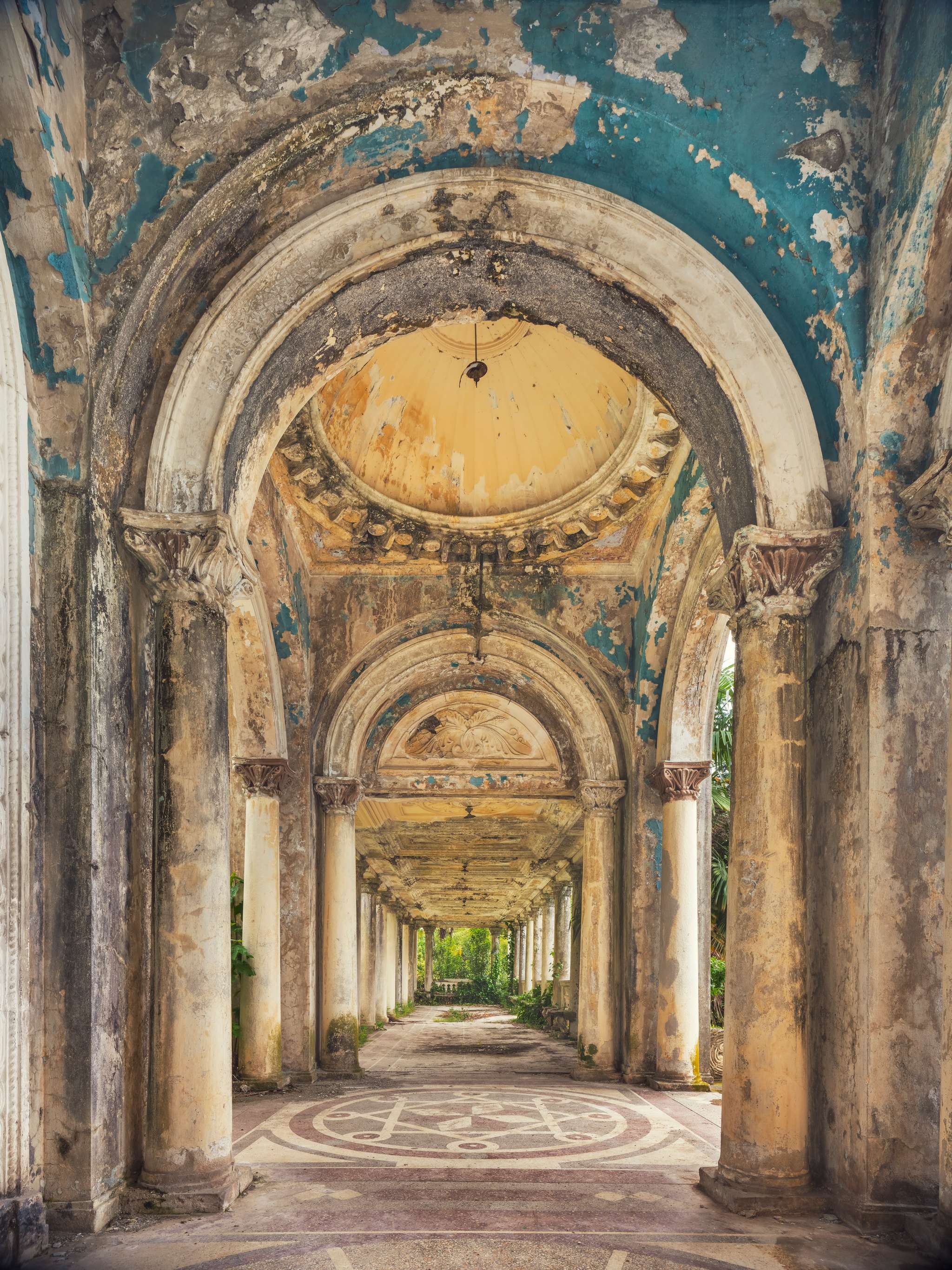
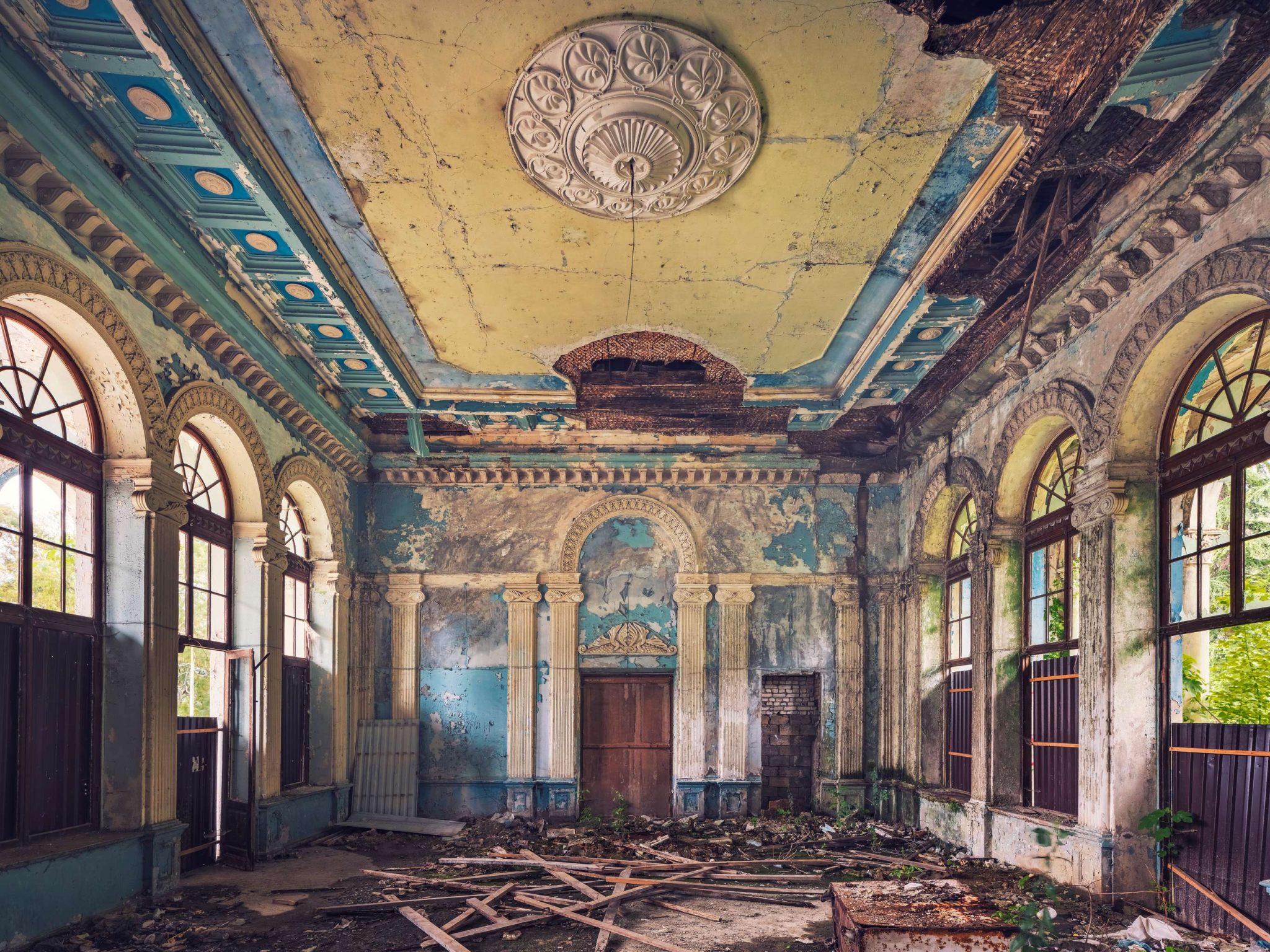
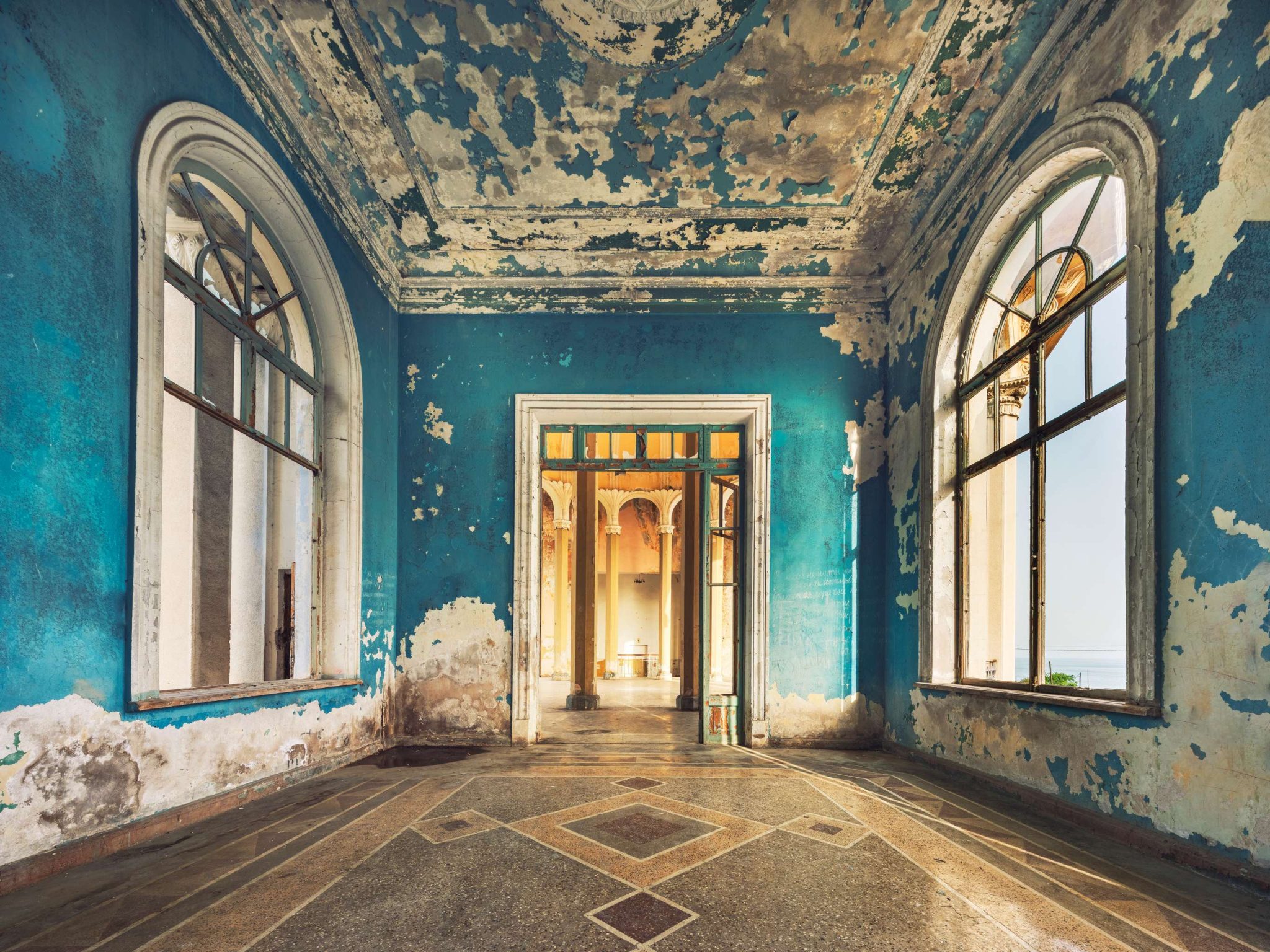
The stations were built in the style of Stalinist classicism, with colonnades, rotundas, stucco and mosaic floors. The station of the capital, Sukhumi, completed in 1951, is the work of the architects Levan and Lola Mushkudiani.
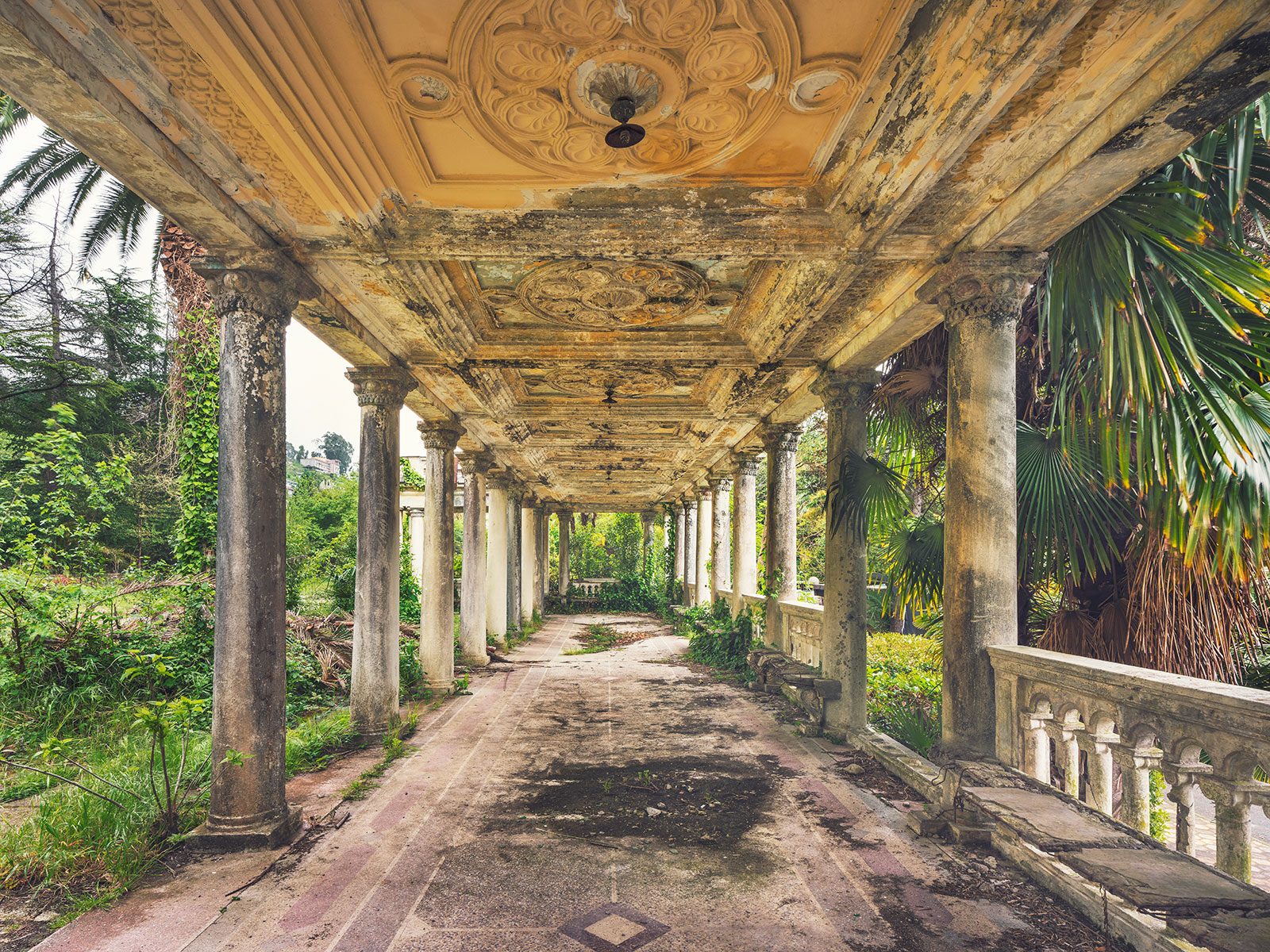
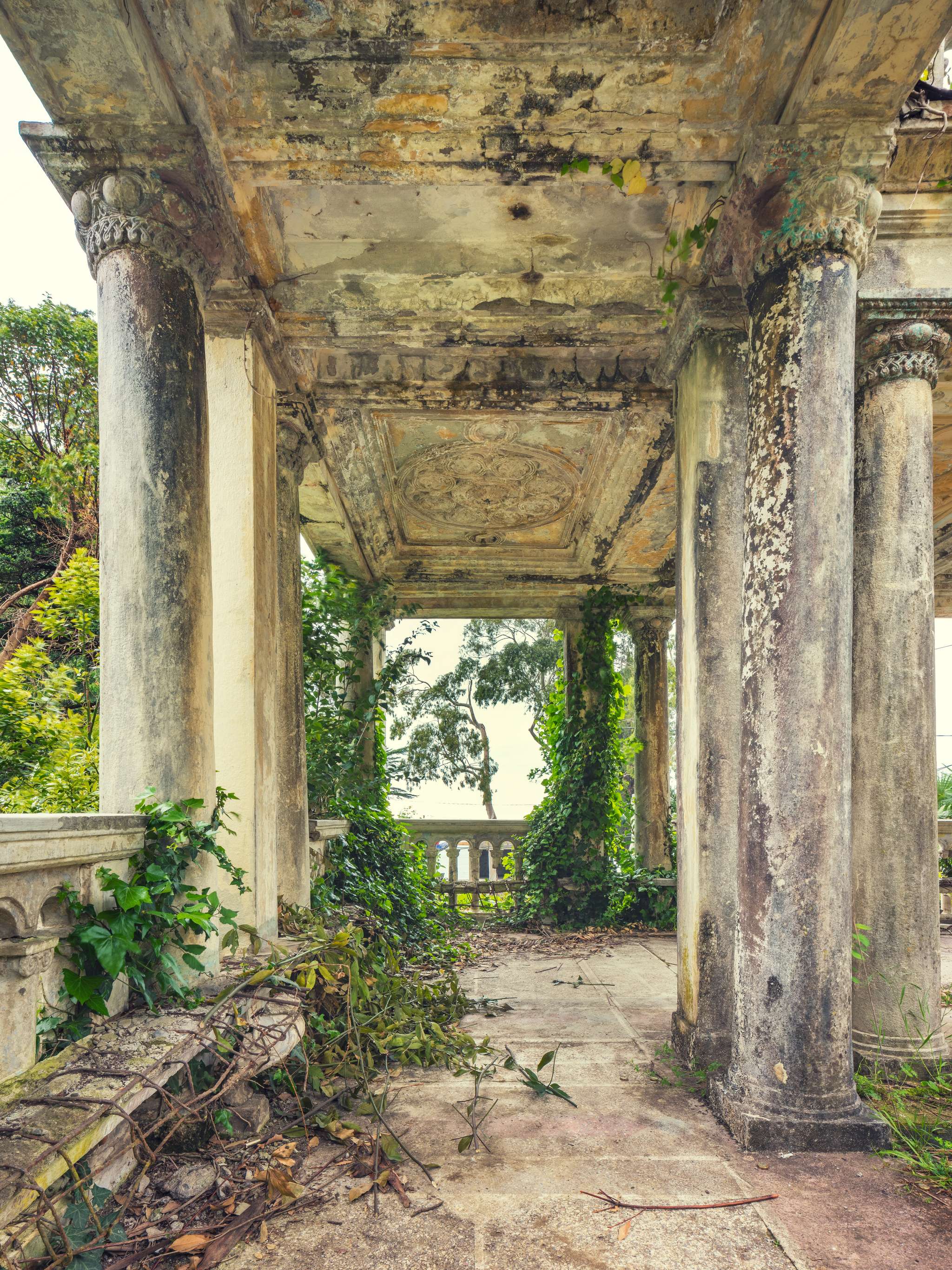
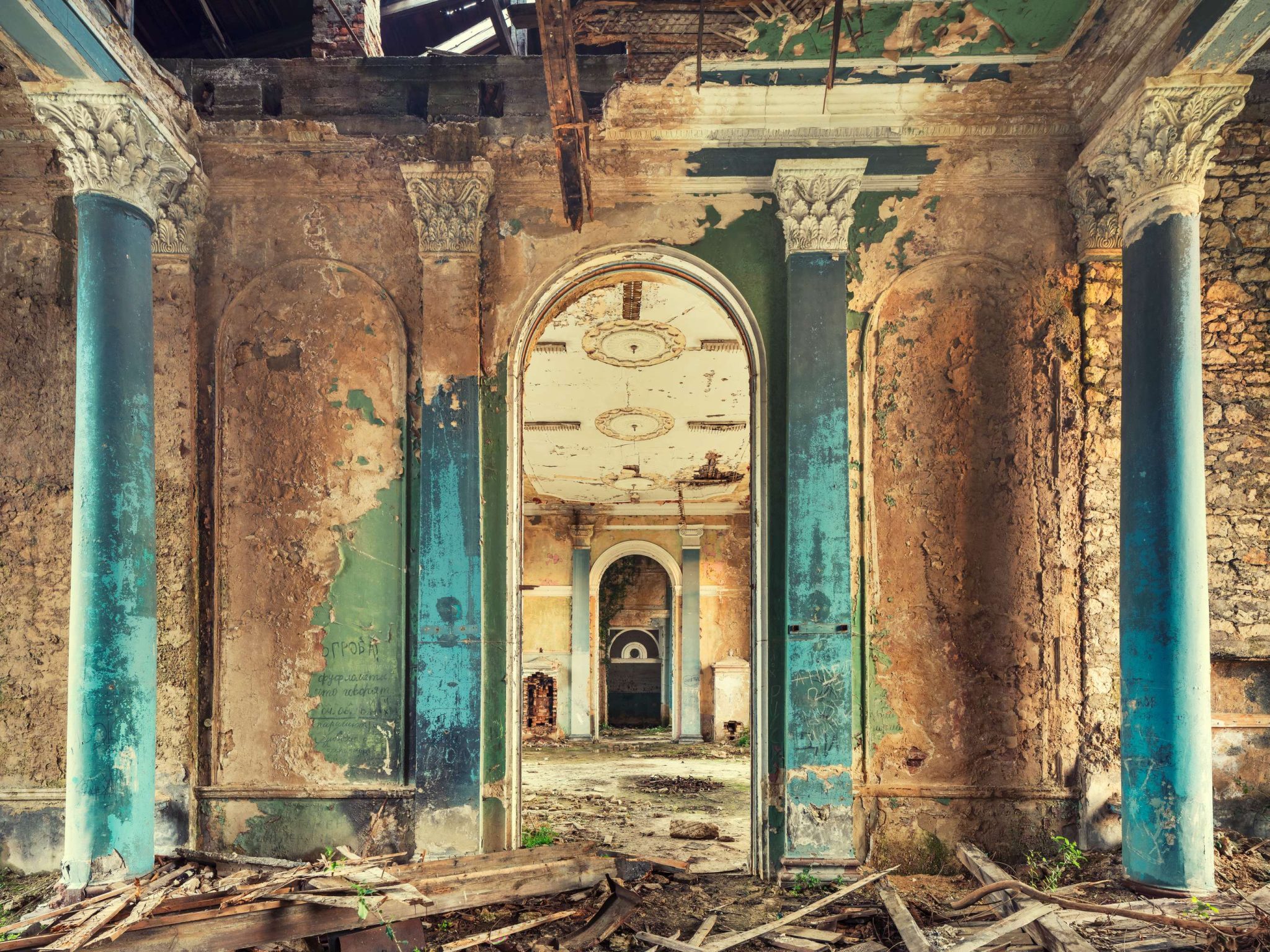
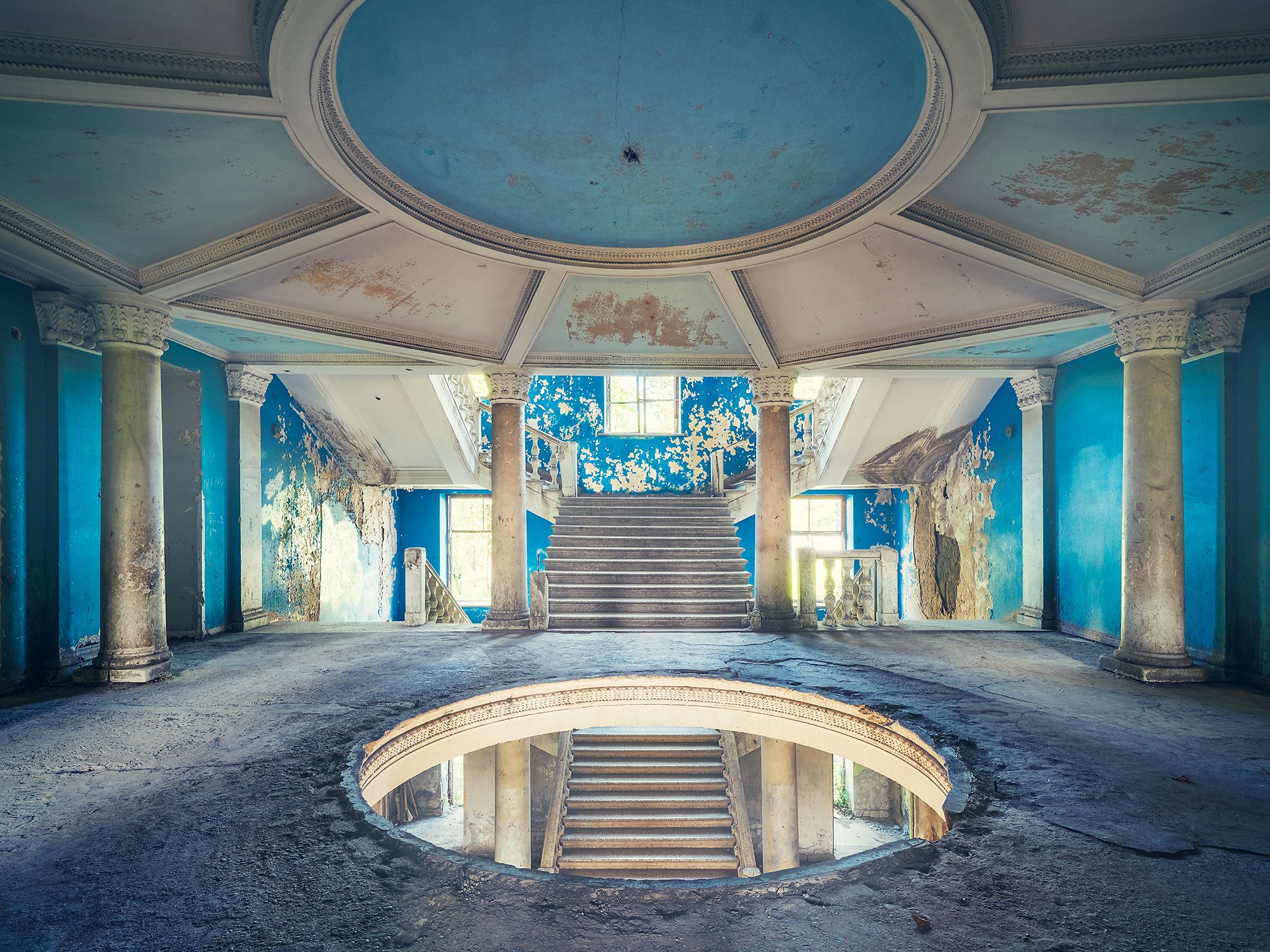
The wonderfully beautiful line along the coast was once a source of great pride and was accompanied by stations that were in part majestic. When I was there in 2019 they had been left to decay for almost thirty years and still shone in their forgotten splendour. It was doubtful whether they would ever see active days again.
Gagra: the colonnade beneath the palms
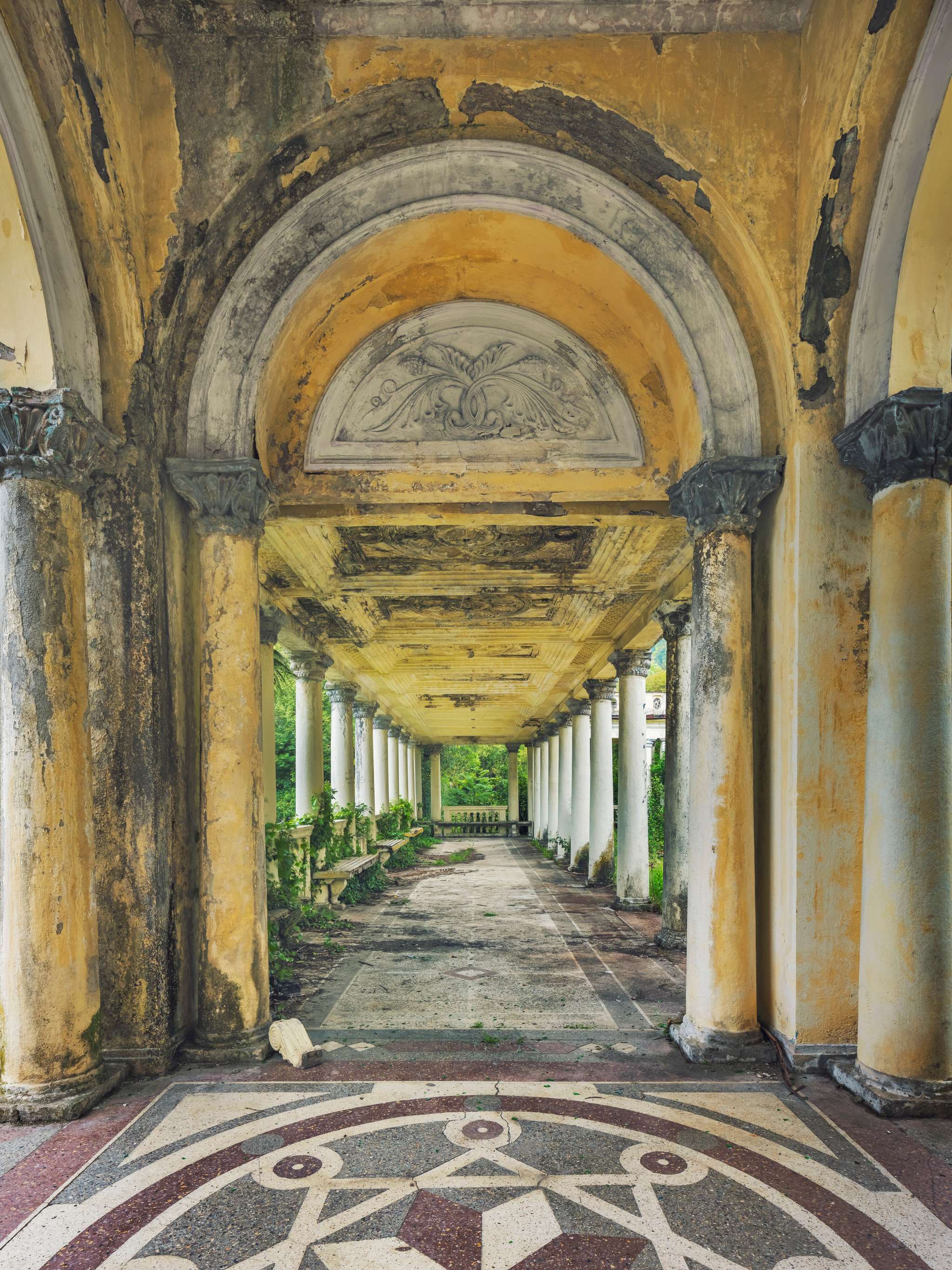
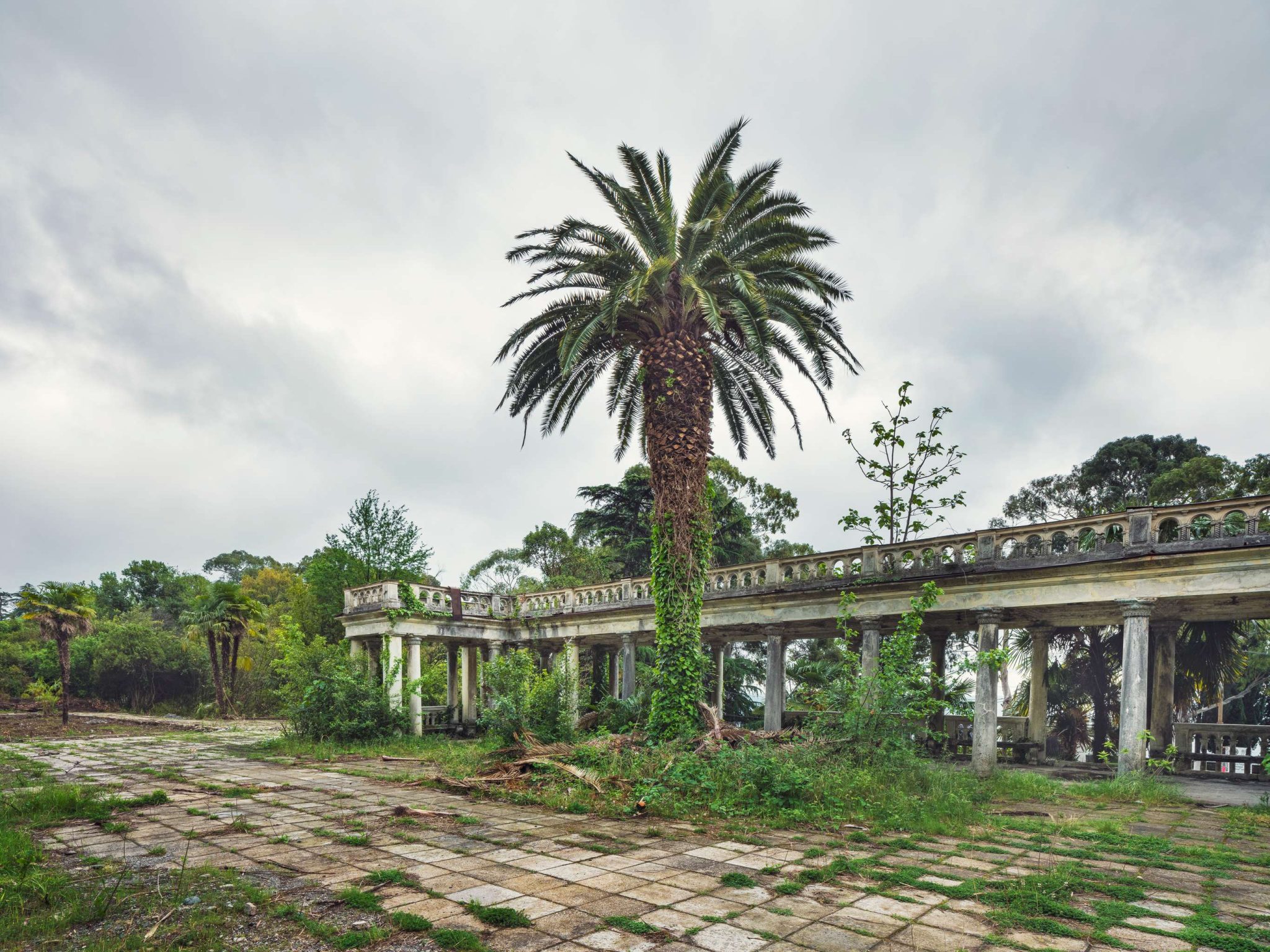
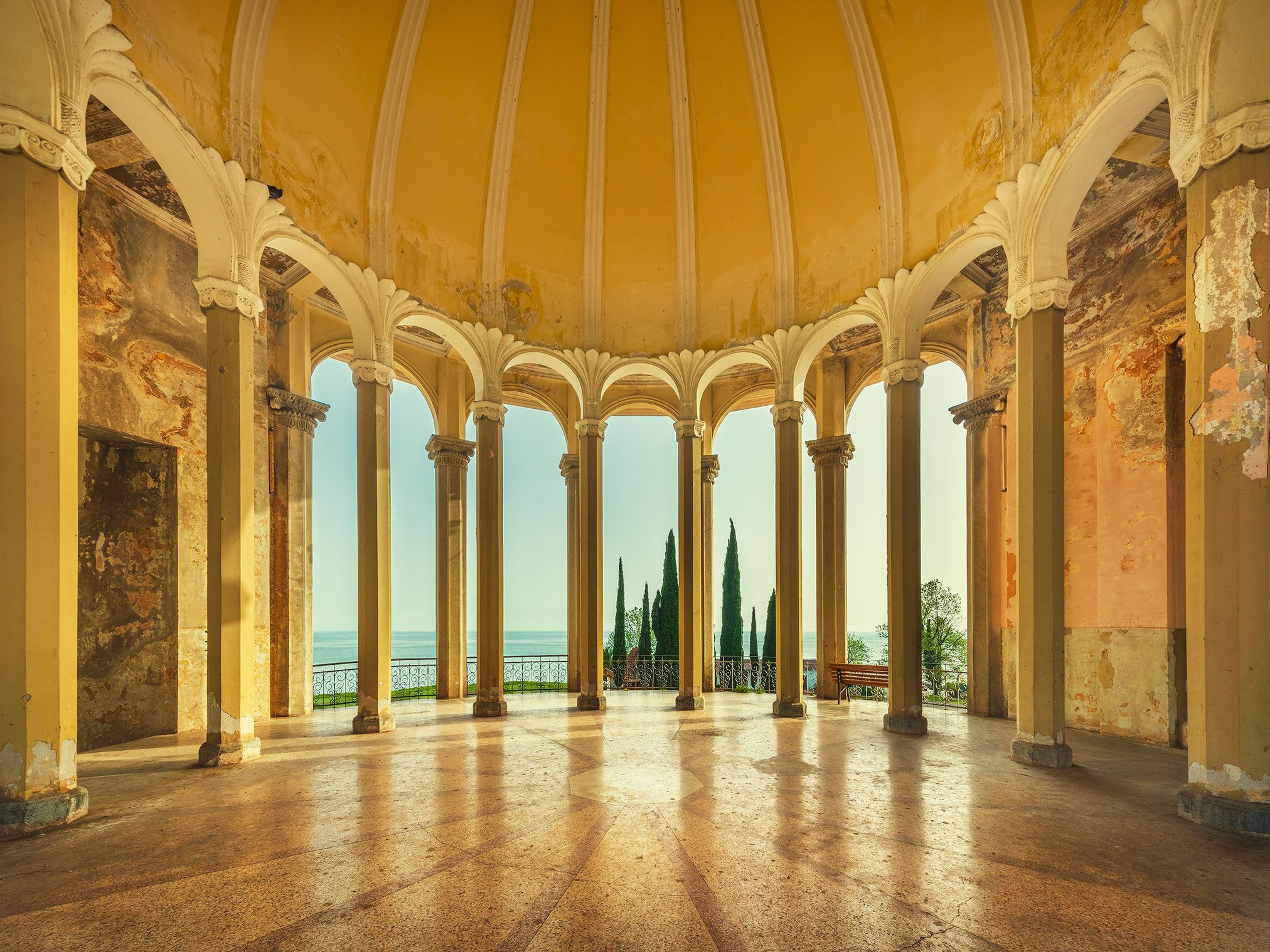
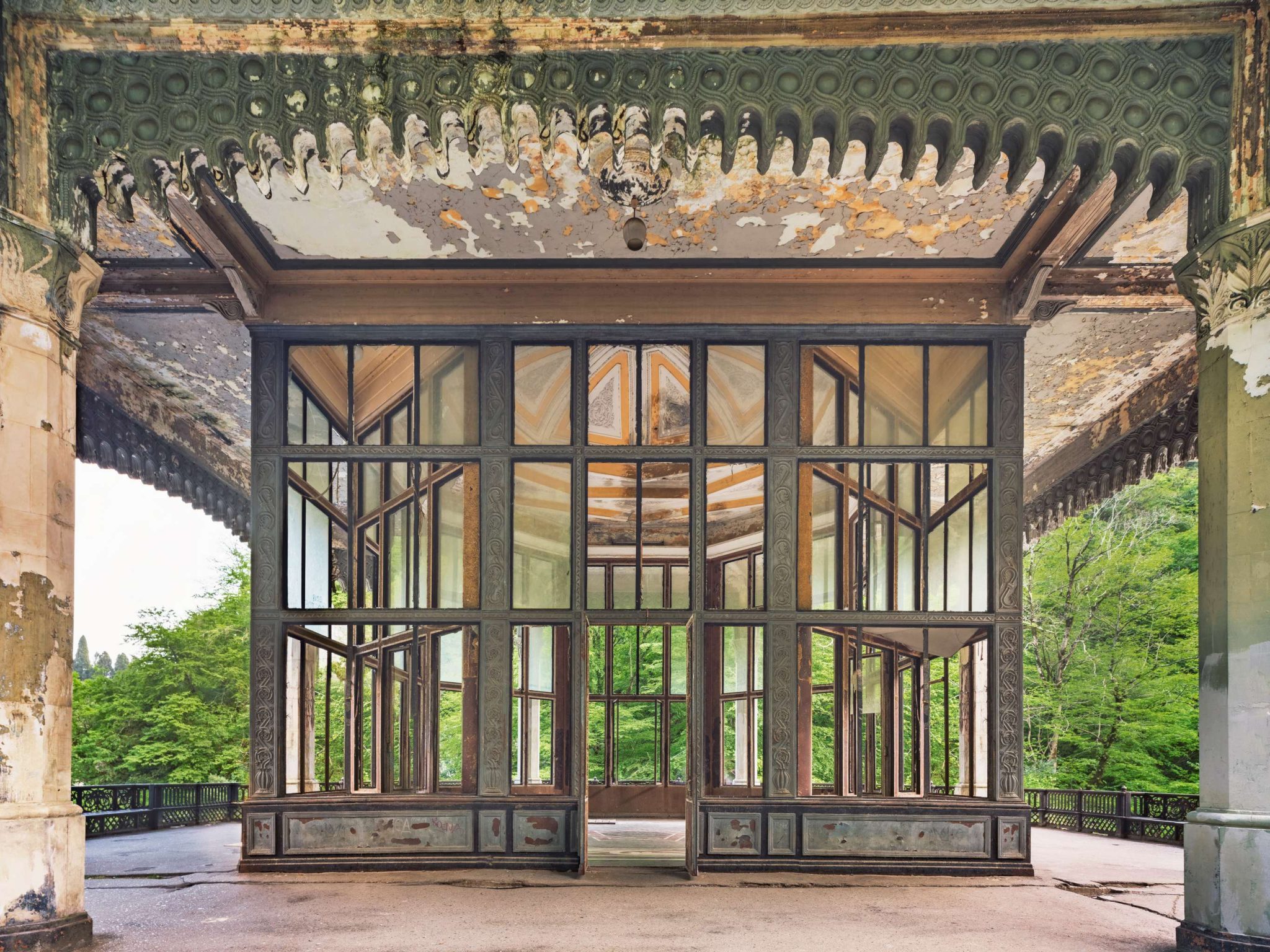
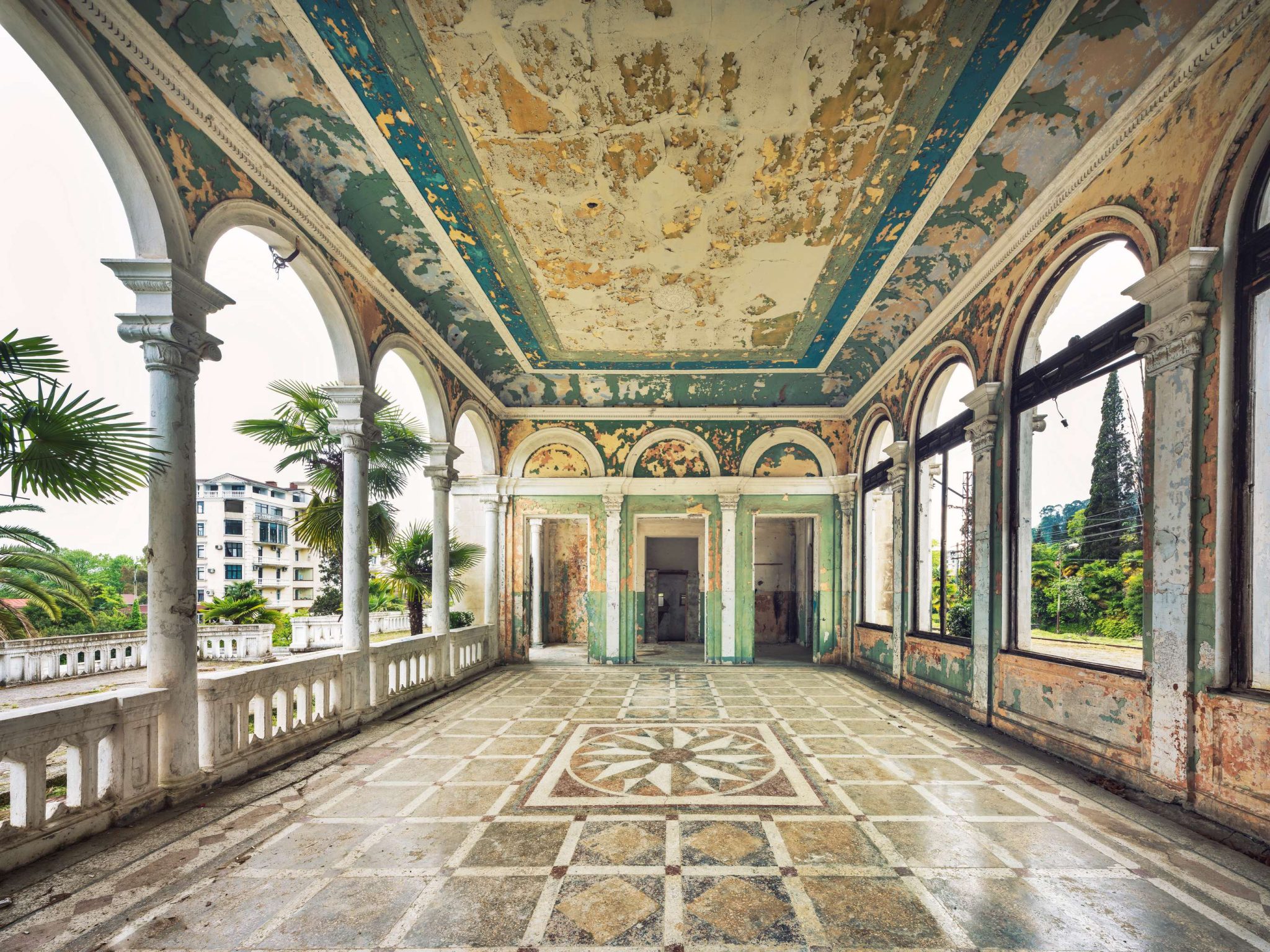
We begin the journey in Gagra near the Russian border, once a showpiece resort, where there is more tourism again today but which is still hard hit by Abkhazia’s isolated position. The old station, now called Gagripsh, opened in 1943; its pavilion with the long colonnade was built in the 1950s. Until 1951 it was the resort’s main station. In 2021 the Abkhaz railway announced a restoration. Since May 2025 a train has been stopping here again.
Gudauta, New Athos and Psyrtskha
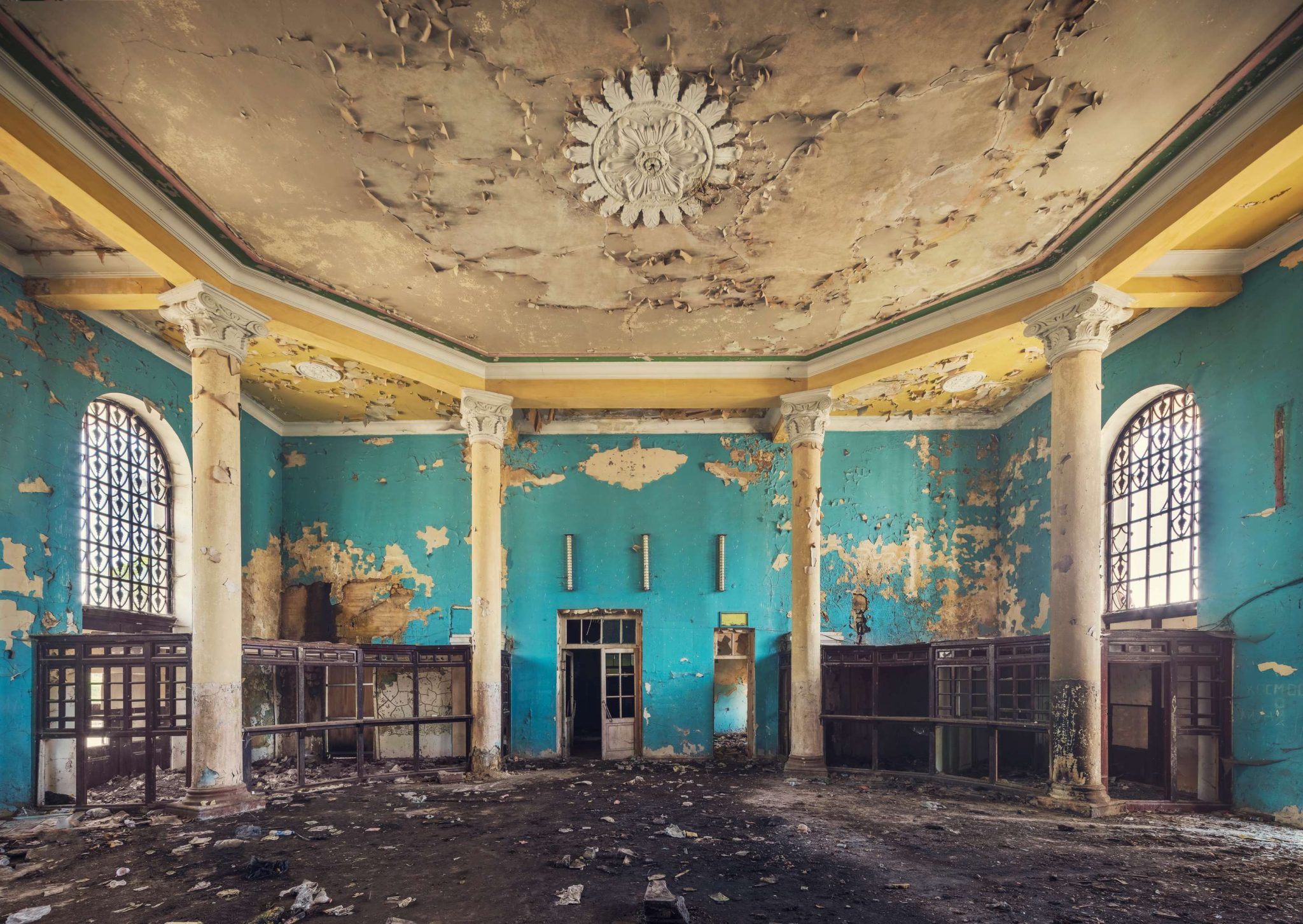
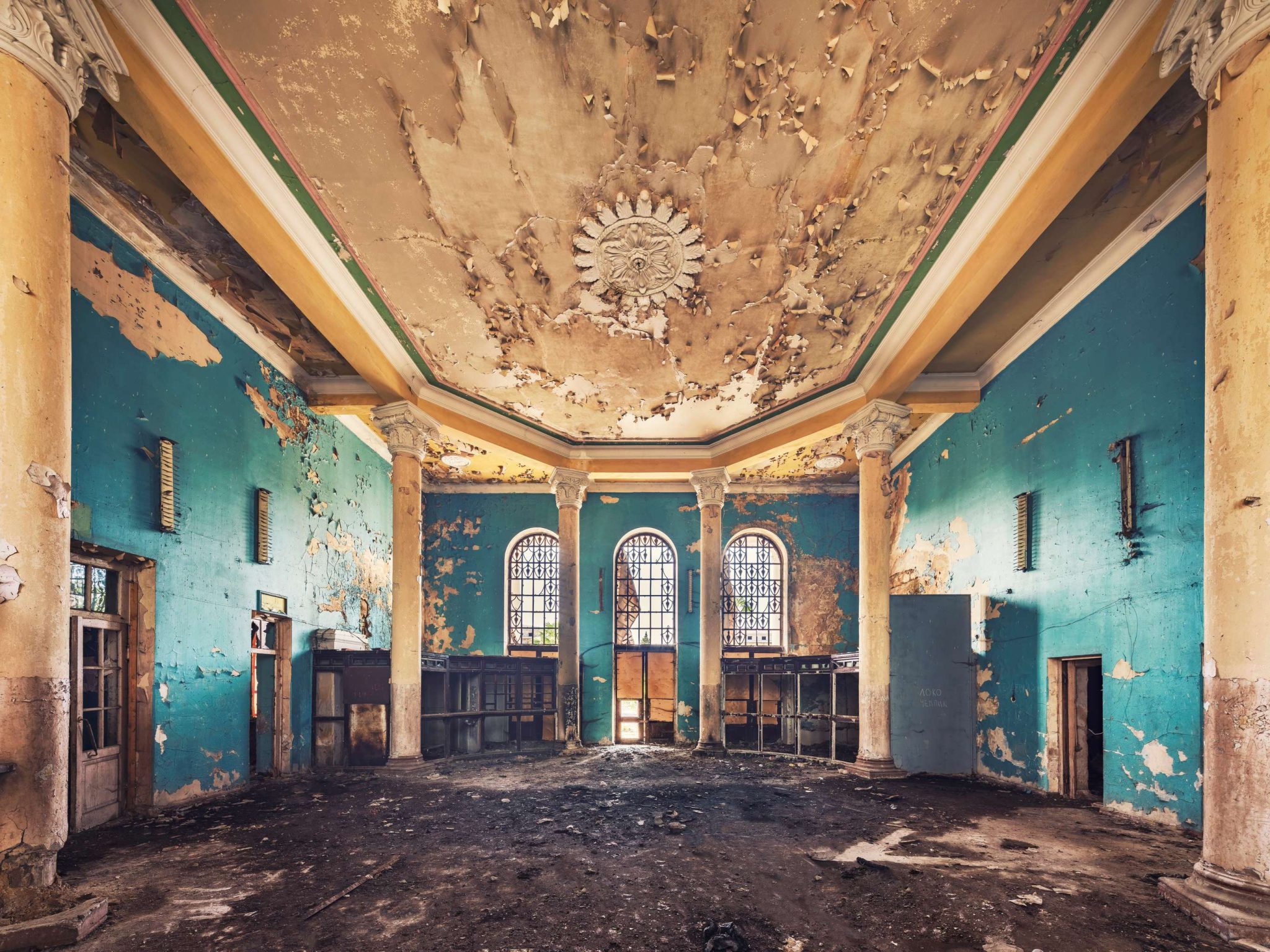
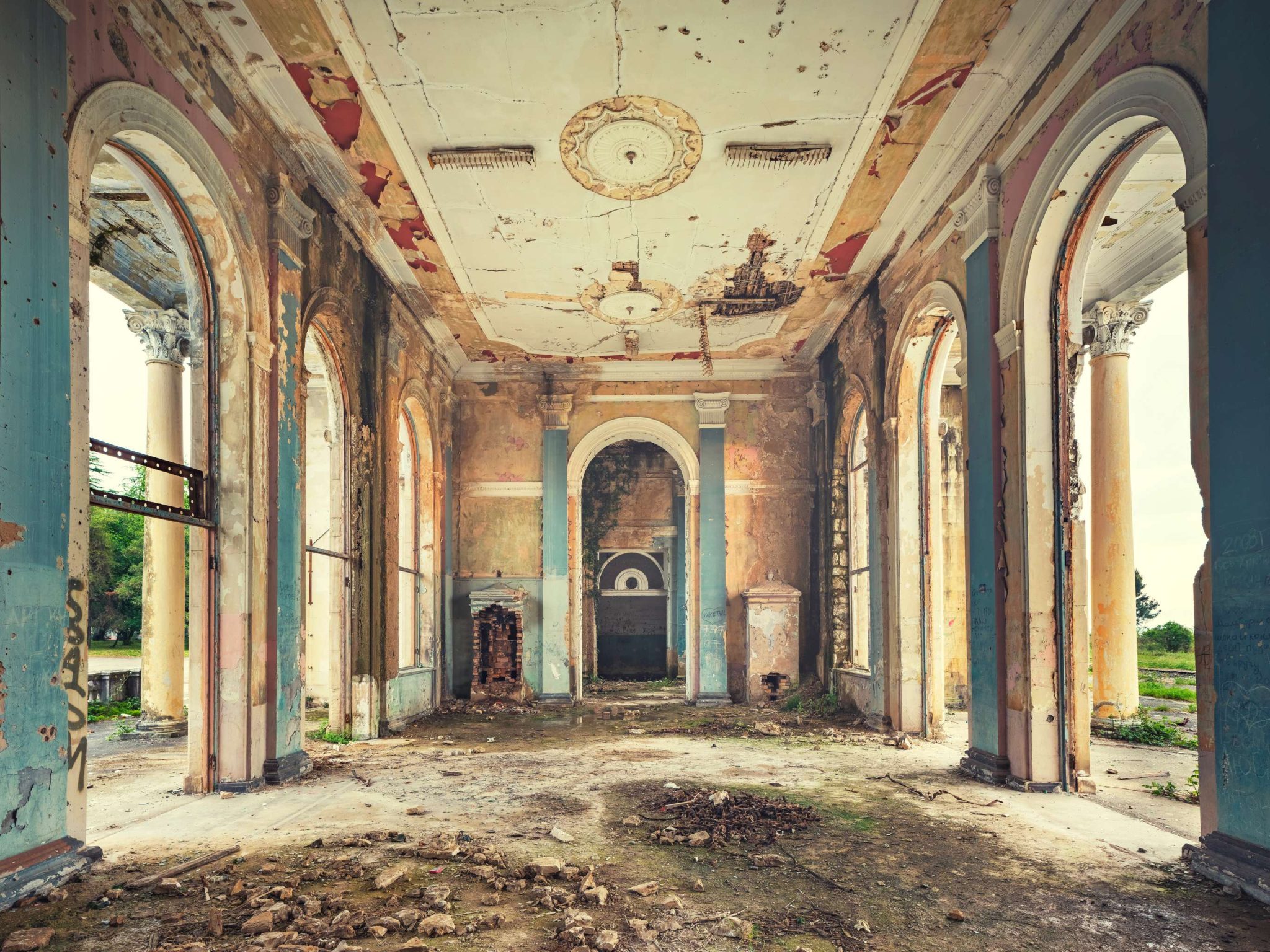
In Gudauta in 2019 I found a ticket hall in turquoise and yellow, the counters still in place. In 2018 residents had announced that they would restore the station themselves. It has since been repaired after about thirty years of standing empty.
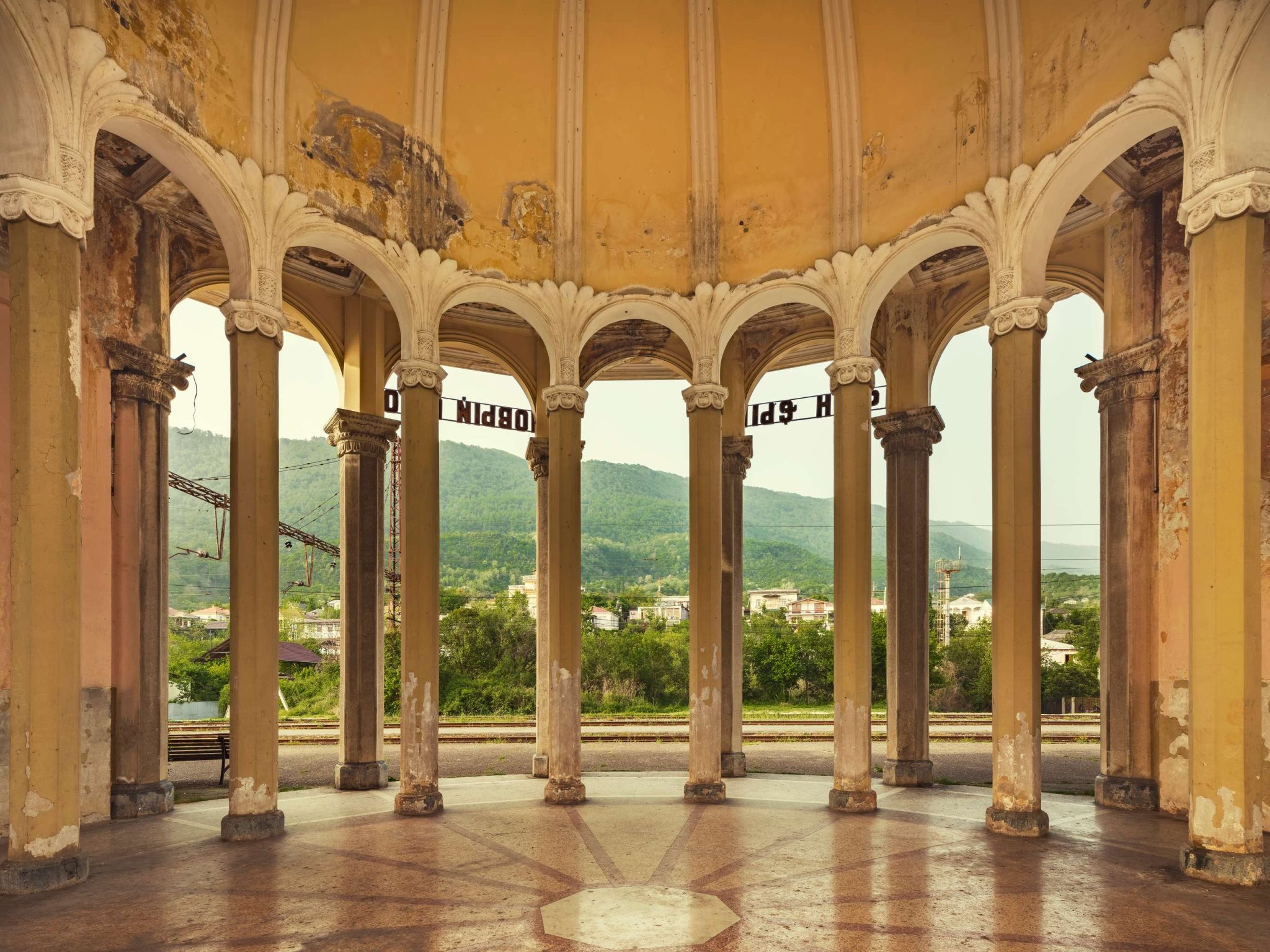
The station of New Athos, Novy Afon, opens towards the sea with a yellow rotunda. It has been under restoration since the summer of 2025.
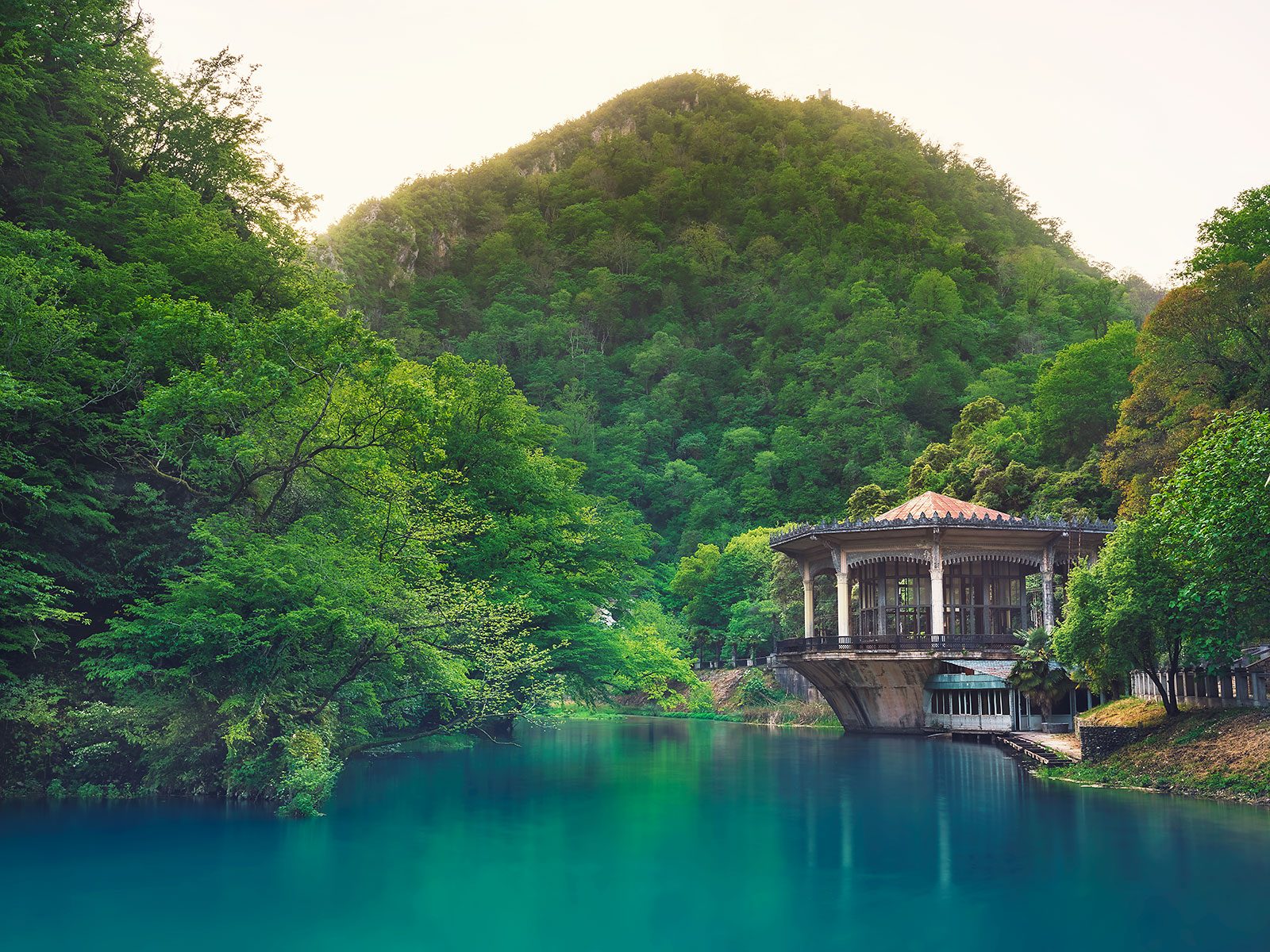
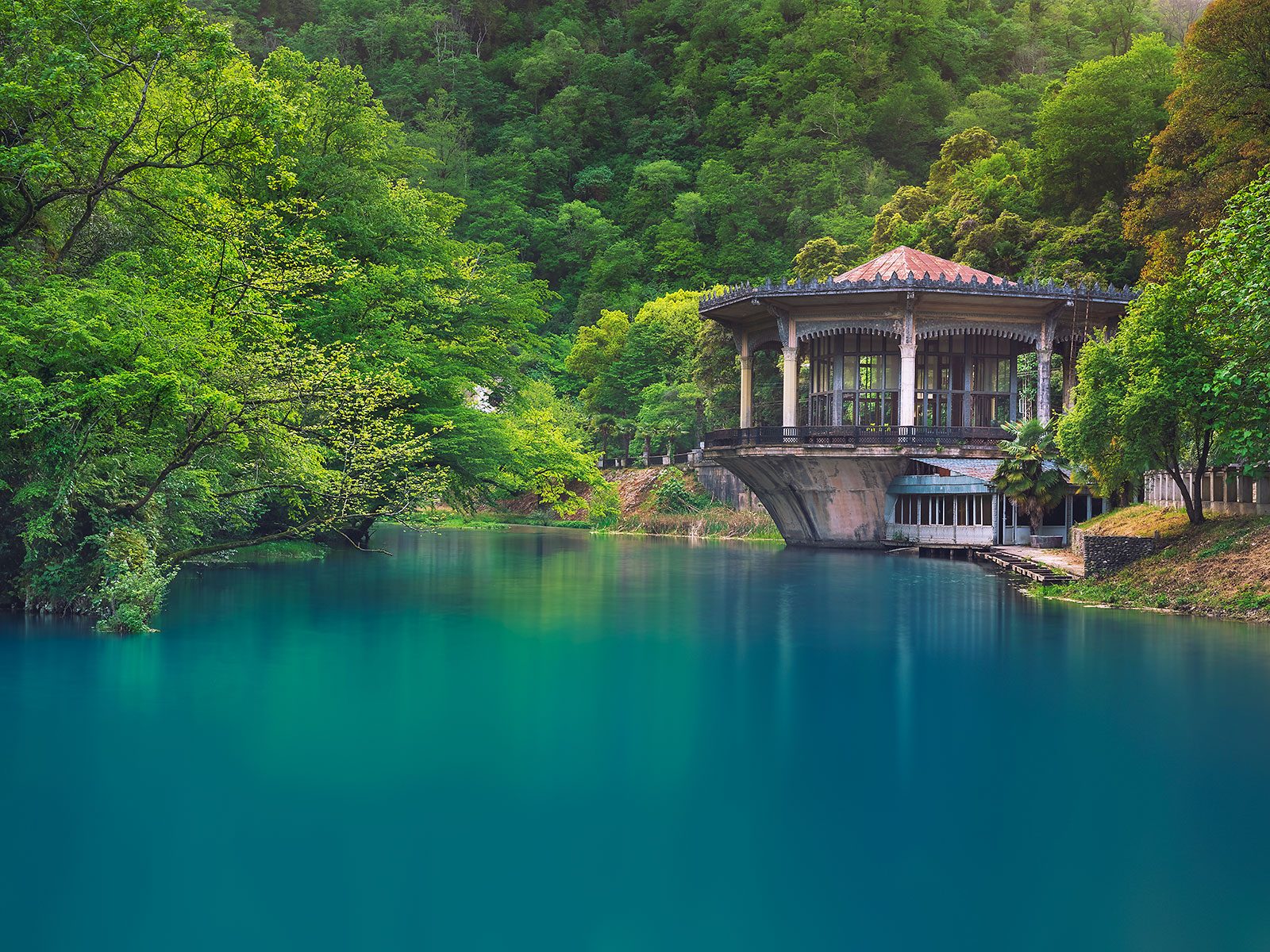
Close by lies Psyrtskha halt: a round pavilion above turquoise water. The halt was laid out in 1944; the pavilion by the architect Georgy Lezhava was built between 1952 and 1954. From 2009 no train stopped here. Abkhaz investors have been restoring it since 2023.
Sukhumi: red halls and a buffet
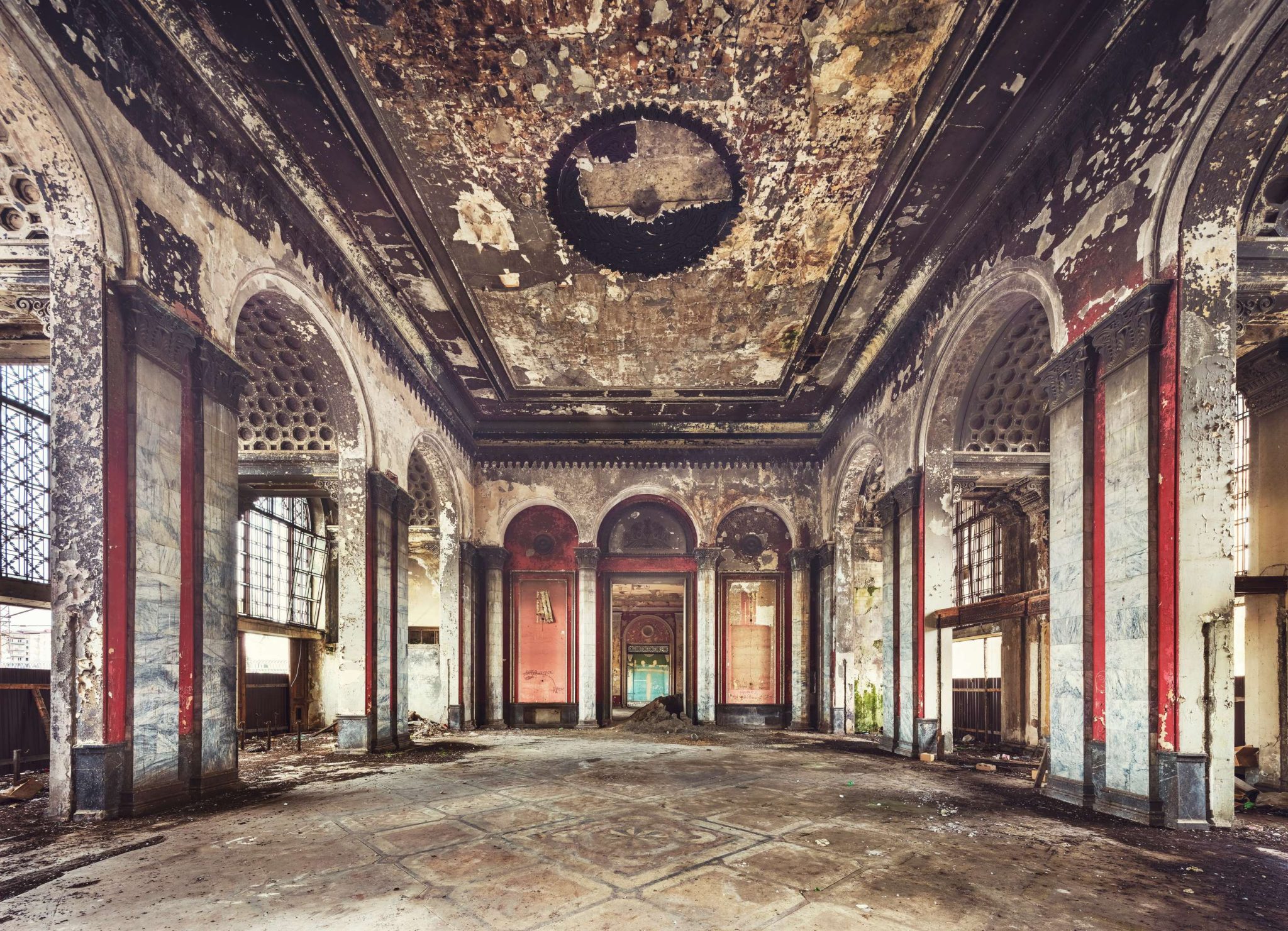
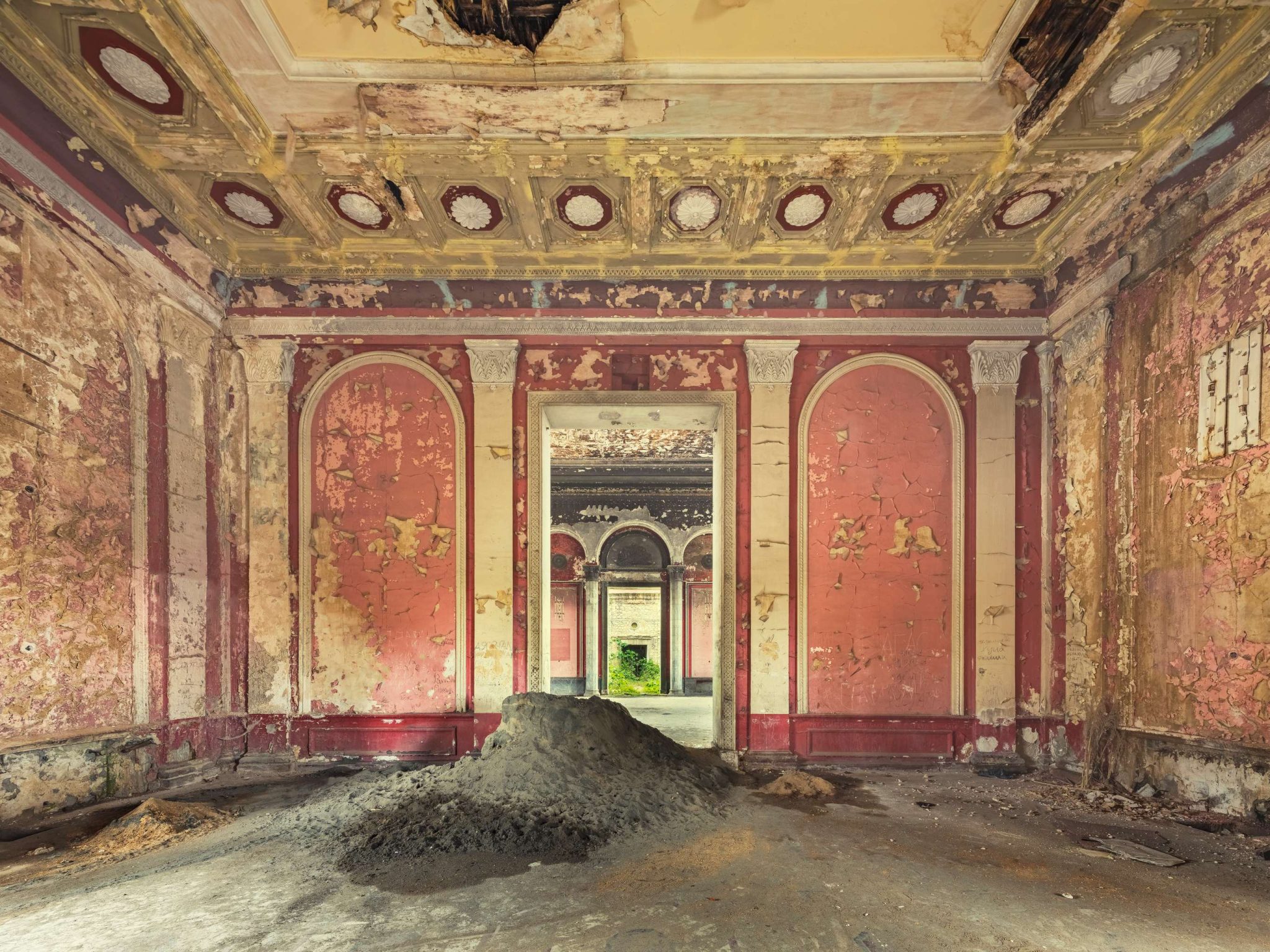
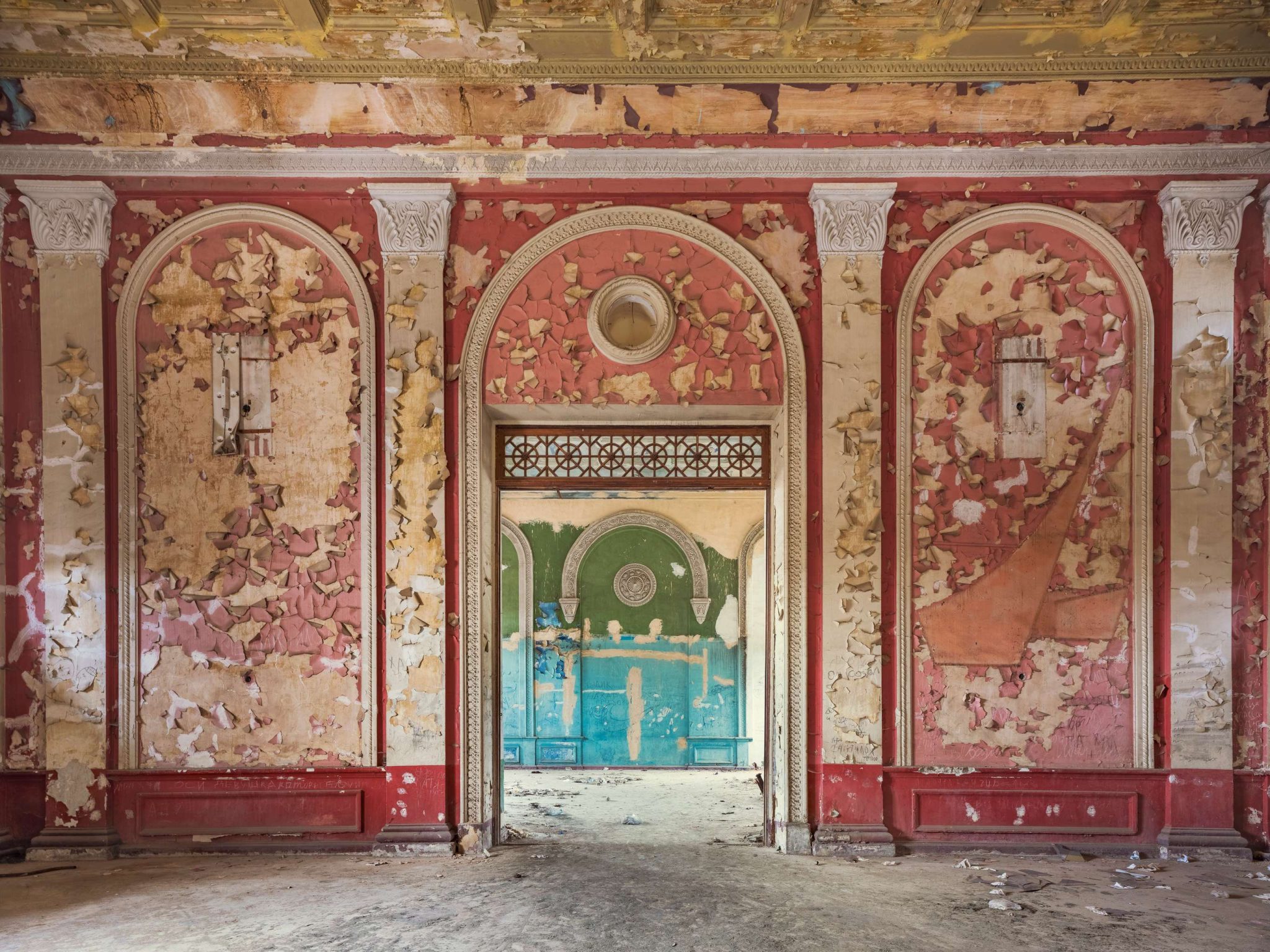
The station of the capital opened on 1 December 1951. During the war it served as an ammunition store. In 2019 its halls stood empty, painted red and pink, with rubble on the floor. In October 2025 the Abkhaz railway reported that the façade and the interiors had been repaired.
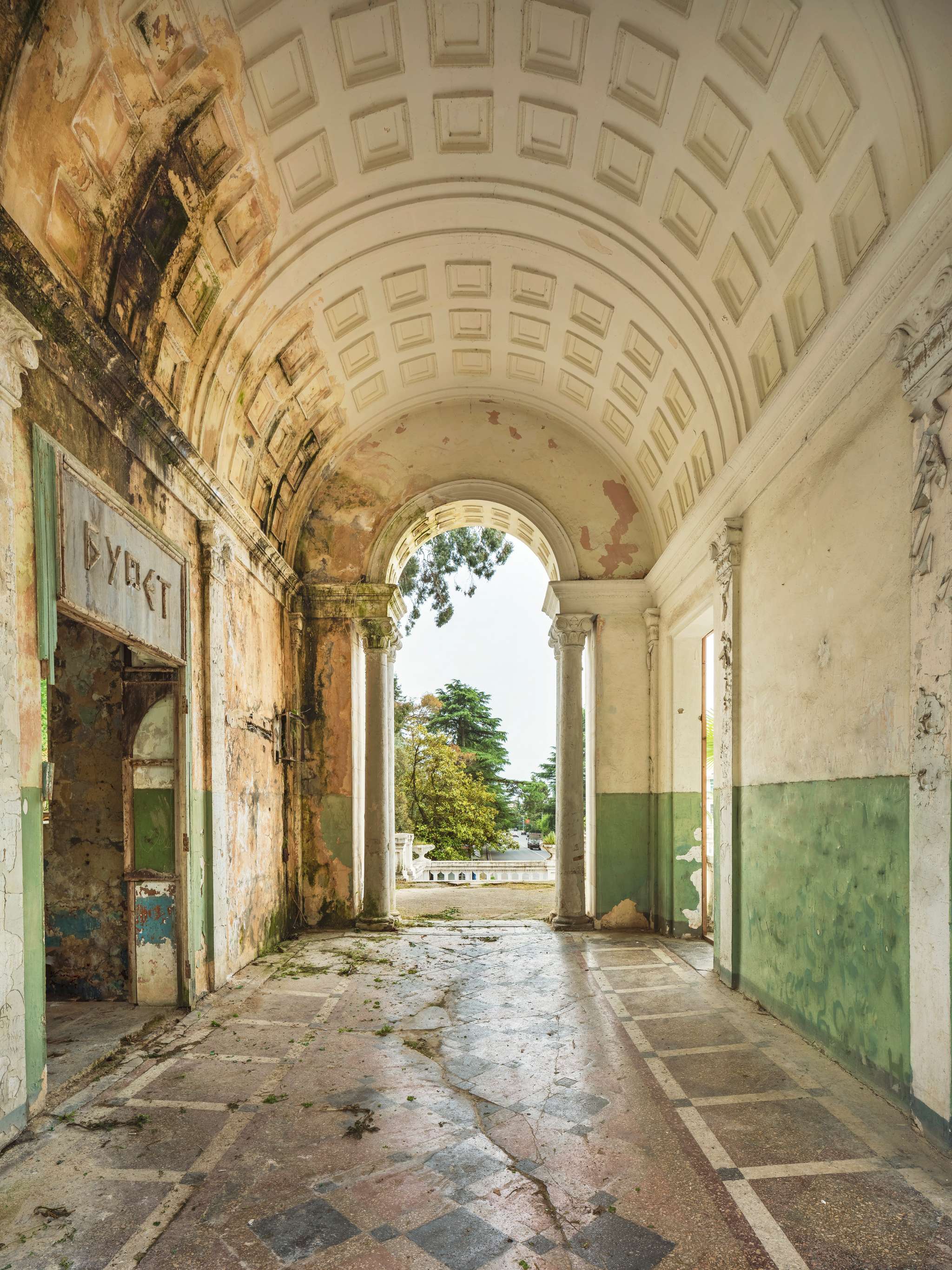
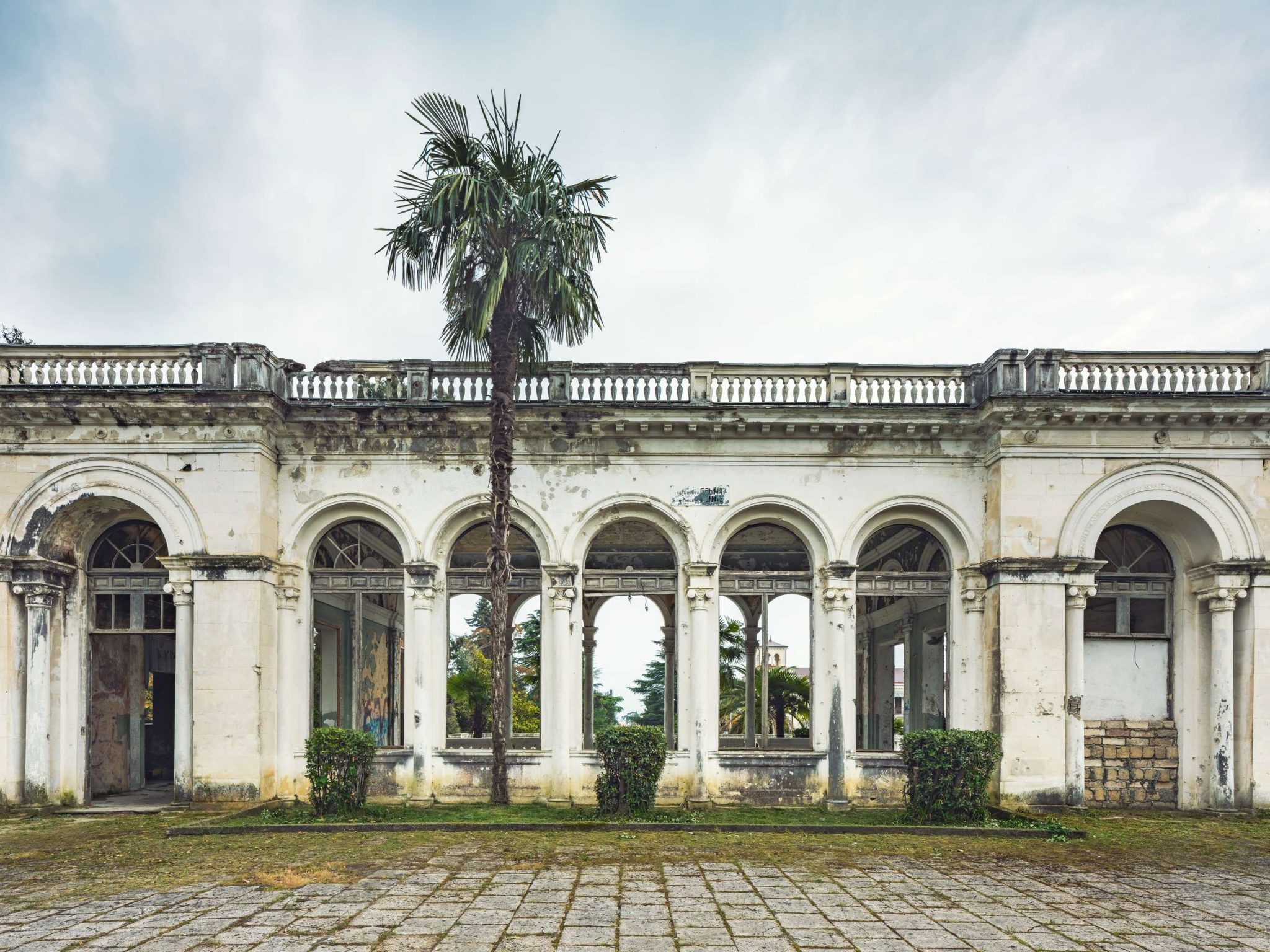
Within the city there is also the small halt that used to be called Baratashvili and is now called Guma. Its pavilion of 1947 has a white arcaded front and a gallery that once linked the buffet with the service rooms. The sign was still hanging in 2019. Since July 2021 the pavilion has been a cultural venue, its arches glazed.
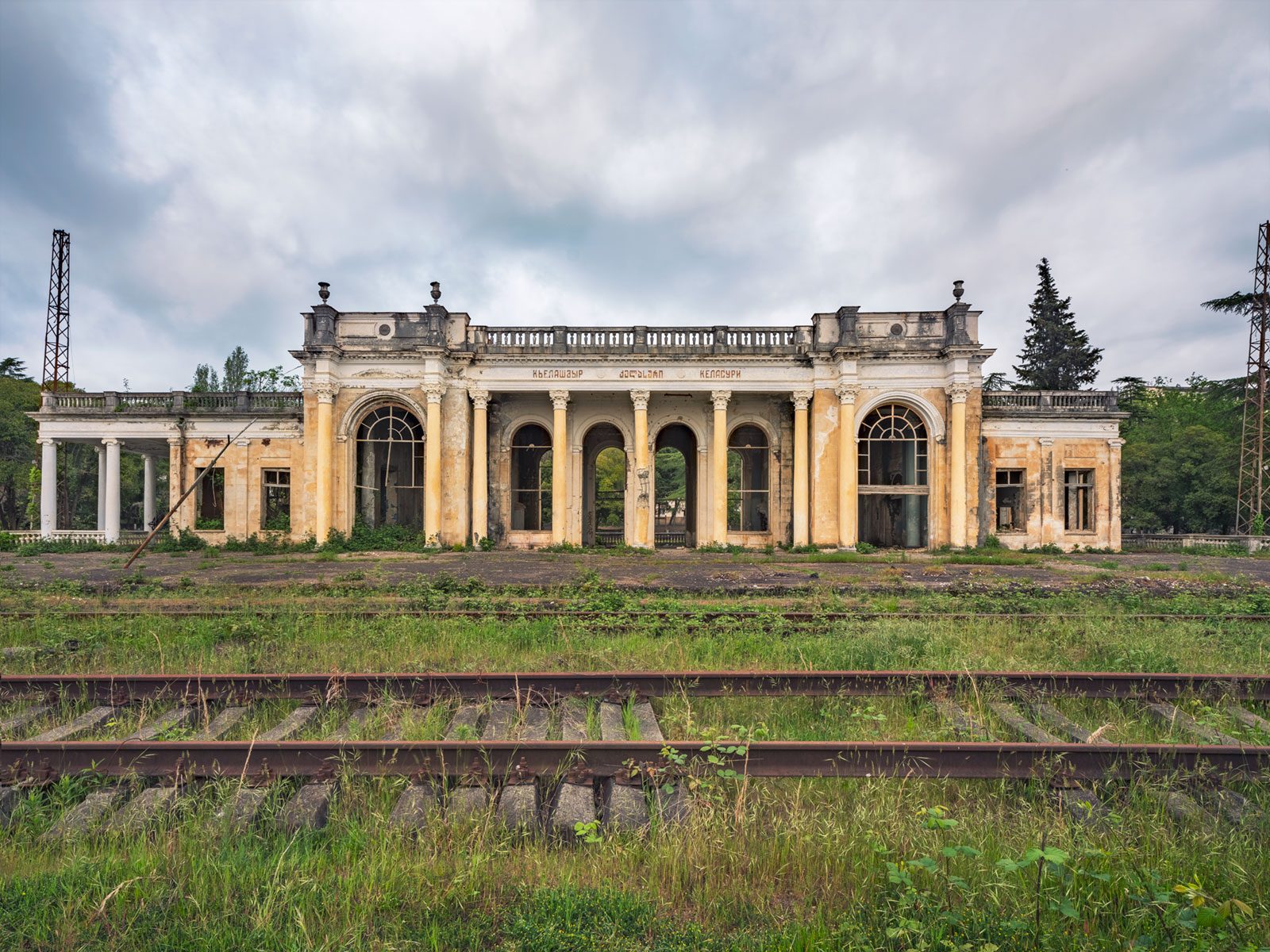
At Kelasuri, on the eastern edge of Sukhumi, the station building from the 1950s stood open, with no roof above one of its rooms.
Why does the line end at the Enguri?
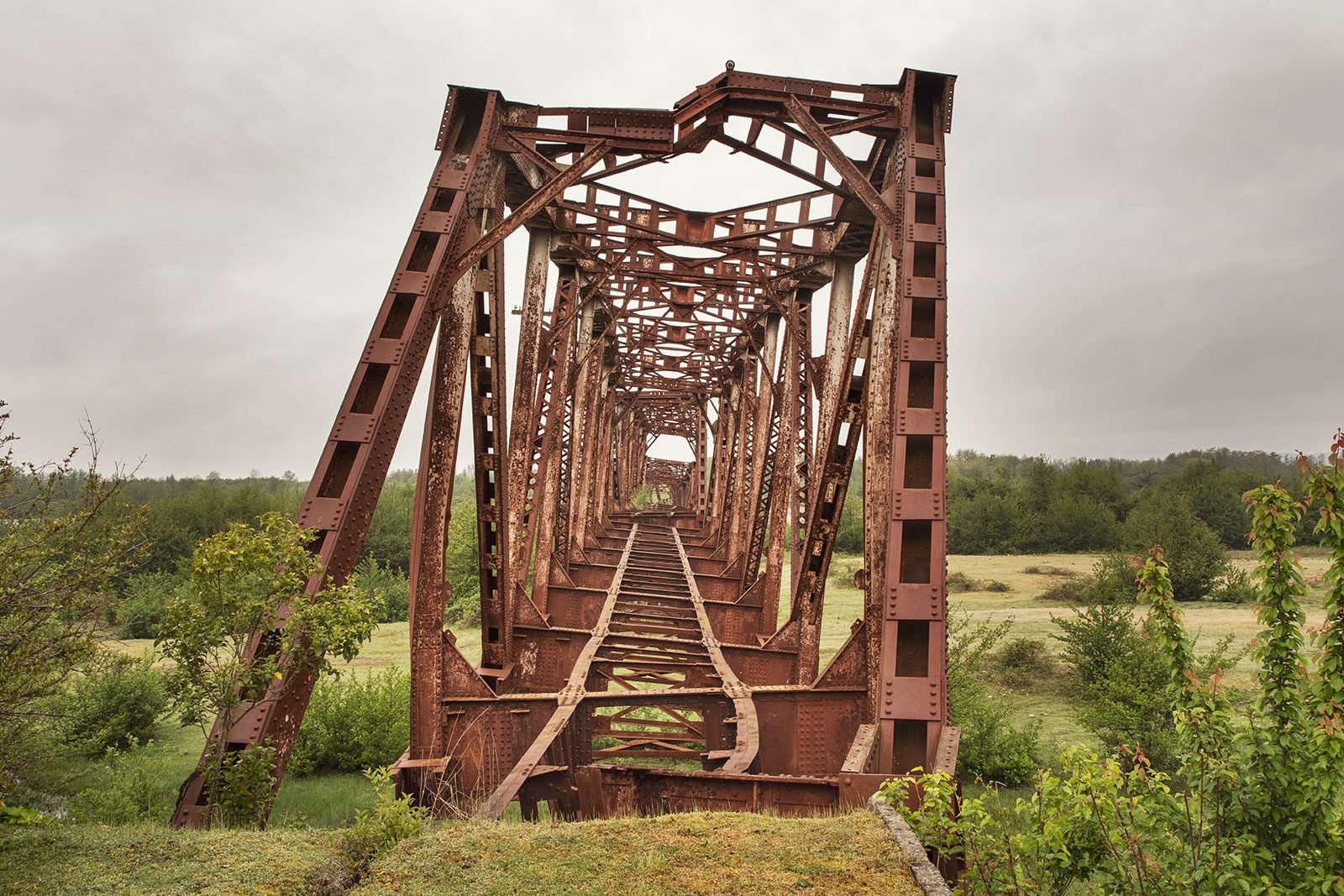
On 14 August 1992 Georgian troops moved into Abkhazia. The official reason given was the protection of the railway. On the same day the railway bridge over the Enguri was blown up. Accounts differ as to who was responsible and whether the bridge was repaired in the meantime and blown up a second time in 1993. It was never rebuilt.
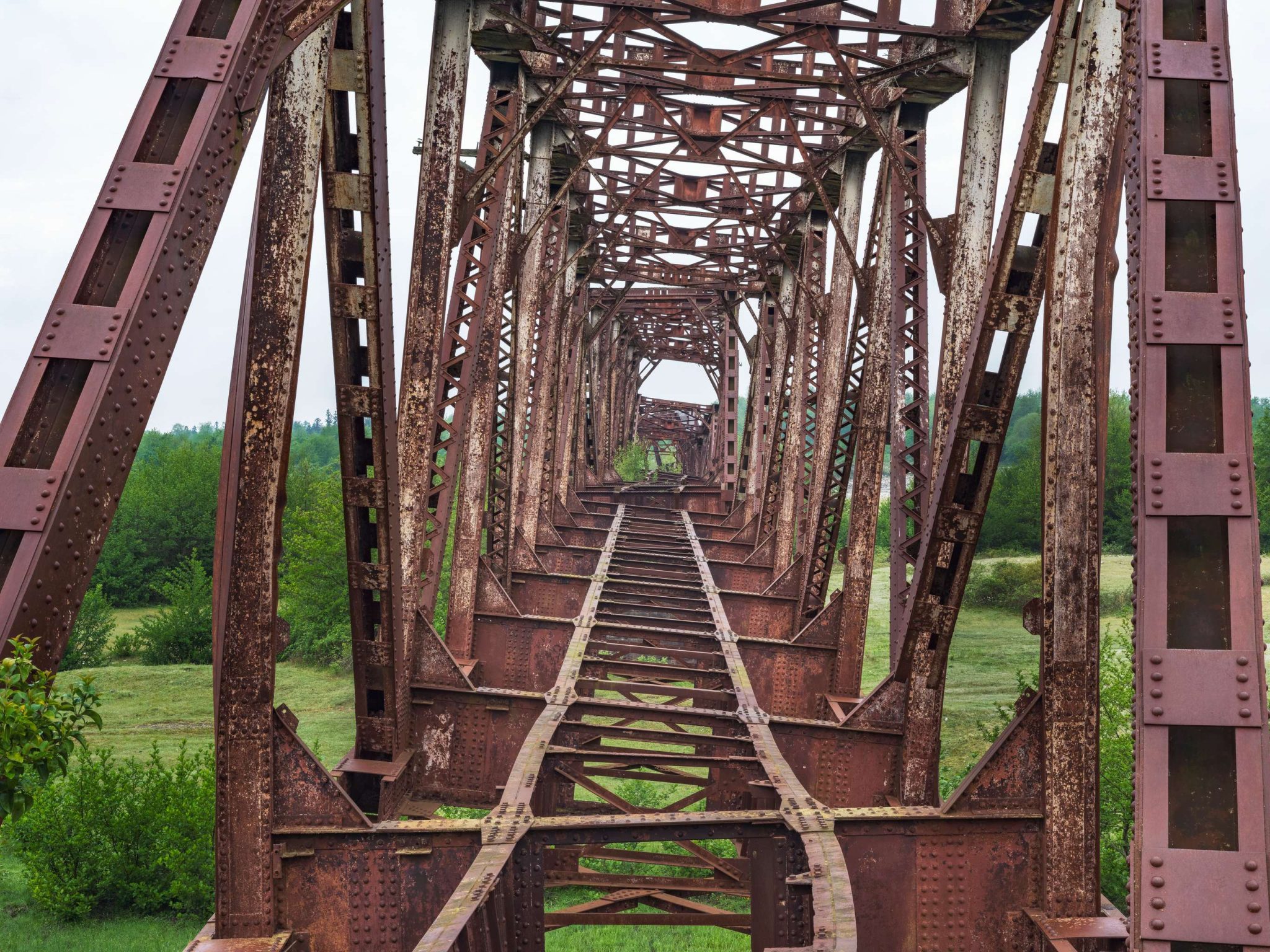
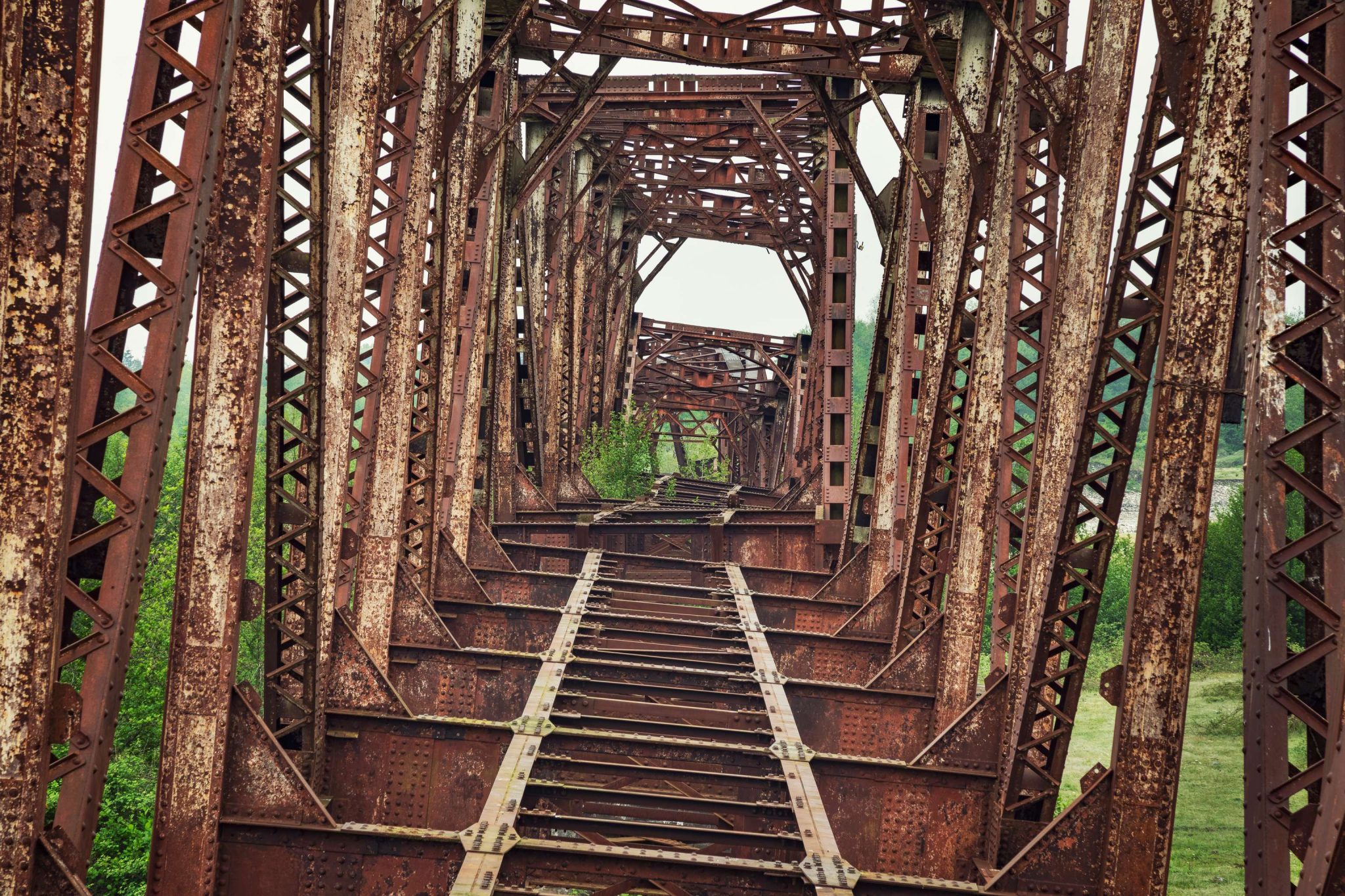
Beyond Sukhumi you see the sad course of the war, and the destruction is everywhere even after thirty years. The Georgian station names have been removed from the buildings. The most heavily destroyed areas around Gali are hardly recognisable today. The final end in the middle of nowhere is the bridge: rusting trusswork in the river meadow, with the rails still lying on it for a short stretch. I photographed it from the Georgian side, near Zugdidi.
What the bridge means
With the bridge the link that had connected Georgia and Armenia with Russia along the coast was severed. In 1996 the states of the CIS adopted restrictions against Abkhazia. Not until 25 December 2002 did a train from Russia run to Sukhumi again; the connection to Moscow has existed since September 2004. In the summer of 2008 some 400 Russian railway troops repaired more than 50 kilometres of line south of Sukhumi.
Reopening the line through to Georgia has been negotiated again and again since 1995, each time without result. A study of 2013 put the cost at 277.5 million dollars and calculated that Armenian traders could save a fifth of their transport costs. In February 2026 the Russian deputy prime minister Alexei Overchuk said that a resumption of rail traffic between Russia and Georgia was being considered. Until then it is mainly freight that runs south of Sukhumi, chiefly Russian coal.
Suspected of spying on the platform
Even today you quickly notice how sensitive a subject the railway and its stations are. More than once, suspicious or instantly agitated residents came and accused me of spying, although the stations are completely open and accessible to anyone. Several times the police or the military were called, and I was therefore unable to photograph some stations. Fortunately most situations were soon resolved once it was understood that my background was not political but purely a passion for the buildings. And yet, at some point, an aftertaste remained in recording these beautiful buildings.
What runs today
Since 1 May 2025 the electric train “Dioskuria” has run twice a day between Sochi and Sukhumi, calling at Gagripsh, Gagra, Gudauta, Psyrtskha and New Athos, among other stops. In the first half of 2026 it carried more than 92,000 passengers. In addition there are the long-distance trains from Moscow and St Petersburg.
Some of the stations I found empty and open are thus in use again or being restored. My pictures show the state before that.
The stations are a chapter of their own in my book VERGESSENE PRACHT, published by Frederking & Thaler in 2023.
The pictures
Photographs taken in May 2019 along the line, from Gagra to the bridge on the Enguri.
Sources and further background
This story draws on the following sources.
- Wikipedia (russisch): Abchasische Eisenbahn , accessed 11. November 2026
- International Alert: Rehabilitation of the Railways in the South Caucasus (2013) , accessed 11. November 2026
- Kathmandu & Beyond: Sukhumi railway station , accessed 11. November 2026
- Wikipedia (russisch): Gagrypsch (Bahnsteig) , accessed 11. November 2026
- Abkhaz World: Restorations of railway stations (03.06.2021) , accessed 11. November 2026
- JAMnews: Gudauta residents to renovate historic train station themselves (17.05.2018) , accessed 11. November 2026
- Wokrug Sweta: Plattform Psyrzcha (29.11.2024) , accessed 11. November 2026
- Wikipedia (russisch): Nowy Afon (Bahnhof) , accessed 11. November 2026
- Wikipedia (russisch): Suchum (Bahnhof) , accessed 11. November 2026
- Wokrug Sweta: Renovierung des Bahnhofs von Suchum (23.10.2025) , accessed 11. November 2026
- Wandrownik: Station Guma (20.04.2026) , accessed 11. November 2026
- Sputnik Abchasien: Das zweite Leben von Guma (15.07.2021) , accessed 11. November 2026
- Wikipedia (russisch): Kelasuri (Bahnhof) , accessed 11. November 2026
- JAMnews: 14 August 1992 , accessed 11. November 2026
- Civil.ge: Train from Russia to Sukhumi (06.01.2003) , accessed 11. November 2026
- Civil.ge: Moscow–Sukhumi railway link reopened (11.09.2004) , accessed 11. November 2026
- Interfax: Russische Eisenbahntruppen verlassen Abchasien (30.07.2008) , accessed 11. November 2026
- OC Media: Abkhazia seeks to revive its rail link to the outside world (2021) , accessed 11. November 2026
- Profile.ru / TASS: Wiederaufnahme des Bahnverkehrs mit Georgien (12.02.2026) , accessed 11. November 2026
- JAMnews: Transit geopolitics in the Caucasus (09.12.2025) , accessed 11. November 2026
- Interfax: Elektrozug „Dioskuria“ (01.05.2025) , accessed 11. November 2026
- Verkehrsministerium Russlands: Fahrgastzahlen 1. Halbjahr 2026 (23.07.2026) , accessed 11. November 2026
Series
More from BOUNDLESS
Related stories
All stories →
Countries and regions · Georgia
Abkhazia: Abandoned railway stations and sanatoria on the Soviet Riviera
Countries and regions · Georgia
Georgia: Abandoned sanatoria and palaces of culture between the Black Sea and the Caucasus

Places · Italy
Rocchetta Mattei: The castle with a drawbridge to the bedroom
Photographed 2013
Share