


Stories · Countries and regions · Georgia
Georgia: Abandoned sanatoria and palaces of culture between the Black Sea and the Caucasus
In May 2019 I travelled through Georgia, to the sanatoria of Tskaltubo, where people displaced from Abkhazia were still living at the time, and to the mining town of Chiatura. I brought back more than pictures: the warmth of people who have almost nothing, and cows that own the road.
At a glance
- Location
- Georgia
- Series
- BOUNDLESS
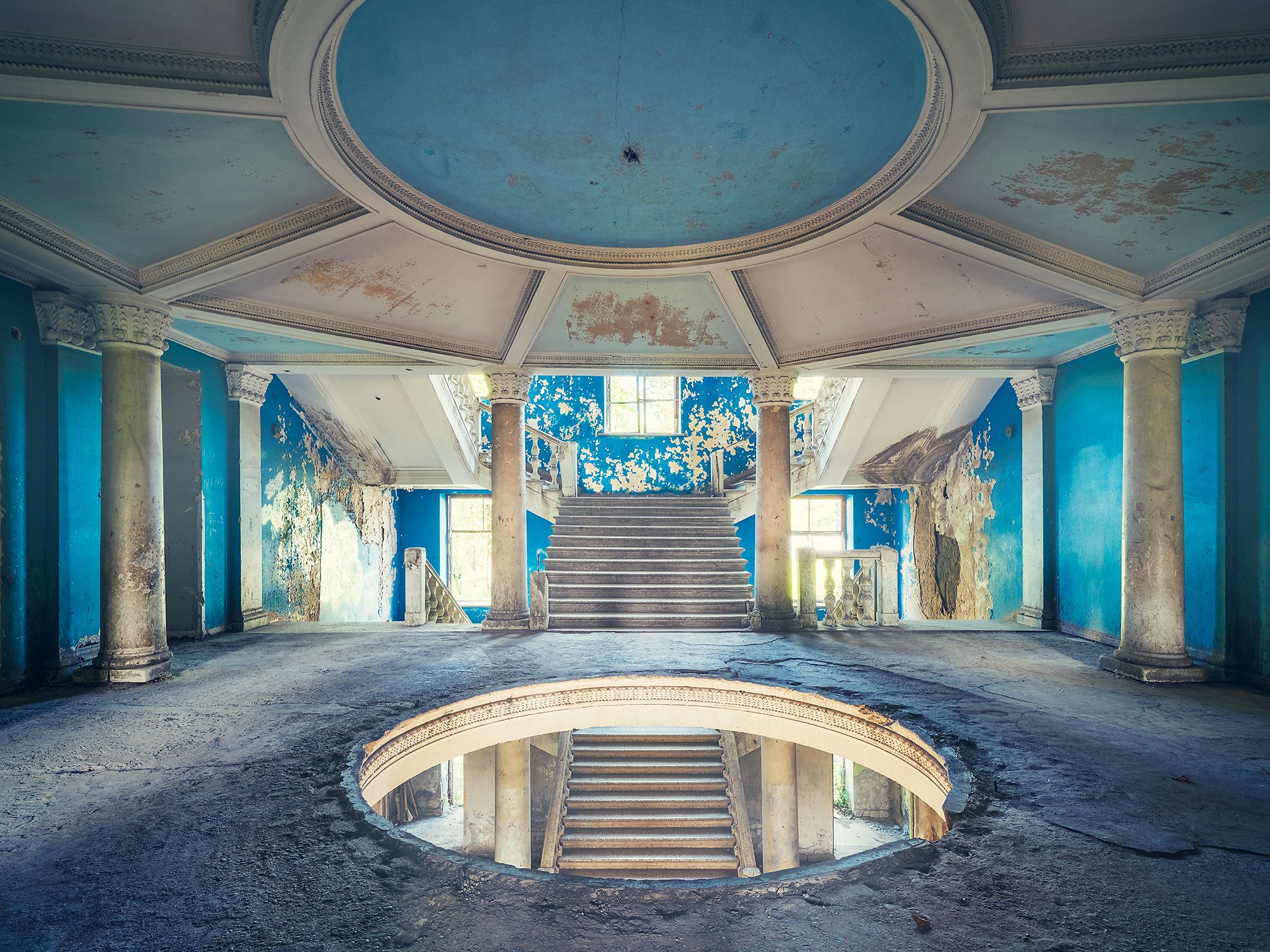
In Georgia, sanatoria, hotels and palaces of culture from the Soviet era stand empty, many of them in the spa town of Tskaltubo in the west of the country. The spa business ended there with the Soviet Union, and after the war in Abkhazia thousands of displaced people moved into the empty buildings. In May 2019 I travelled the country, from the baths of Tskaltubo to the mining town of Chiatura.
A country hardly anyone at home knows
Where I come from, hardly anyone knows anything about Georgia beyond, perhaps, its rough position east of the Black Sea. The country won my heart with its beauty, its warmth and its cultural wealth, and Georgian cooking and wine are more than worth discovering.
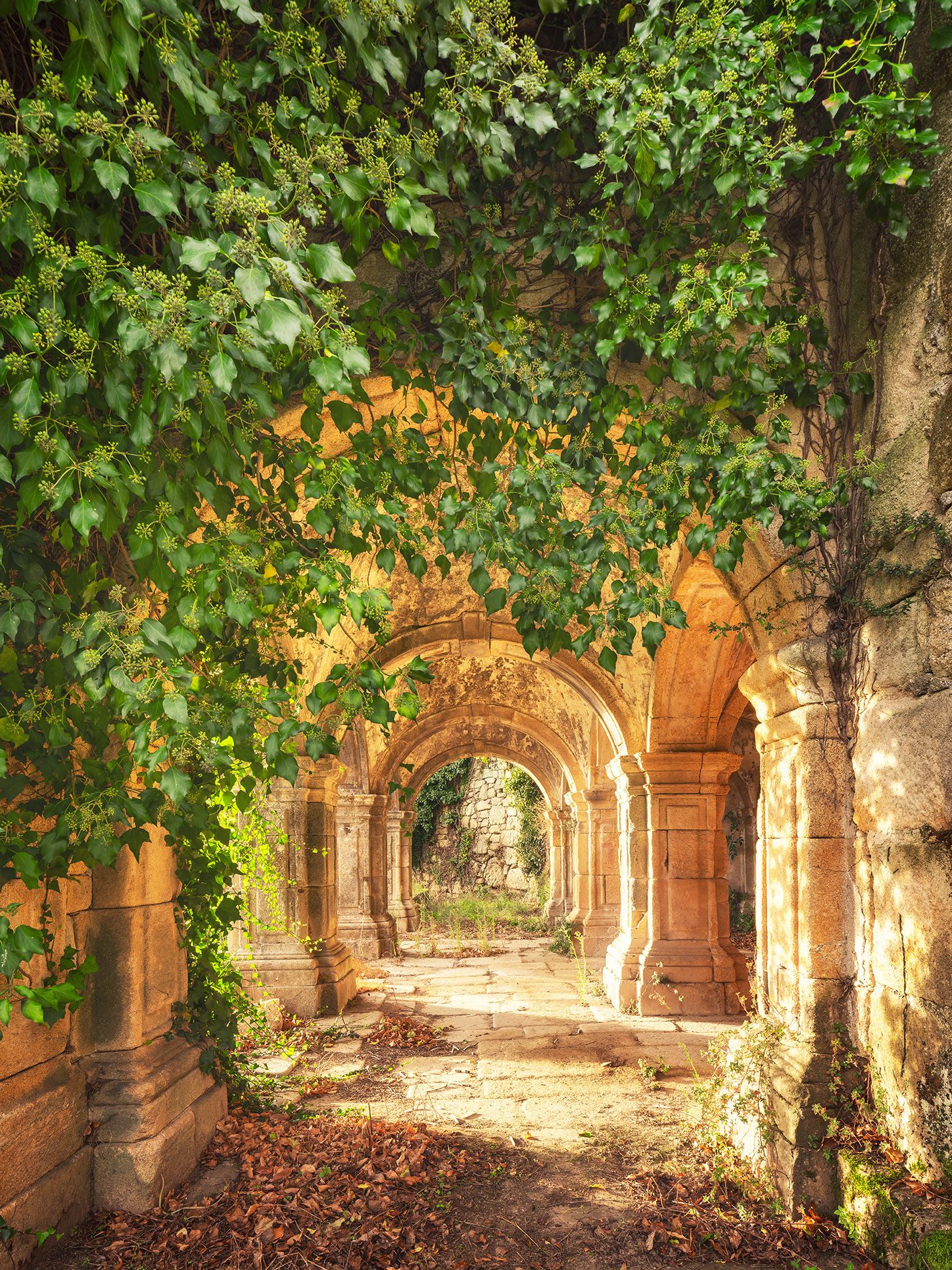
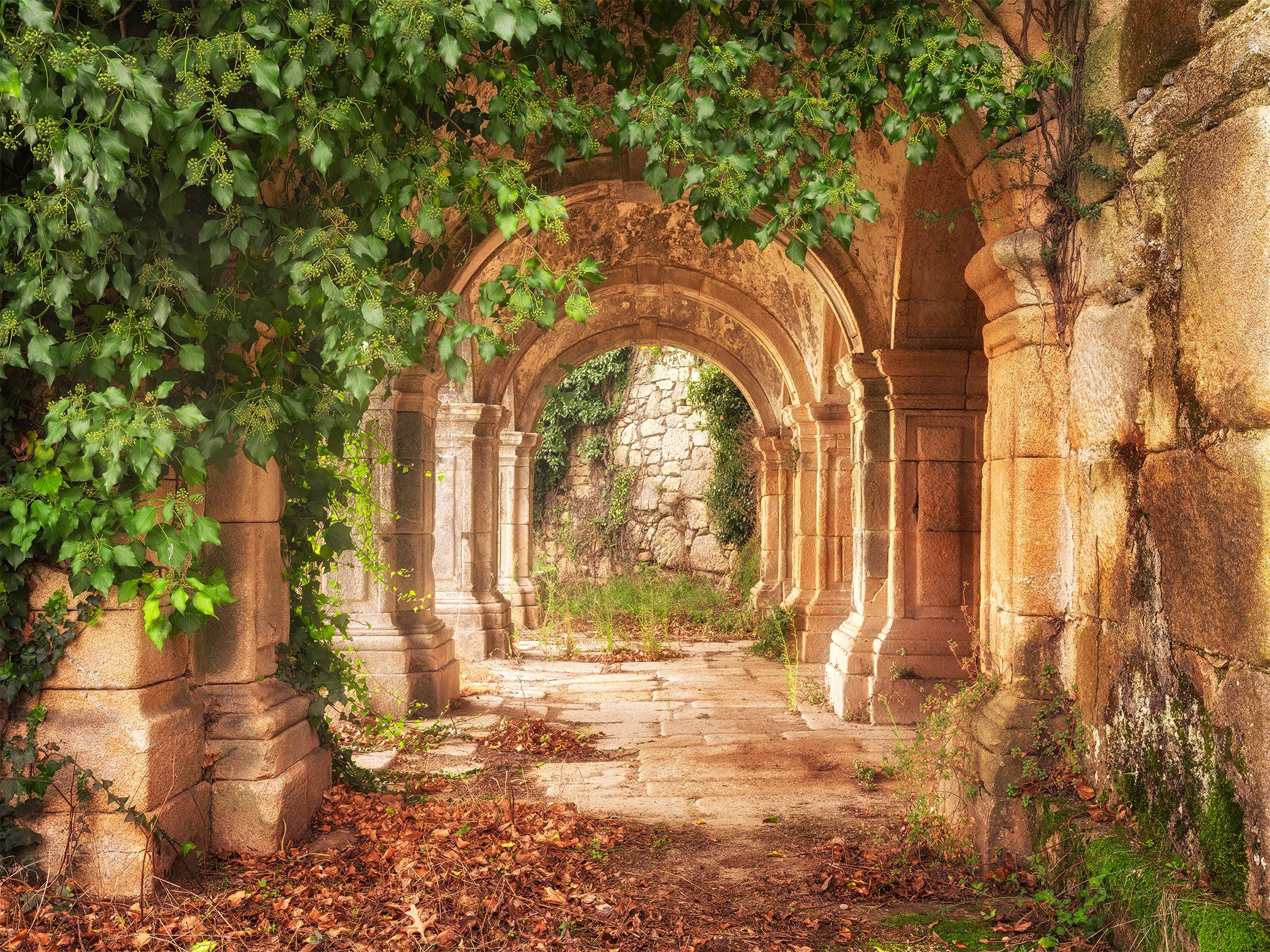
Almost unknown are the beauty and variety of its nature: the Black Sea to the west, the Greater Caucasus to the north as the border with Russia, and mountains in the south as well. Besides the abandoned places I drove through largely untouched ranges and valleys and came upon waterfalls, old monasteries and rock-hewn towns. About 40 per cent of the country is covered by forest, and the World Bank counts Georgia among the regions of the earth with especially rich biodiversity.
The cows are the bosses of the road
Travelling in the country takes some getting used to, including the fact that the hire car is old. You quickly see the simplicity and the poverty too, above all in the countryside. Yet it is a beautiful simplicity, for it soon brings you back to yourself and to what matters, and to the question of how much luxury is actually necessary and healthy.
There were many unpaved roads and, above all, one important rule: here the cows are the bosses of the road. Everywhere, in the villages and on the expressway alike, I met cows ambling about on the carriageway in perfect calm, sometimes inside the abandoned buildings too. When I remarked in a conversation that this would be unthinkable at home, I was met with a smile and put right. The animals are doing fine, I was told; they know exactly where their home is and turn up again in their own yard every evening, good as gold. As simple and as lovely as that.
Palaces for culture
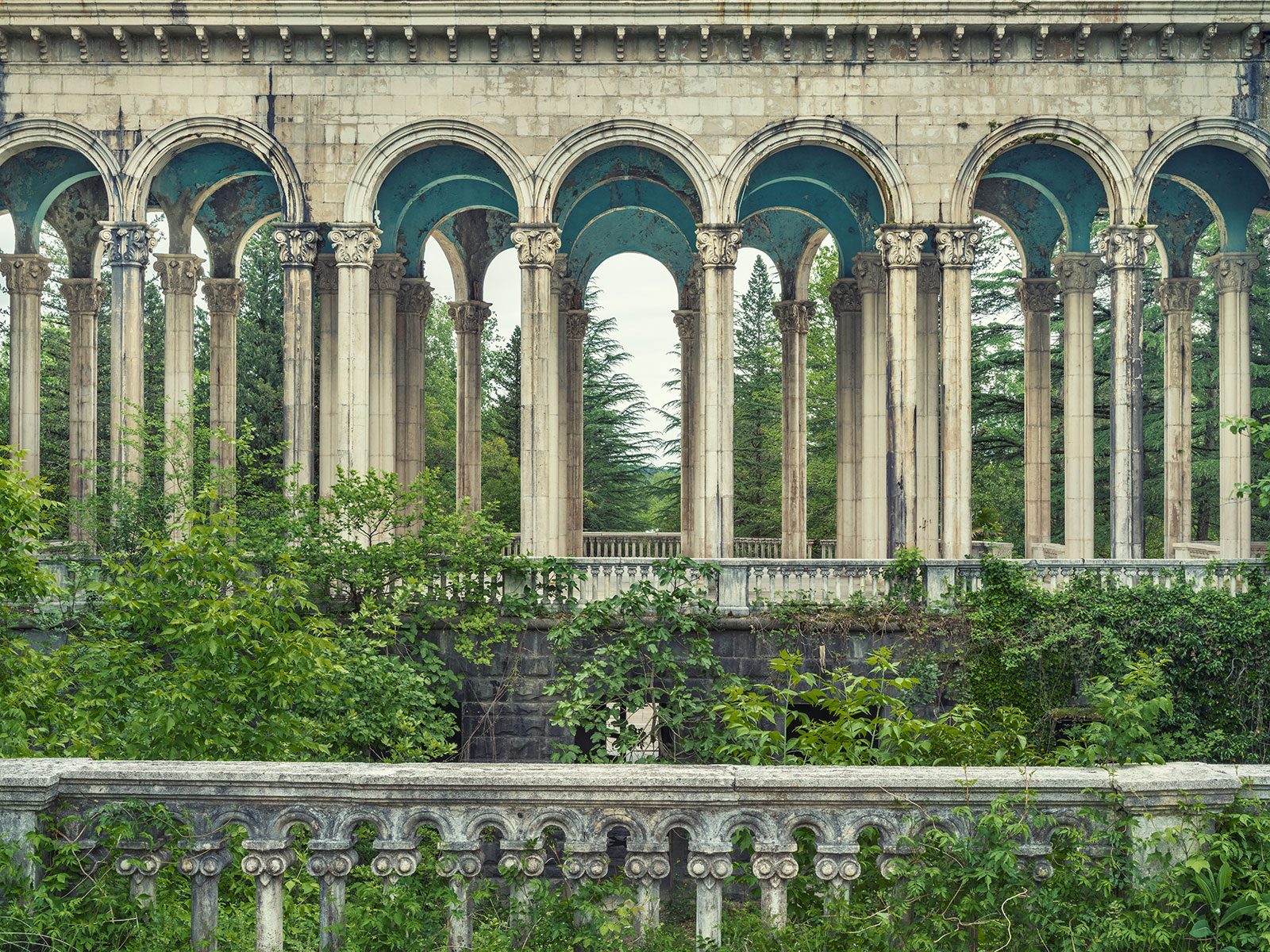
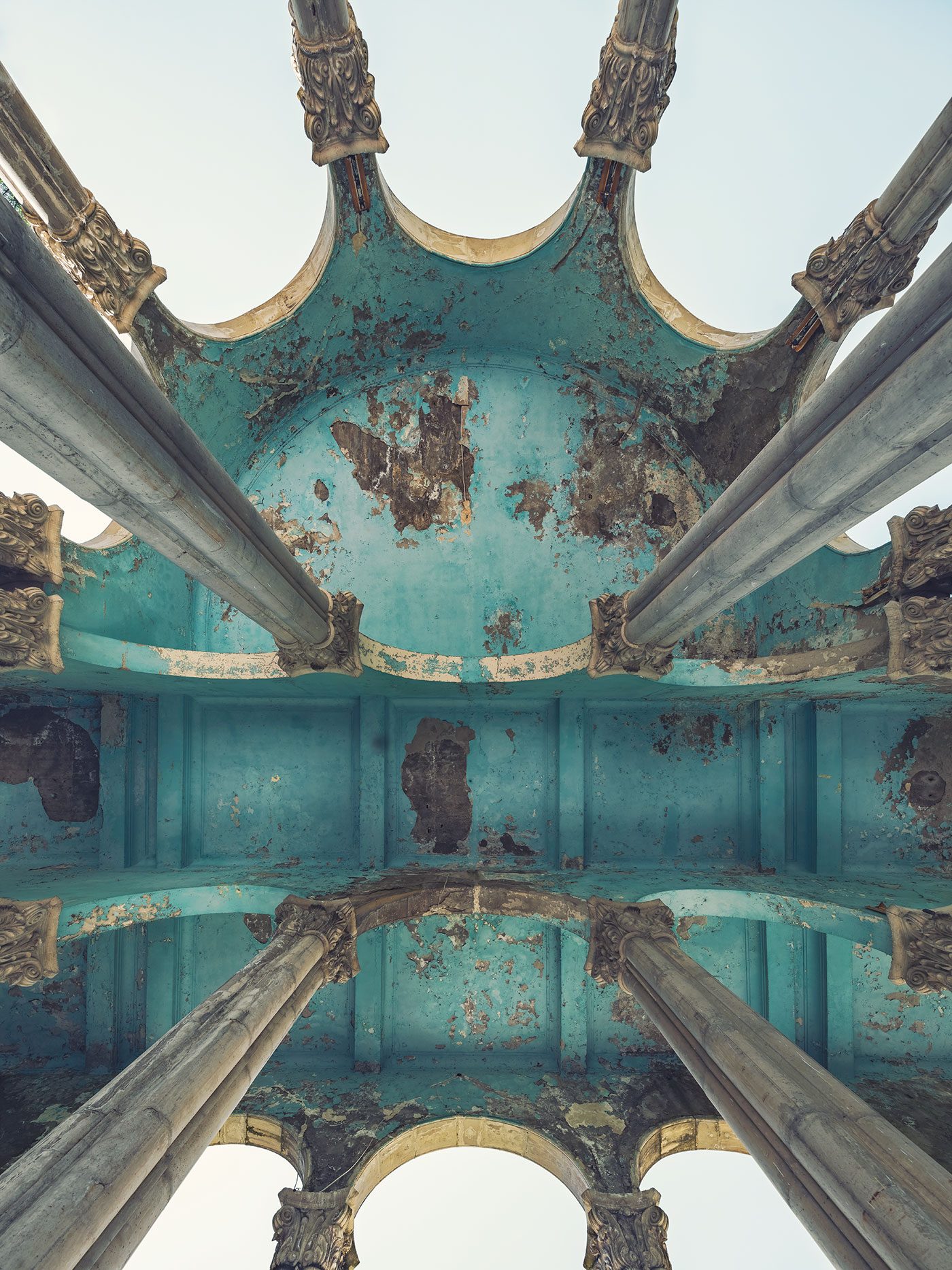
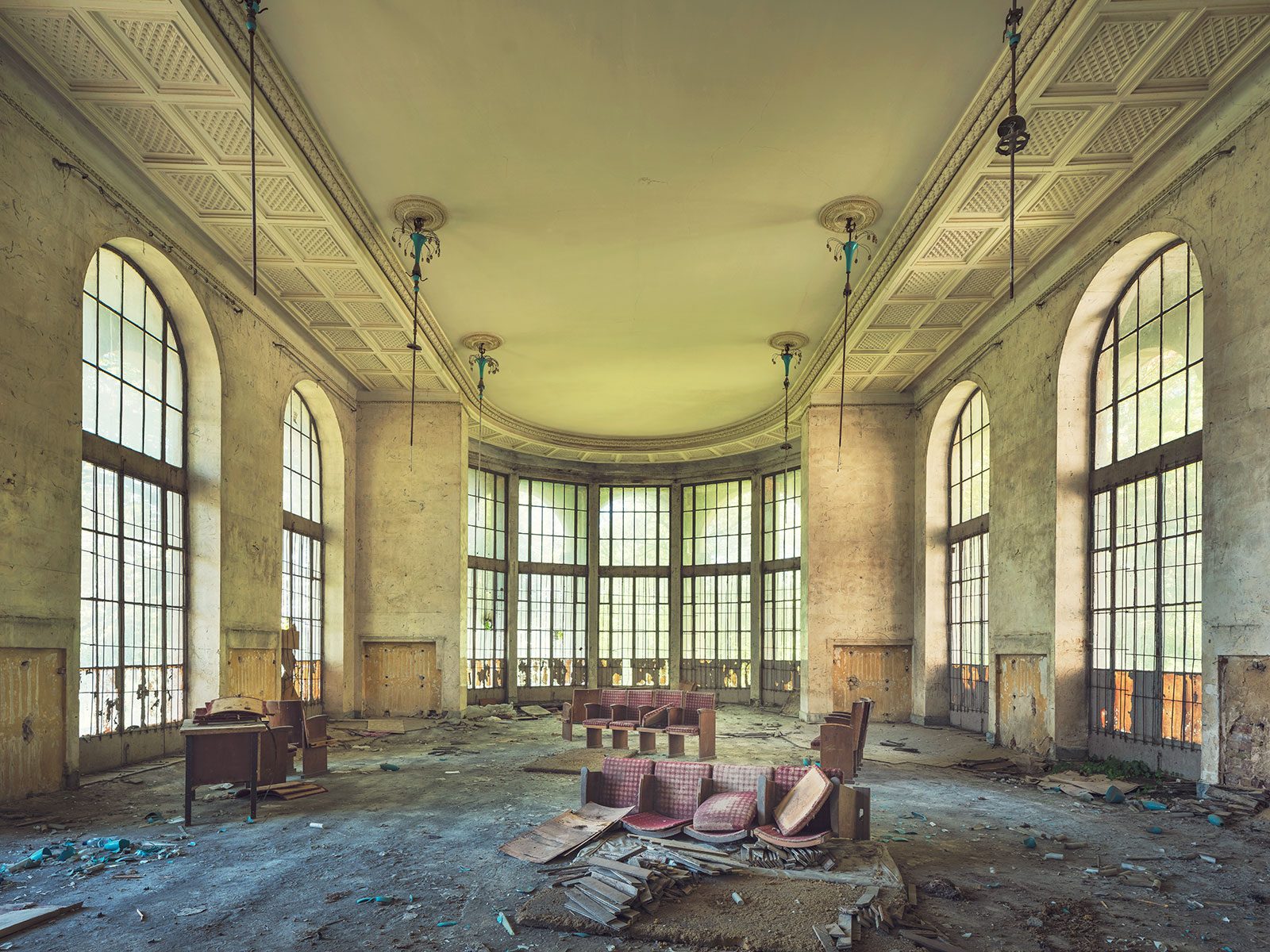
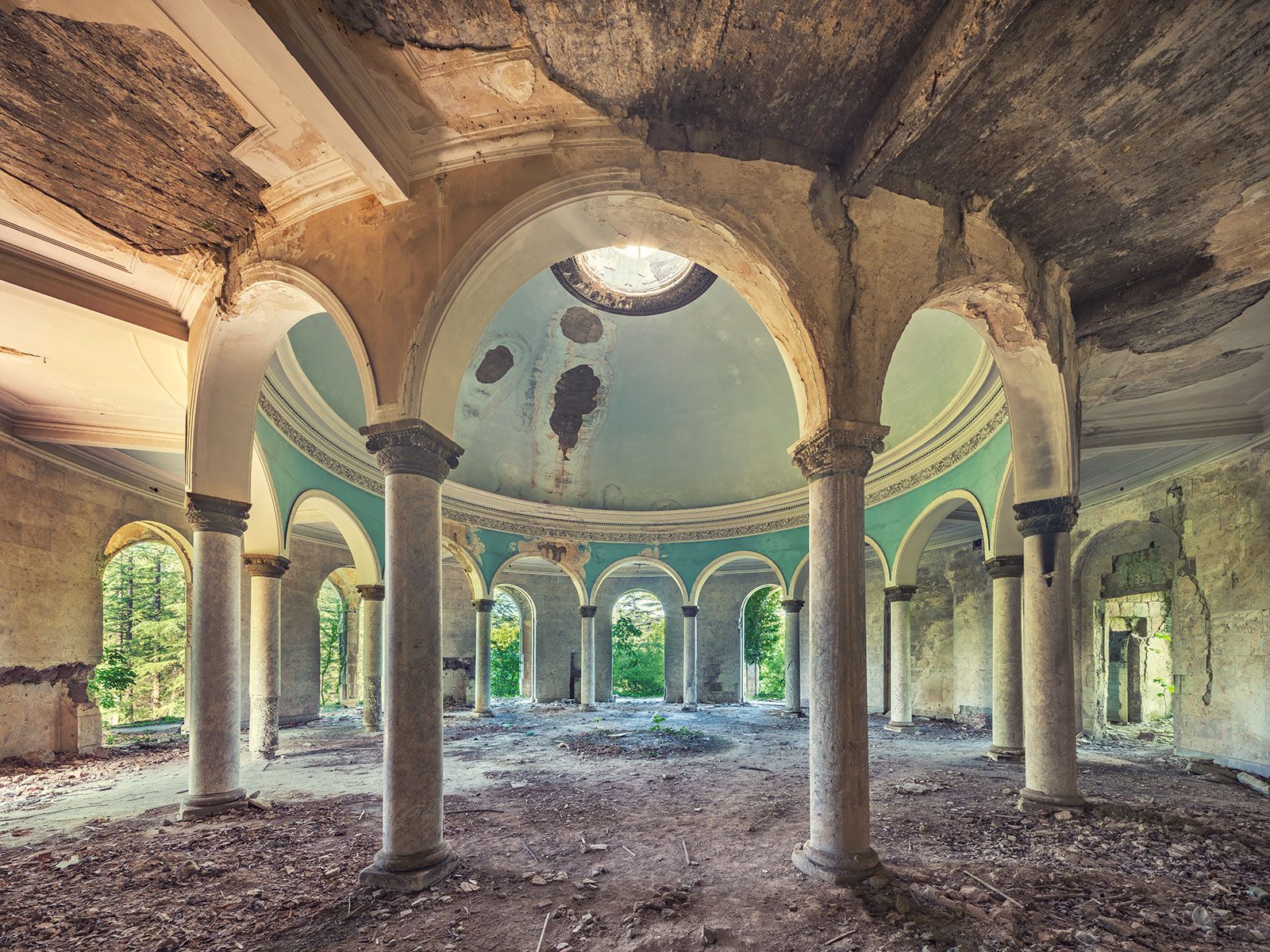
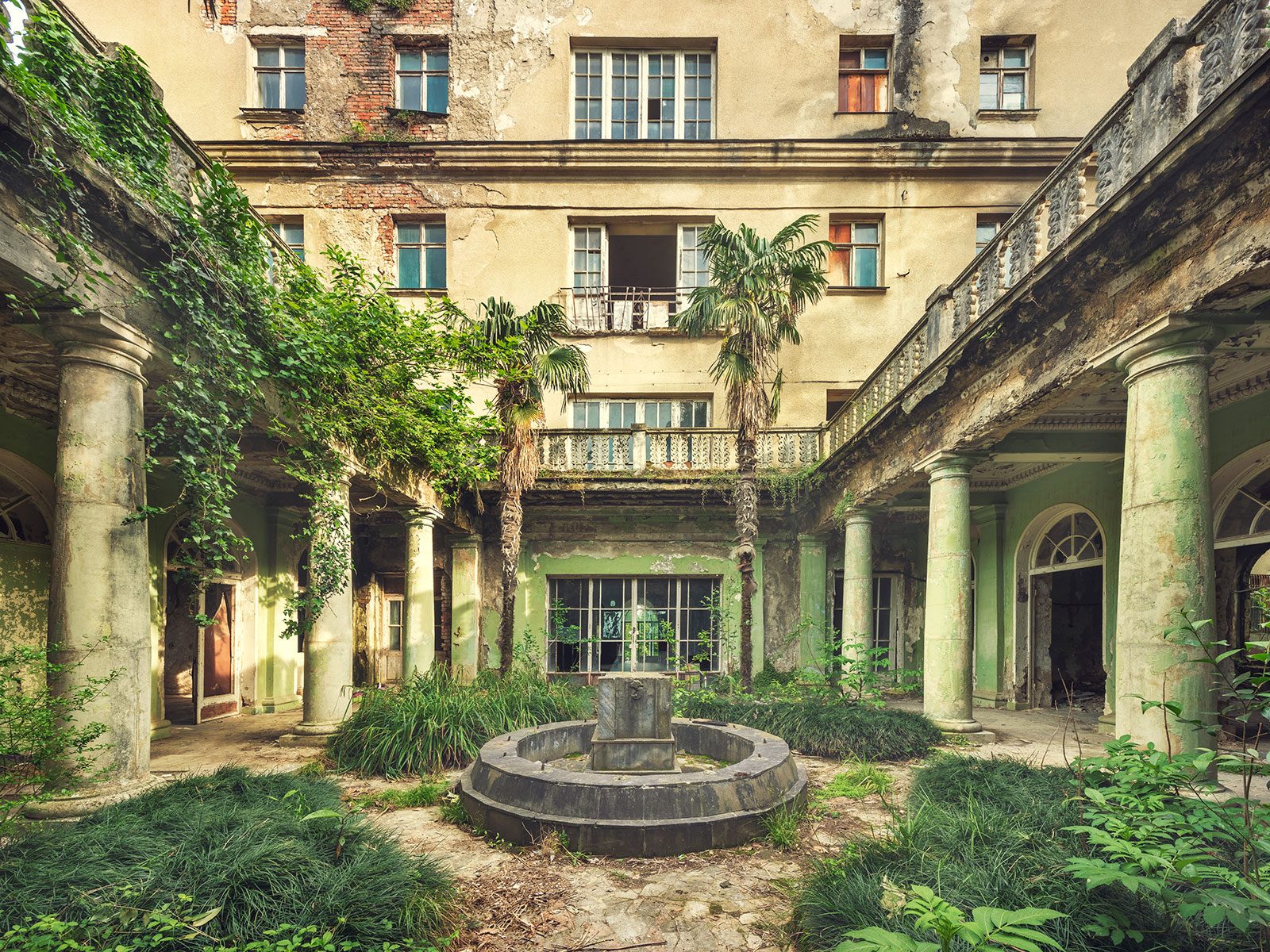
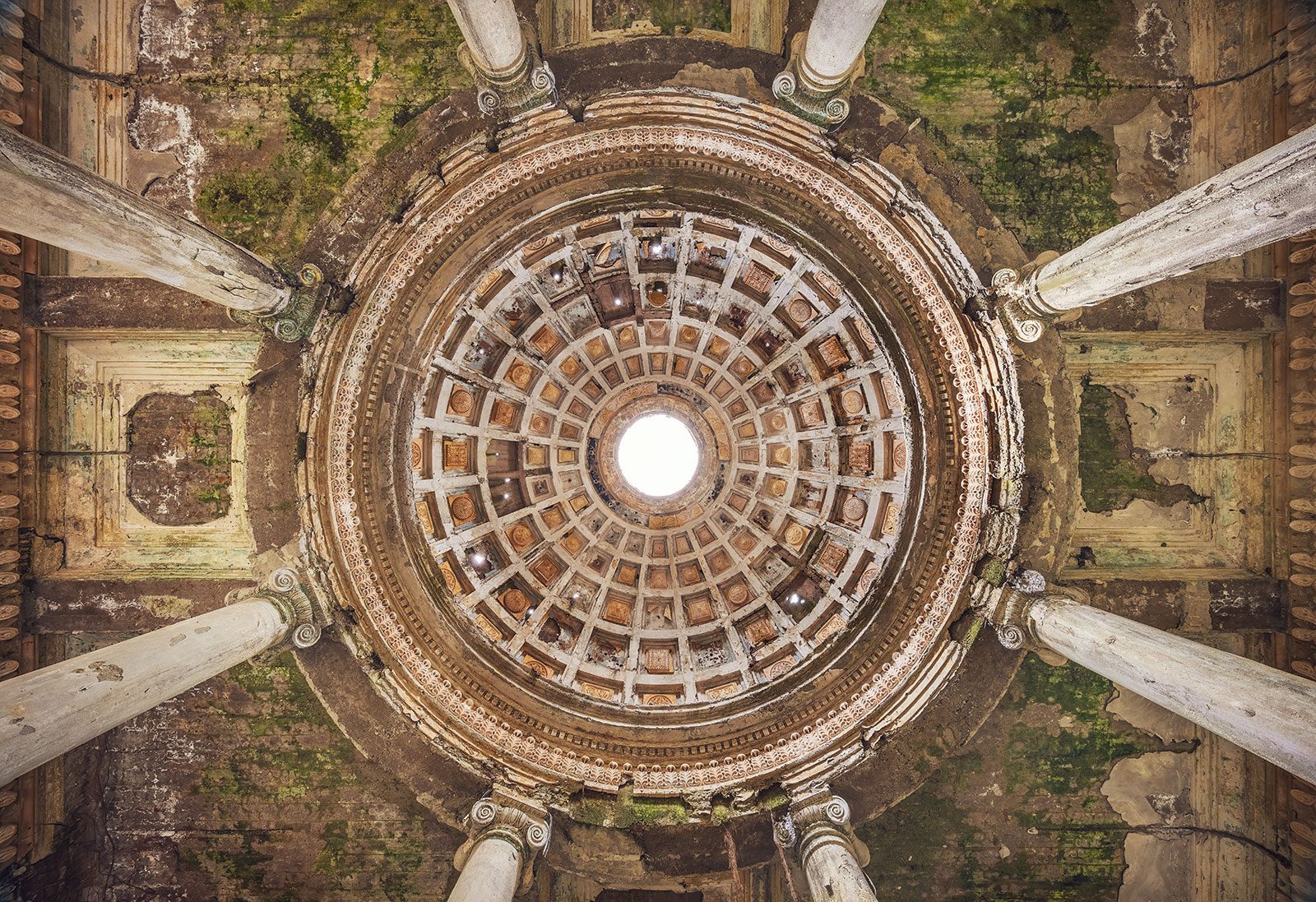
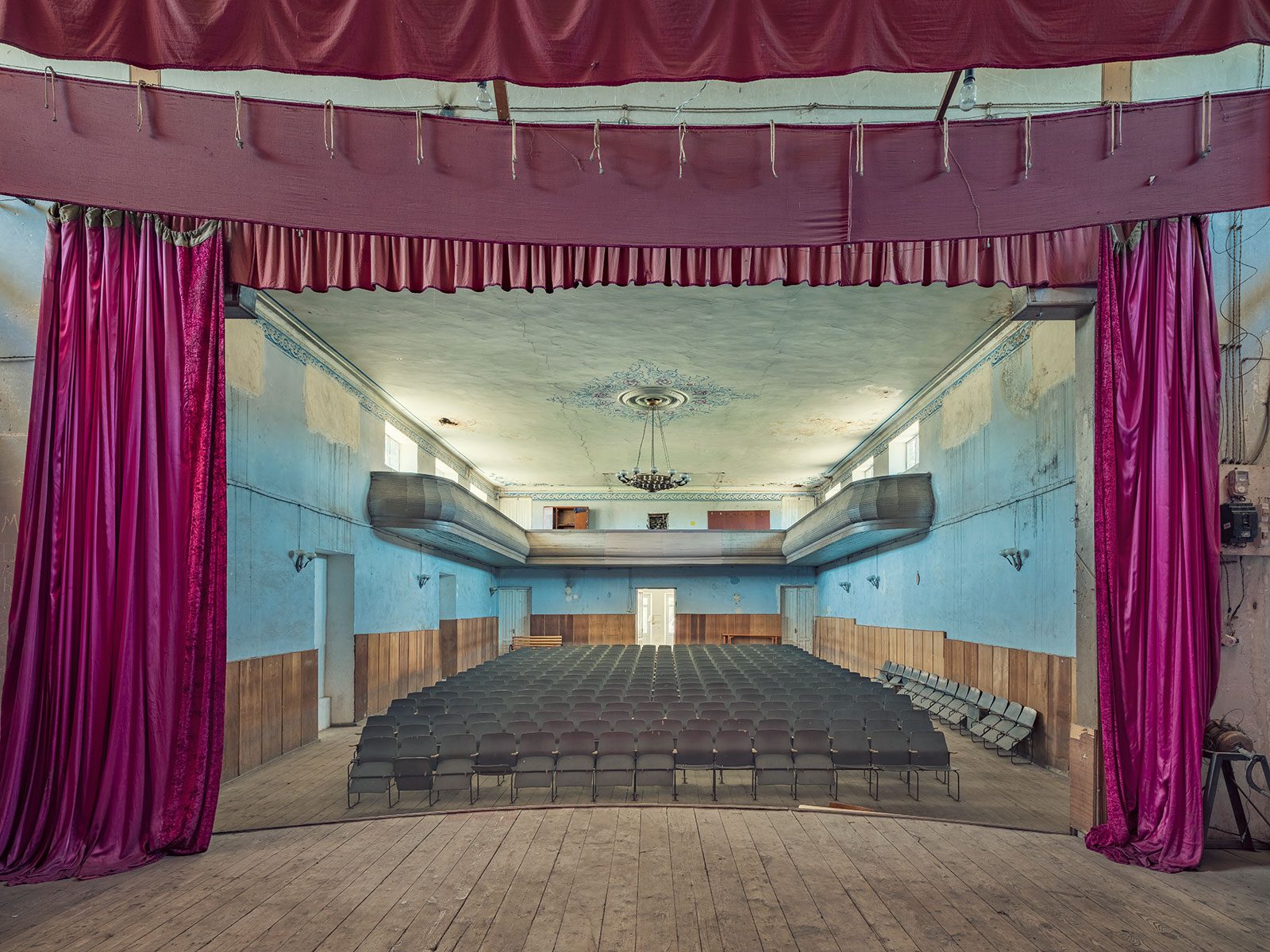
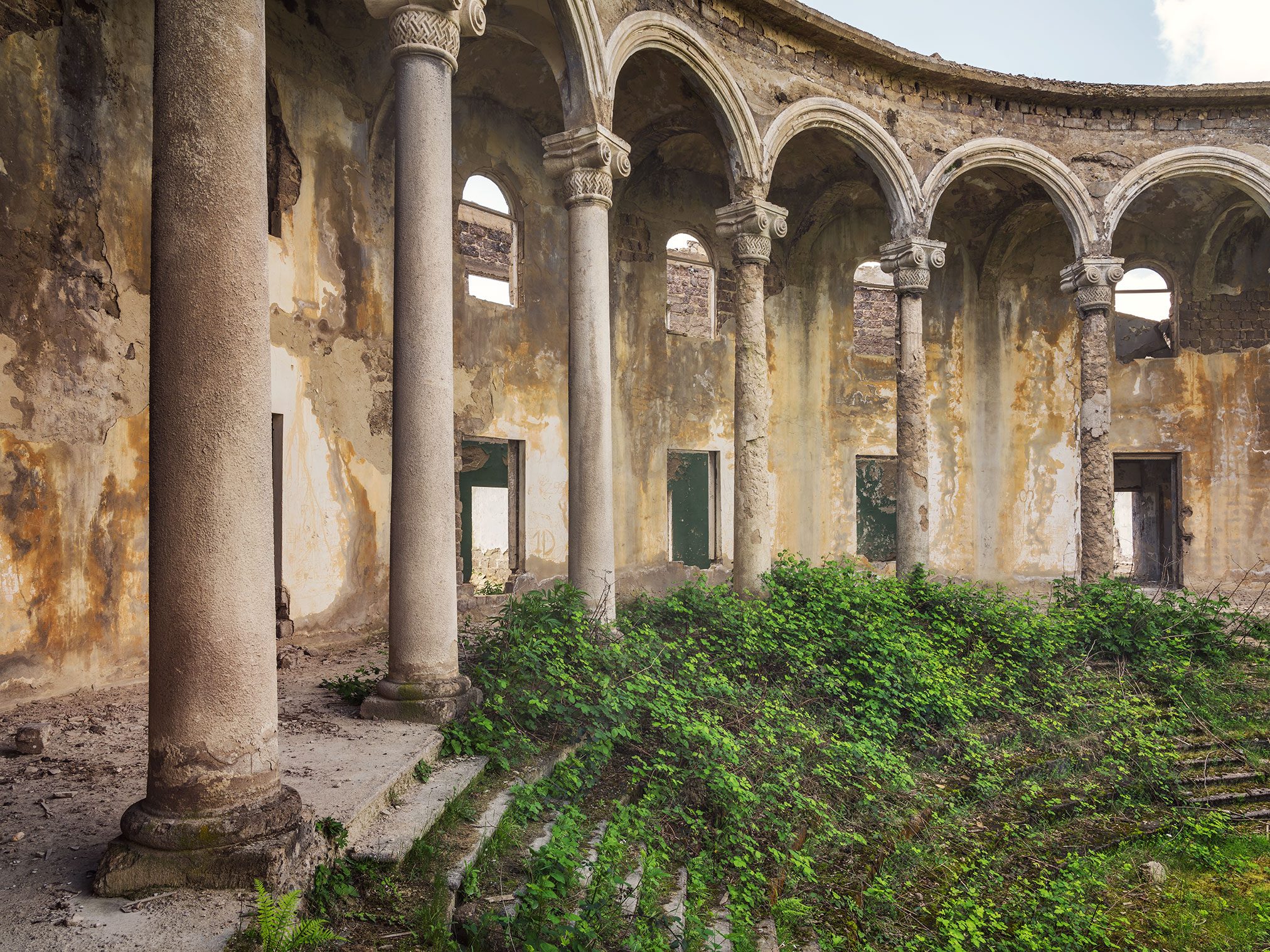
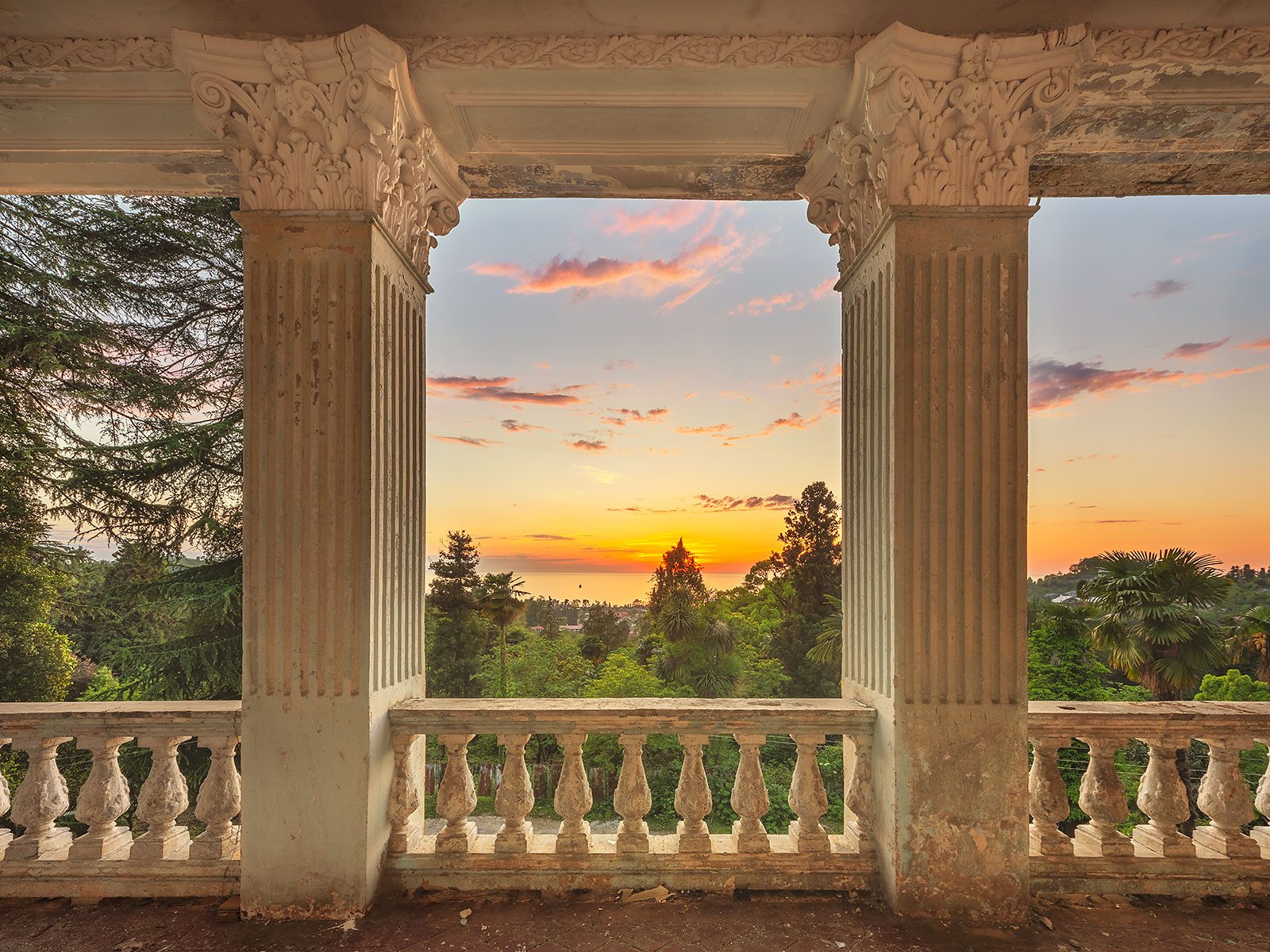
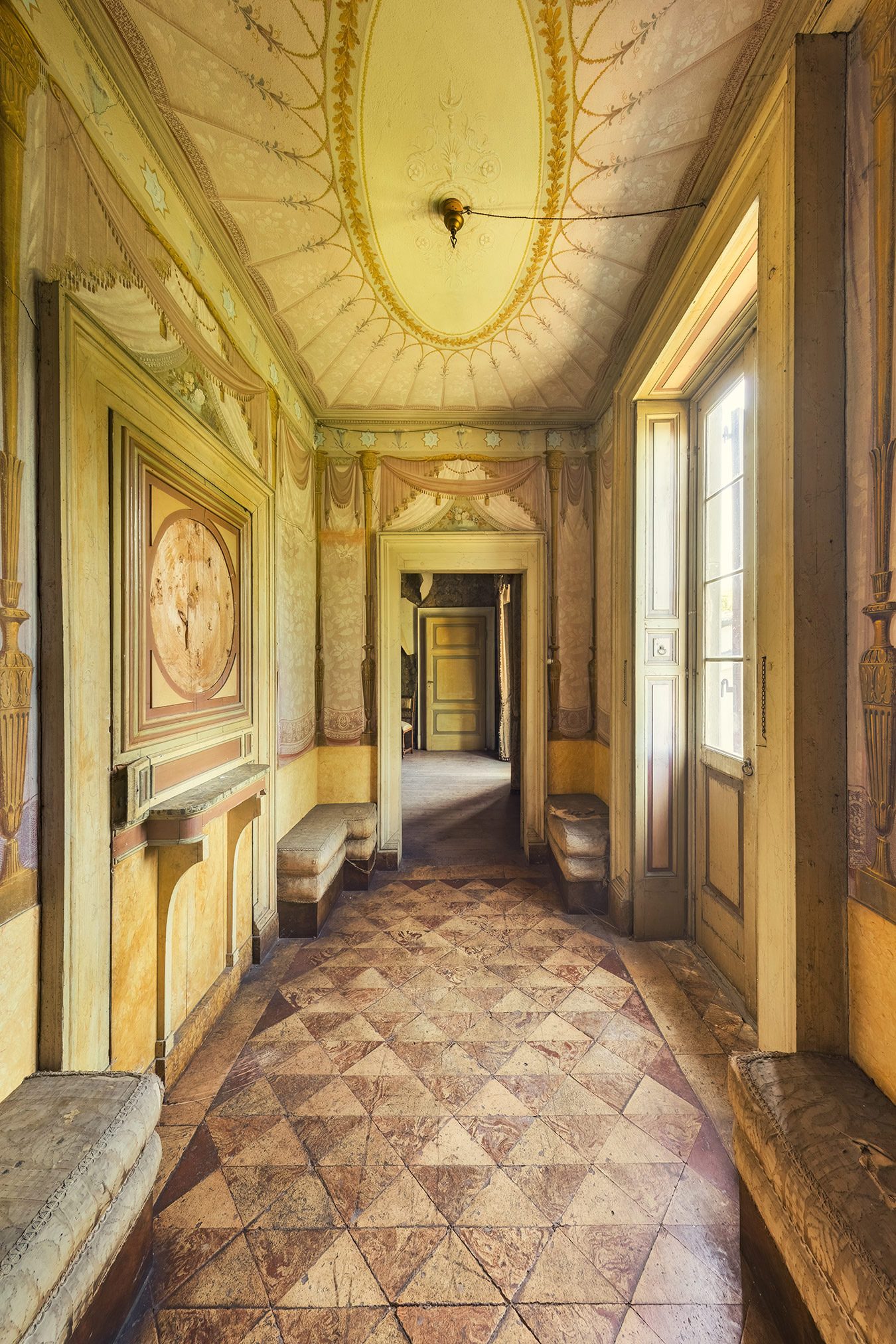
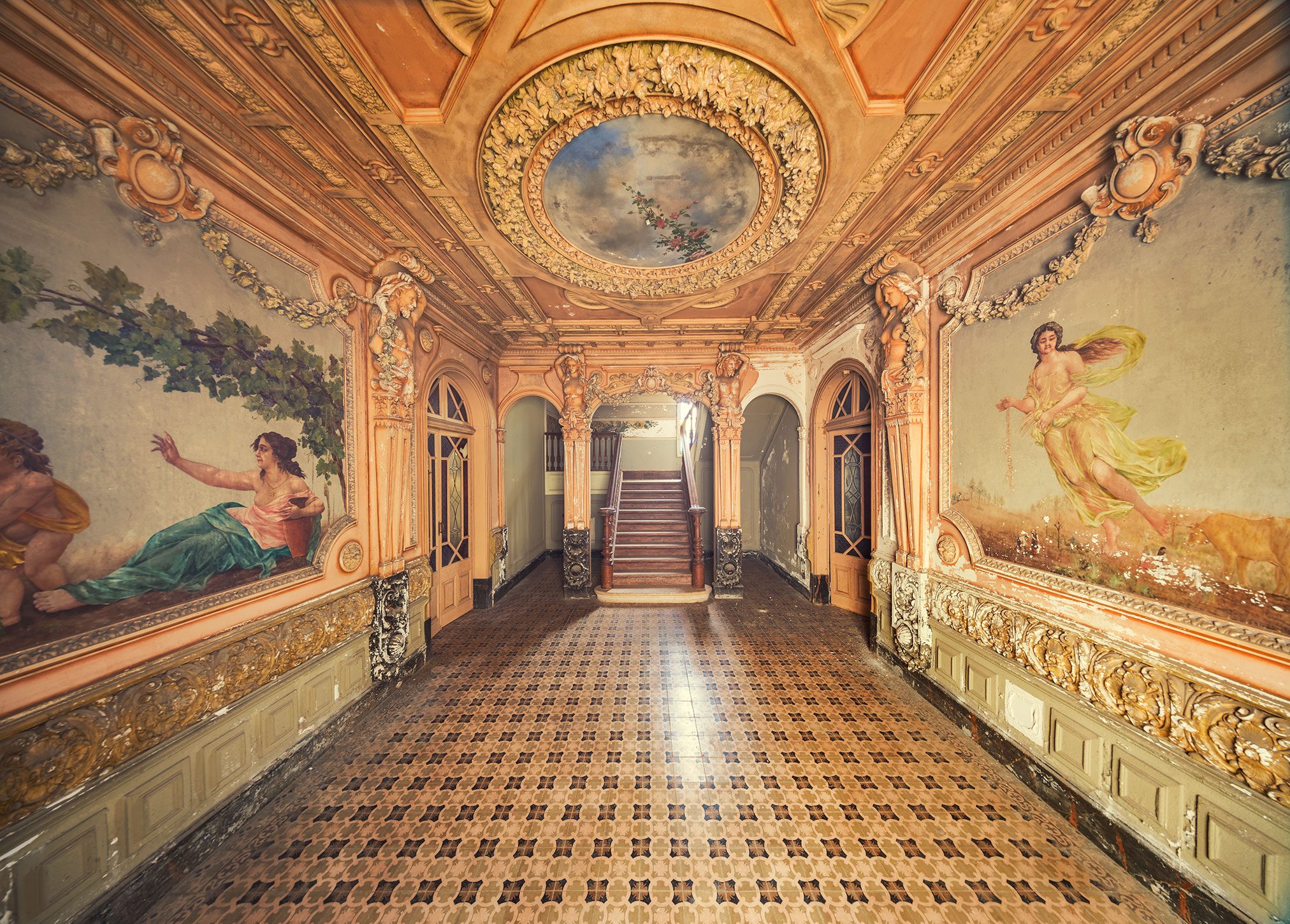
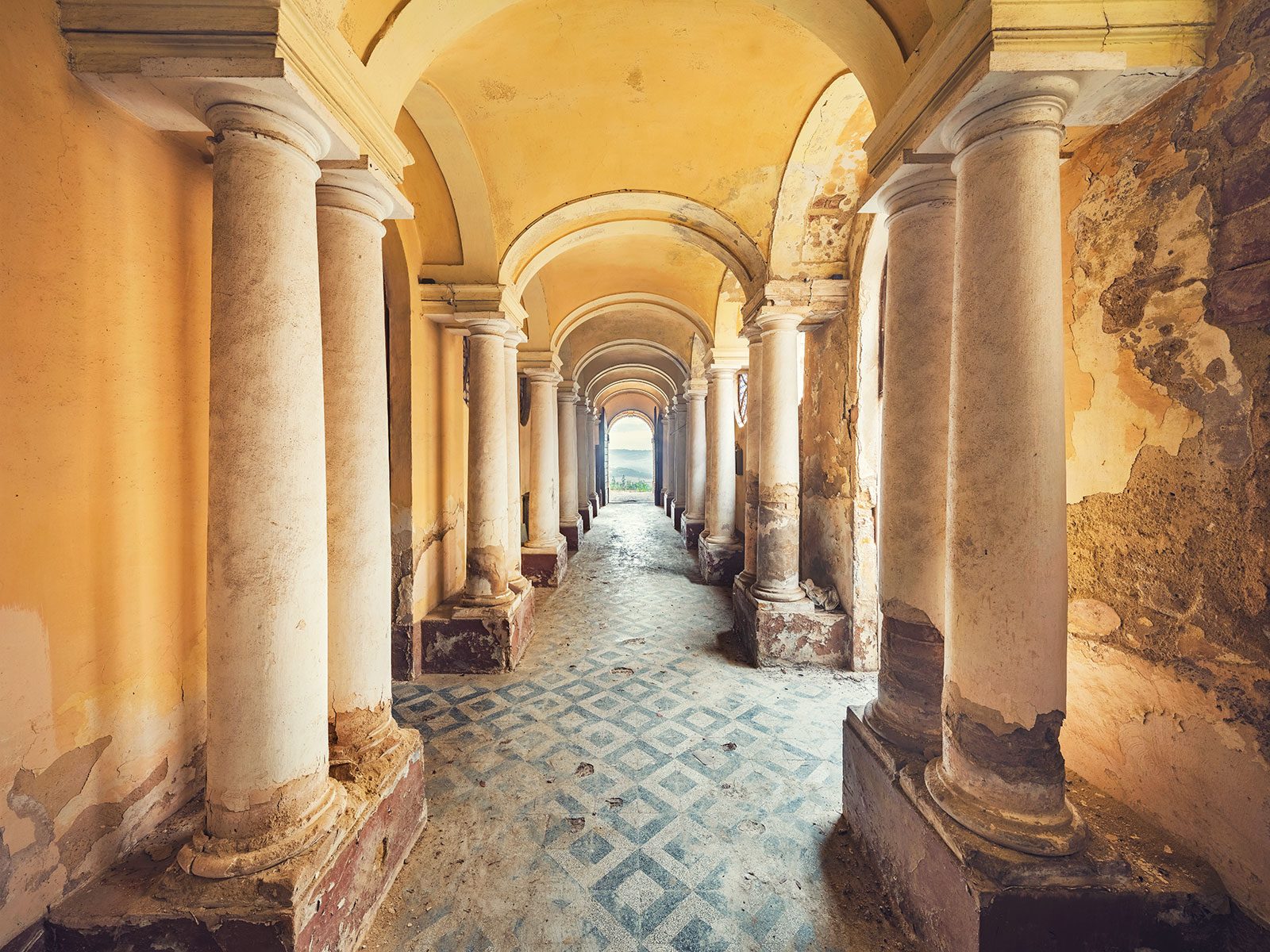
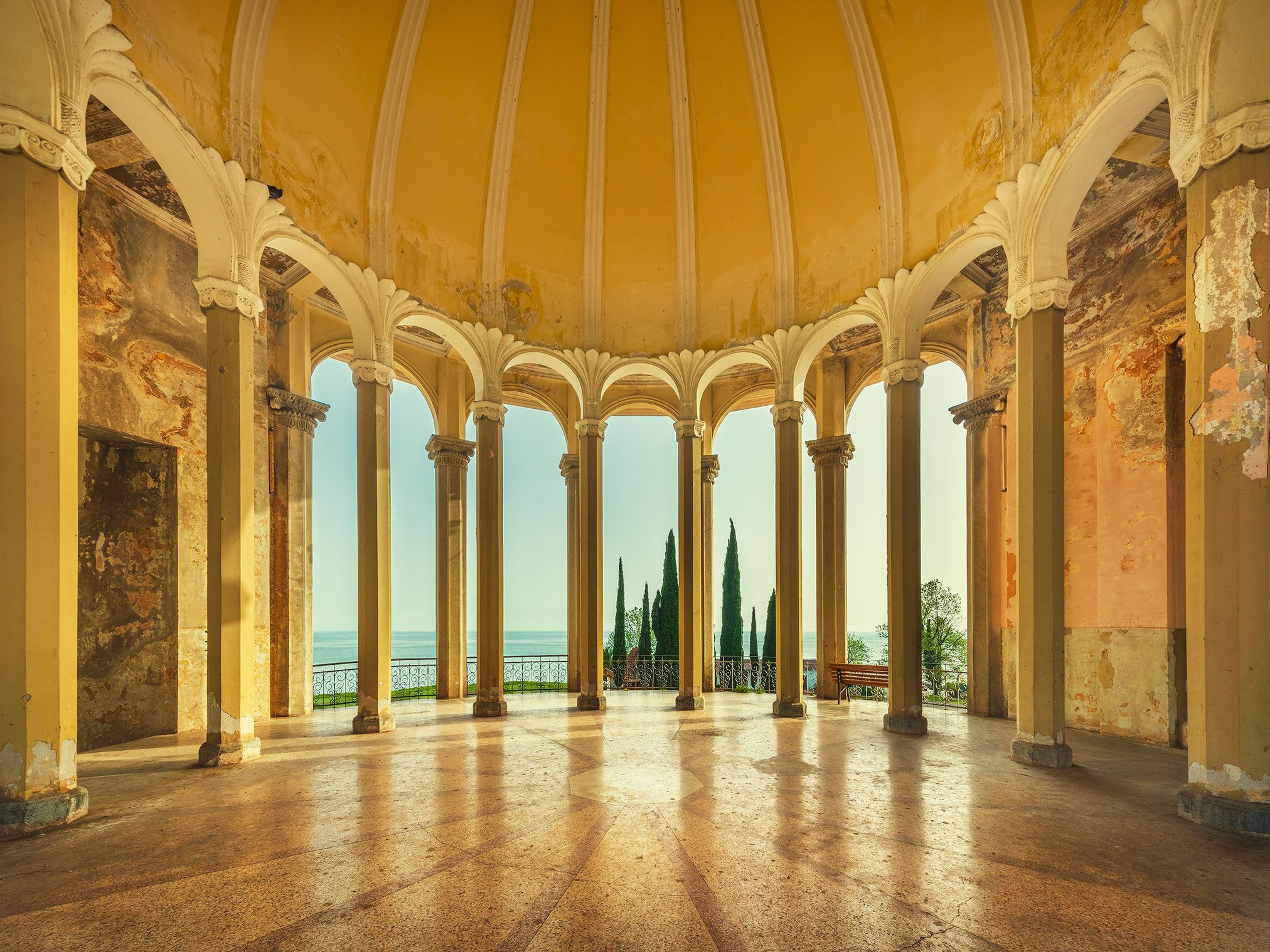
Architecturally the country is strongly shaped by the Soviet era. Even in small towns you still find the old sanatoria, hotels and grandiose palaces of culture. More and more of them are now being restored and used again. Many of my destinations lay in precisely this past.
What has become of Tskaltubo?
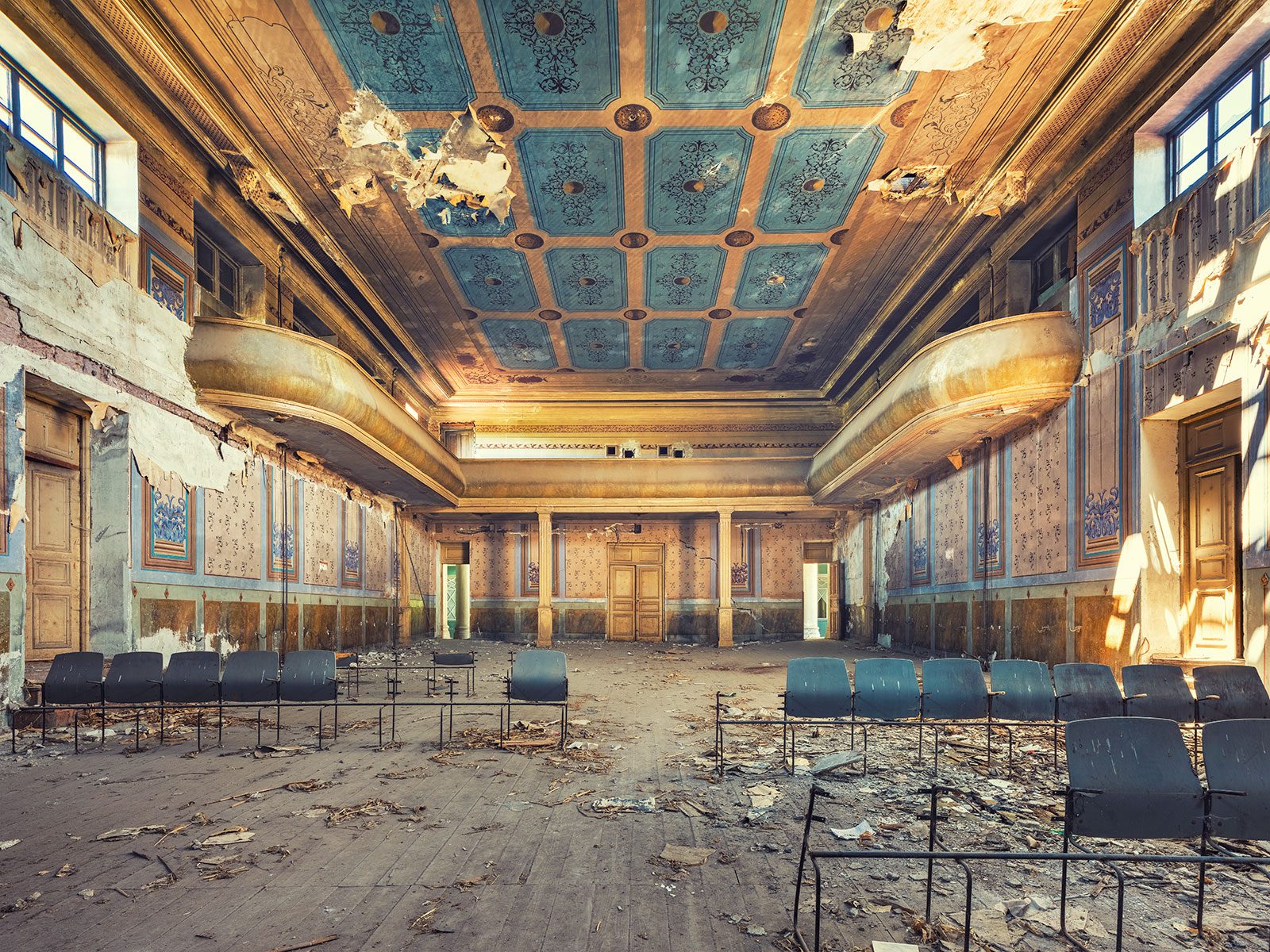
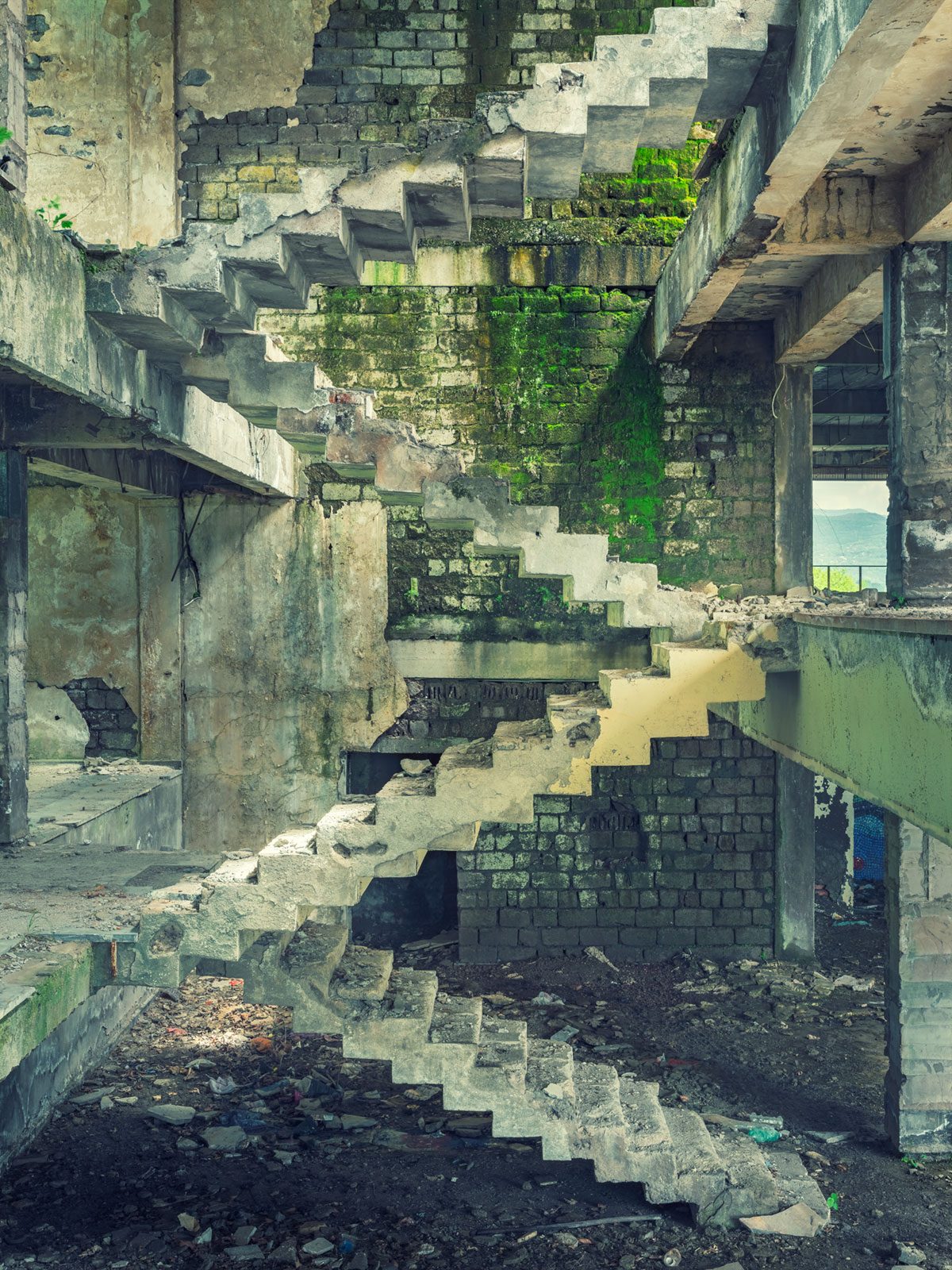
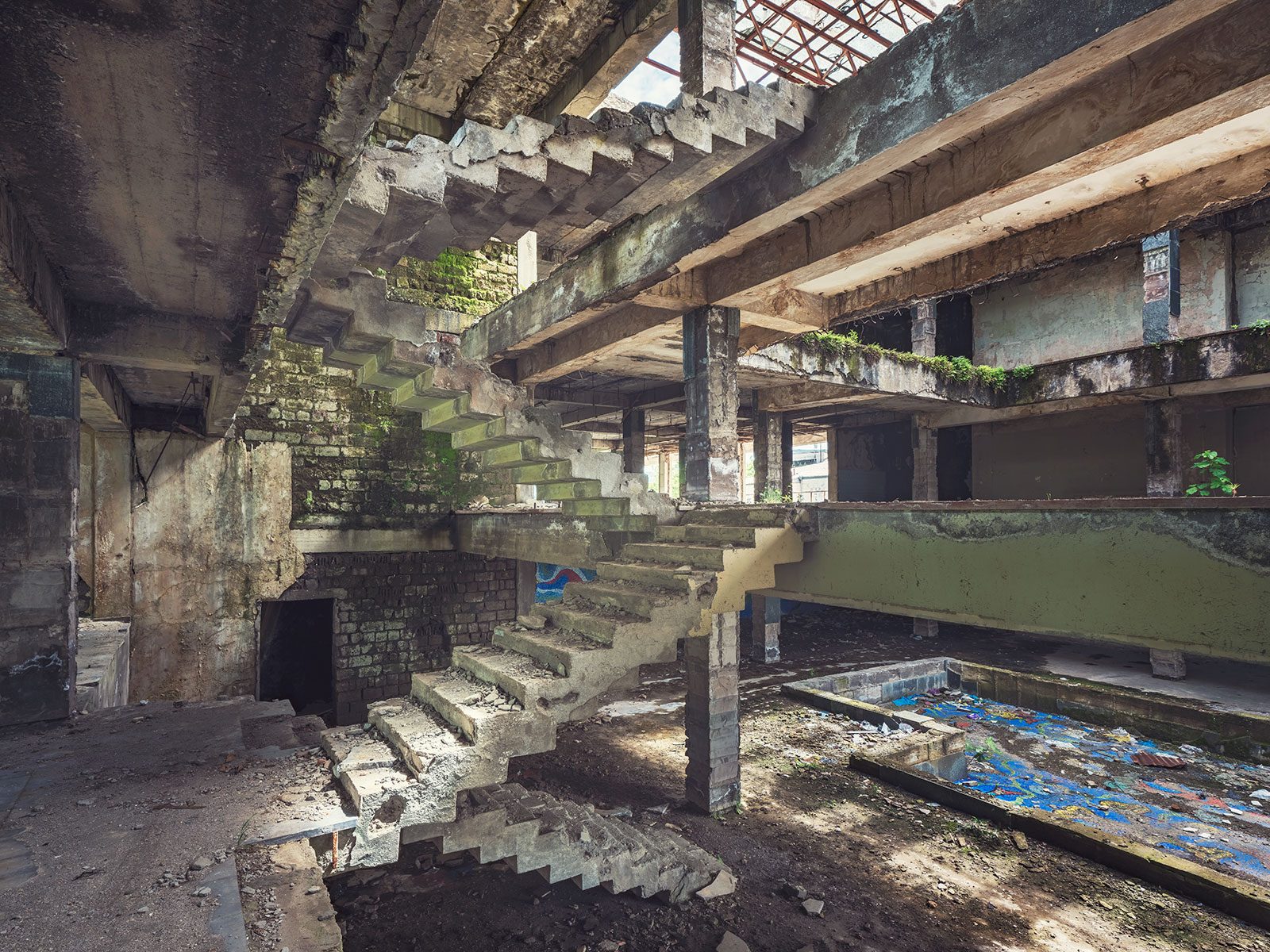
Tskaltubo, also spelled Tsqaltubo, was one of the most important spa towns of the Soviet Union. In Soviet times 22 sanatoria stood here, with room for 5,800 guests. With the end of the Soviet Union the spa business collapsed. After the war in Abkhazia of 1992 and 1993, which displaced some 240,000 people, thousands of them found refuge in the empty sanatoria.
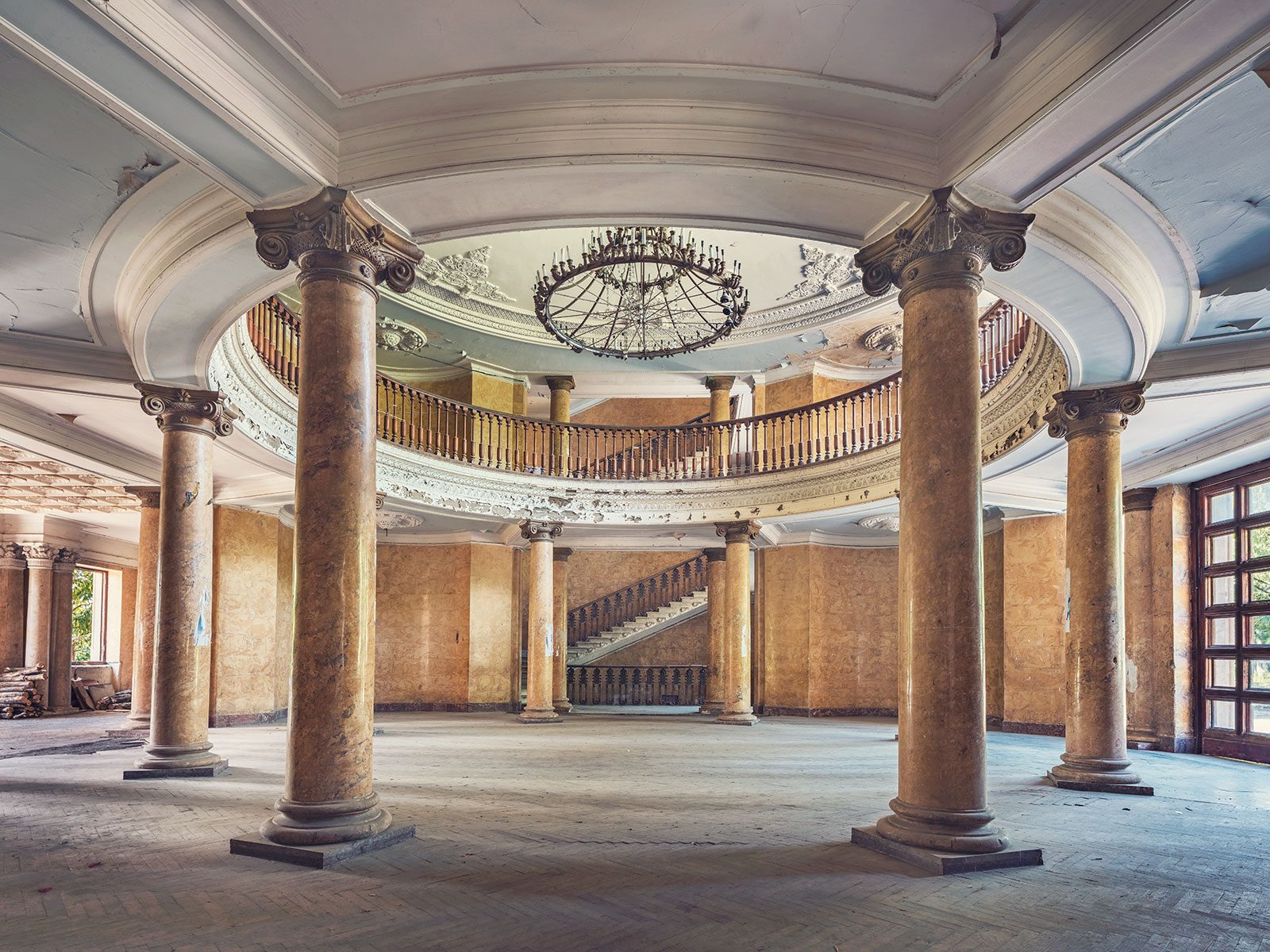
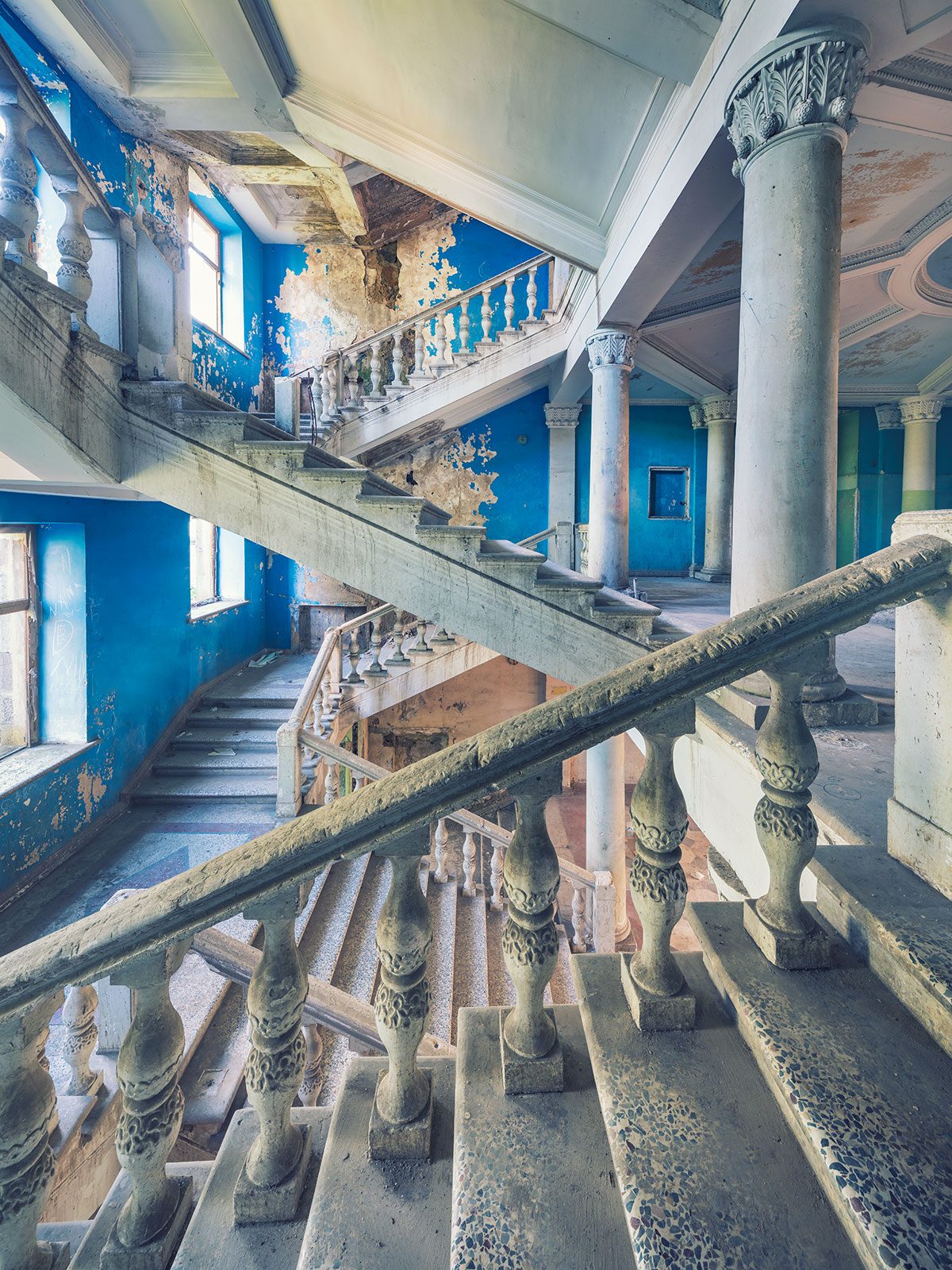
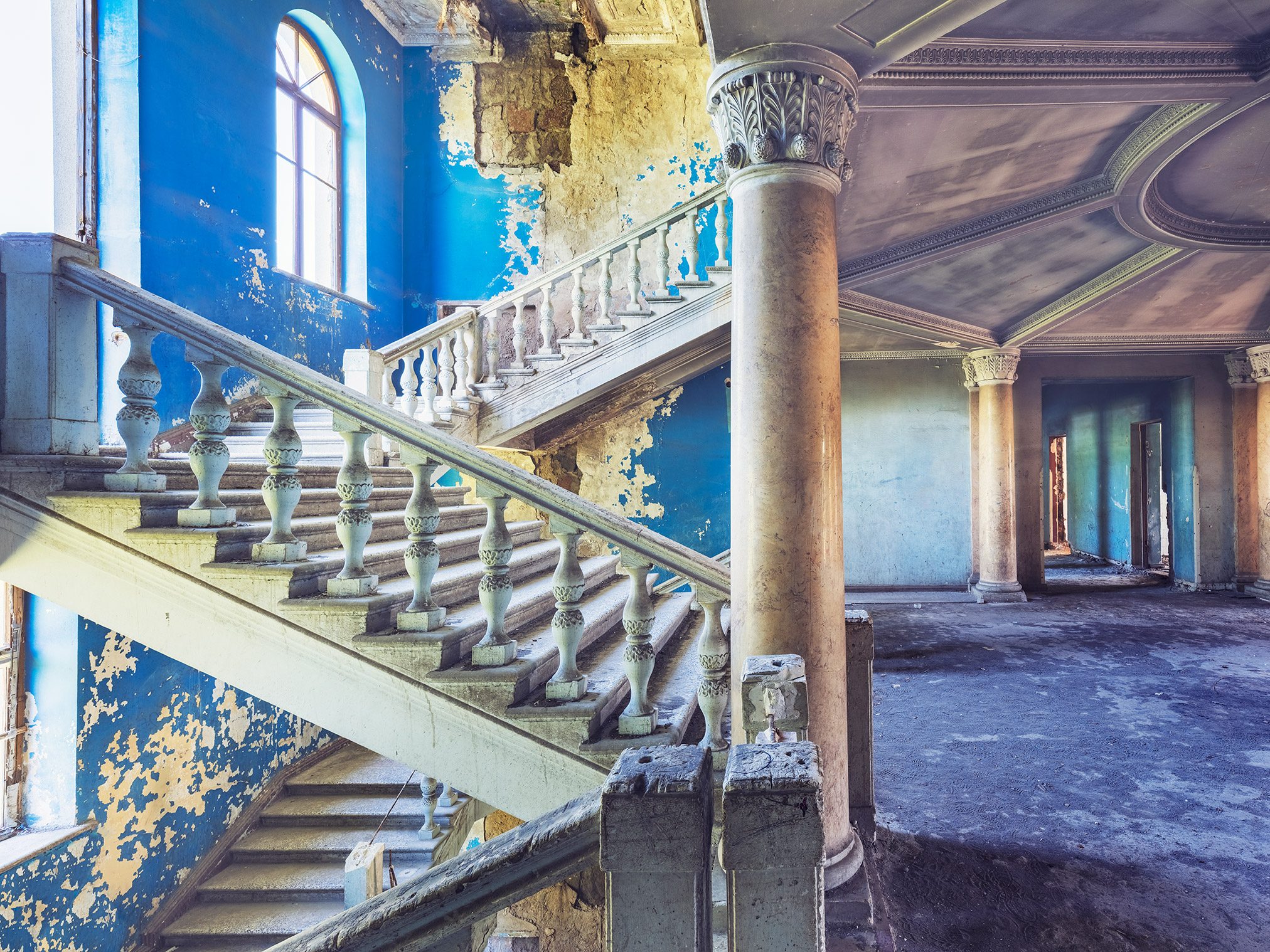
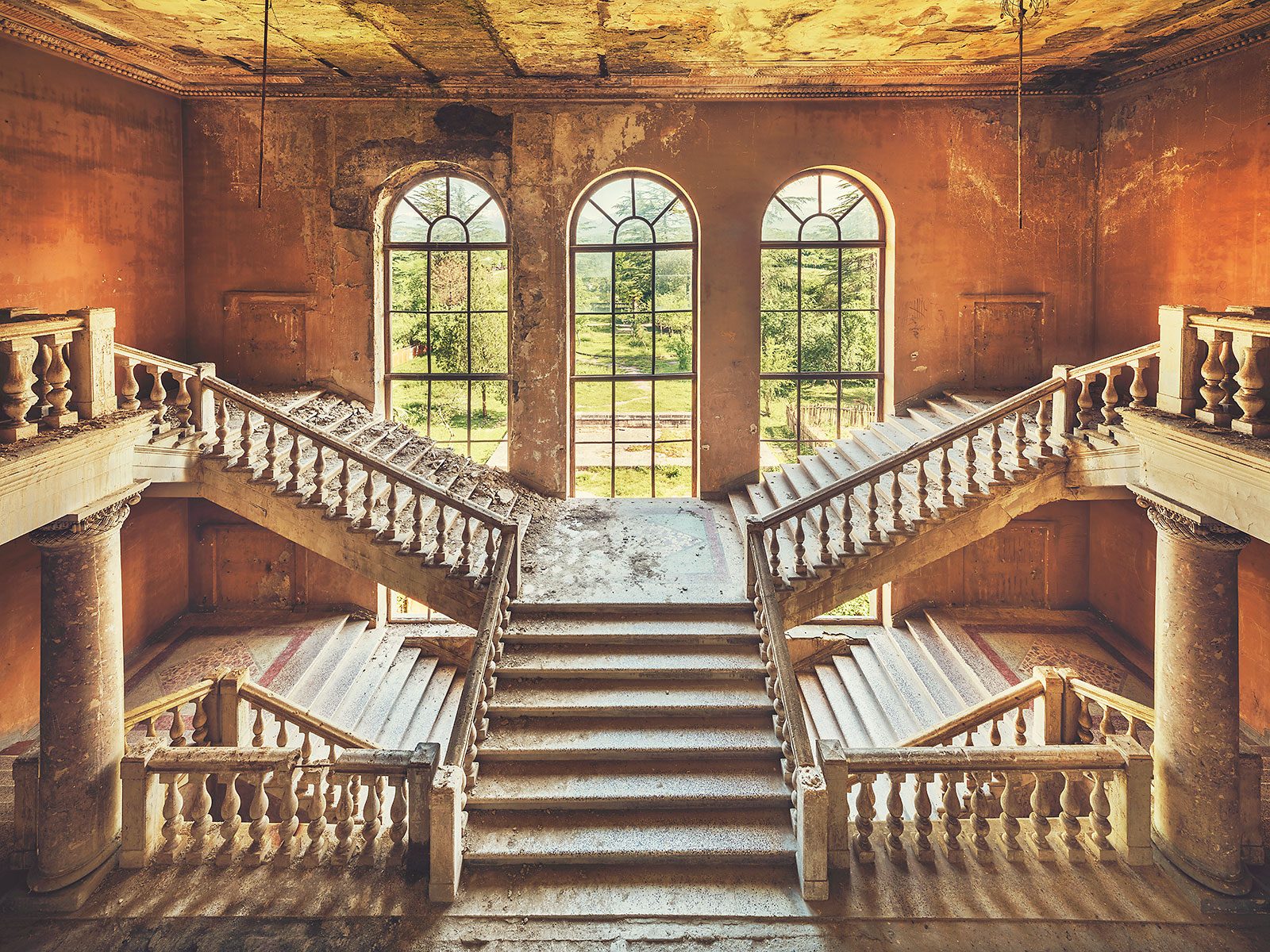
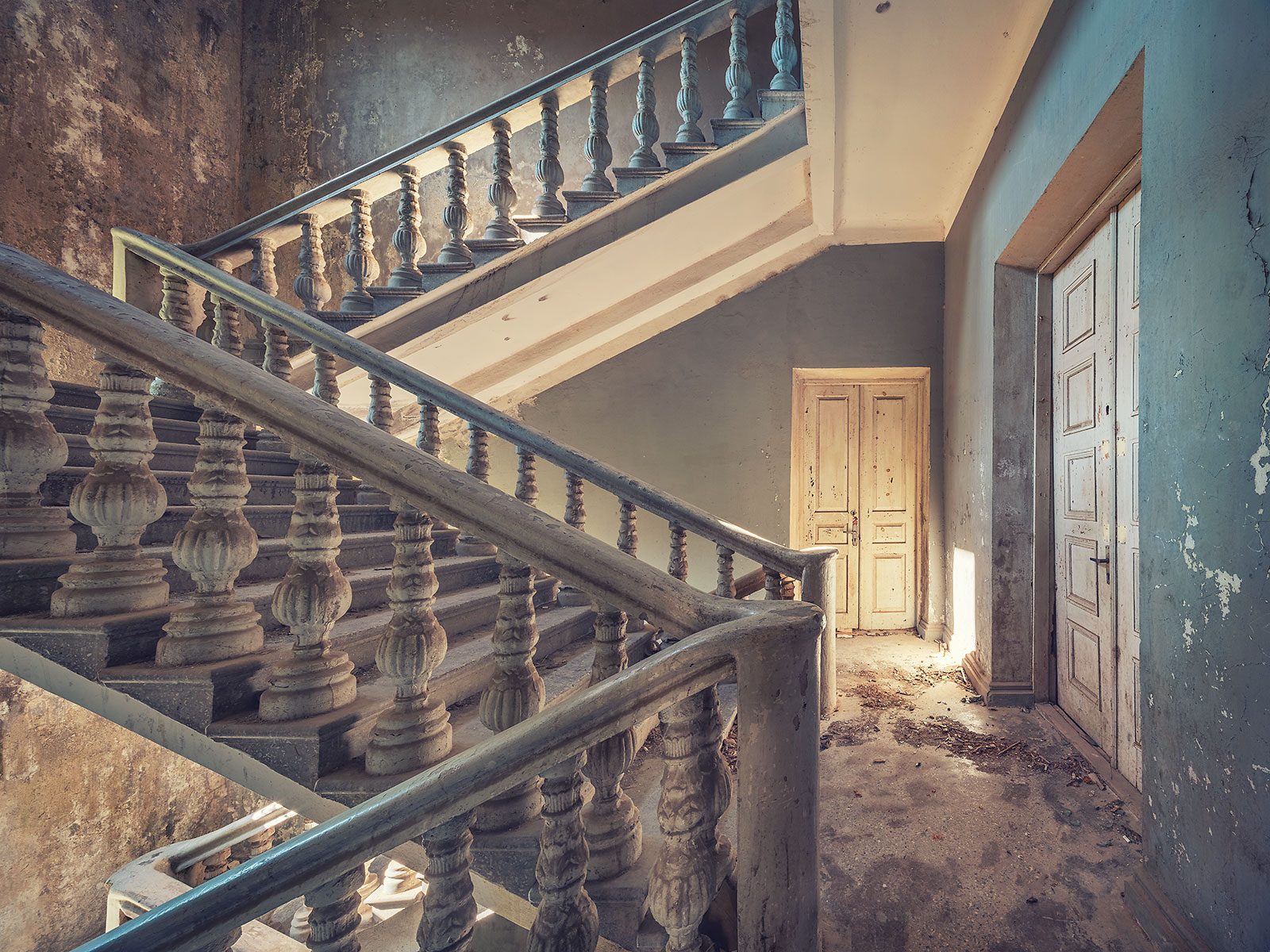
The most important destination of my journey was therefore a sad one too, though in the end only in part. At first it seemed bizarre, and at times it felt almost disrespectful to wander through the old buildings. Often some wings were lived in while the opposite side was already in deep decay. That the way to their flats led through a majestic yet crumbling staircase was simply not important to the people here. Meals were being cooked next to the abandoned theatre, children were racing down the corridors, and again and again a sense of dismay set in.
At the same time I was moved and impressed by the people, lastingly so. Despite a complete language barrier I was welcomed everywhere warmly and with open arms, shown around and invited without ceremony to a glass of wine or a meal. No envy, no resentment. The people I met here, in all their poverty and with their tragic past, were far greater than we manage to be on our high horse.
When I was there, resettlement was already under way: by 2019, 1,759 families had moved, and another 920 were to follow by 2021. Almost all received new flats in 2021 and 2022. In October 2026, according to an estimate quoted by Radio Free Europe, about 100 to 200 displaced people were still living in the buildings. Since 2022 the state has been trying to sell the sanatoria to investors. In October 2026 it offered ten of them once again.
In contrast to all this stands Bathhouse No. 6, one of the baths still in operation. It was built for Joseph Stalin, and his sumptuous private bath survives to this day. It is not used for anything else and seems almost like a grotesque monument.
Chiatura: manganese and cable cars
The mining town of Chiatura in the centre of the country, on the slopes and in the valley of the river Kvirila, was fascinating too. Manganese ore has been mined here since 1879. Around the turn of the twentieth century, according to the present operator, Chiatura met up to half of the world’s demand for manganese, and before the First World War most of the ore went to Germany.
The townscape is marked by its cable cars, since 1954 the most important means of transport for many residents between the centre and their homes on the slopes. The old cars were shut down some years ago for safety reasons. In 2021 a new network of four lines went into service. To me the presence of mining felt like a journey into our own past.
What I took with me
Tskaltubo and Georgia remind me again and again to value what matters and to change my perspective, even today.
Georgia is one of the twelve countries in my book VERGESSENE PRACHT, published by Frederking & Thaler in 2023.
The pictures
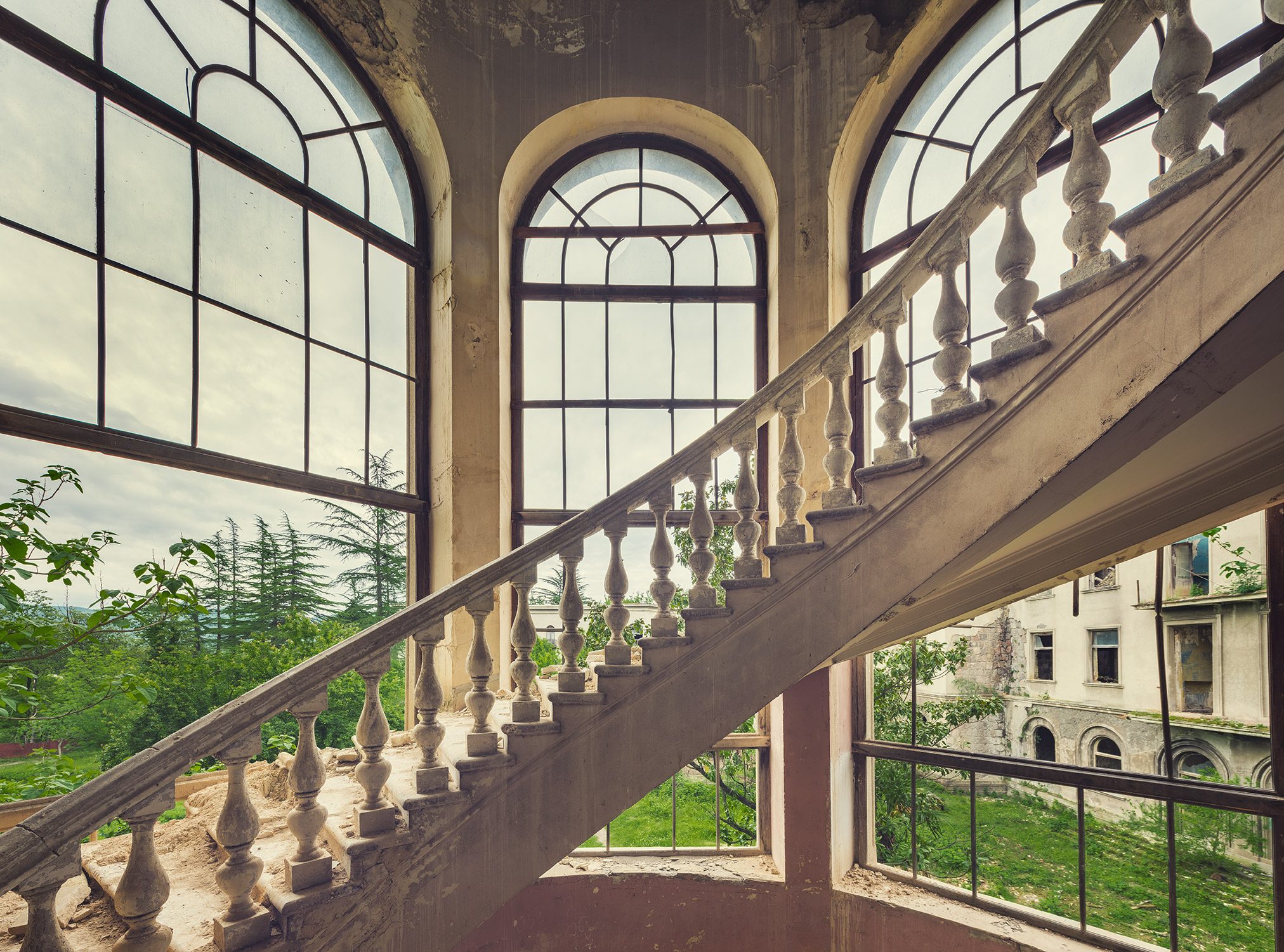
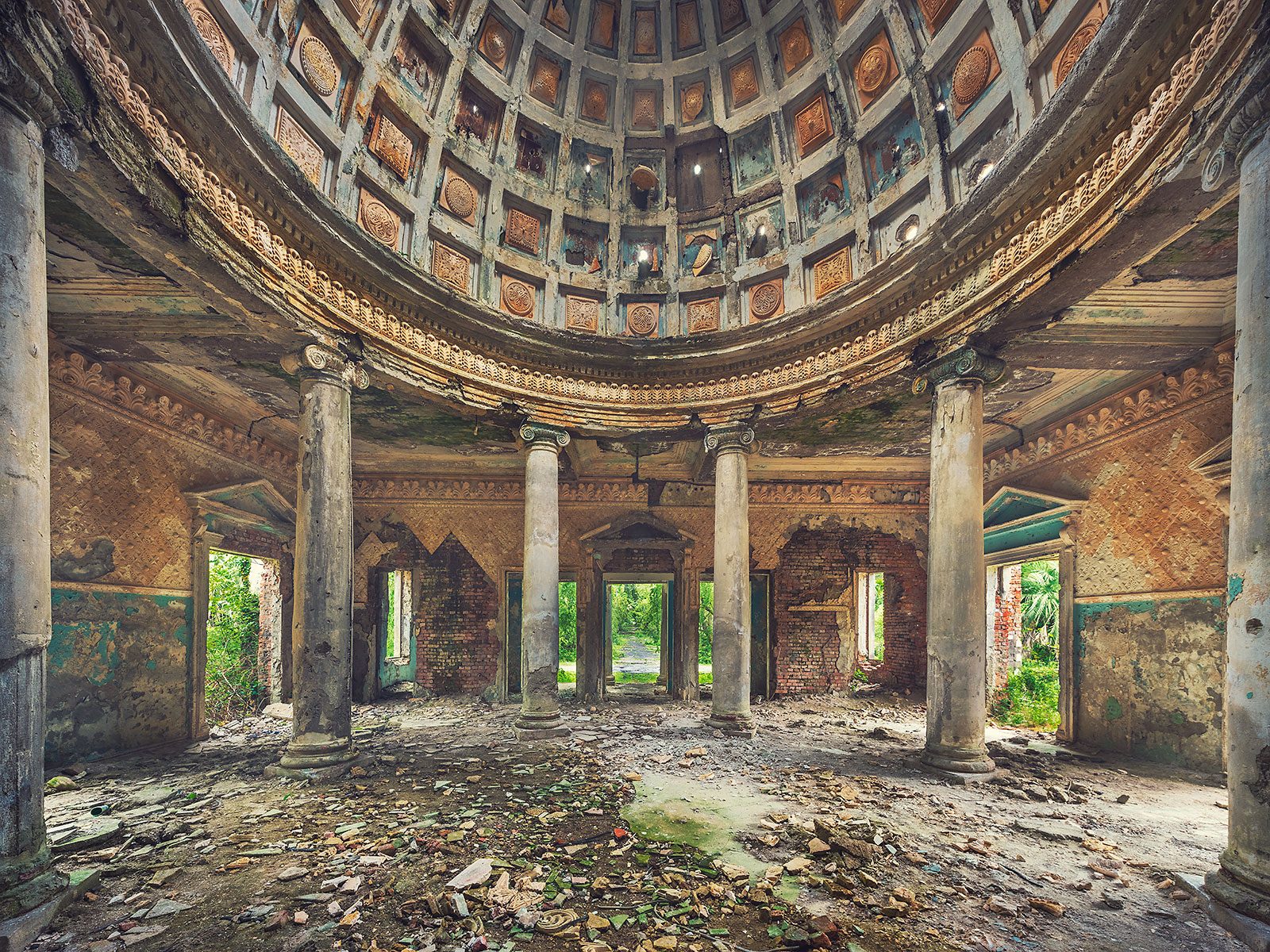
Photographs from Georgia taken in May 2019, from the series BOUNDLESS, RISE AND FALL, SANCTUARIES OF BLISS and others.

Sources and further background
This story draws on the following sources.
- JAMnews: Tskaltubo, Georgia’s abandoned paradise (30.07.2019) , accessed 11. November 2026
- Al Jazeera: Growing up and growing old in Georgia’s abandoned sanatoriums (09.09.2019) , accessed 11. November 2026
- Chaikhana: Tskaltubo, Georgia’s forgotten paradise (26.10.2022) , accessed 11. November 2026
- RFE/RL: Soviet sanatoriums in Georgia back on the market (23.10.2026) , accessed 11. November 2026
- Brookings Institution: From Responsibility to Response, Georgia (2011) , accessed 11. November 2026
- World Bank: Project Information Document, Georgia (27.06.2019) , accessed 11. November 2026
- Georgian Manganese: History of Chiatura mining , accessed 11. November 2026
- N. Gelaschwili: Deutsche Unternehmen in Tschiatura, Universität Potsdam (2010) , accessed 11. November 2026
- OC Media: Chiatura’s cable cars to receive upgrade , accessed 11. November 2026
- Trend: New cable cars in Chiatura (02.09.2021) , accessed 11. November 2026
Series
More from BOUNDLESS
Fine art prints on the theme
Related stories
All stories →


Share